



19th Century Farm Table
A 19th century farm table provides a sturdy timber workspace or dining surface shaped by decades of heavy domestic use.
19th Century Farm Table
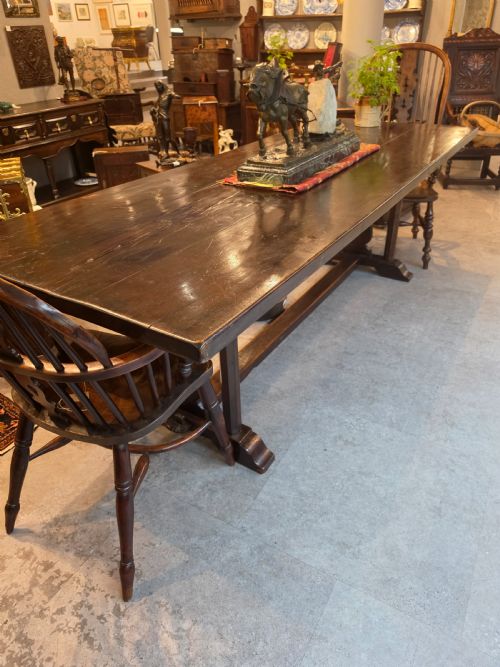
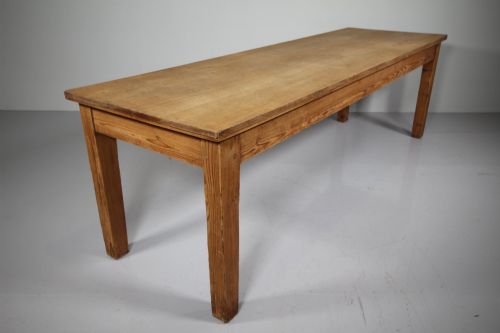
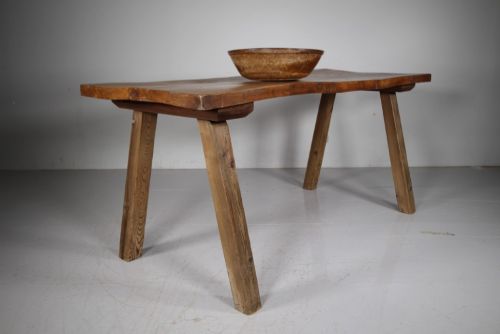
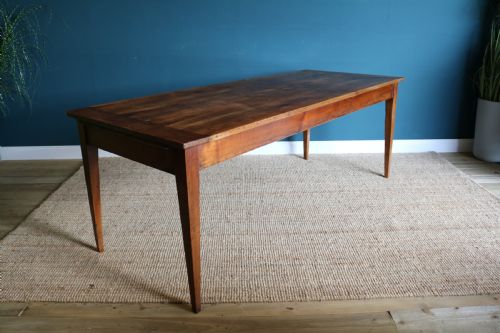
A 19th century farm table serves as a robust central hub for kitchens, dining rooms, and preparation spaces, originating from diverse regional workshops. Buyers encounter numerous pine, oak, and fruitwood examples designed for utilitarian service rather than formal display.
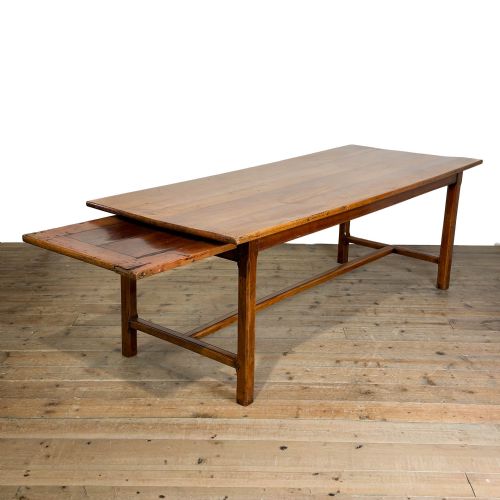
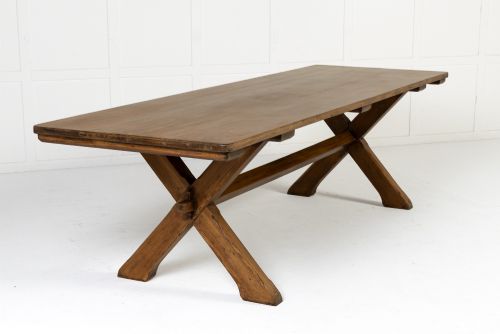
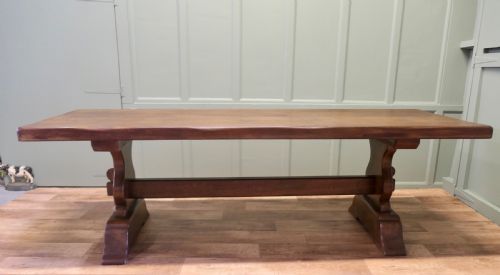
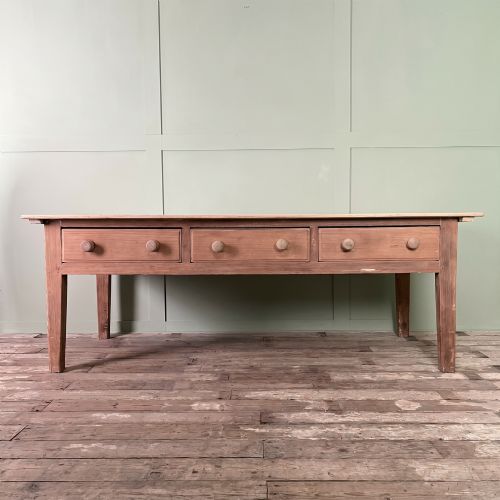
The selection ranges from simple scrubbed pine kitchen tables and trestle forms to large oak refectory tables and cherry dining pieces. Many feature single or double drawers built into the front frieze, reflecting their original purpose as working furniture.
Regional origins span French, English, Scandinavian, and Italian traditions, encompassing styles such as rustic farmhouse, primitive country, and French provincial. These tables carry the distinct marks of daily life through scrubbed timber tops and painted bases.
How They Were Made
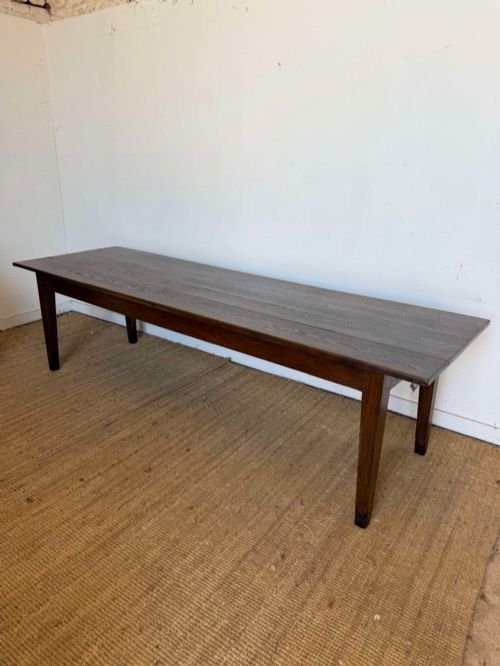
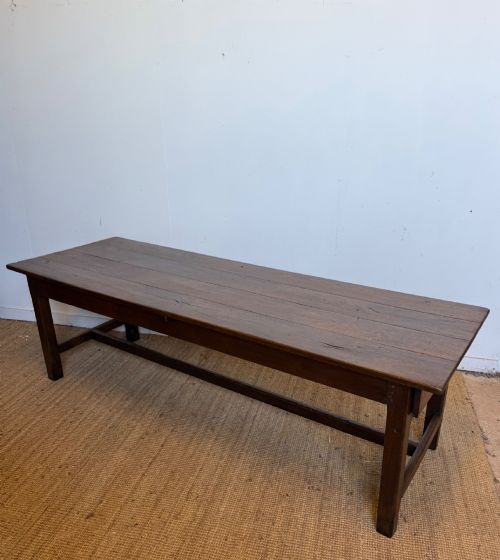
Carpenters constructed these tables using a combination of dense hardwoods like oak, elm, cherry, and fruitwood alongside softer timbers such as pine and sycamore. Tops were frequently fashioned from thick planks joined together, while structural frames utilised mortise and tenon joinery for durability.
Surface finishes varied from natural waxed or scrubbed wood to layered painted treatments in original colours. Drawers were assembled with hand-cut joints, and specialised forms incorporated trestle supports or draw-leaf mechanisms to extend the surface area.
19th Century Farm Table Retail Price Guide 2026
Typical asking prices for 19th century farm table among the pieces listed under this phrase on Sellingantiques today, from the lower quarter to the upper quarter. They describe what is for sale here now, not the wider market.
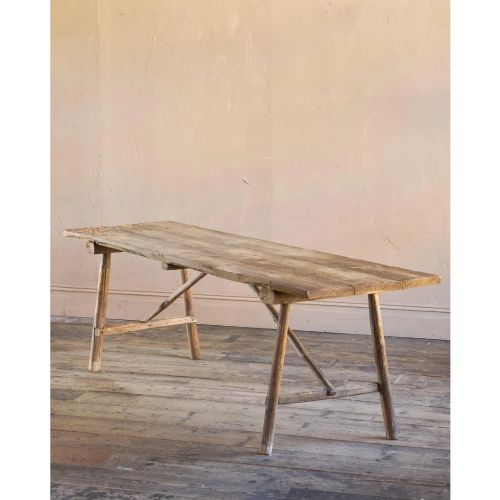
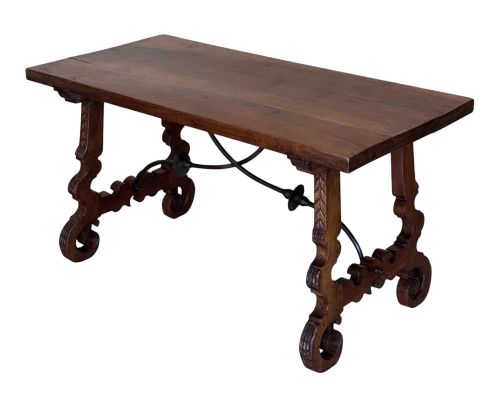
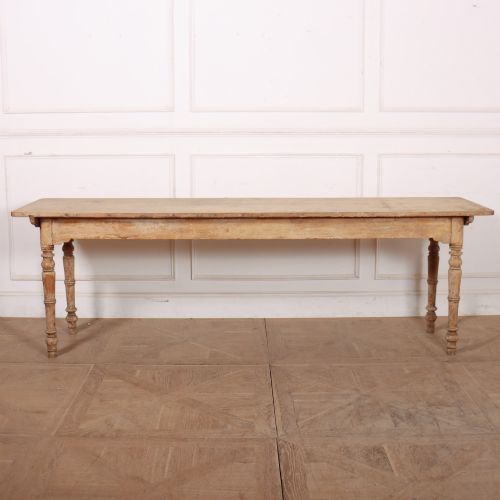
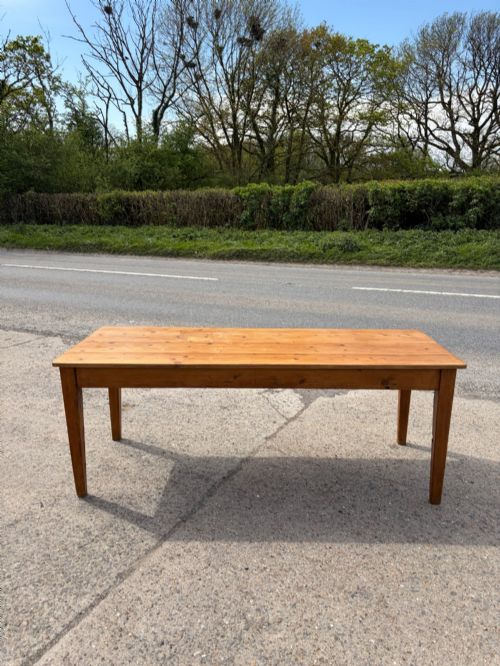
Table forms include refectory, trestle, console, and kitchen designs with integrated frieze drawers.
What Varies in Quality
Quality rests upon the integrity of the timber selection, the preservation of original surfaces, and the structural stability of the base. Tables featuring dense hardwoods like oak or aged fruitwood exhibit greater resilience than softer pine variants.
The survival of original painted finishes or untouched scrubbed surfaces distinguishes superior examples. Construction details such as well-fitted frieze drawers and robust joinery further elevate the standing of an individual piece.
The 19th Century Farm Table Glossary
- Refectory table
- A long dining table traditionally used in monastic refectories and later adopted in domestic kitchens.
- Frieze
- The horizontal structural band situated directly beneath the top surface of the table.
- Scrubbed top
- A wooden surface repeatedly washed with water and sand to clean the grain, leaving a pale, weathered texture.
- Trestle table
- A table supported by two or more vertical frames connected by a horizontal beam.
- Draw-leaf
- An extending table mechanism featuring pull-out leaves stored beneath the main top.
19th Century Farm Table: Frequently Asked Questions
How were farm tables used originally?
These tables functioned as heavy-duty workspaces for food preparation, kneading dough, and daily family dining in farmhouses and rural kitchens.
Their robust construction accommodated demanding domestic chores before modern fitted kitchens became standard in homes.
What woods are most common?
Pine and oak appear frequently alongside fruitwoods such as cherry, sycamore, and elm.
Makers selected timber based on local availability, employing softer pine for utility tables and durable hardwoods for main dining surfaces.
How do I care for a scrubbed top?
Maintenance involves dry wiping or gentle cleaning with mild soap and water to preserve the untreated wood texture.
Avoiding excessive moisture prevents staining on porous antique timbers like pine and sycamore.
Did these tables have drawers?
Many examples incorporate one or two drawers built directly into the front frieze for storing utensils.
These compartments provide practical utility while maintaining the traditional silhouette of regional farmhouse furniture.