

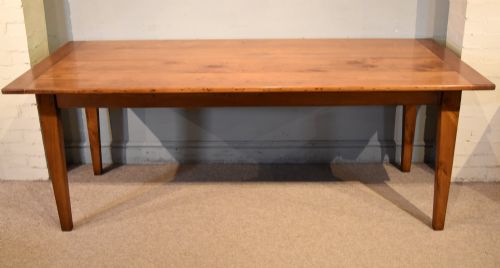
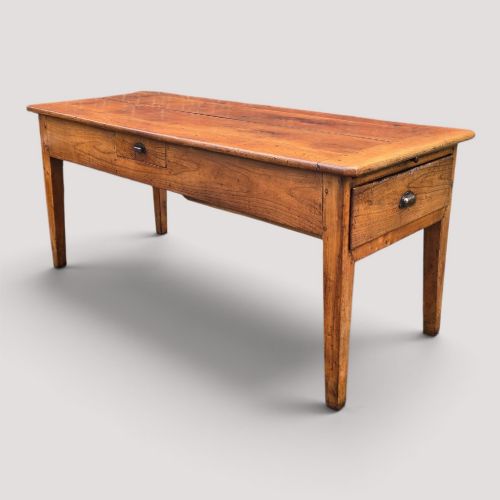
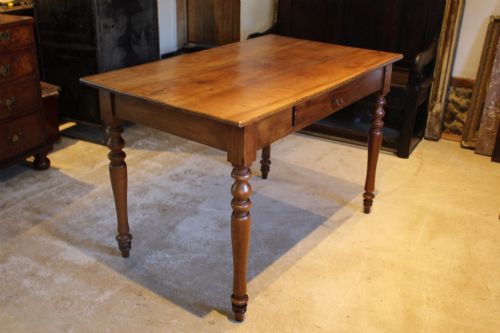
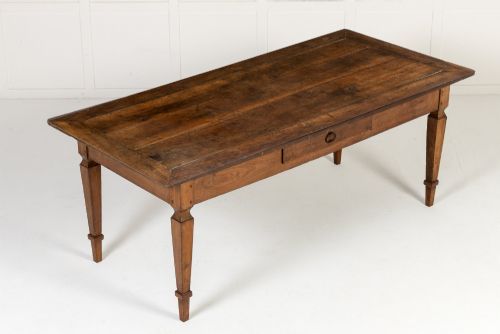



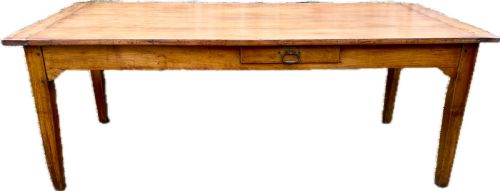


French Cherry Refectory Table
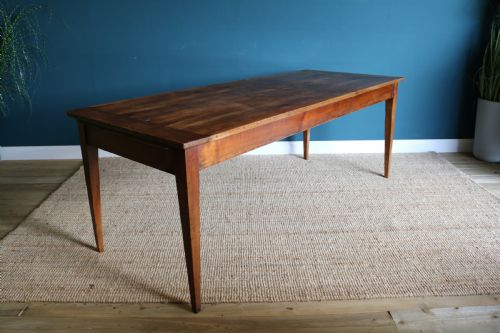
A French cherry refectory table brings warmth and utility to a room through dense fruitwood grain and honest provincial construction.
French Cherry Refectory Table
When searching for a French cherry refectory table, buyers encounter sturdy dining furniture built for daily provincial kitchen and farmhouse use. The pieces span the eighteenth, nineteenth, and early twentieth centuries, reflecting long utility in rural homes.
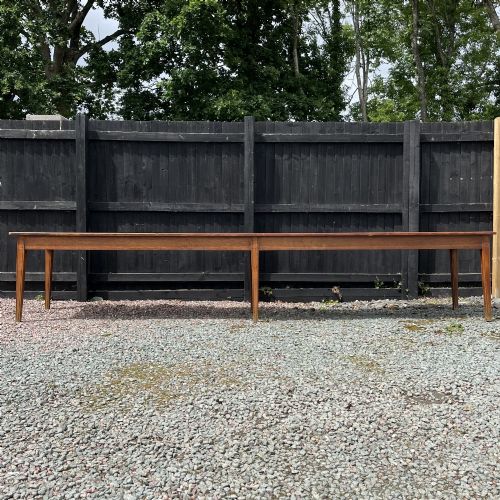
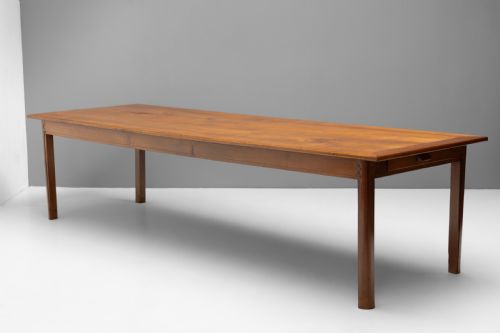
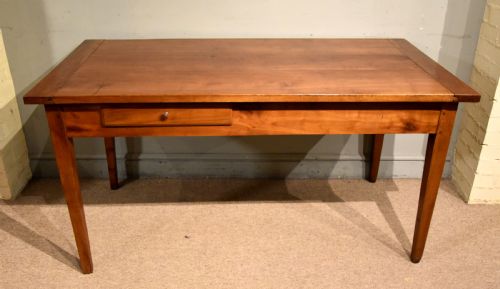
Originating in French provincial and country settings, these tables display straightforward rectangular forms designed to seat several diners. Surviving pieces range from modest kitchen tables to large multi-plank boards exceeding three metres in length.
Materials and construction
Makers utilised solid cherry wood, cherrywood, and related fruitwoods for the primary surfaces and framing of these tables. Secondary timbers occasionally appear in secondary framing, while metal and brass components reinforce functional elements like drawers and extension slides.
Construction relies on traditional planking methods, with surviving tables showing five or six plank tops joined for heavy domestic use. Joinery techniques accommodated the dense properties of fruitwood, supporting sturdy legs in straight or cabriolet configurations.
French Cherry Refectory Table Retail Price Guide 2026
Typical asking prices for french cherry refectory table among the pieces listed under this phrase on Sellingantiques today, from the lower quarter to the upper quarter. They describe what is for sale here now, not the wider market.
Some nineteenth-century boards retain stubborn ink spots from centuries of children completing homework by candlelight.
Distinctions in quality
The standard of a table rests on the quality of the timber selection and the integrity of the original construction. Uniformity in the cherry wood grain and the proportion of the planks define superior examples from the period.
The French Cherry Refectory Table Glossary
- Refectory table
- A long dining table traditionally used for communal meals in large halls and later adapted for farmhouse kitchens. It offers an elongated surface supported by sturdy legs and stretchers.
- Fruitwood
- A timber category that includes cherry, pear, and apple wood, valued for a fine grain and warm tone. These woods acquire a rich patina over decades of use.
- Bread board
- A wooden board set into the end of a table top to accommodate seasonal wood movement. This functional element prevents the main planks from warping.
- Cabriolet leg
- A curved furniture leg that arches outward and then inward, reminiscent of the hind leg of an animal. It appears on provincial seating and table designs.
- Draw leaf table
- A dining table with extension leaves hidden beneath the main top that pull out from each end. This mechanism increases surface length without requiring separate storage leaves.
French Cherry Refectory Table: Frequently Asked Questions
How do I care for a cherry wood table?
Keep the wood away from direct heat sources and sudden humidity shifts to prevent the timber from splitting. Regular wiping with a dry or slightly damp cloth preserves the natural finish without harsh chemical polishes.
Allow the surface to breathe and accept that daily use builds character over decades. Minor marks blend into the grain of nineteenth-century fruitwood over time.
Were these tables used only in kitchens?
Farmhouse tables served as the central workspace for food preparation, daily dining, and domestic chores in rural French homes. They occupied kitchens and large living rooms alike where family life converged.
Today, the generous proportions make them practical for modern dining rooms and open-plan spaces. Their sturdy construction suits active daily environments.
How can I tell the age of a farmhouse table?
Examine the plank construction, tool marks underneath the top, and the assembly methods used in the frame. Eighteenth and nineteenth-century pieces display hand-cut joinery and natural wear patterns consistent with age.
Check for variations in timber colour and the depth of the patina across the fruitwood surface. Documentation and structural clues help narrow the date of manufacture.
Do extending tables work smoothly?
Many nineteenth-century examples feature draw leaf or double extending mechanisms designed for practical use. Over generations of movement, wooden runners may require careful adjustment by a specialist.
Test the action gently to understand how the leaves slide beneath the main surface. Original mechanisms reflect the ingenious space-saving designs of period provincial makers.