

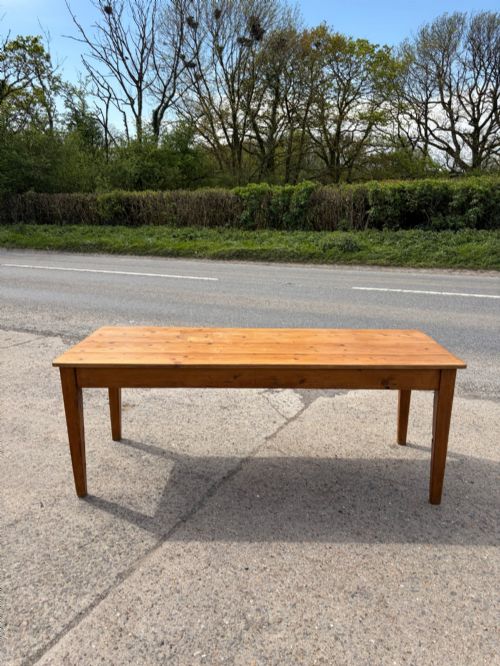


Tapered Leg Farm Table
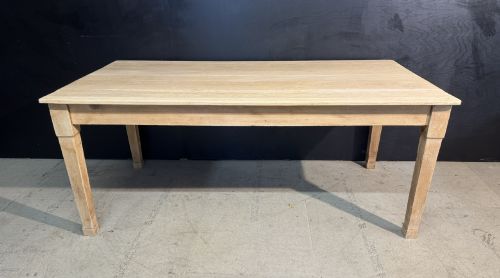
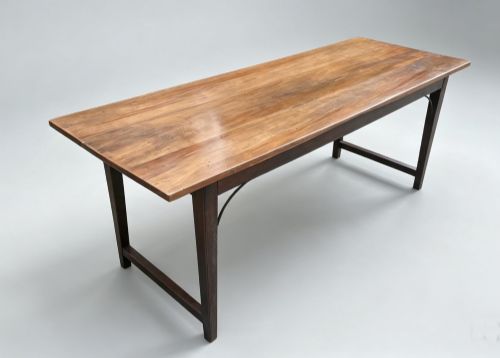
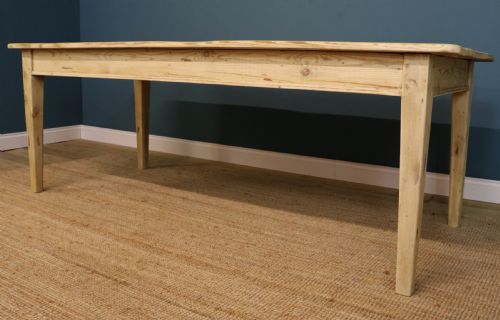
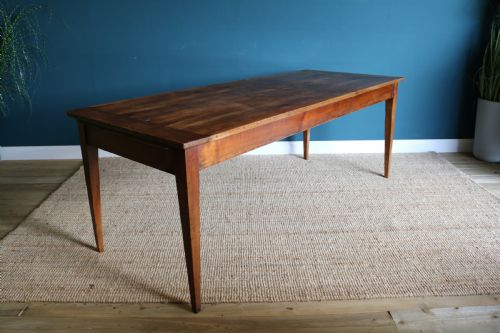
A tapered leg farm table brings honest utility to a room, offering sturdy timber construction shaped by daily use.
Tapered Leg Farm Table
A tapered leg farm table is a practical dining surface built for domestic work and daily meals, drawing on regional traditions from the Georgian, Victorian, and twentieth-century periods. These tables emerge from English and French country workshops, designed primarily as kitchen or refectory dining pieces.
The versions most commonly met on this page feature pine, cherrywood, or fruitwood tops supported by straightforward wooden frames. Simple drawer additions appear beneath the frieze on certain examples, providing modest storage for everyday implements.
Makers shaped these surfaces for heavy use rather than formal display, resulting in robust proportions and generous seating capacities. French provincial and rustic farmhouse styles dominate the selection, showing straightforward joinery without elaborate ornamentation.
How they were made
Carpenters built these tables using solid timber boards for the tops, frequently selecting pine, oak, or fruitwood for availability and strength. Frames utilise mortise and tenon joinery to lock the legs and rails securely beneath the heavy top boards.
Legs were hand-turned or shaped with straight tapered profiles using simple hand tools, reducing bulk at the floor while maintaining structural support. Wrought iron hardware occasionally reinforces the structure or forms functional drawer pulls on single-drawer friezes.
Tapered Leg Farm Table Retail Price Guide 2026
Typical asking prices for tapered leg farm table among the pieces listed under this phrase on Sellingantiques today, from the lower quarter to the upper quarter. They describe what is for sale here now, not the wider market.
Materials recorded across current pieces include solid pine, cherrywood, fruitwood, oak, and wrought iron.
What varies in quality
Quality rests in the integrity of the original timber and the restraint shown in any subsequent surface restoration. Tables retaining unblemished fruitwood or cherrywood tops show superior material selection compared to softer pine variants.
Proportion and stance dictate the visual success of the piece, with cleaner taper transitions and balanced overhangs separating standard workshop output from finer country house examples.
The Tapered Leg Farm Table Glossary
- Frieze
- The horizontal band running directly beneath the tabletop, occasionally housing a storage drawer. This structural member connects the legs and supports the underside of the surface boards.
- Refectory
- A long dining table traditionally used for communal meals in large institutions or country houses. These formats provide extended seating space along both flanks.
- Draw leaf
- An extension mechanism where auxiliary leaves slide out from beneath the main surface to lengthen the table. This ingenious system adapts the seating capacity without requiring loose boards.
- Fruitwood
- Dense timber harvested from fruit-bearing trees such as cherry, pear, or apple. Cabinetmakers favored these woods for their smooth grain and warm tone.
Tapered Leg Farm Table: Frequently Asked Questions
What woods were used for these tables?
Makers constructed these tables from regional timbers available near their workshops, predominantly selecting pine, oak, and fruitwoods like cherry.
Softer woods like pine frequently served utility roles in kitchens, while harder fruitwoods provided durable surfaces for dining.
How do I date a farm table?
Dating relies on examining the construction methods, tool marks left on the timber, and the style of the leg taper. Georgian and Victorian examples show distinct hand-planed surfaces compared to later twentieth-century production.
Hardware details and secondary woods used in the drawer linings also help establish the manufacturing period.
Are these tables suitable for daily dining?
These pieces were originally built for heavy domestic use, making them robust choices for modern dining rooms and kitchens. Their solid timber construction handles daily activity with ease.
Buyers should consider the clearance beneath the frieze and drawers to ensure comfortable seating.
What is a french provincial style?
French provincial style reflects regional furniture designs created outside Paris during the eighteenth and nineteenth centuries. These pieces balance rustic utility with refined proportions.
Makers utilised local fruitwoods and straightforward construction methods suited to country homes.