
Traditional Wood Refectory Table
A traditional wood refectory table grounds a room with historic presence, offering long spans of solid timber built for daily communal dining.
Traditional Wood Refectory Table
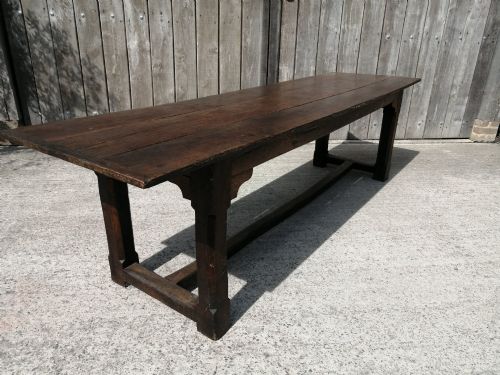
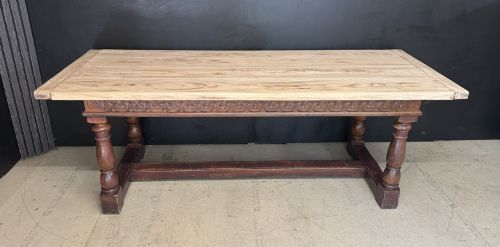
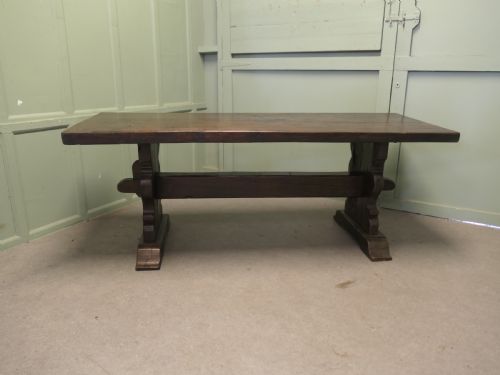
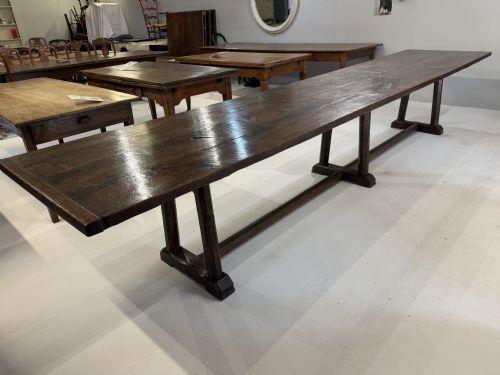
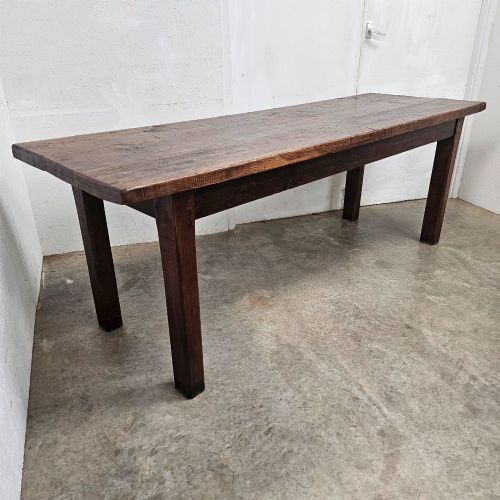
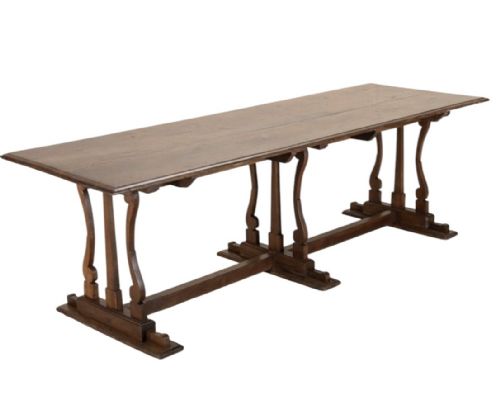
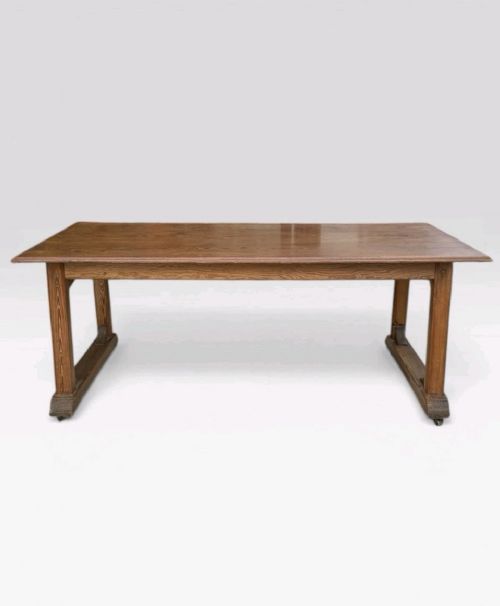
A traditional wood refectory table is a long, substantial piece designed originally for monastic dining halls and later adapted for domestic country houses and farmhouses. When you search for this phrase, you encounter forms that span from the eighteenth century into the early twentieth century, reflecting both English tavern traditions and continental styles.
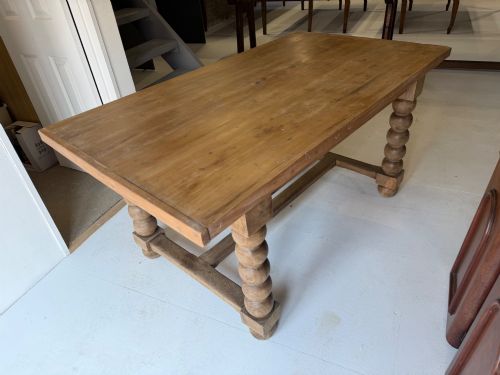
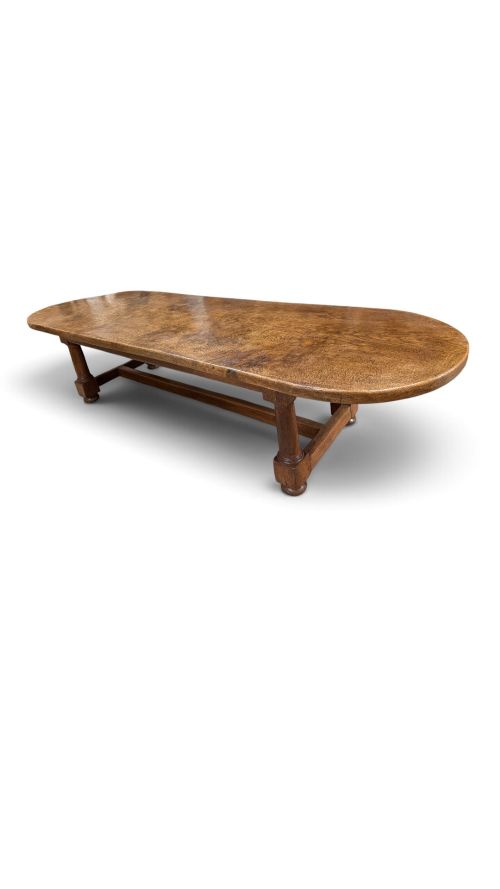
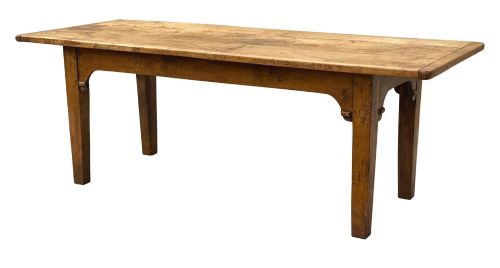
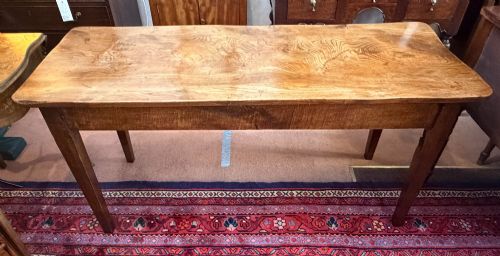
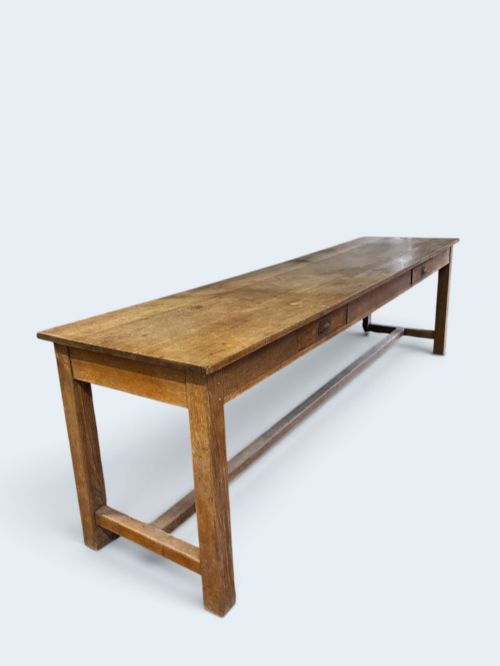
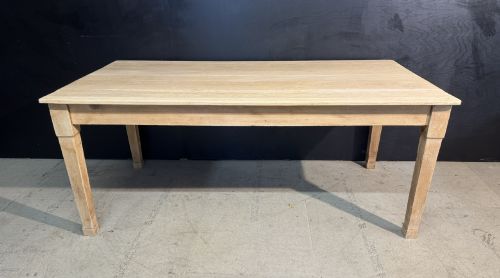
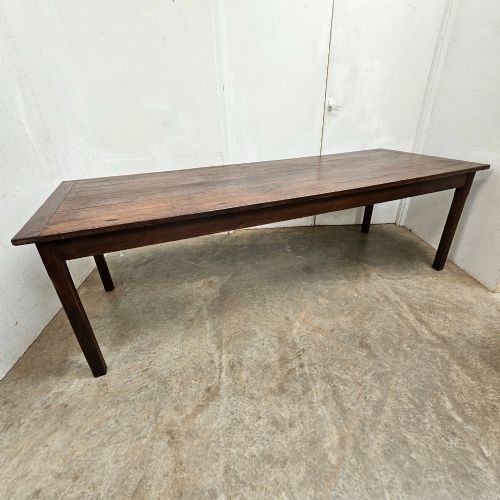
The versions most likely to meet you on this page are oak and fruitwood dining tables, often showing regional characteristics such as French provincial or English country house proportions. These objects range from single plank tops to parquetry surfaces, sometimes incorporating drawers or extension mechanisms for practical use.
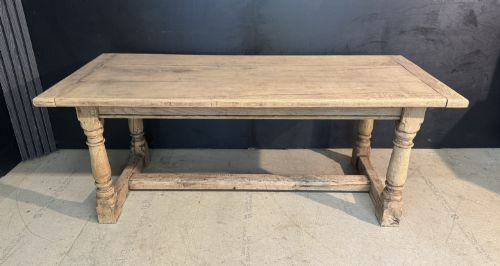
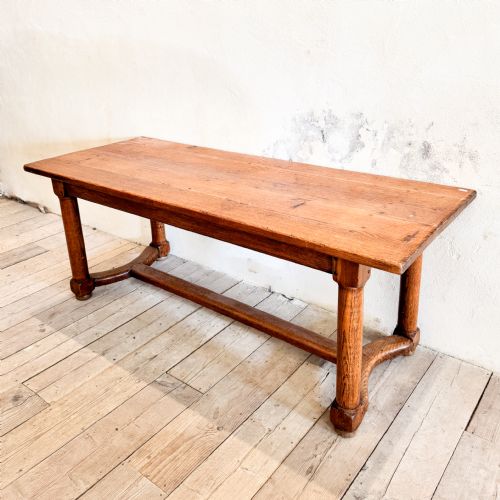
Beyond standard dining tables, the category encompasses related forms like serving tables and coffee tables constructed from the same dense timbers. The structural vocabulary includes bobbin legs, turned legs, barrel legs, and end stretchers that stabilise the long framework.
What varies in quality
Quality rests in the integrity of the timber selection and the retention of original structural components like thick table tops and sturdy stretchers. Tables featuring single plank oak tops or dense fruitwood display superior material continuity compared to constructed or heavily altered surfaces.
The refinement of the base construction also dictates distinction, where hand-turned legs, bobbin supports, or integrated drawers show the care taken by the original maker. The balance between the massive top and the supporting legs determines whether the table sits firmly and wears its age with appropriate dignity.
Several tables arrive equipped with handy drawers once reserved for stashing heavy linen napkins and stubborn tavern tally chalk.
The Traditional Wood Refectory Table Glossary
- Refectory table
- A long dining table historically used in monasteries and large halls. It is characterised by a narrow, elongated proportion supported by sturdy legs and longitudinal stretchers.
- Stretcher
- A horizontal wooden bar connecting the legs of a table for extra stability. End stretchers and H stretchers help brace the heavy frame against lateral strain.
- Parquetry
- A geometric mosaic of wood pieces used for decorative surfacing on tabletops. French fruitwood examples often employ this technique to create patterned panels.
- Plank top
- A table surface constructed from boards running the full length of the piece. Single plank variations are particularly valued for their uninterrupted expanse of timber grain.
Traditional Wood Refectory Table: Frequently Asked Questions
How do I care for an antique wood table?
Feed the timber periodically with natural beeswax to maintain the moisture balance in older oak or fruitwood surfaces. Avoid placing the table near direct heat sources that might cause the old planks to split.
Use coasters and felt pads to protect the historic finish from liquid rings and deep scratches. Gentle cleaning with a dry or barely damp cloth preserves the patina built up over generations.
What rooms suit a refectory table?
These long tables suit spacious kitchens, open-plan dining rooms, and large living spaces where their substantial length can dominate the floor plan. Their rustic and formal balance works alongside modern seating just as well as with antique chairs.
Ensure you measure the clearance around the table so guests can pull chairs out comfortably. The narrow width of many refectory formats makes them surprisingly conversational for dinner parties.
How can I tell the age of a wood table?
Examine the underside of the top and the joints for tool marks, hand-cut peg holes, and the natural oxidation of the timber over centuries. Variations in board widths and hand-planed surfaces indicate earlier manufacturing methods.
Style clues like bobbin legs, X-legs, or heavy walnut stretchers point towards specific periods from the 1700s through the Edwardian era. Consistent wear patterns around the edge of the boards also signal genuine age.
Are all refectory tables made of oak?
While oak is the most common timber found in these listings, makers also utilised elm, walnut, cherry, beech, and fruitwood. Continental pieces frequently feature French fruitwood or cherry with distinct warm tones.
Pine and sycamore also appear, particularly in provincial farmhouse variants designed for domestic utility. Each wood species ages differently, giving every table its own distinct colour and grain texture.