
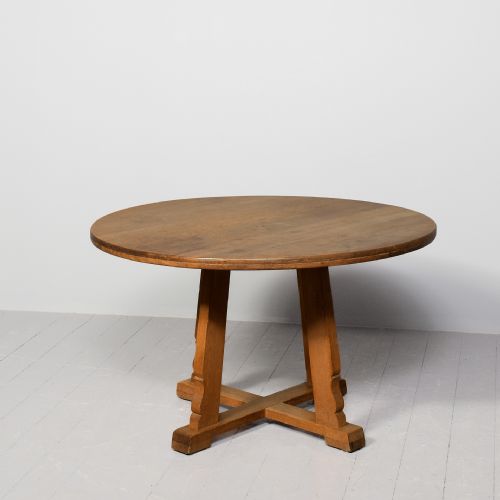


Scottish Dining Table
A scottish antique dining table brings substantial presence and robust timberwork to a room, built by cabinetmakers working in Edinburgh, Glasgow, and regional workshops.
Scottish Dining Table
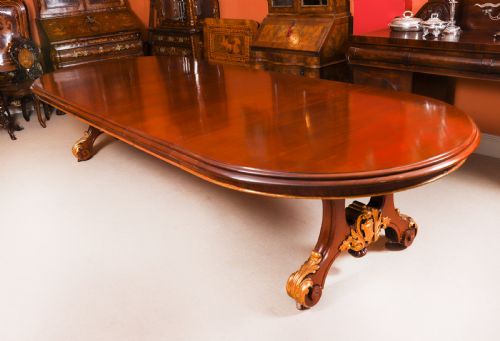
A scottish antique dining table spans formal pedestal formats, extending designs, and sturdy kitchen or refectory boards found across the centuries. The evidence shows examples originating from the Georgian and Regency eras through to the Victorian period and the early twentieth century.
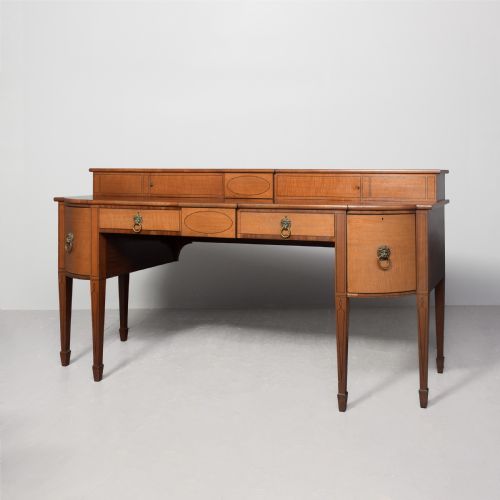
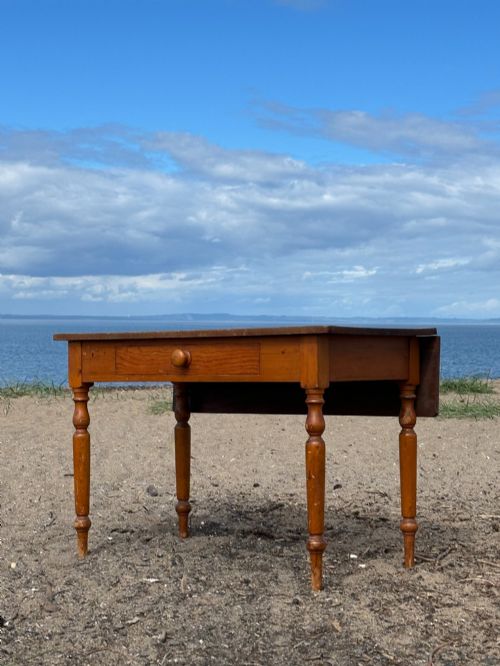
Regional variations include stage-back sideboards and serving tables often associated with dining rooms, alongside simpler kitchen preparation tables. Makers from Edinburgh and Glasgow produced refined pieces, while country workshops turned out robust oak and pine furniture.
Materials and construction
Cabinetmakers utilised dense hardwoods like mahogany, walnut, and rosewood, often selecting flame mahogany veneers for decorative surfaces. Secondary timbers such as pine appeared in utilitarian contexts like kitchen preparation tables.
Inlay work incorporated boxwood and lacewood banding to define borders and panels on tabletops and sideboard fronts. Brass fittings, including castors and mounts, supported the movement and structure of pedestal and dining tables.
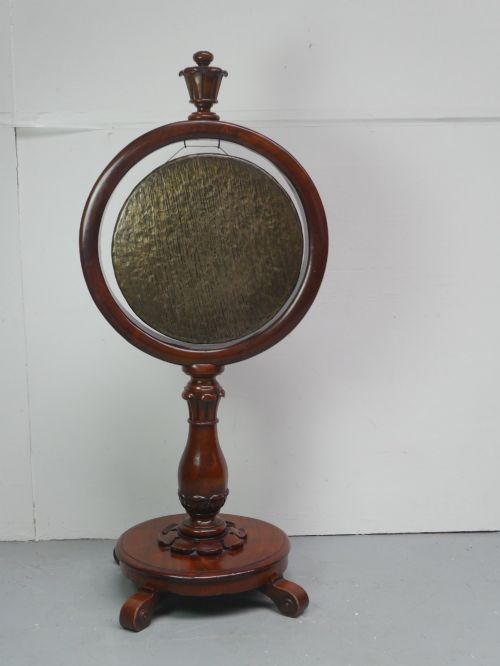
One historic country house dining setup includes a brass dinner gong ready to summon guests to the table.
Evaluating quality and execution
The distinction between standard workshop output and top-tier cabinet work lies in the selection of timbers, such as highly figured flame mahogany or carefully matched Cuban mahogany boards. Fine craftsmanship shows in the precision of boxwood or lacewood inlay and the stability of pedestal pillars.
Design attribution to known makers or specific Scottish towns elevates a piece, reflecting the skill of regional workshops. Structural integrity, original brass castors, and well-preserved surface finishes separate surviving dining tables of high distinction from simpler utility items.
Wylie & Lochead, Glasgow·Morison of Ayr·Whytock & Reid of Edinburgh·Sir Robert Stoddart Lorimer·William Trotter of Edinburgh·James Mein of Kelso·Matthew Lawson
The Scottish Dining Table Glossary
- Stage-back sideboard
- A large dining room sideboard featuring a raised rear tier or shelf section, frequently seen in Georgian Scottish pieces.
- Tilt-top table
- A table with a tabletop hinged to tilt vertically when not in use, allowing it to be stored against a wall.
- Refectory table
- A long, narrow dining table traditionally built with solid oak and substantial stretcher supports.
- Boxwood inlay
- Contrasting light-coloured wood inserted into recesses on a darker timber surface to create decorative borders.
- Twin pedestal
- A table base configuration consisting of two separate column supports standing on branched legs.
Scottish Dining Table: Frequently Asked Questions
How do I identify a Scottish dining table?
Look for distinctive regional traits in the timber selection, such as rich flame mahogany or satin birch, alongside construction details typical of Edinburgh and Glasgow workshops.
Attributions or maker signatures where present often point directly to Scottish cabinetmakers of the Georgian, Regency, or Victorian eras.
What woods were used in these tables?
Cabinetmakers primarily worked with mahogany, Cuban mahogany, oak, and walnut for formal dining and centre tables.
Kitchen and utility tables utilised local timbers like pine, while decorative examples incorporated boxwood and lacewood inlay.
How do pedestal and refectory tables differ?
Pedestal tables rely on twin pillars or central columns with branched feet to support the top, allowing for flexible seating arrangements.
Refectory tables use four legs joined by floor-level stretchers, offering long, fixed boards suited to larger dining spaces.
How should I care for a historic dining table?
Keep wooden surfaces away from direct heat sources and strong sunlight to prevent the timber and veneers from drying out or splitting.
Clean gently with a soft cloth and maintain the polish using appropriate wax without applying harsh modern chemical sprays.