
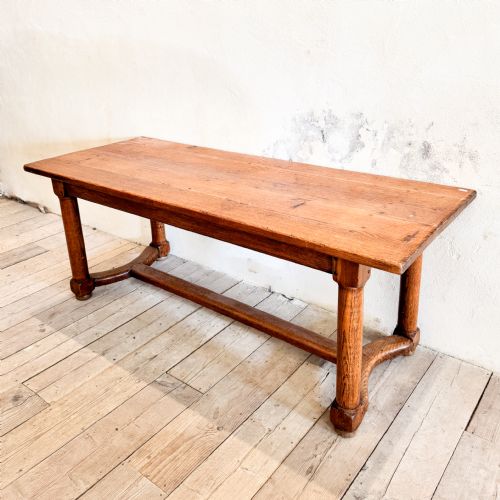


Six Seater Table
A proper six seater table gathers a household for daily meals, appearing here in sturdy oak and rich mahogany across Georgian, Victorian, and later periods.
Six Seater Table
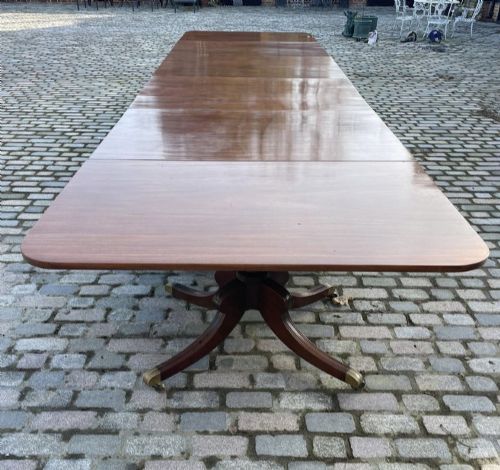
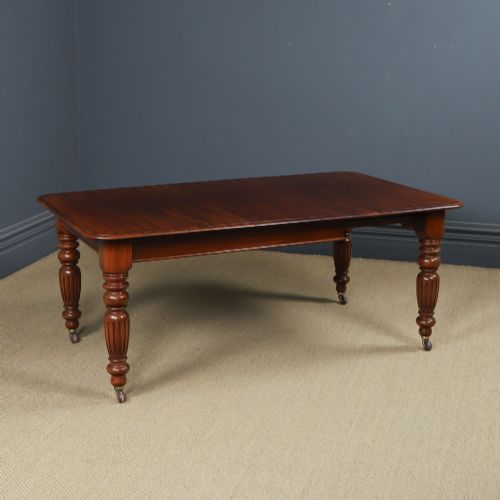
A six seater table serves as the principal gathering surface for family dining, taking form in both formal dining rooms and robust country kitchens. When searching for a six seater table, buyers encounter a diverse selection ranging from extending Victorian wind-out models in mahogany to solid oak refectory styles.
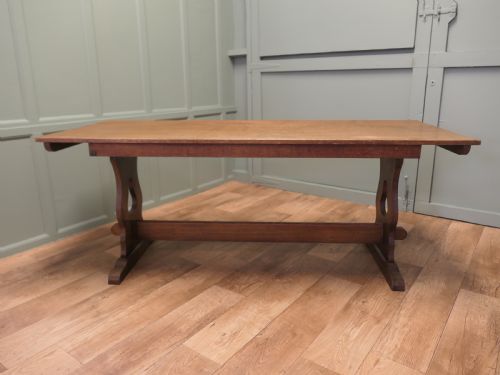
The pieces available span multiple centuries, including Georgian drop-leaf formats, Arts and Crafts golden oak designs, and sleek Art Deco walnut suites complete with matching chairs. Oak farmhouse and kitchen variations bring a vernacular domestic utility to the selection, while Regency and Victorian examples offer polished formal elegance.
Originating largely from British workshops and country houses, these tables reflect the shifting domestic habits of the nineteenth and early twentieth centuries. Whether configured as a fixed refectory board or an extending mechanism for guests, each piece is built to accommodate six diners comfortably.
How they were made
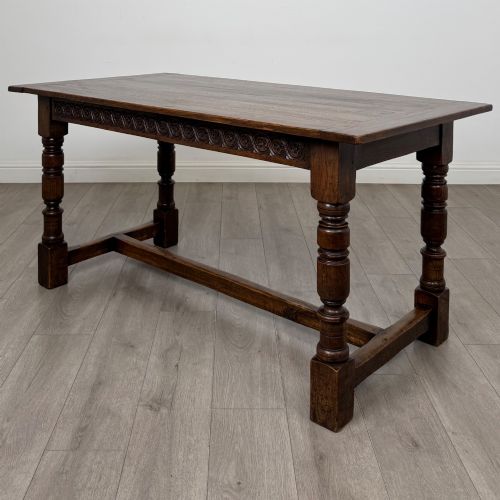
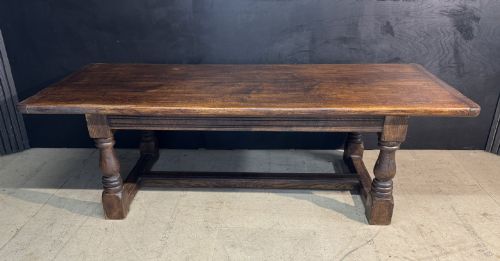
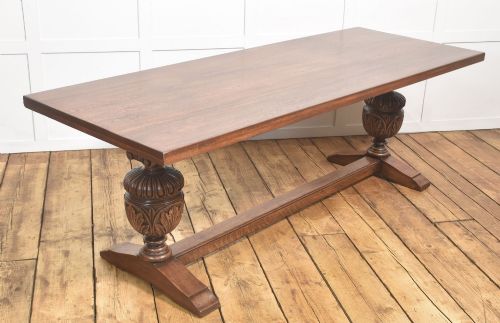
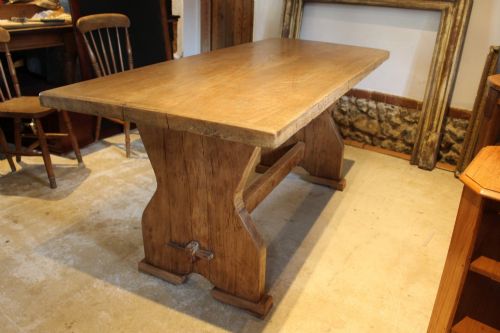
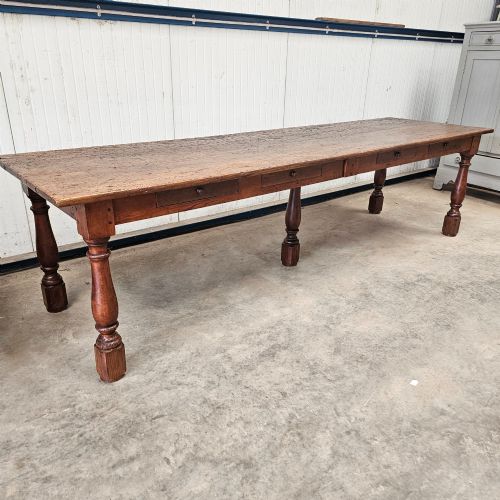
Makers relied heavily on native hardwoods like oak and mahogany, supplemented by walnut, pine, chestnut, and cherrywood for specific regional or stylistic demands. Solid construction methods predominated in farmhouse and refectory formats, utilising thick timber tops supported by refectory stretchers, turned legs, or bulbous carved supports.
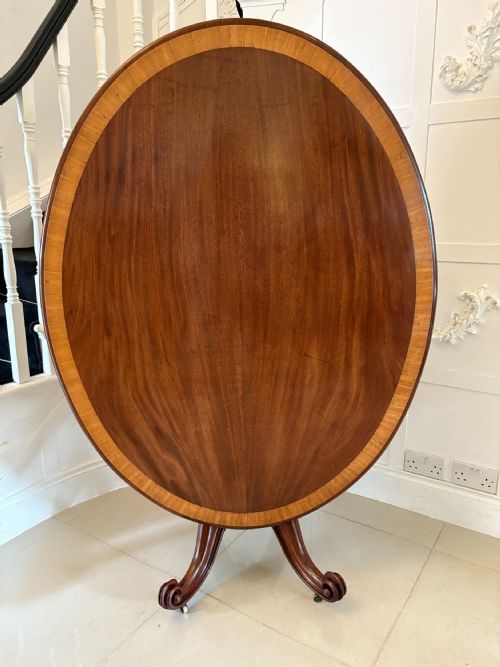
Formal dining tables from the Victorian and Regency periods incorporated sophisticated mechanical extending systems, such as wind-out screw actions housed within mahogany frames. Surface finishing relied on natural grain manipulation, turning, carving, and occasional inlay like satinwood to accentuate the timber's inherent colour and figure.
Listings feature oak and mahogany predominantly, alongside walnut and pine across nineteenth and early twentieth-century periods.
What varies in quality
Quality rests significantly on the selection of timber, distinguishing plain utility pine from highly figured mahogany, burr walnut, or golden oak with deep natural grain patterns. The integrity of the construction - evident in the weight of the timber, the stability of refectory joints, and the smooth operation of extending mechanisms - separates standard utility pieces from exceptional commissions.
Artisanal execution dictates the upper tier of the range, visible in crisply carved cabriole legs, reeded supports, and well-balanced proportions. Original condition and surface patina gathered through decades of domestic use further elevate a piece above later restorations or heavily altered examples.
Harry and Lou Epstein
The Six Seater Table Glossary
- Wind-out table
- An extending dining table operated by a mechanical handle that separates the top to insert additional leaves. This clever nineteenth-century system allowed hosts to expand a compact board for larger dinner parties.
- Refectory table
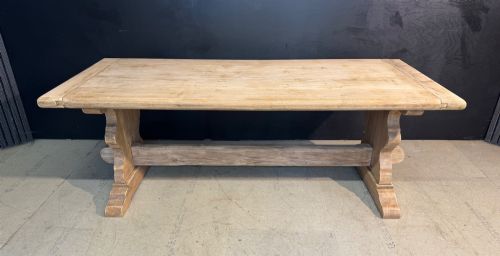
- A long, narrow dining table traditionally used in communal dining halls and supported by substantial legs linked with floor stretchers. These sturdy wooden boards are heavily represented in oak across farmhouse styles.
- Drop-leaf table
- A table featuring a fixed central section with hinged flaps on either side that fold down when not in use. Georgian examples in oak provide adaptable dining space for smaller rooms.
- H stretcher
- A horizontal wooden brace connecting the legs of a table in the shape of the letter H to provide structural rigidity. This support is frequently encountered on late nineteenth-century walnut dining tables.
- Figured mahogany
- Timber cut from specific sections of the mahogany tree that display rich, swirling grain patterns rather than a uniform surface. Cabinet makers selected these decorative veneers to catch the light in formal dining rooms.
Six Seater Table: Frequently Asked Questions
How many people does a six seater table actually seat?
These tables provide comfortable dining space for six individuals during everyday meals. Extending versions can often accommodate additional guests when pulled out with extra leaves.
Buyers should measure their dining room space carefully to ensure adequate clearance around the table for chairs to pull out fully.
How do I tell a Victorian extending table from a Georgian drop-leaf?
Victorian extending tables generally utilise mechanical wind-out systems with a central split, allowing leaves to be added into the middle. Georgian drop-leaf tables rely on hinged side flaps that lift up and are supported by swing legs.
Examining the undercarriage and mechanism usually reveals the period construction methods employed by the cabinet maker.
Are oak farmhouse tables suitable for daily kitchen use?
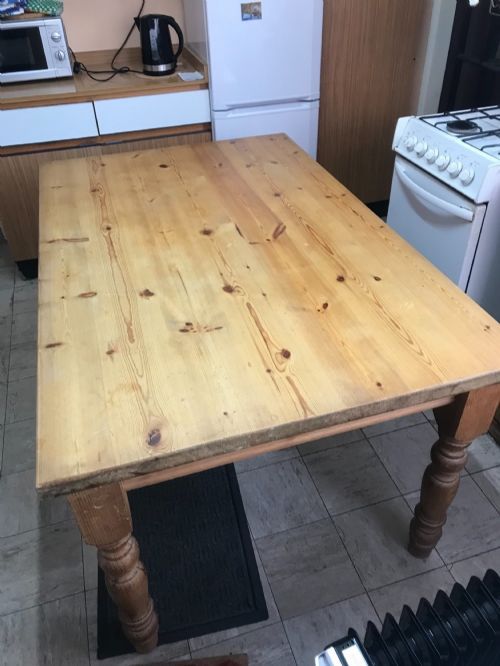
Solid oak and pine farmhouse tables are built for heavy domestic environments and handle daily family life with ease. Their robust timber construction withstands frequent use while developing a deeper character over time.
Maintaining the wood with appropriate oils protects the surface from moisture and everyday wear.