
Vintage Leaf Table
A vintage leaf table brings expandable timber engineering into everyday rooms, offering flexible surfaces in oak and mahogany across periods from the eighteenth century to the twentieth.
Vintage Leaf Table
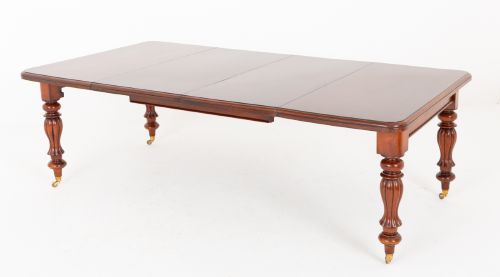
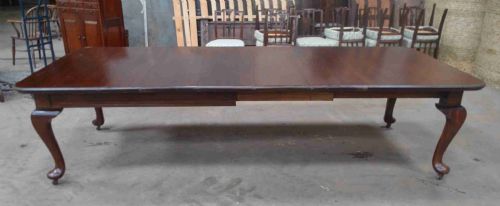
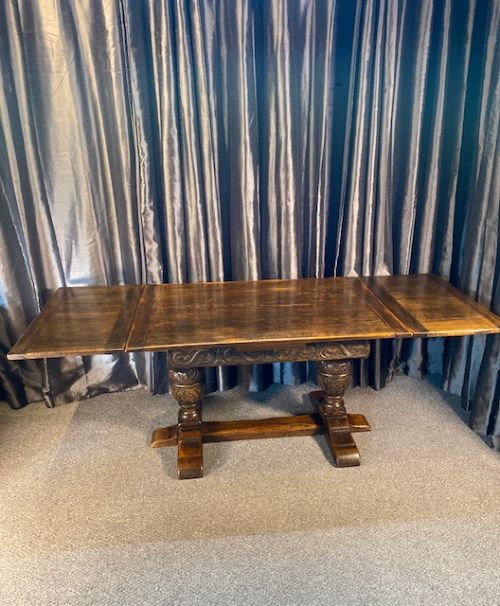
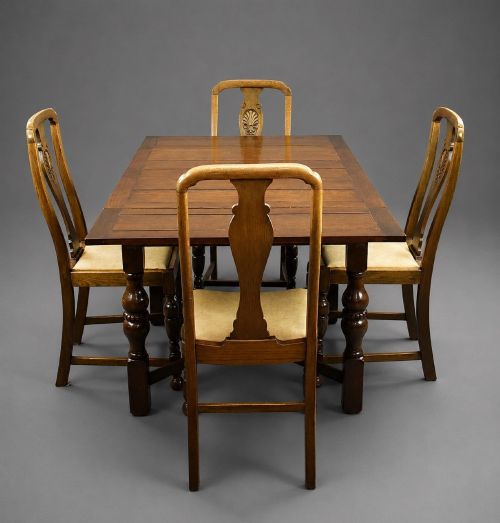
A vintage leaf table encompasses practical extending furniture designed to adapt surface area through drop leaves, gatelegs, draw leaves, or added leaves. Buyers searching for a vintage leaf table encounter diverse historical forms ranging from compact Pembroke and Sutherland tables to large refectory and dining sets.
Oak and mahogany dominate the selection, appearing across Victorian, Edwardian, and earlier Georgian or Regency periods. The most frequent discoveries on this page are sturdy oak draw leaf dining tables and mahogany drop leaf or gateleg side tables dating from the nineteenth and early twentieth centuries.
How they were made
Cabinet makers utilised solid hardwoods like oak, mahogany, walnut, and pine, often joined with sturdy structural elements such as barley twist legs, gateleg supports, and extending draw mechanisms. Timber selection governed both the daily utility and the structural longevity of these expanding surfaces.
Surface treatments and secondary materials included rich French polishing, occasional parquetry, lacquer, and brass fittings. Workshops balanced heavy supporting frames with hinged drop leaves or pull-out extensions to ensure smooth mechanical operation.
Automatic drop leaf tables provide a moment of mechanical theatre when their secret internal springs snap the leaves smoothly into place.
What varies in quality
The standard of a vintage leaf table rests upon the integrity of its timber and the precision of its moving leaves or extending mechanisms. Superior examples display seamless joins between additional leaves and main tops, alongside tight hinges and stable gateleg pivots that bear weight without sagging.
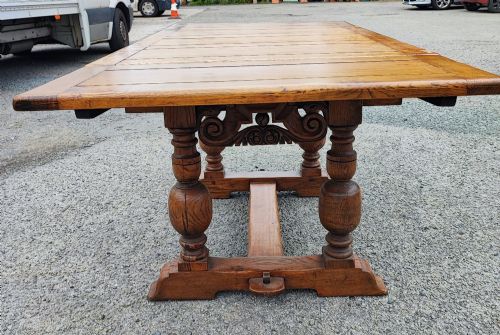
Execution of carved details, such as Jacobean style motifs or turned barley twist legs, distinguishes finer workshop production from simpler utility pieces. Grain selection in burr walnut or figured mahogany also separates standard domestic furniture from higher grade cabinetwork.
Zimmermann
The Vintage Leaf Table Glossary
- Draw leaf table
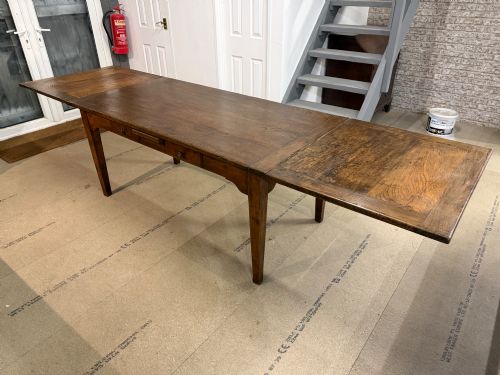
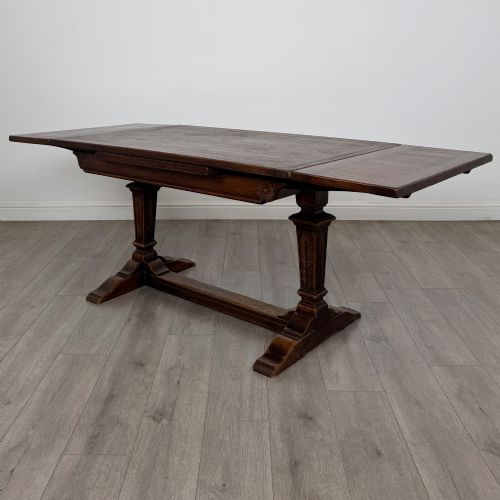
- A dining table featuring pull-out leaves stored beneath the main top that slide out to extend the surface area instantly. This design maintains stability while doubling the seating capacity.
- Drop leaf table
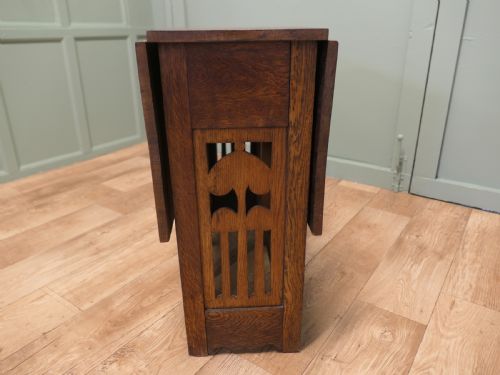
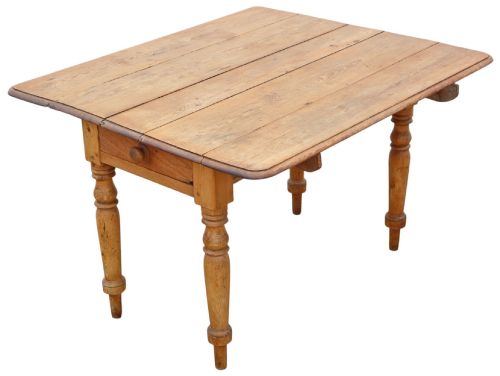
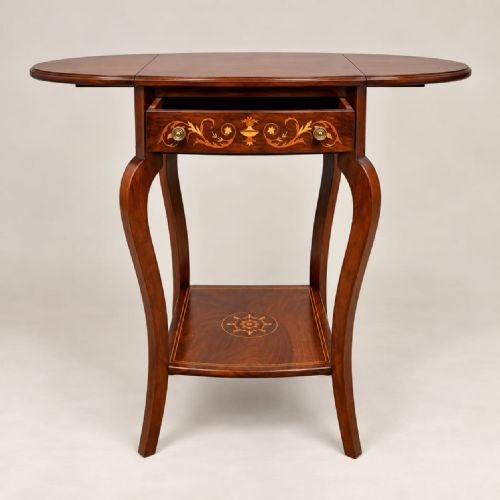
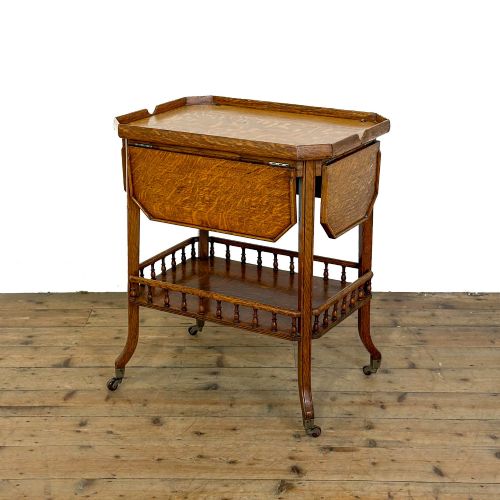
- A table with a fixed central section and hinged flaps on either side that fold down when not in use. Flaps are supported by swing legs or brackets.
- Gateleg table
- A drop leaf table where the hinged legs swing outward like a gate to support the dropped leaves. This provides robust wooden framing beneath extended surfaces.
- Pembroke table
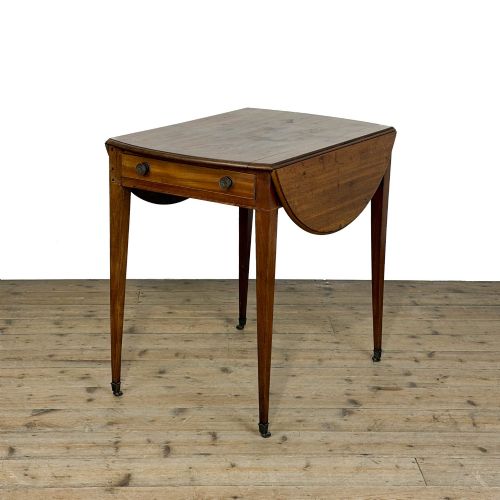
- A small rectangular side table with drop leaves on two opposing sides, typically fitted with a single drawer. It originated in the eighteenth century as a versatile breakfast or writing surface.
- Sutherland table
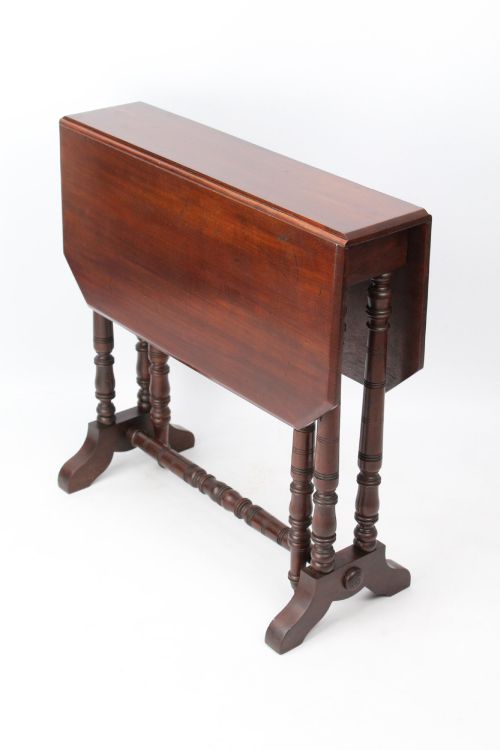
- A narrow drop leaf table featuring exceptionally slender leaves and a low footprint when folded flat. It was popular in the Victorian era for occasional parlour use.
Vintage Leaf Table: Frequently Asked Questions
How do draw leaf tables work?
Draw leaf tables utilise hidden secondary leaves positioned directly beneath the main surface. When pulled outward, these leaves rise smoothly into alignment to extend the table length.
This clever mechanism allows users to expand dining space quickly without storing separate loose boards elsewhere.
Where should I place a gateleg table?
Gateleg tables function well in smaller dining areas or hallways where floor space fluctuates. With both leaves dropped, the table occupies minimal depth against a wall.
Opening one or both leaves creates a full dining or display surface as daily requirements change.
How do I identify a Victorian leaf table?
Victorian examples frequently employ solid mahogany or walnut, often featuring turned legs, brass castors, or rich polish. Look for construction details characteristic of nineteenth century workshops.
Tables from this era commonly utilise drop leaf, Sutherland, or early extending mechanisms designed for middle class dining rooms.
Can I use a Pembroke table daily?
Pembroke tables provide sturdy surfaces for writing or occasional tea placement when the side flaps are raised. Their hinged leaves handle normal daily use provided weight stays balanced.
Avoid placing heavy loads directly onto the unsupported edges of the drop leaves.