



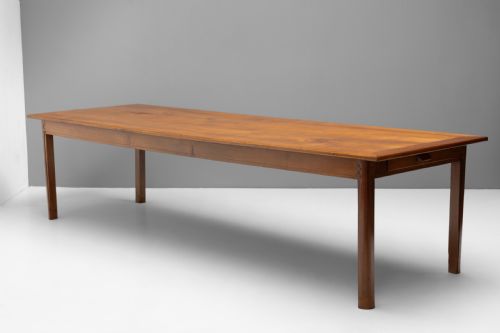


French Provincial Farm Table
A french provincial farm table brings hearty utility and rustic warmth to a kitchen, prized for solid timbers and generous proportions.
French Provincial Farm Table
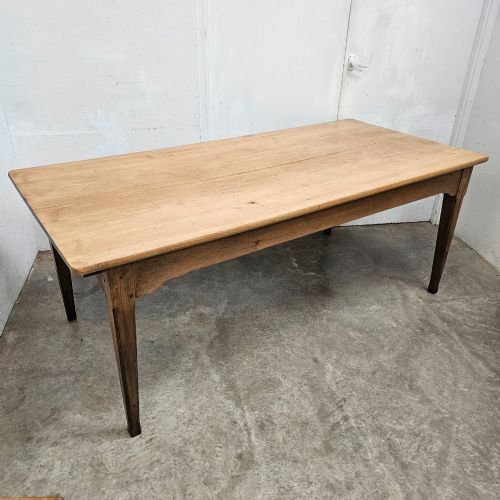
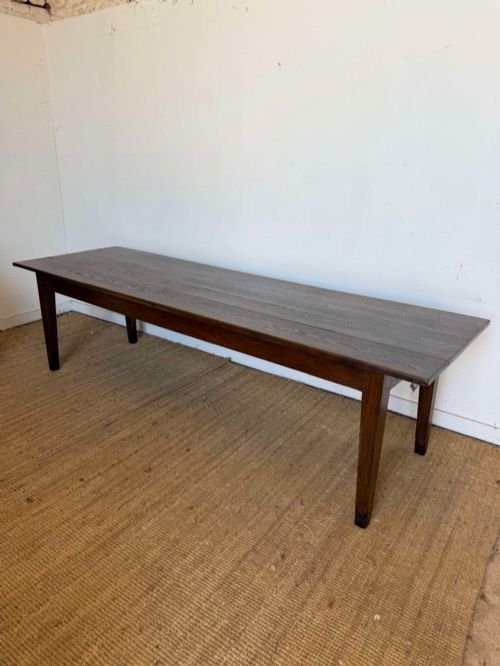
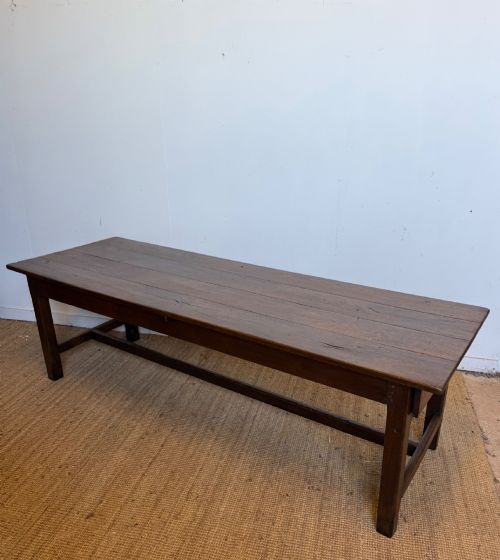
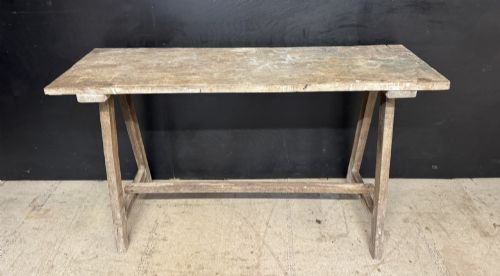
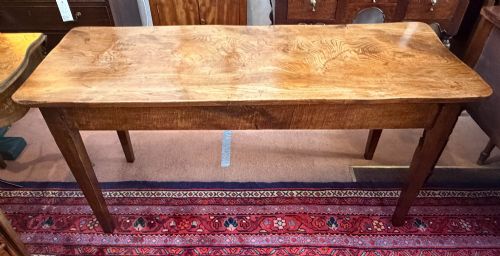
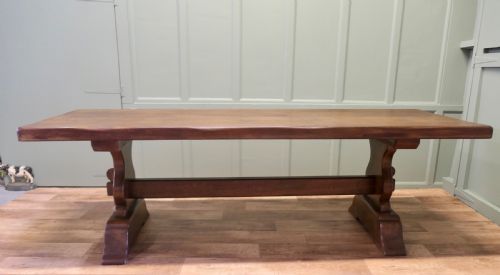
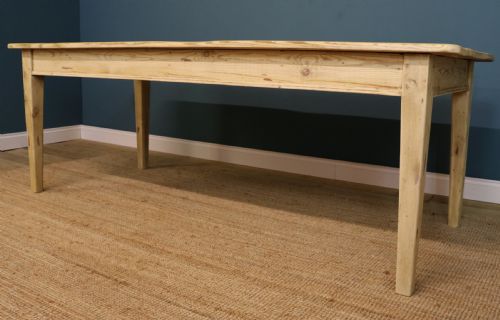
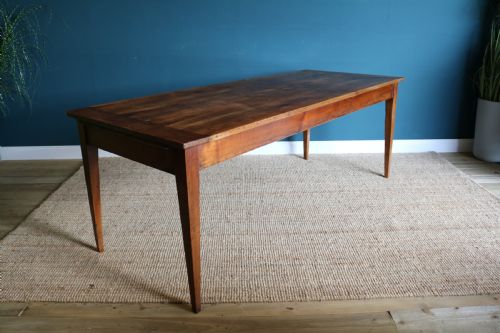
A french provincial farm table serves as a sturdy dining surface rooted in rural practicality, commonly found in formats like refectory, trestle, and draw-leaf designs. The pieces appearing here span from the eighteenth century through to the early twentieth century, carrying the vernacular styles of French country districts.
Most examples you encounter rely on solid local timbers rather than exotic veneers, shaped for daily family use. Dining tables dominate the selection, accompanied by occasional console and coffee table adaptations.
Makers built these objects to endure generations of domestic labour, resulting in robust forms with substantial top boards. Their appeal lies in honest construction and timber surfaces mellowed by decades of use.
Construction and timbers
Makers relied heavily on native hardwoods and softwoods, utilising oak, cherrywood, elm, pine, fruitwood, sycamore, walnut, poplar, chestnut, and cherry for durability. Planks were selected for thickness, often supported by trestle frames, sturdy legs, or bread-slide mechanisms.
Joinery prioritized structural stability over ornament, employing pegging and heavy framing to handle heavy loads. Surfaces received minimal factory finishing, leaving the raw timber grain exposed to develop character over time.
French Provincial Farm Table Retail Price Guide 2026
Typical asking prices for french provincial farm table among the pieces listed under this phrase on Sellingantiques today, from the lower quarter to the upper quarter. They describe what is for sale here now, not the wider market.
One remarkably diminutive bronze statuette of a farm girl shares the provincial lineage with tables intended for Christmas dinner.
Evaluating the standard
Quality rests in the integrity of the primary timber and the honesty of the construction, where boards retain their original thickness and supportive framing remains tight. Superior examples show balanced proportions between the top and the undercarriage, without excessive structural alteration.
The degree of surface preservation also dictates standing, distinguishing tables that retain a desirable scrubbed or naturally faded patina from those stripped too harshly. Retained functional elements like drawers or bread slides add desirable integrity to the piece.
The French Provincial Farm Table Glossary
- Refectory table
- A long, narrow dining table originally designed for communal eating in monasteries or large households. These forms provide ample seating space along both flanks.
- Bread slide
- A pull-out shelf positioned beneath the table top, historically used for cooling bread or extending surface area. It moves on runners integrated into the apron.
- Trestle table
- A table featuring a horizontal beam supported by two vertical legs or feet at each end. This design allows maximum legroom for diners seated along the length.
- Parquetry
- A geometric mosaic of wood pieces used for decorative effect on furniture surfaces. It appears selectively on table tops to add subtle pattern.
- Faded patina
- The softened surface colour and texture achieved through sunlight and age. This condition signifies decades of exposure and maintenance.
French Provincial Farm Table: Frequently Asked Questions
What woods were commonly used?
Makers constructed these tables from whatever local timbers grew in abundance across French regions. Oak, cherry, elm, and pine appear frequently in the surviving record.
Softer woods like pine and poplar served utility roles, while dense hardwoods like cherry and oak formed resilient dining surfaces. Each timber ages differently under domestic care.
How do I maintain the surface?
Keep wooden surfaces clean using a damp cloth and mild soap, avoiding harsh chemical cleaners that strip the finish. Apply natural wax occasionally to nourish the grain and protect against moisture.
Protect the timber from direct heat sources and excessive sunlight to prevent warping or splitting. Regular gentle upkeep preserves the historic patina.
Are these tables suitable for daily use?
These pieces were built specifically for heavy domestic labour and active family dining. Their robust construction handles everyday meals without difficulty.
Using placemats and coasters helps guard against accidental stains on historic timber surfaces. Living with an antique table means embracing minor marks as part of its ongoing history.
How are different periods identified?
Dating relies on observable construction methods, tool marks left on the undersides, and specific leg styles like cabriole supports. Earlier eighteenth-century examples display hand-cut joinery and thicker planking.
Nineteenth and early twentieth-century pieces often incorporate mechanical extensions or standardised hardware. Comparing timber shrinkage and wear patterns helps confirm the era.