


Extendable Kitchen Table
An extendable kitchen table gives you everyday utility and room for guests, combining sturdy construction with practical versatility.
Extendable Kitchen Table
An extendable kitchen table provides adaptable surface space, moving easily between daily family meals and larger gatherings. When you search for an extendable kitchen table, you encounter practical furniture designed to expand when needed.
The selections here span periods from the late seventeenth century through the Victorian and Edwardian eras into the twentieth century. Oak and mahogany appear most frequently, alongside fruitwood, cherry, pine, and metal hardware.
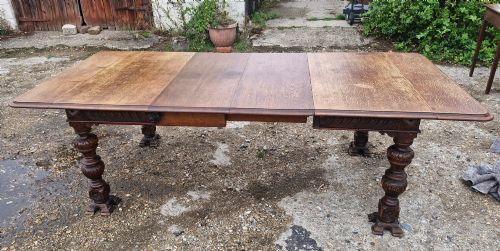
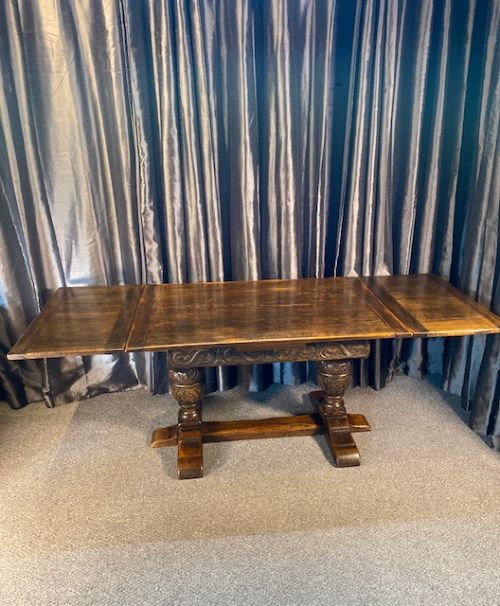
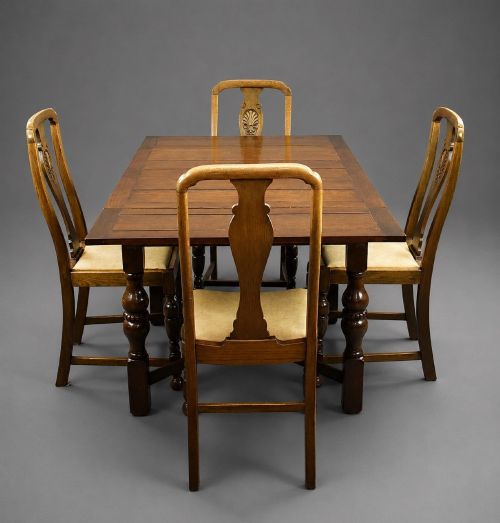
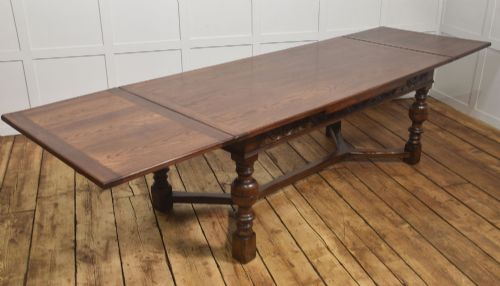
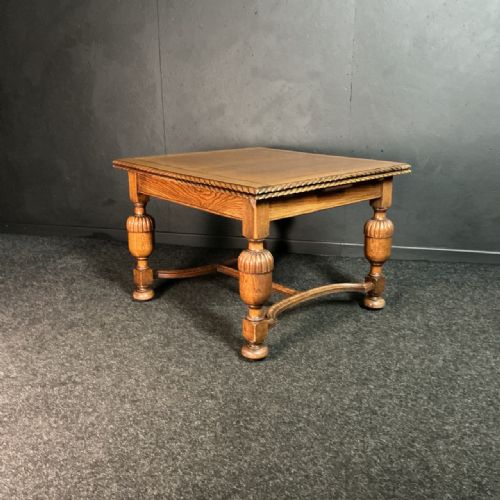
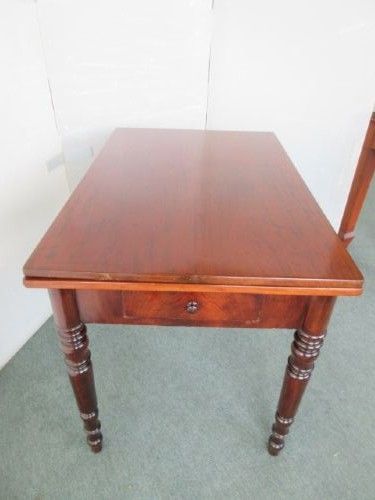
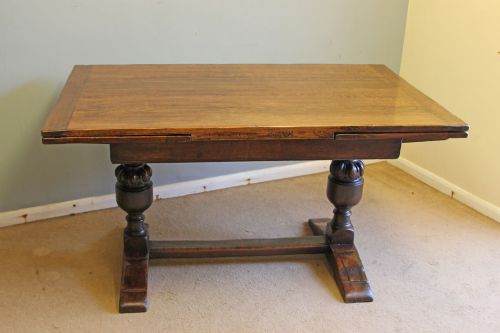
Forms include draw-leaf mechanisms, drop-leaf designs, gateleg tables, and refectory styles. You will also find dining sets paired with chairs or featuring bread slides and cabriole legs.
How they were made
Carpenters relied principally on solid oak and mahogany for durability, utilising fruitwood and cherry for specific regional or stylistic variations. Timber was selected for grain pattern and strength, ensuring the frame could support the stresses of daily kitchen use and mechanical extension.
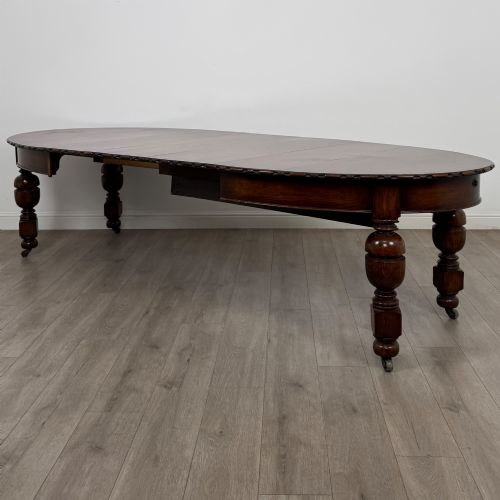
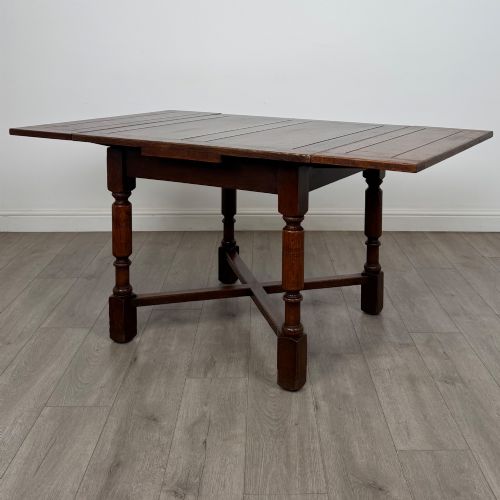
Extension systems range from simple draw-leaf leaves that slide beneath the main top to gateleg supports and drop-leaf hinges in brass. Joinery methods such as mortise and tenon secured the legs and aprons, while surfaces received wax or polish finishes to protect the wood.
Some tables hide extra space beneath the top just waiting for your sourdough.
What varies in quality
The refinement of the mechanism dictates much of the quality, separating tables that slide smoothly on well-fitted runners from those that bind. Superior examples maintain stability across the frame whether closed or fully extended.
Timber selection and the crispness of carved details in styles such as Jacobean Revival or Arts and Crafts distinguish simpler utilitarian pieces from finer workshop productions. The integrity of the joints and the preservation of original surfaces also determine the standing of each piece.
Maple and Co
The Extendable Kitchen Table Glossary
- Draw-leaf
- A table with auxiliary leaves stored beneath the main top that pull out to lengthen the surface. This mechanism allows quick expansion without removing parts.
- Gateleg
- A table with hinged legs that swing out like gates to support drop leaves. It folds compactly when not in use.
- Refectory
- A long, narrow dining table originally used in monasteries and large halls. These tables feature strong stretcher bases for stability.
- Bread slide
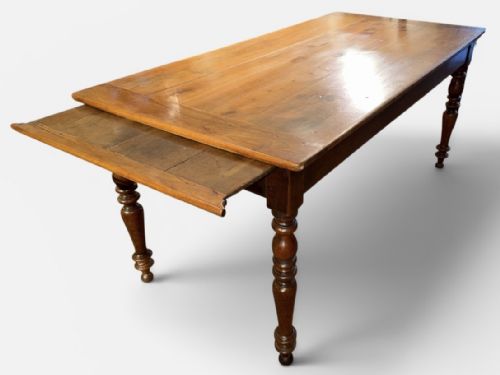
- A pull-out wooden shelf traditionally used for cooling bread or expanding workspace. It slides directly beneath the main tabletop.
- Cabriole leg
- A furniture leg that curves outward and then tapers inward with a graceful arch. This shape is often associated with eighteenth-century and revival designs.
Extendable Kitchen Table: Frequently Asked Questions
How do draw leaf tables work?
Draw leaf tables use concealed leaves positioned underneath the main surface. You pull these leaves outward from each end while the centre section drops slightly into place.
This design keeps the leaves attached to the table at all times, removing the need for separate storage boards.
How do I care for an oak kitchen table?
Protect the wood by using placemats and coasters to prevent heat rings and moisture damage. Clean surfaces with a damp cloth rather than harsh chemical sprays.
Applying natural beeswax periodically nourishes the timber and maintains a soft sheen on the finish.
Are these tables suitable for daily use?
Solid timber construction makes these tables robust enough for everyday kitchen activities. Mechanisms are built to withstand frequent opening and closing.
Routine use develops a natural patina over time that enhances the character of the wood.
How do I identify Victorian tables?
Victorian tables often utilise dense timbers like mahogany and oak with substantial turned legs or heavy pedestals. Details reflect revival movements such as Jacobean or later Arts and Crafts influences.
Construction methods typically show hand-cut joinery combined with early mechanical runners for extending leaves.