

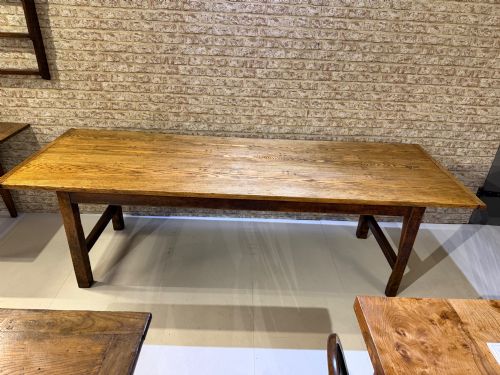
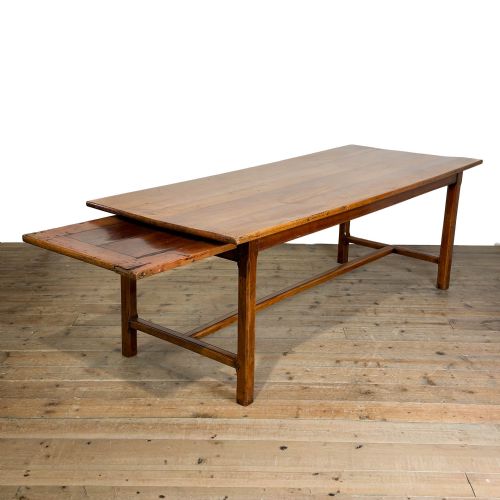
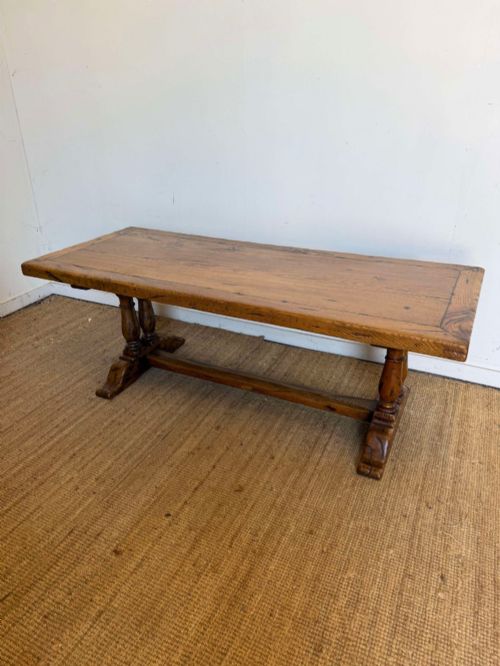
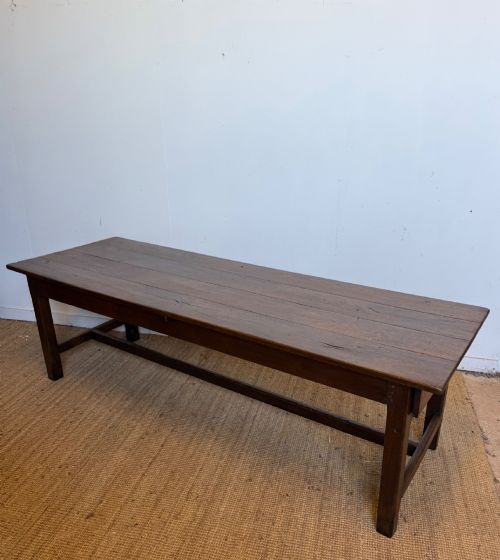
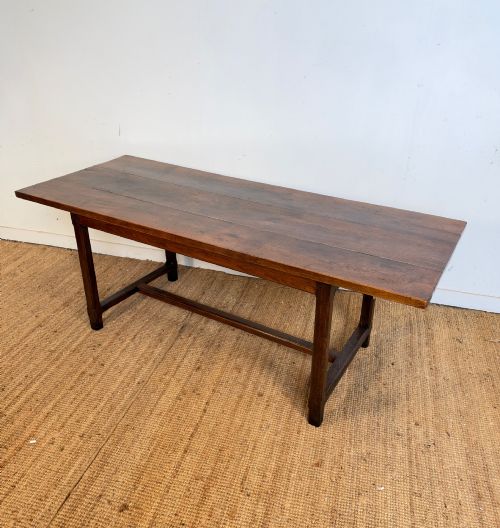
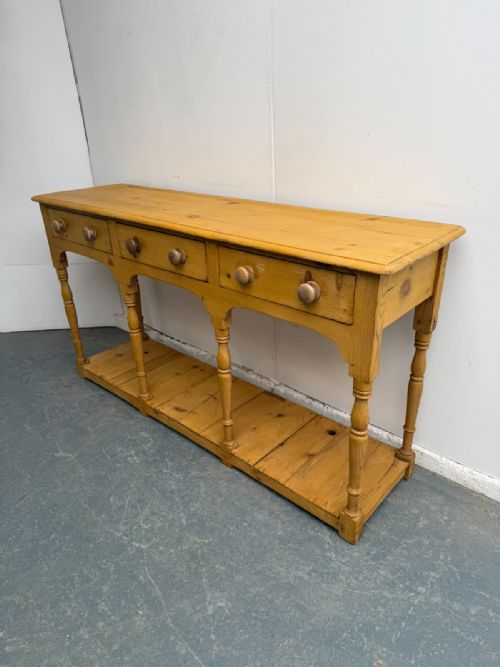
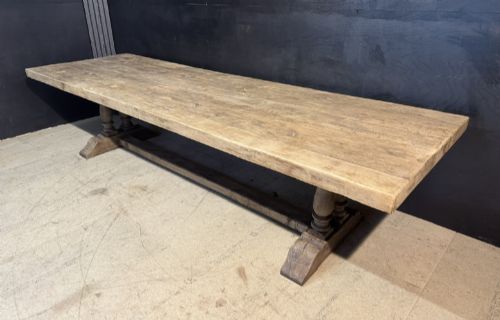
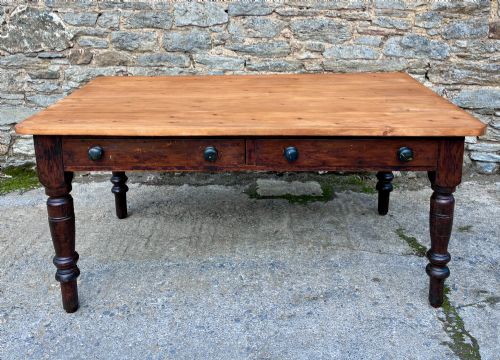
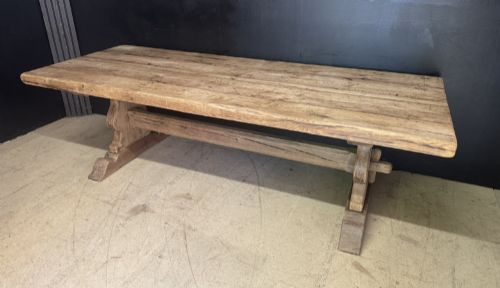
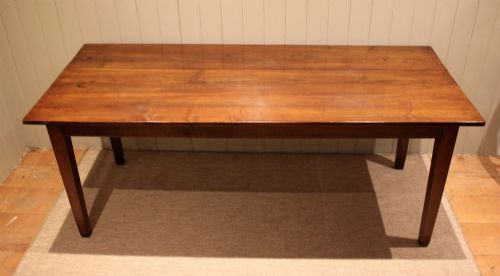
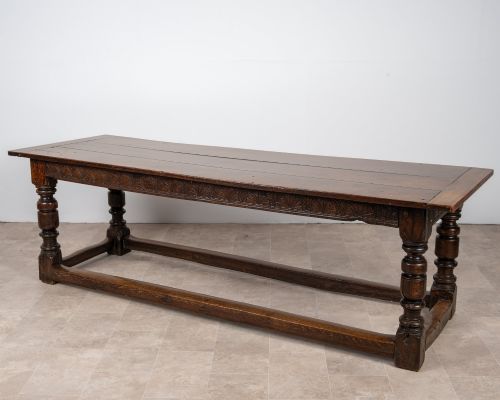
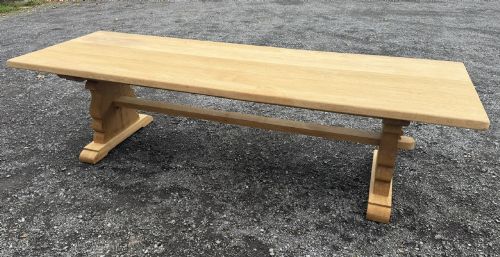
Traditional Country Kitchen Table
A traditional country kitchen table anchors the room with sturdy utility, built from honest timber to handle daily family life.
Traditional Country Kitchen Table
A traditional country kitchen table brings together sturdy utilitarian forms designed for heavy domestic labour and communal meals. Buyers searching this phrase most frequently encounter nineteenth-century pieces, alongside earlier eighteenth-century examples and later twentieth-century interpretations.
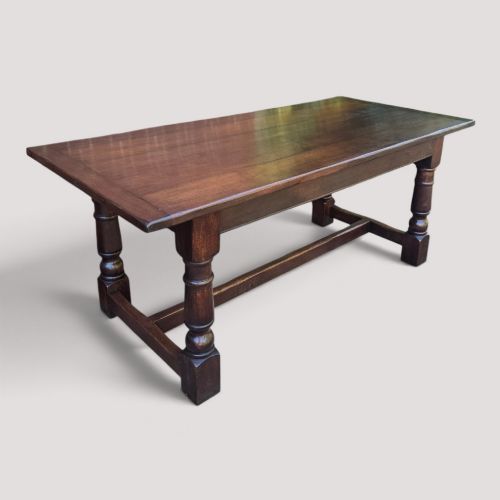
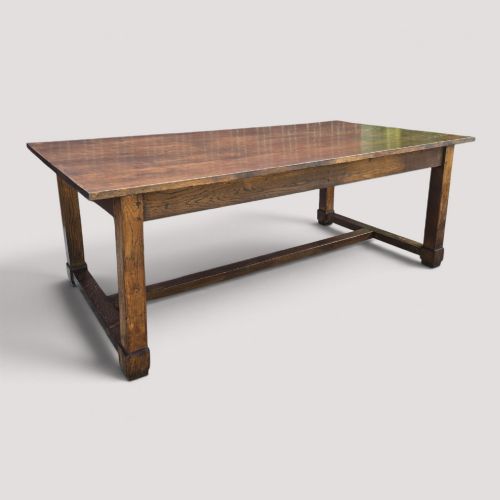
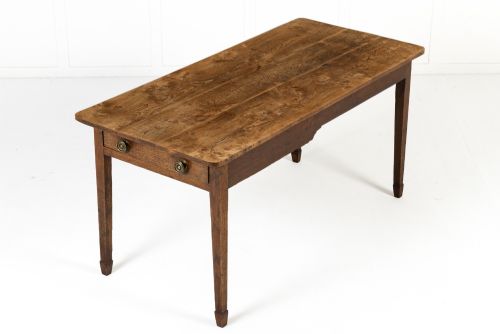
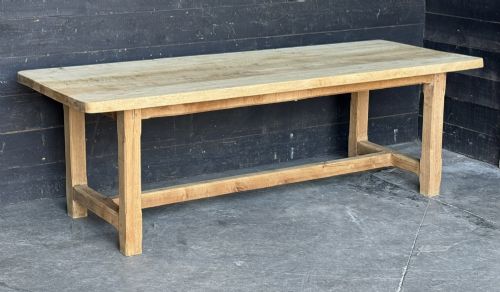
The dominant forms span refectory tables, farmhouse tables, and dresser bases with timber tops intended for everyday preparation and dining. Regional variations emerge through French country styles and English vernacular pieces.
The selection ranges from compact pine boards to substantial oak refectory tables stretching eight feet or longer. These domestic workhorses reflect the practical needs of past households through straightforward construction.
Assessing Quality
Quality rests upon the integrity of the timber selection and the retention of original structural timber rather than applied surface finishes. Tables utilising single plank tops or dense quarter-sawn oak demonstrate superior stability compared to heavily warped secondary boards.
The proportion between top thickness and underframe support dictates the longevity of the piece under heavy daily loads. Original patination earned through decades of domestic use distinguishes honest wear from later artificial distressing.
Traditional Country Kitchen Table Retail Price Guide 2026
Typical asking prices for traditional country kitchen table among the pieces listed under this phrase on Sellingantiques today, from the lower quarter to the upper quarter. They describe what is for sale here now, not the wider market.
Listings feature eighteenth and nineteenth-century pieces alongside early twentieth-century examples, built primarily from oak, pine, elm, and fruitwood.
The Traditional Country Kitchen Table Glossary
- Refectory table
- A long dining table historically used for communal meals in monasteries or large halls, later adopted into domestic kitchens. They typically feature sturdy legs connected by low longitudinal stretchers.
- Potboard dresser base
- A sideboard or low table featuring an open lower shelf used for storing pots and kitchen utensils. These provide substantial surface area for food preparation.
- Single plank top
- A tabletop fashioned from one wide board cut from a single tree trunk. This feature indicates substantial tree maturity and offers an uninterrupted timber grain.
- Bobbin leg
- A turned furniture leg shaped to resemble a series of wooden bobbins or spools stacked end to end. This decorative turning style appears frequently on seventeenth and nineteenth-century vernacular pieces.
- Stretcher
- A horizontal wooden brace connecting the legs of a table to improve structural rigidity. They often double as footrests on dining tables.
Traditional Country Kitchen Table: Frequently Asked Questions
How do I clean a wooden table?
Wipe surfaces down using a damp cloth with mild soap, avoiding harsh chemical cleaners that strip the protective wax or oil finish. Dry the wood immediately to prevent moisture rings from forming on the grain.
Apply a traditional beeswax periodically to nourish the timber and maintain a soft lustre. Regular polishing helps protect the antique surface from daily kitchen spills.
Can I use these daily?
These tables were originally constructed for heavy daily work, making them well-suited for modern family life and kitchen dining. Their durable hardwood and softwood construction handles constant use without difficulty.
Use coasters and placemats to protect historic timber from extreme heat and moisture. Accepting minor marks as part of the ongoing history of the piece preserves its character.
How do I date an old table?
Examine the tool marks on the underside and drawer linings, where hand-sawing leaves irregular ridges distinct from modern mechanical cuts. Peg construction and timber shrinkage patterns also offer reliable clues to the age of the piece.
Compare the leg turnings and stretcher arrangements against known vernacular styles from specific centuries. Iron or brass fixings, where present, help confirm the manufacturing period.
What is a refectory table?
A refectory table is an elongated dining table designed originally for communal dining spaces and large domestic kitchens. Their generous proportions easily seat eight or more diners for everyday meals.
Low stretchers running between the legs provide structural stability while keeping the design open underneath. This form remains a practical choice for large modern dining spaces.