

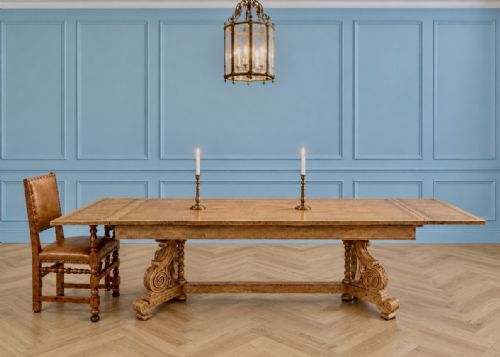
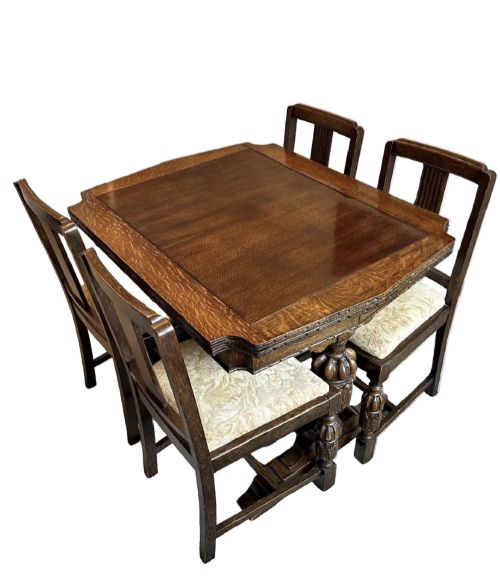
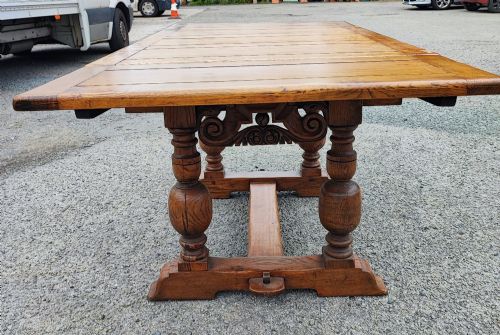
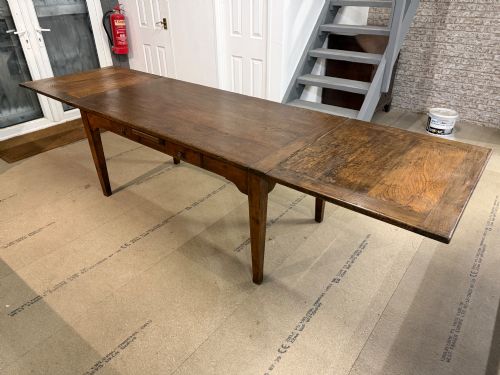
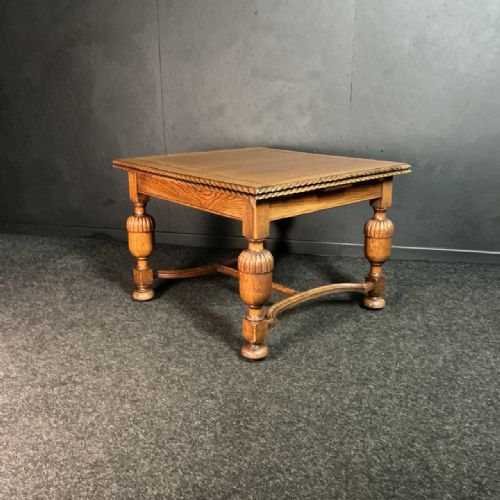
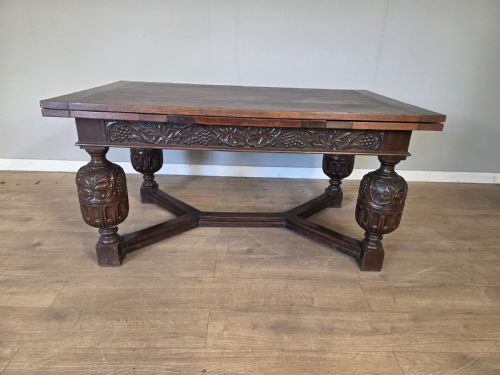
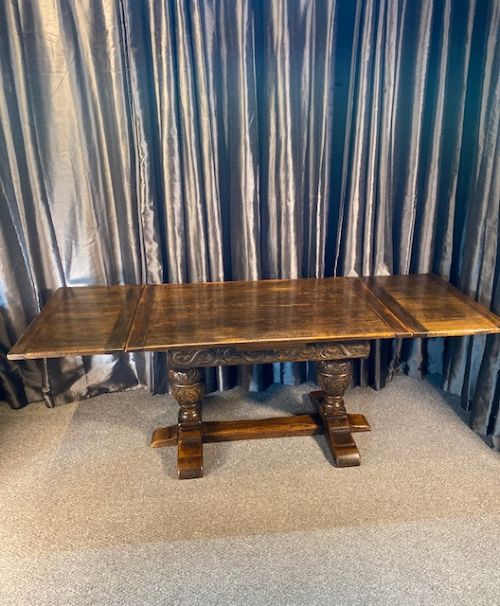
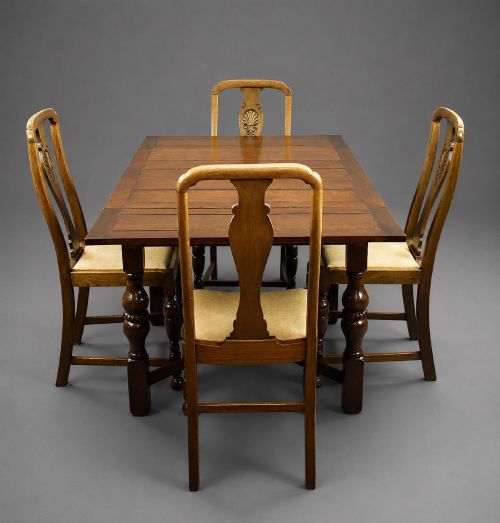

Draw Leaf Dining Table
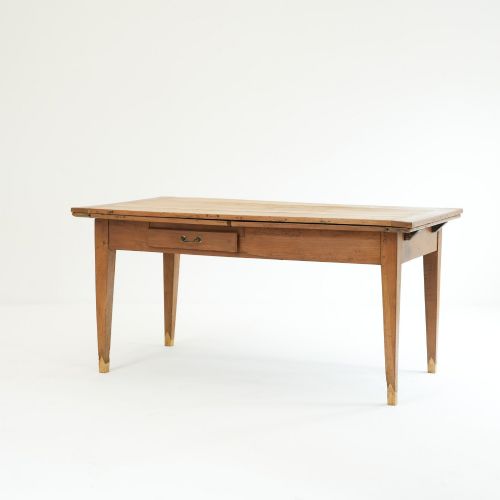
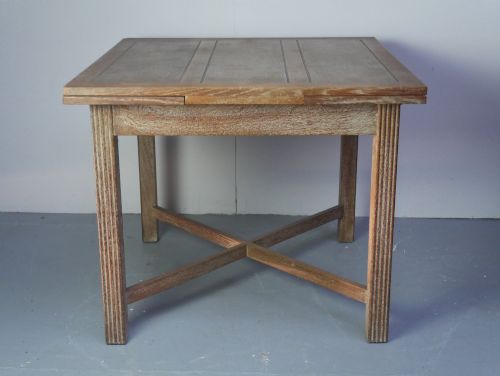
A draw leaf dining table provides clever expandable seating through hidden sliding leaves that tuck beneath the main surface.
Draw Leaf Dining Table
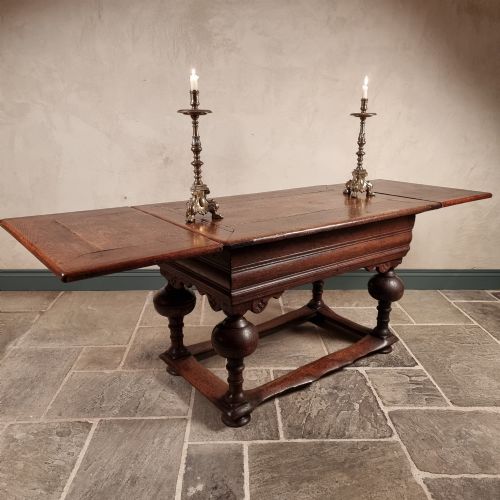
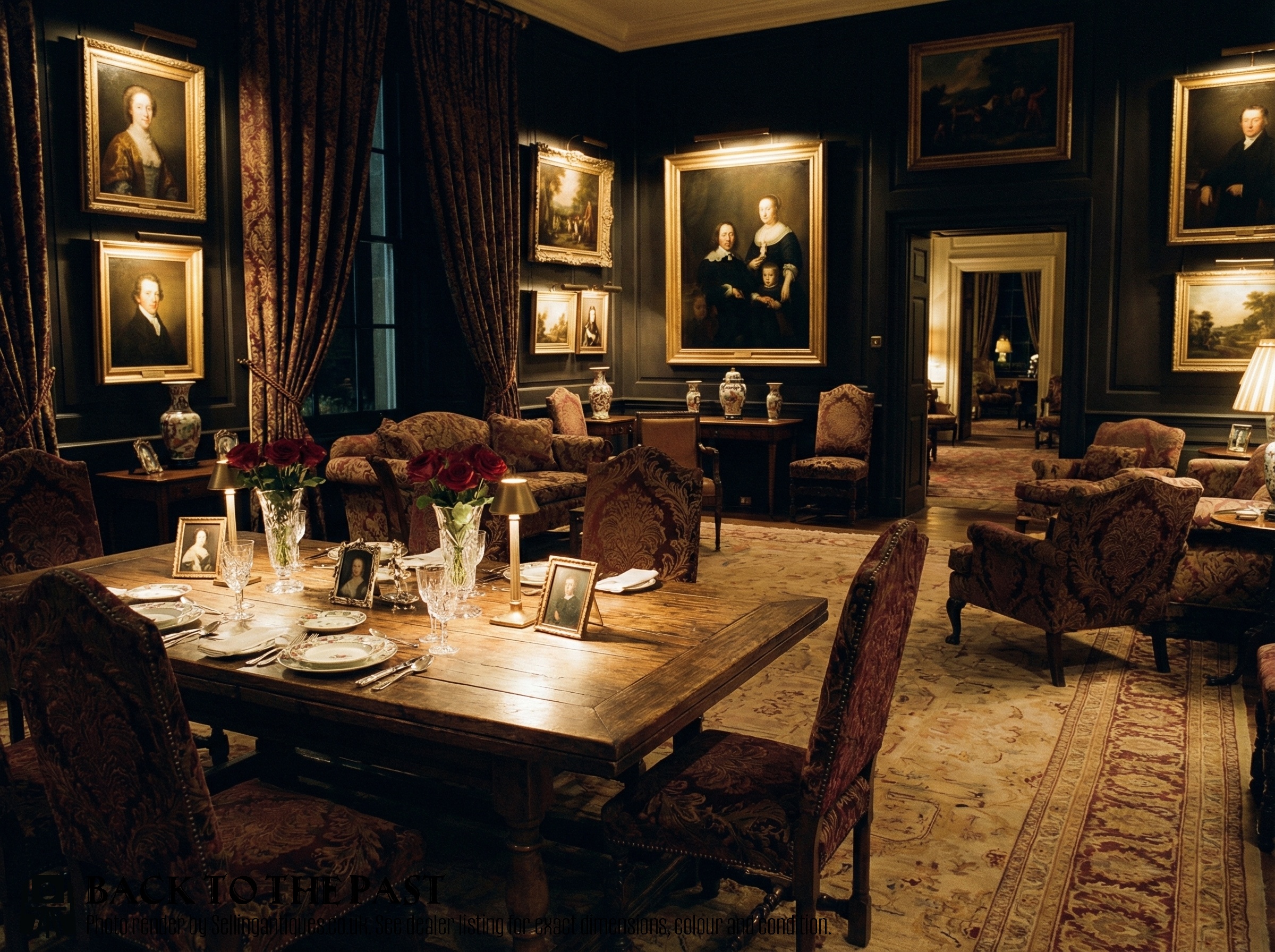
A draw leaf dining table allows a host to expand surface space rapidly when guests arrive without removing the main centre board. The mechanism relies on two extra leaves hidden underneath the top panel that slide outward smoothly on internal runners.
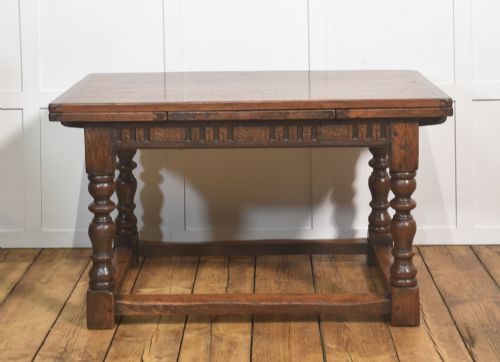
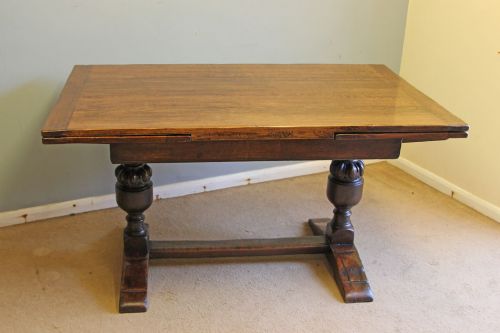
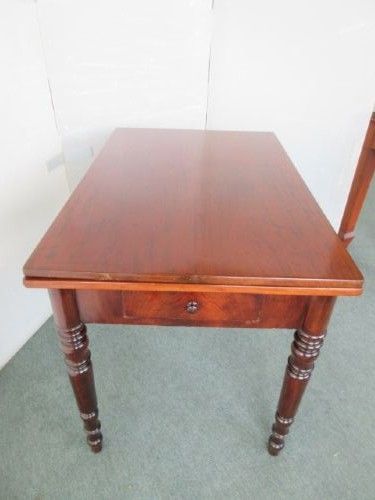
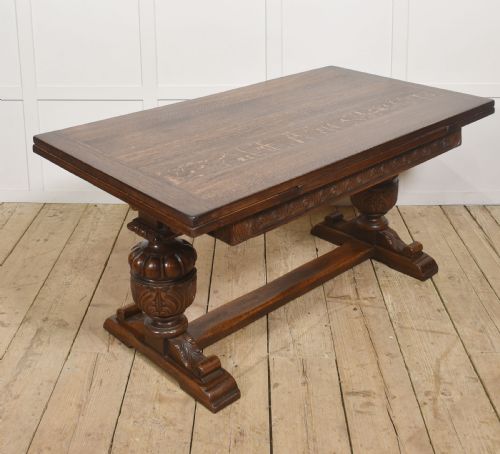
Most examples found on this page appear in sturdy oak, following refectory and farmhouse traditions from the seventeenth century onward. Cabinetmakers also fashioned these expanding surfaces in walnut, mahogany and fruitwood during later periods.
Variations range from compact Edwardian and Arts and Crafts iterations to large Jacobean revival pieces and French provincial formats. Buyers encounter everything from plain rustic boards to finely parquetry-topped dining tables built for daily family use.
Materials and construction methods
Cabinetmakers built the primary framework using solid timber such as oak, walnut and fruitwood, jointed with traditional peg and mortise techniques. These dense woods provided the structural backbone required to support heavy sliding end leaves.
Surfaces frequently show decorative parquetry, wood inlay and brass accents, particularly on continental and later revival pieces. The sliding mechanism utilises parallel wooden runners hidden beneath the main top, allowing the leaves to glide out and drop into level alignment.
Draw Leaf Dining Table Retail Price Guide 2026
Typical asking prices for draw leaf dining table among the pieces listed under this phrase on Sellingantiques today, from the lower quarter to the upper quarter. They describe what is for sale here now, not the wider market.
Some antique extending tables hide a sneaky bread slide beneath the top, ready for midnight cheese.
Assessing quality and craftsmanship
The degree of refinement in the timber selection and the precision of the sliding mechanism dictate the standing of a piece. Superior examples exhibit tightly fitted runner tracks that allow the leaves to pull out straight and lock level with minimal friction.
Carved detailing on the base and legs separates standard utilitarian formats from bespoke commissions by notable makers. Well-balanced proportions when fully extended indicate thoughtful planning by the original cabinetmaker.
Heals·Maple and Co·Gillows·Rackstraw
The Draw Leaf Dining Table Glossary
- Draw leaf
- An extending table design featuring two concealed leaves stored beneath the main top that pull out to lengthen the surface.
- Refectory table
- A long, narrow dining table historically used in monasteries and large halls, frequently adopted as the base form for extending tables.
- Parquetry
- A geometric mosaic of wood pieces used for decorative surfaces on table tops, commonly seen in walnut and oak.
- Bread slide
- A pull-out board traditionally used for slicing bread, found beneath the main top on certain continental fruitwood tables.
- Mortise and tenon
- A traditional joint where a projecting tongue fits snugly into a matching cavity, securing the table frame without modern metal fasteners.
Draw Leaf Dining Table: Frequently Asked Questions
How do the hidden leaves operate?
The main top remains stationary while the two secondary leaves slide outward from underneath on concealed wooden tracks. As they reach full extension, the main surface drops slightly to lock the leaves flush.
This clever design means the legs remain at the corners even when the table is fully extended, keeping legroom clear for seated guests.
Were these tables used in formal dining rooms?
Many examples originated in large country houses, farmhouses and refectories where daily gatherings required flexible seating arrangements. Cabinetmakers adapted the mechanism for both rustic utility and refined urban dining.
Lighter Edwardian and Arts and Crafts versions later brought the practical format into suburban homes.
How do I care for the wood surface?
Routine maintenance involves dusting with a soft cloth and applying appropriate wax to nourish the grain of the oak, walnut or fruitwood. Avoiding direct sunlight and sudden temperature changes protects the sliding mechanisms from warping.
Promptly wiping up spills prevents moisture from marking the parquetry or polished finish.
How can I tell older periods apart?
Early pieces from the seventeenth century display heavy turned supports and hand-pegged joinery without modern metal screws. Later Edwardian and revival iterations often show lighter proportions and machine-cut elements.
French provincial and Dutch styles introduce distinct fruitwood timbers and intricate parquetry tops compared to standard English oak.