

Rustic Farmhouse Table
A rustic farmhouse table is a heavy-timbered domestic board built for hard labour, daily meals and family life.
Rustic Farmhouse Table
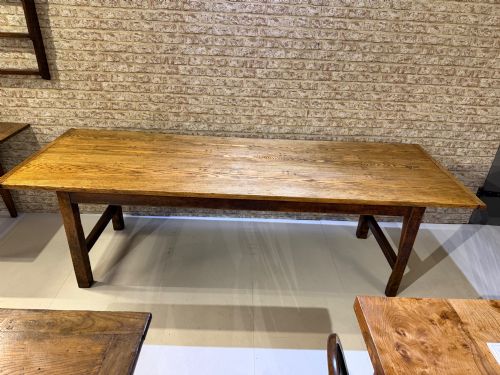
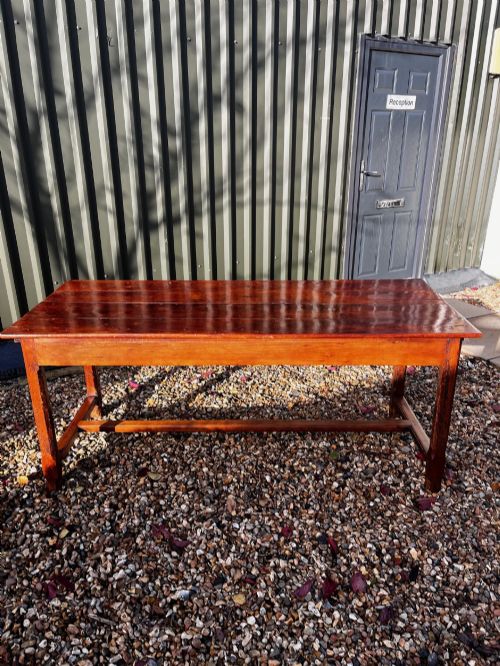
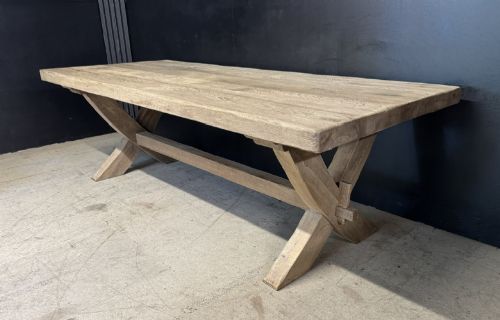
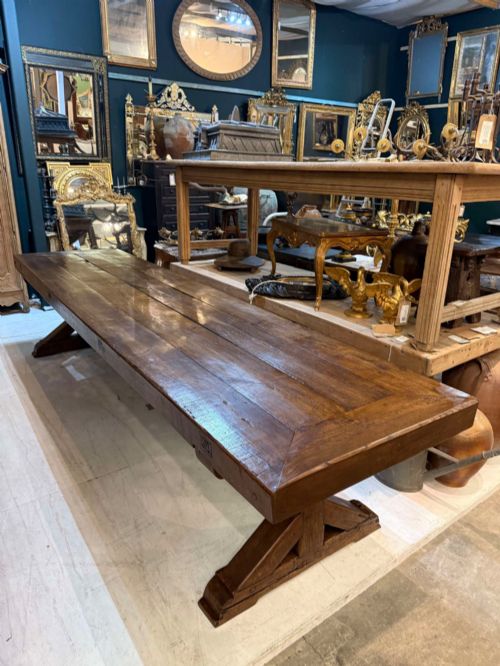
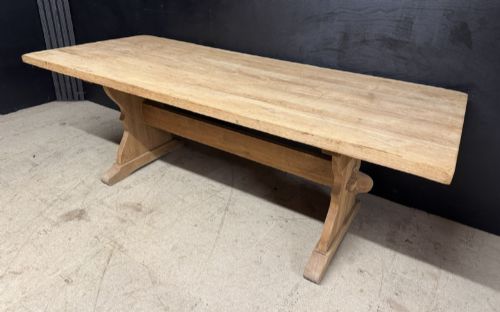
A rustic farmhouse table is a sturdy working piece originating from domestic kitchens, dairies and provincial dining rooms across Britain and continental Europe. You will most frequently encounter nineteenth-century examples fashioned from pine, oak or fruitwoods, often bearing the visible marks of daily use and food preparation.
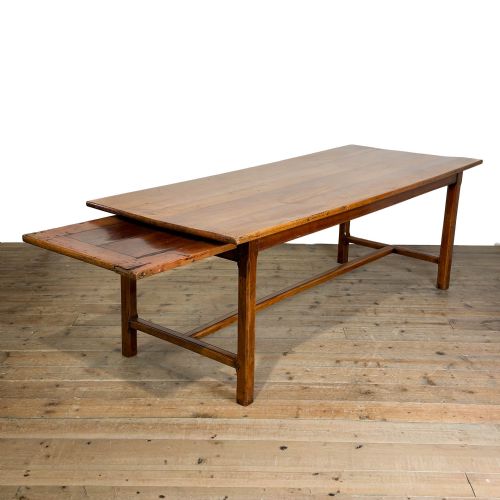
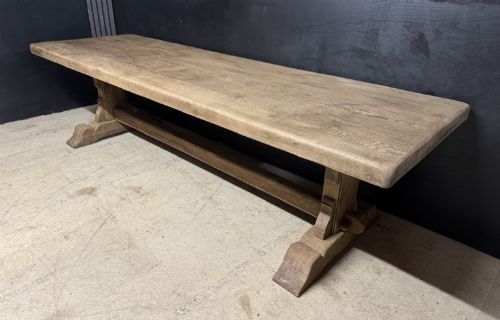
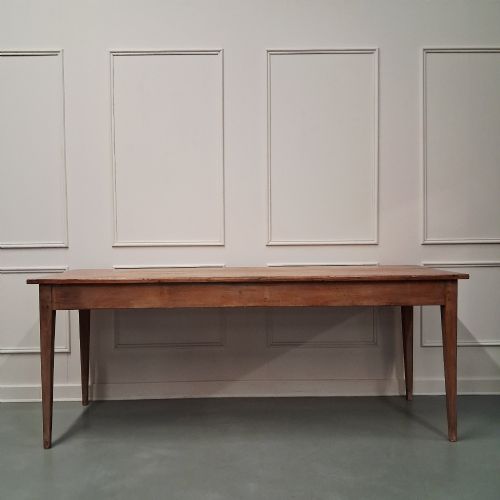
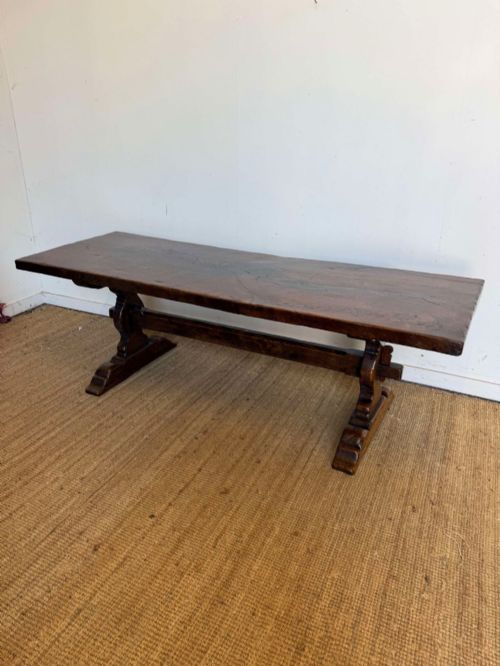
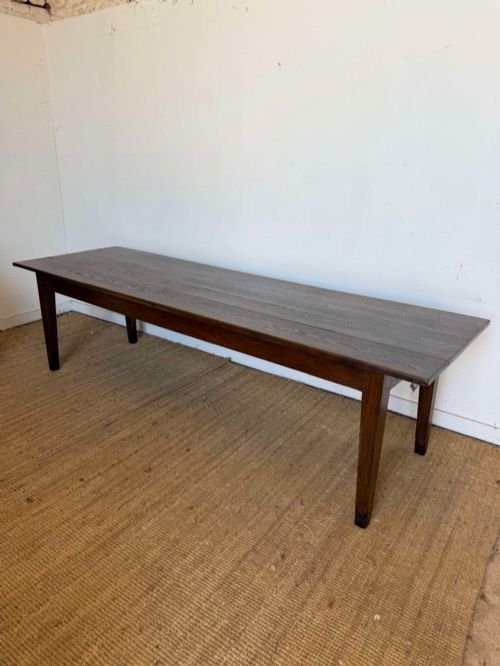
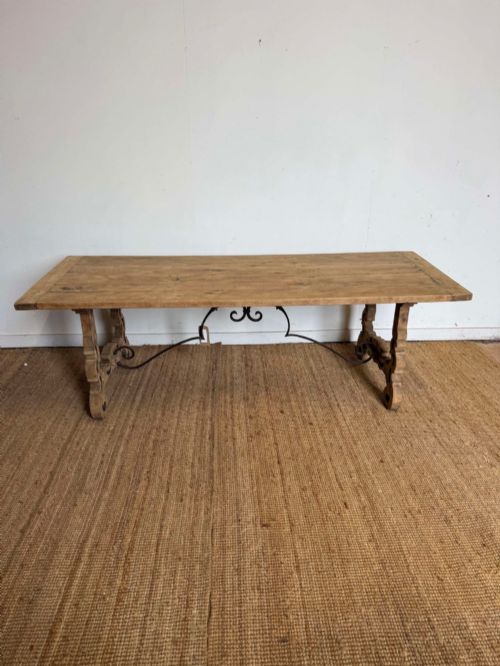
The form spans straightforward plank-top boards with simple tapering legs to long refectory formats and drop-leaf variations designed to accommodate larger gatherings. Many examples originate from French provincial traditions or British country workshops, reflecting local utility rather than formal court aesthetics.
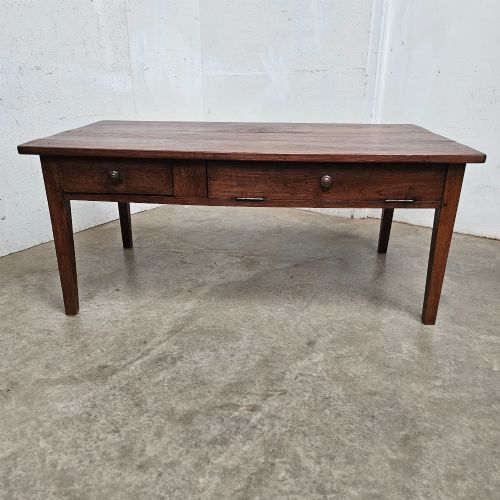
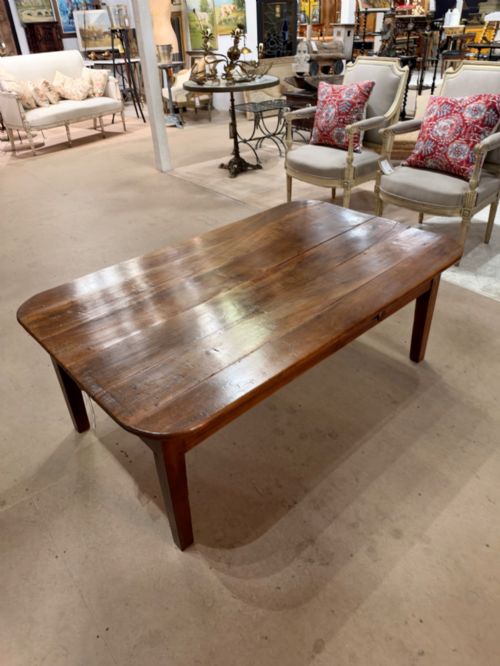
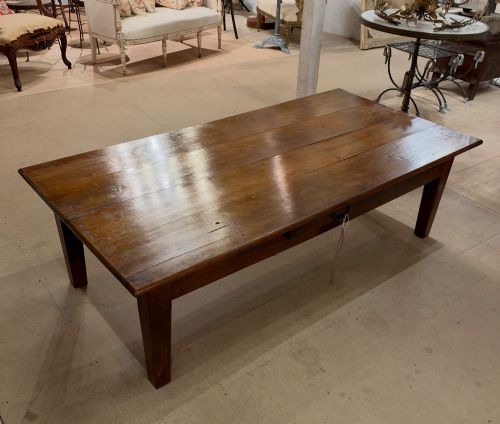
Beyond standard dining boards, the category includes shorter coffee tables adapted from larger formats, serving tables, and prep tables fitted with practical storage drawers. These tables bring a grounded, historical anchor to modern domestic spaces through their honest timber construction.
How they were made
Makers constructed these tables predominantly from solid native timbers such as oak, pine, elm, beech and fruitwoods like cherry and pear. Planks were selected for thickness and durability, then joined using traditional methods to withstand the heavy downward pressure of kitchen labour and family dining.
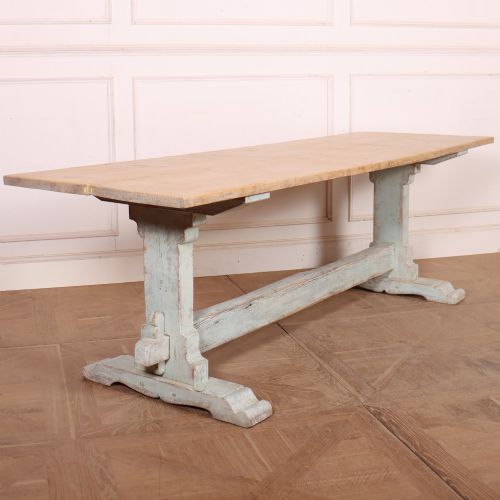
Undercarriages rely on robust framing, frequently featuring tapered, turned, or bobbin-carved legs secured with sturdy stretchers or potboards beneath. Surfaces were often left unpainted to be scrubbed clean, though some examples received wax finishes, milk paint or later bleaching to lighten the timber.
Rustic Farmhouse Table Retail Price Guide 2026
Typical asking prices for rustic farmhouse table among the pieces listed under this phrase on Sellingantiques today, from the lower quarter to the upper quarter. They describe what is for sale here now, not the wider market.
Listings feature regional variations from British, French and Spanish workshops, spanning pine, oak, elm, beech and fruitwood materials.
What varies in quality
Quality rests primarily in the integrity of the timber selection and the structural honesty of the original construction rather than decorative flourish. Tables built from dense, old-growth oak or heavy fruitwood boards exhibit a permanence and stability that lighter secondary woods simply cannot match.
Proportion and joinery distinguish superior pieces from utilitarian work tables. Well-balanced overhangs, thoughtful leg placement that allows adequate seating space, and uncompromised structural frames separate the master carpenter's output from the local handyman's utility board.
The Rustic Farmhouse Table Glossary
- Breadboard ends
- Transverse pieces of timber fixed to the ends of a plank table top to prevent warping and conceal end grain. This traditional joinery technique allows the main boards to expand and contract naturally with humidity changes.
- Potboard
- A lower shelf fitted beneath a table or dresser base, traditionally used for storing pots, pans and heavy kitchen utensils off the flagstone floor. It adds considerable rigidity to the overall leg structure.
- Bobbin legs
- Turned furniture legs shaped with a series of rounded, spool-like swellings resembling bobbins used in lace-making. This decorative turning style is frequently found on seventeenth- and nineteenth-century country pieces.
- Dairy table
- A specialised low-use table featuring an unpainted wood or slate top, historically utilised in cool dairies for milk setting and cheese production. They often display scrubbed pine surfaces and practical lower storage.
Rustic Farmhouse Table: Frequently Asked Questions
How do I clean an antique pine surface?
Clean antique pine using a soft, slightly damp cloth with mild soap, avoiding harsh chemical detergents that strip historic patinas. Dry the wood immediately to prevent moisture penetration into the unsealed grain.
Maintain the surface by applying a neutral beeswax sparingly, buffing gently once the wax has settled. This preserves the tactile warmth accumulated over generations of domestic use.
Can I use a farmhouse table outdoors?
These tables are designed for interior domestic environments and exposure to outdoor elements will rapidly degrade historic timber and joinery. Fluctuating humidity and rain cause old planks to warp, split and rot.
Keep them inside where stable indoor temperatures protect the original wood structure and finish. If used in a covered conservatory, ensure they are kept away from direct sunlight and damp stone floors.
How do I distinguish oak from pine?
Oak is a heavy hardwood featuring distinct open grain patterns, medullary rays, and a deep golden-brown hue that darkens with age. It offers exceptional density and resistance to denting.
Pine is a softer softwood with prominent growth rings, knots, and a lighter yellowish tone that bleaches or yellows further over time. It feels considerably lighter in weight and shows impacts more readily than oak.
What is fruitwood furniture?
Fruitwood refers to timber harvested from fruit-bearing trees like cherry, pear, apple and plum, utilised extensively by country cabinetmakers. These woods offer a fine grain and warm reddish-brown tones.
Because fruit trees grow irregularly compared to plantation timber, boards were often narrower, requiring skilled joinery. Tables made from these woods possess a distinctive smooth lustre unlike standard pine or oak.