
Traditional Country Dining Table
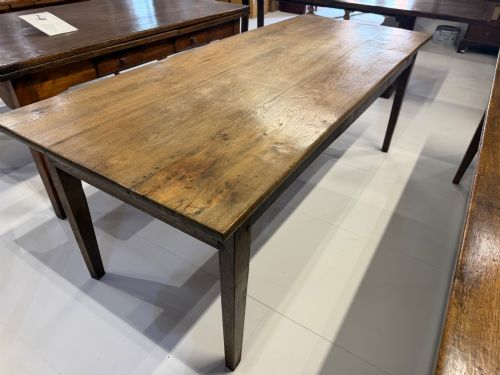
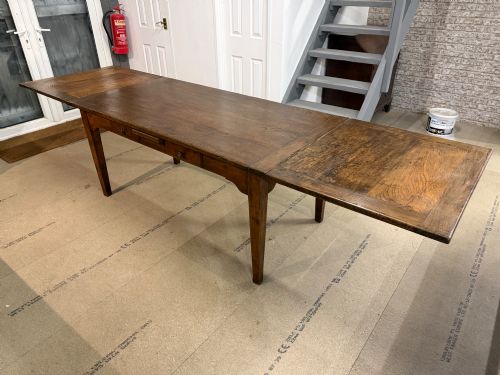
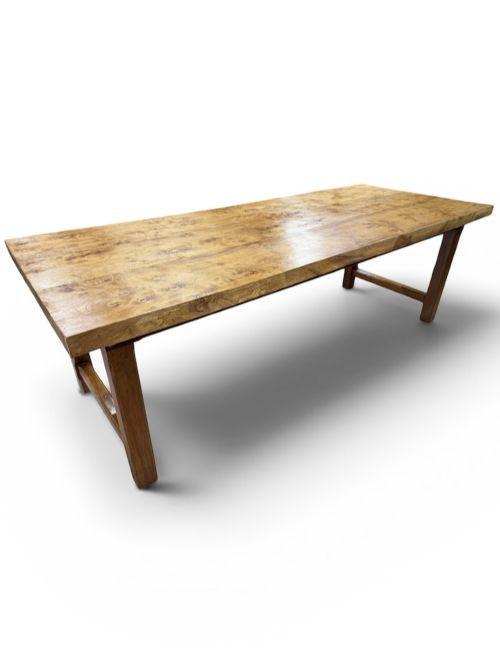
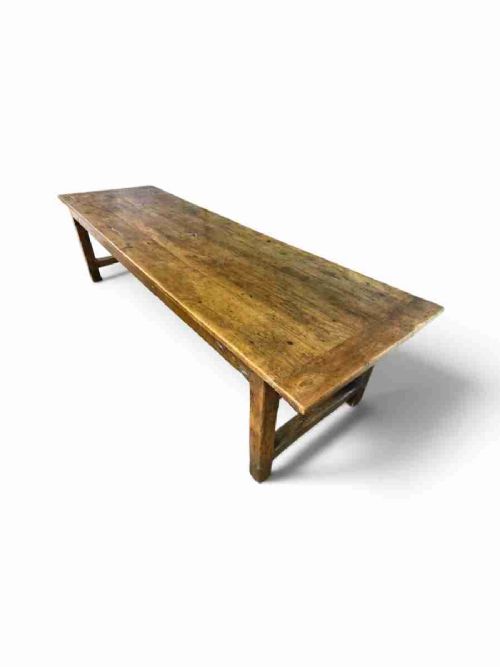
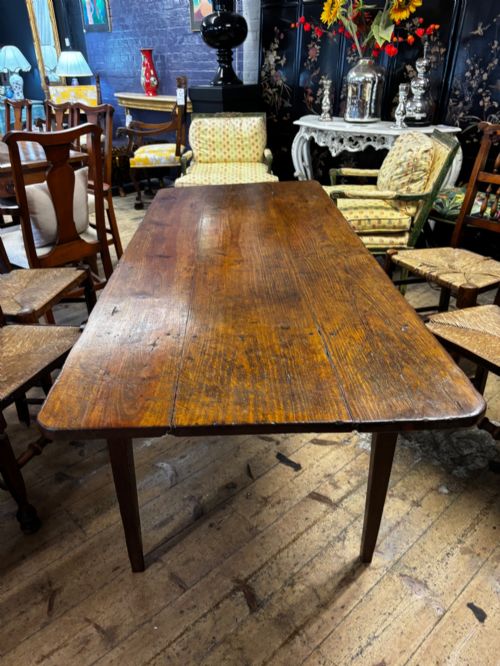
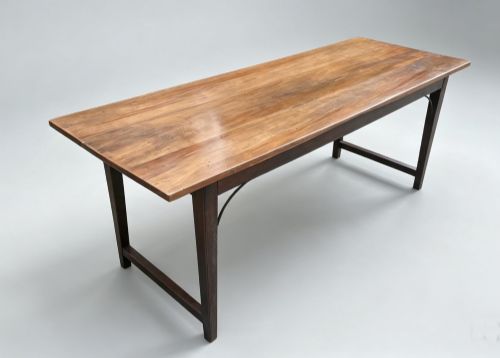
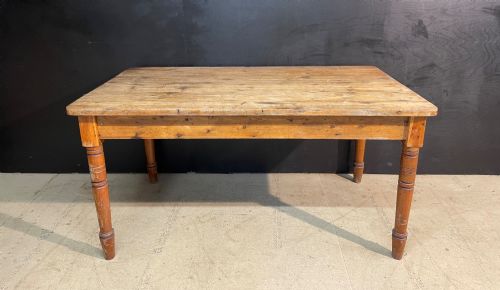
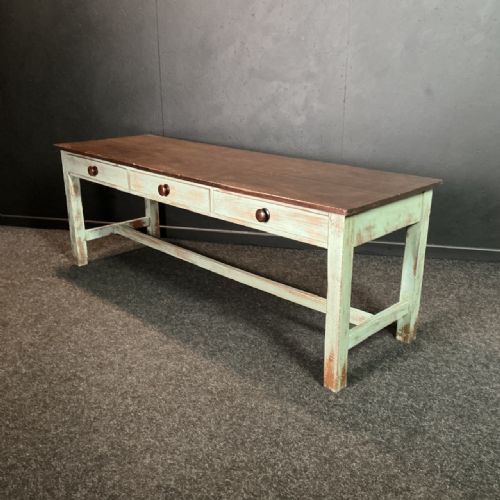
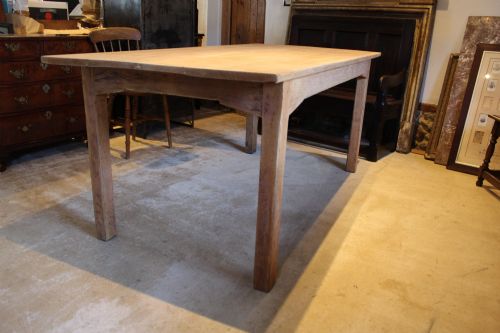
These traditional country dining table examples are heavy timber boards built for daily use, offering the honest grain and sturdy build every kitchen needs.
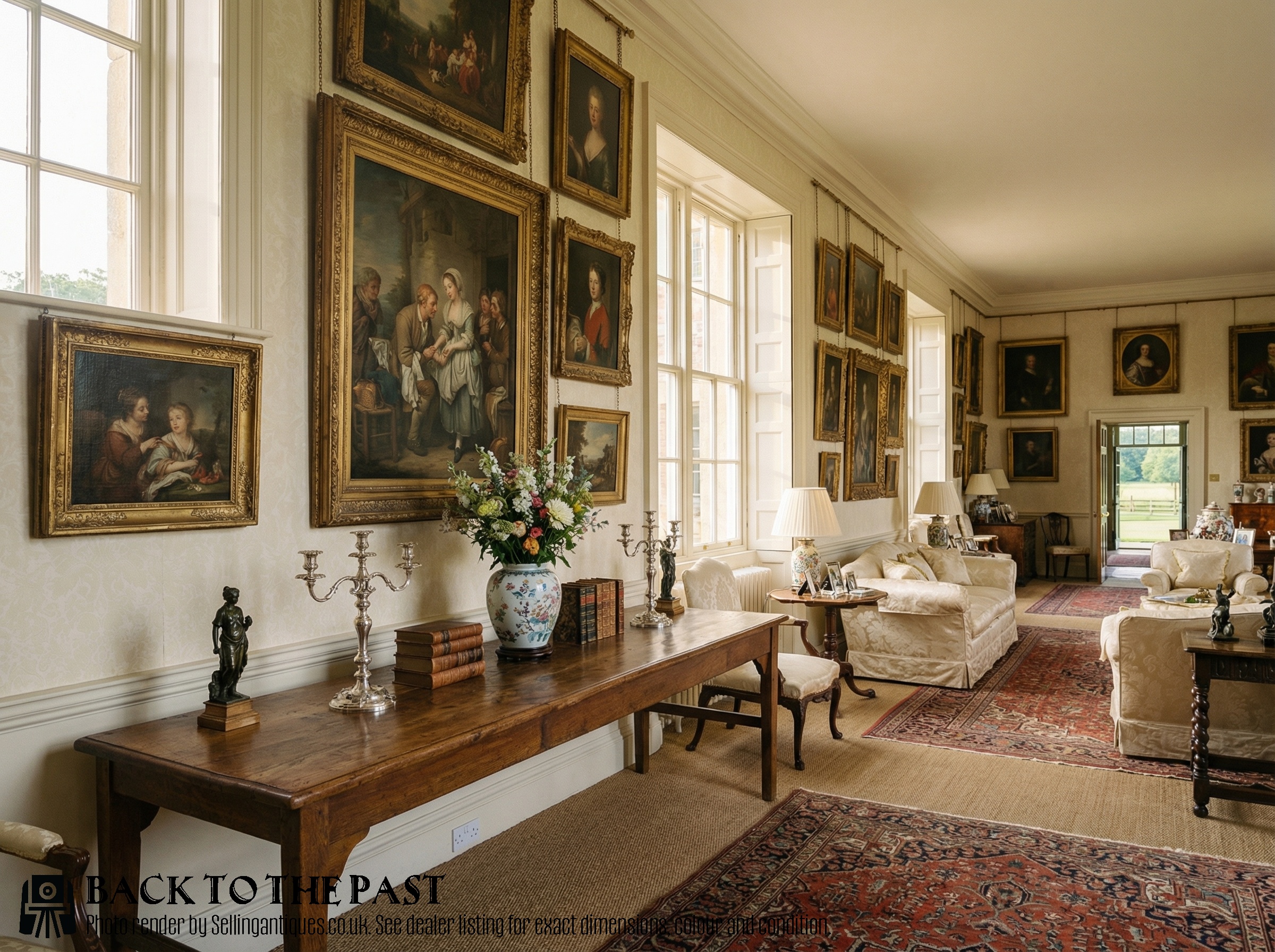
Identifying a traditional country dining table
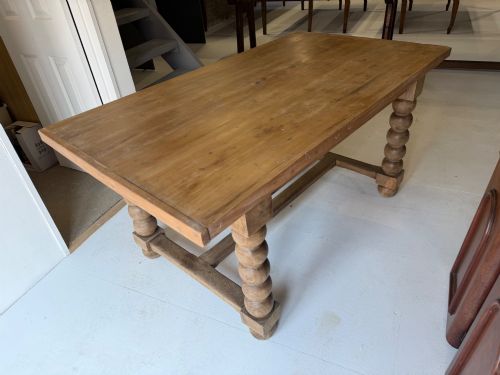
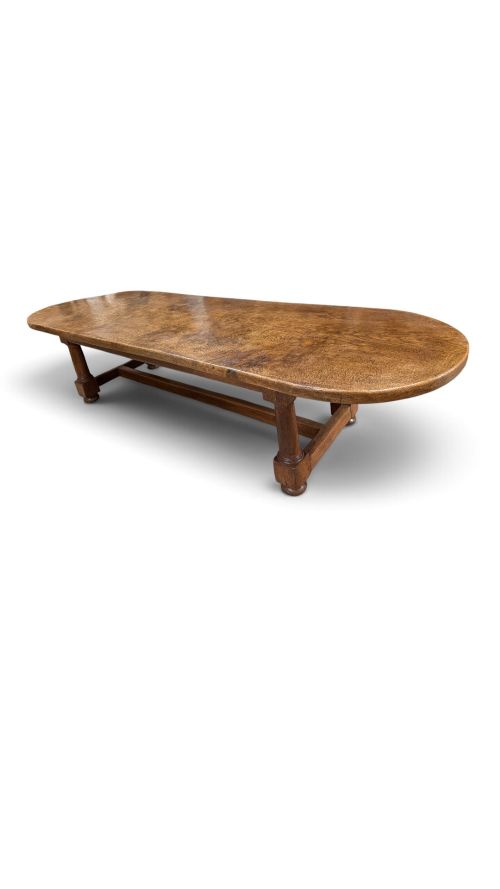
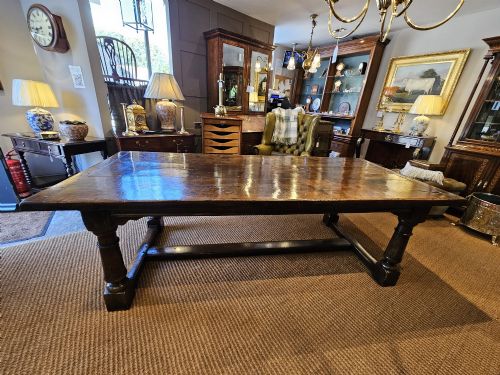
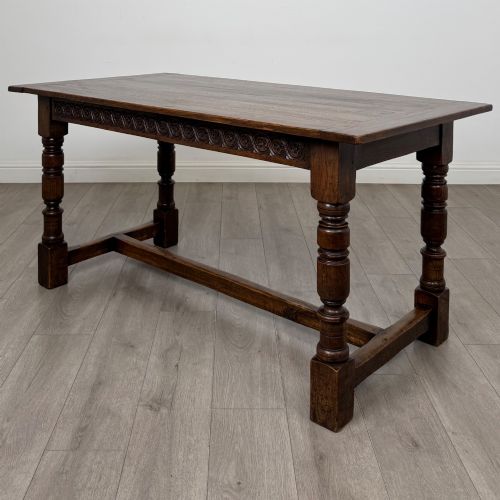
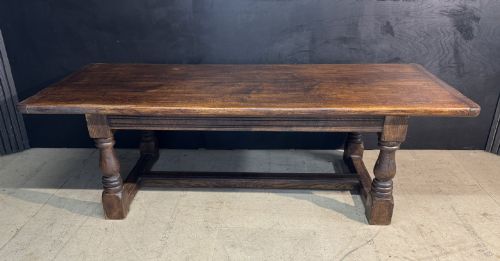
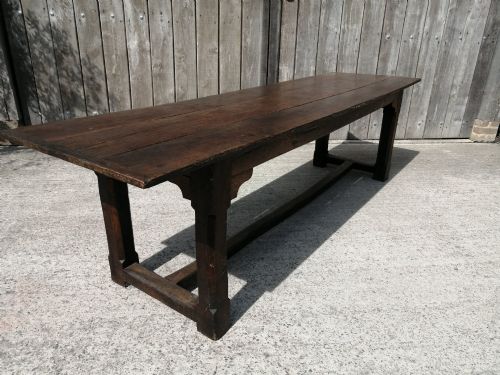
When searching for a traditional country dining table, buyers encounter solid wood examples dating from the nineteenth century up to the nineteen-twenties. These pieces take the form of refectory tables, barrel leg designs, and farmhouse tables suited for communal meals.
The versions most commonly met on this page span the Victorian era, nineteen hundred, nineteen-ten, and nineteen-twenty. They originate from English country workshops and feature rustic farmhouse aesthetics built around utility.
Construction and timber
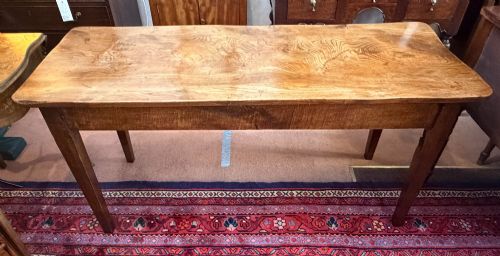
These boards rely entirely on solid hardwoods like oak, elm, and ash, often utilising two-plank top constructions. Carpenters selected dense timber for its durability, letting the natural grain patterns form the primary decorative surface without veneers or added marquetry.
Joinery techniques prioritised strength to withstand heavy daily use in rural kitchens and dining halls. Frame and leg assemblies, including barrel legs and refectory bases, were pegged and jointed by hand to ensure lasting stability.
Retail Price Guide 2026
Typical UK retail prices for traditional country dining table, calculated from the Sellingantiques database of over a million retail prices indexed since 2003. This retail price guide relies exclusively on Sellingantiques data; no external sources or auction records are used, so the figures do not describe the wider market.
Listings feature items from the 19th Century, 1900, 1910, and 1920, constructed from oak, elm, solid ash, and timber.
Judging quality and character
Quality in these pieces rests upon the selection of timber and the integrity of the structural frame. Tables built from thick, figured oak or wide elm planks with uniform shrinkage display greater substance than those made from lesser secondary woods.
The distinction between ordinary utility items and finer examples lies in the balance of proportions and the depth of natural patina accumulated through decades of use. Well-preserved surface wear on a solid ash or oak top indicates a superior timber choice that has aged gracefully.
The Traditional Country Dining Table Glossary
- Planked top
- A table surface constructed from joining two or more wide boards of solid timber side by side. This method allowed makers to utilise wider trees before modern sheet materials existed.
- Elm
- A tough, interlocking hardwood often used for country table tops and seating due to its resistance to splitting. Its irregular grain gives these surfaces distinct visual movement.
- Barrel leg
- A rounded, swelling table leg profile turned from solid timber. This shape offers sturdy vertical support while adding a subtle sculptural weight to the base.
Frequently Asked Questions
What rooms suit these tables?
These large timber surfaces anchor spacious kitchens and dining rooms where family gatherings take place.
Their substantial footprint requires ample floor space to allow seating and movement all around.
How do I clean the wood?
Wipe surfaces down with a slightly damp cloth and dry them immediately to protect the aged finish.
Avoid harsh chemical sprays that strip the natural patina accumulated over the centuries.
Are these tables sturdy enough?
Solid ash, oak, and elm construction provides exceptional weight and stability for heavy daily tasks.
Pegged joints and thick timber boards ensure the frame remains rigid without wobbling.
How do I date an antique table?
Examine the timber species, tool marks underneath, and the construction methods used in the frame.
Nineteenth-century and early twentieth-century pieces show hand-finished surfaces and characteristic wear patterns.