


Seventeenth Century Style Table
These seventeenth century style table examples deliver sturdy oak frames and period joinery for daily dining or hallway display.
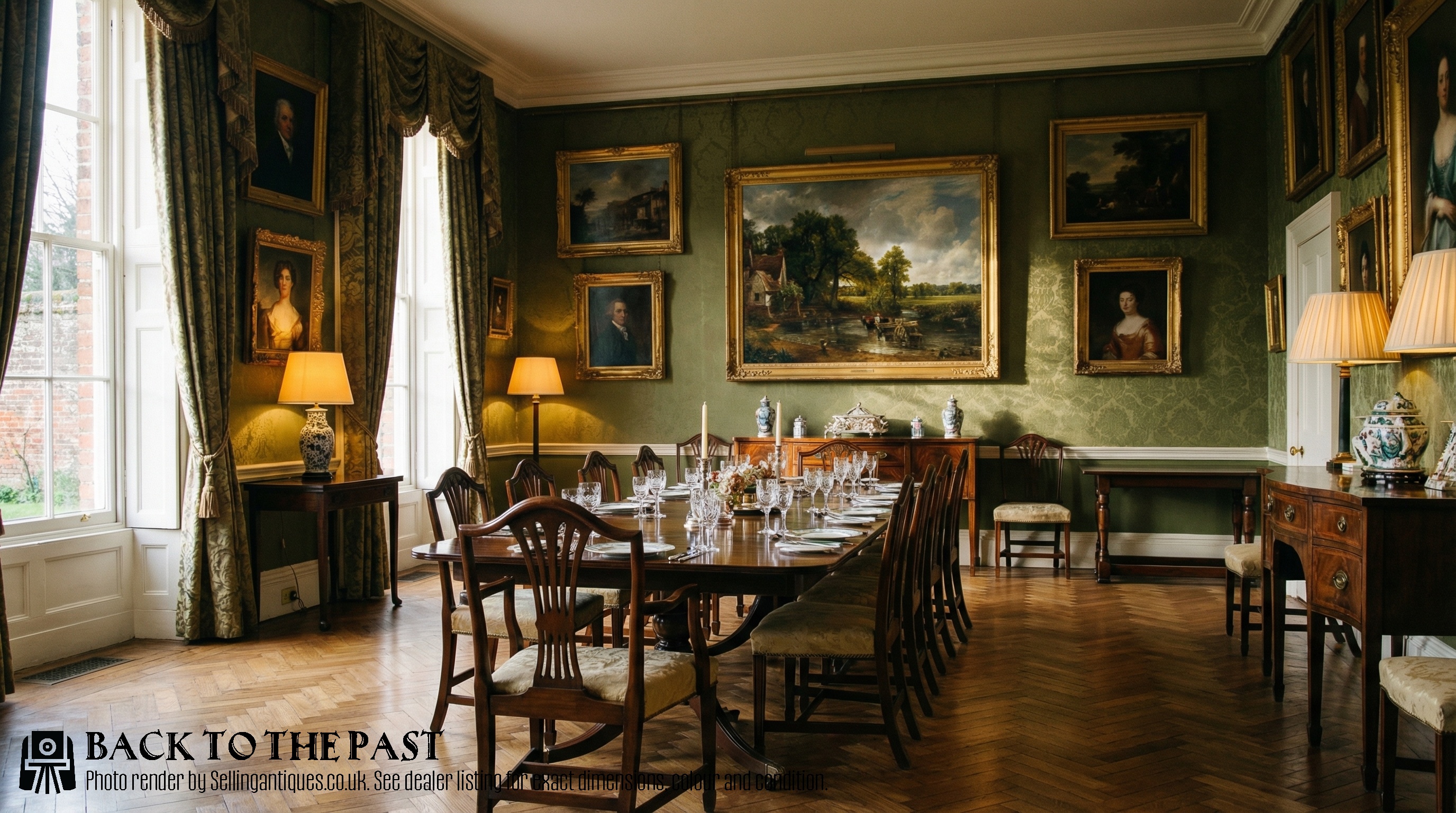
Seventeenth Century Style Table
A seventeenth century style table brings robust historical character into contemporary rooms through substantial timber forms and traditional joinery. Buyers exploring this category encounter sturdy refectory dining tables, gateleg designs, and compact side tables.
The selections span authentic seventeenth-century craftsmanship alongside later nineteenth- and twentieth-century revival pieces modelled on Jacobean and Charles II aesthetics. Oak dominates these offerings, supplemented by walnut, fruitwood, and painted finishes across various forms.
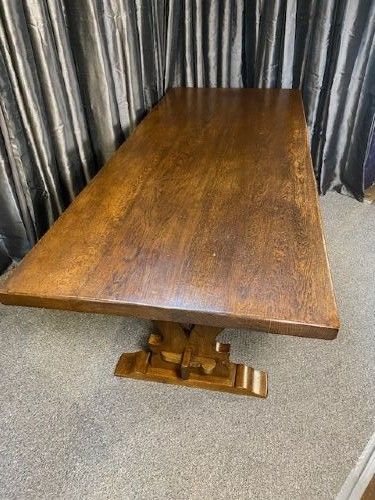
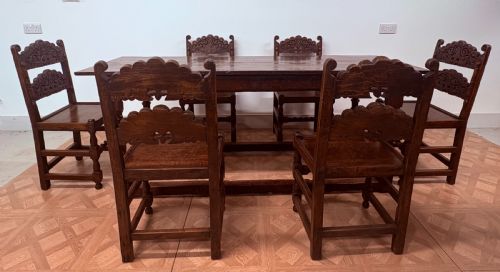
Refectory and gateleg dining tables provide expansive surfaces for gathering, while smaller side and hall tables adapt easily to tighter domestic spaces. Each piece reflects the enduring appeal of heavy timber construction and historic English design traditions.
How they were made
Carpenters constructed these tables primarily from solid oak, frequently incorporating walnut, fruitwood, and iron or brass hardware for structural stability and hinges. Timber was heavily worked using hand tools to create thick planks, sturdy stretchers, and turned legs.
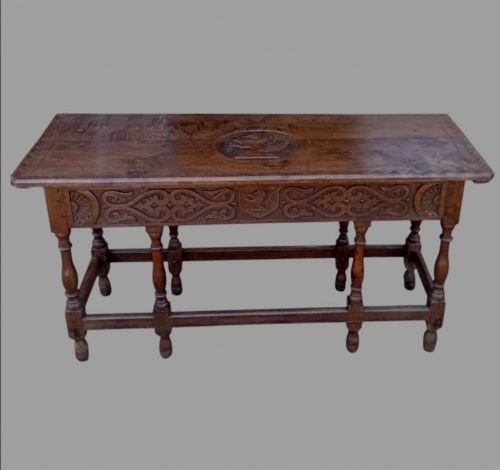
Joiners relied on traditional mortise and tenon joints secured with wooden pegs, ensuring durable frames capable of enduring centuries of use. Surface decoration often involved hand carving, geometric mouldings, and occasionally painted finishes or inlay work.
Seventeenth Century Style Table Retail Price Guide 2026
Typical asking prices for seventeenth century style table among the pieces listed under this phrase on Sellingantiques today, from the lower quarter to the upper quarter. They describe what is for sale here now, not the wider market.
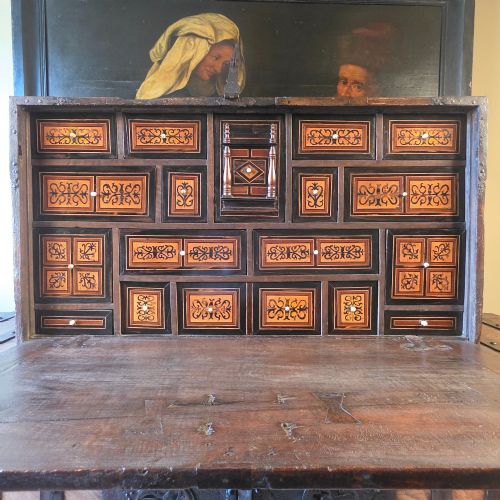
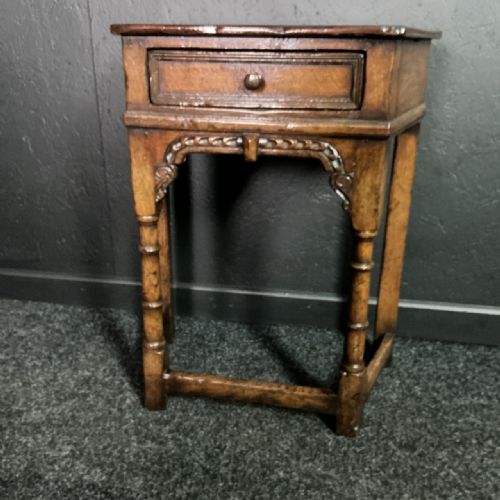
Some tables include hidden drawers originally designed to conceal secret notes or small valuables from household servants.
What varies in quality
Quality rests upon the proportion of original timber preserved and the integrity of the structural joinery holding the frame together. Tables featuring dense, well-figured oak and crisp, hand-carved detailing stand apart from simpler revival iterations.
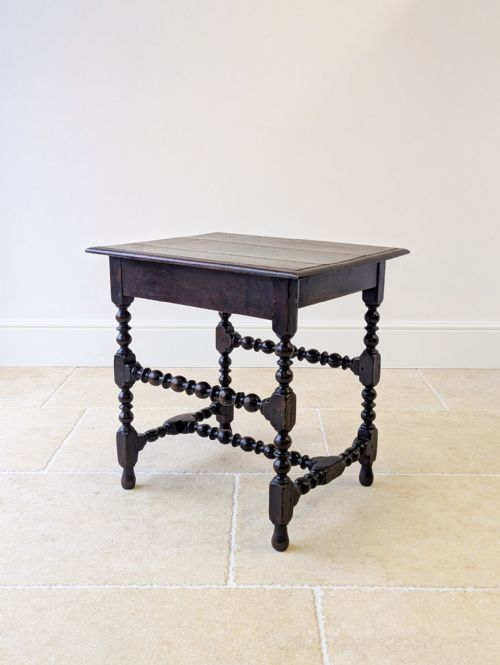
The sophistication of the turning on legs and stretchers - ranging from simple tapered forms to complex bobbin-turning - distinguishes finer workshops. Patina accumulated through decades of use further enhances the visual depth of superior examples.
The Seventeenth Century Style Table Glossary
- Refectory table
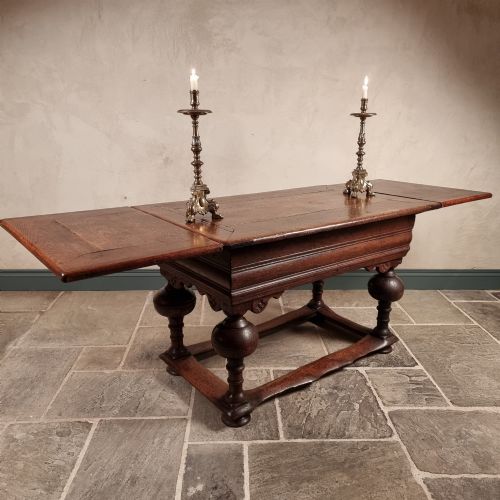
- A long, narrow dining table traditionally used in monasteries and large halls, characterised by substantial legs connected by low floor stretchers. These tables provide generous seating capacity along their length.
- Gateleg table
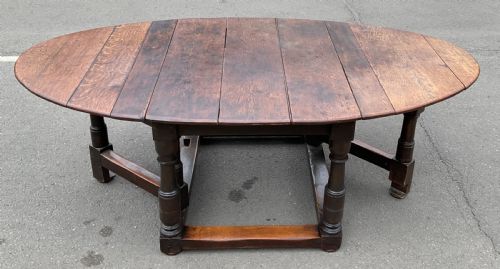
- A drop-leaf table featuring hinged flaps supported by swing-out legs that resemble a opening gate. This clever mechanism allows the surface area to expand or contract according to space requirements.
- Bobbin-turning
- A decorative woodworking technique where the lathe cuts a series of rounded, spool-like shapes along the length of a table leg or stretcher. The resulting profile creates rhythmic patterns of light and shadow.
- Jacobean style
- An English design aesthetic spanning the early seventeenth century, noted for heavy proportions, dark oak timber, and geometric panel or strapwork carving. Revival pieces from later centuries often emulate these robust characteristics.
- Dresser base
- A low wooden storage unit featuring drawers and sometimes cupboards beneath a flat top surface, frequently utilised as a sideboard. These pieces share the sturdy timber construction typical of period tables.
Seventeenth Century Style Table: Frequently Asked Questions
How do I style a refectory table in a modern home?
Pair these substantial oak tables with contrasting minimalist seating to highlight the historic timber grain and sturdy stretcher base.
Keep surface decoration simple with ceramic bowls or low runners to let the original craftsmanship remain the central focus of the room.
Can I use a gateleg table in a small dining room?
Drop-leaf gateleg formats work exceptionally well in compact spaces because the leaves fold down completely flat against walls when not in use.
Swinging out the supporting legs takes seconds, transforming a narrow side console into a functional dining surface for multiple guests.
What is the difference between seventeenth-century and revival tables?
Period pieces from the seventeen hundreds or earlier exhibit authentic wear patterns, hand-split timbers, and period-specific ironwork forged by historical smiths.
Revival examples, constructed during later eras like the nineteenth or twentieth century, imitate these traditional forms using slightly different mechanical tooling.
How should I care for antique oak surfaces?
Maintain the timber by applying natural beeswax sparingly and buffing with a soft cloth to nourish the dry grain without building up heavy residues.
Position tables away from direct heat sources and sudden moisture changes to prevent the solid wood planks from splitting or warping.