

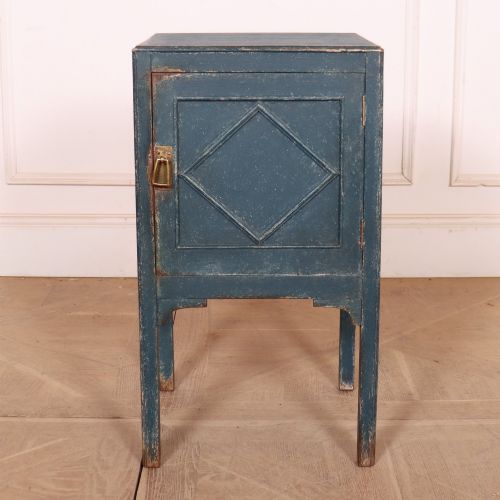

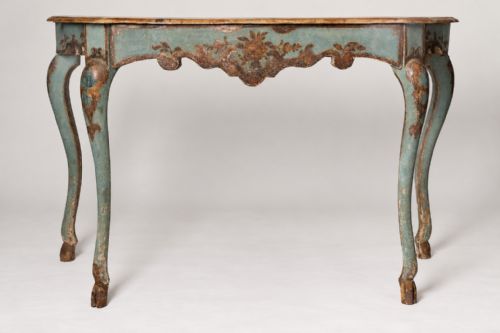
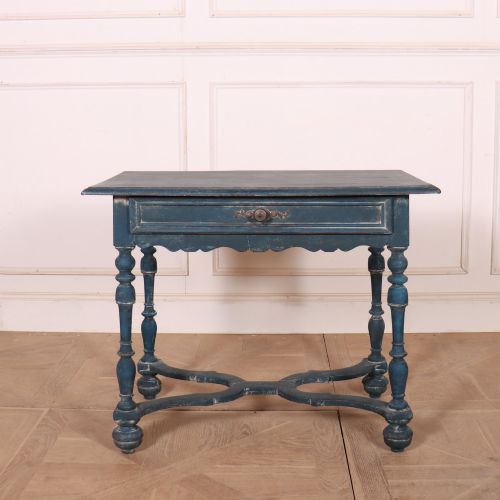
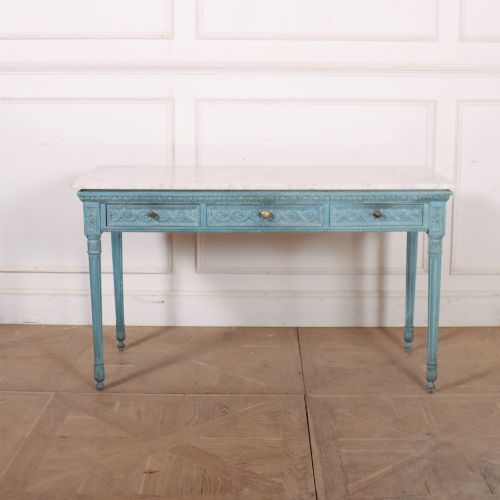

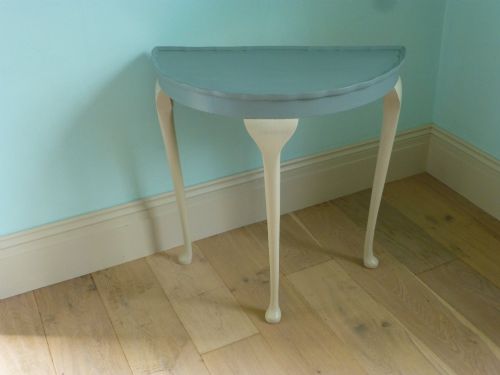
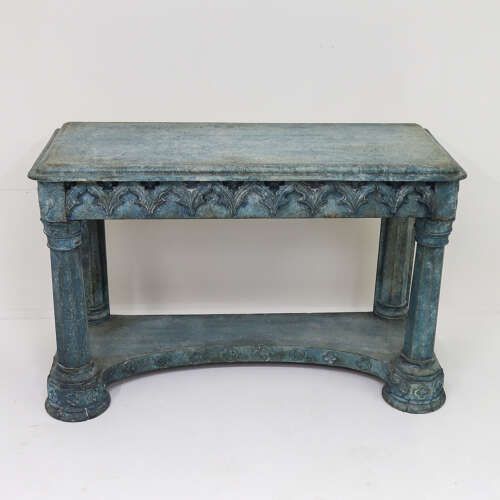


Blue Painted Side Table
A blue painted side table brings quiet colour and practical surface space to a room, drawing on centuries of vernacular and formal woodworking traditions.
Blue Painted Side Table
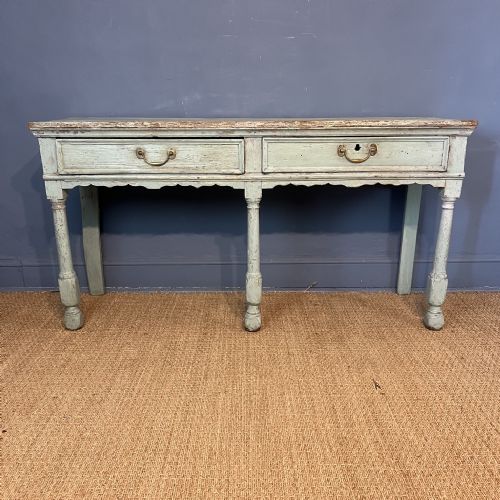
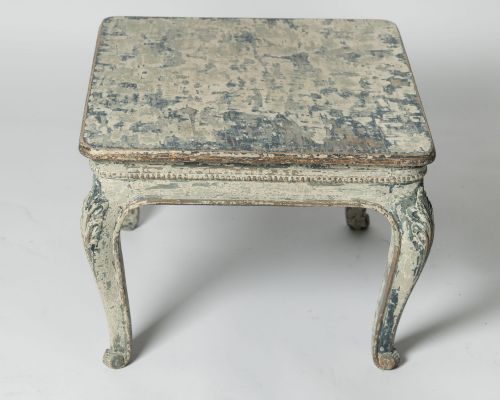
A blue painted side table is essentially a compact surface piece finished in pigmented coatings, spanning simple pine forms to more elaborate console designs. Buyers seeking this type often find themselves choosing between English country styles, French provincial pieces, and Scandinavian painted pine tables.
The selection here encompasses items originating from the eighteenth century up through the early twentieth century, including Georgian and Victorian examples. Many pieces lean towards regional rustic traditions, whilst others adopt formal continental silhouettes or Gothic revival details.
Materials and construction
Pine and general timber form the foundational structure for the majority of these pieces, providing a stable base for multiple layers of paint. Artisans applied traditional pigments over wood surfaces, sometimes augmenting the design with brass fittings or marble tops.
Construction techniques range from the straightforward joinery of bakers and lamp tables to more complex carved consoles. Surface treatments vary from accumulated historic coats of paint to more deliberate decorative finishes.
Blue Painted Side Table Retail Price Guide 2026
Typical asking prices for blue painted side table among the pieces listed under this phrase on Sellingantiques today, from the lower quarter to the upper quarter. They describe what is for sale here now, not the wider market.
The listings demonstrate a strong presence of 19th-century pine furniture alongside 18th-century forms, executed in materials including marble, brass, and porcelain.
Assessing quality and character
Quality in these pieces rests heavily on the integrity of the timber and the honesty of the painted surface rather than mere age. Tables retaining their original undisturbed paint layers command greater interest than those stripped or repeatedly recoated over generations.
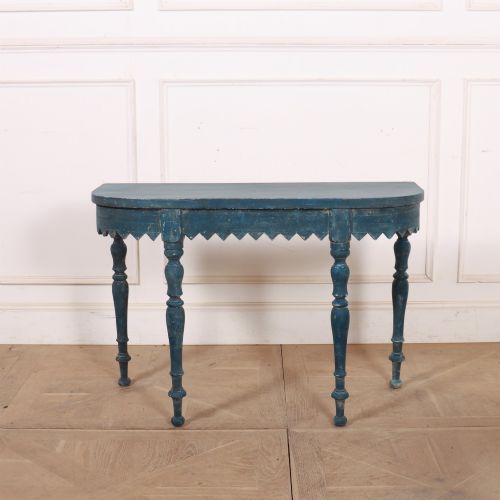
The finesse of the joinery and the balance of proportions distinguish finer examples from standard vernacular work. Subtle details in the turning of legs or the shaping of edges separate standard utility furniture from more considered regional pieces.
The Blue Painted Side Table Glossary
- Gueridon
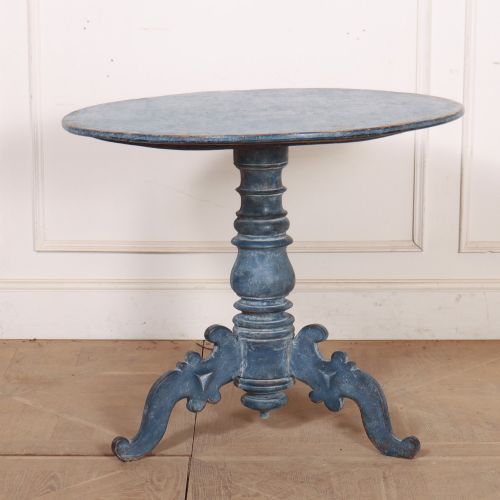
- A small French occasional table, often round, supported by a central pillar or three legs. These frequently feature decorative tops such as marble.
- Console table
- A table designed to be fixed against a wall, sometimes supported by brackets or legs at the front. They often serve decorative hallway or reception room functions.
- Pine
- A soft timber widely utilised across European vernacular furniture for its workability and availability. It forms the structural core of many painted country pieces.
- Drop leaf table
- A table featuring hinged flaps that fold down to save space when not in use. They offer flexible surface arrangements for smaller rooms.
- Cricket table
- A small, light occasional table traditionally featuring three splayed legs and a round top. The design derives from early English domestic utility.
Blue Painted Side Table: Frequently Asked Questions
How do I care for painted wood surfaces?
Keep painted tables away from direct sunlight and excessive heat fluctuations to prevent the timber from moving and the paint from flaking. Dust gently with a dry or barely damp cloth.
Avoid chemical cleaning products that might soften historic paint layers. Wax can be applied sparingly if the finish is unsealed, but most historic painted surfaces require minimal intervention.
Are these tables suitable for daily use?
Most pieces were built for practical domestic tasks, ranging from bedside storage to serving food or holding lamps. Their robust construction suits normal everyday placement.
Consider adding protective glass to tops if you intend to place liquids or heavy items on vulnerable historic paintwork. Otherwise, embrace light patination as part of the piece's ongoing history.
How can I tell original paint from later decoration?
Original paint surfaces show natural wear patterns, craquelure, and integration with the underlying timber that mimic the true age of the object. Look closely at corners and edges where handling naturally removes pigment.
Fresh or modern overpainting often sits too evenly across crevices and lacks the depth built up by decades of oxidation. Examine the surface under natural light to assess the relationship between the paint and the wood beneath.
What distinguishes Scandinavian painted furniture?
Scandinavian pieces, particularly from Swedish traditions, often employ lighter, softer blue tones and clean neoclassical or rustic lines. These finishes were designed to reflect available light in long northern winters.
Unlike heavier English country pieces, Swedish tables frequently display Gustavian restraint or folk-carved details. Pine is the predominant wood utilised in these regional works.