

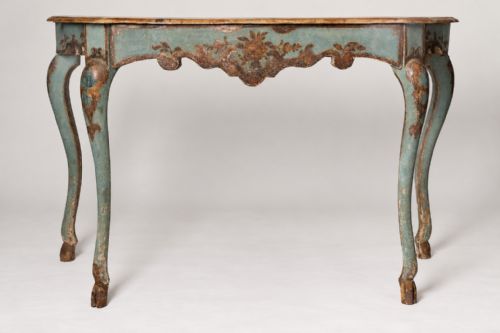
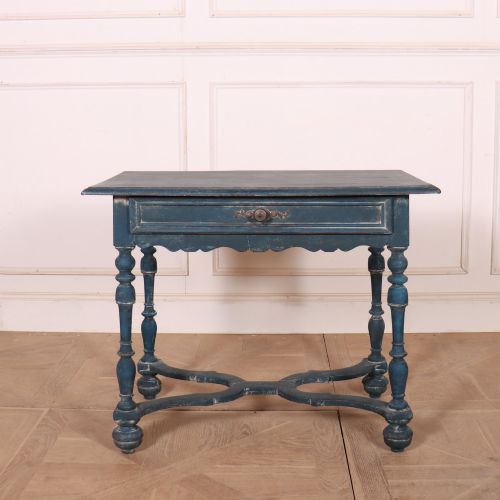
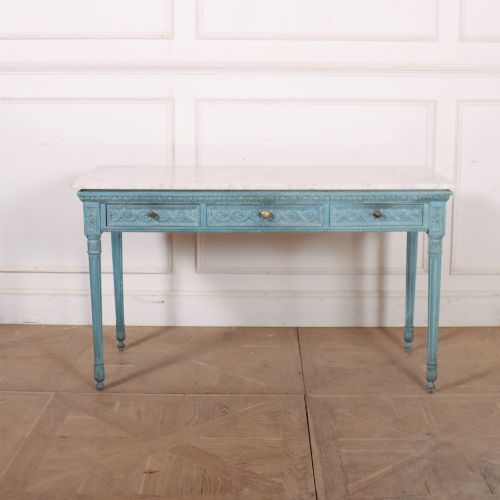
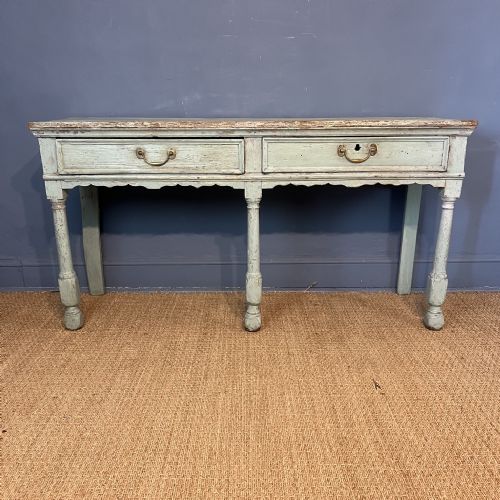
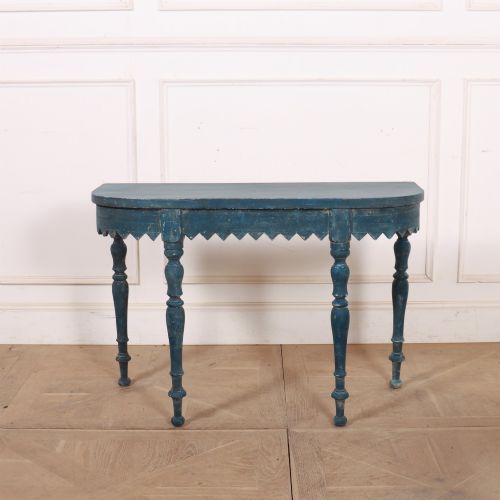
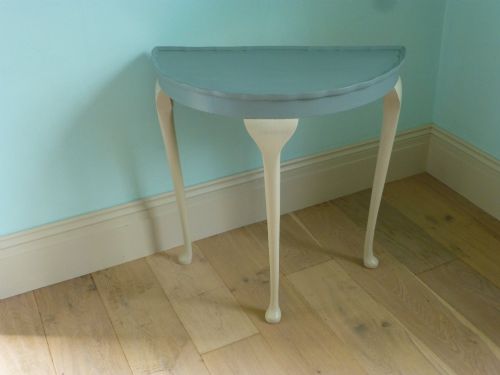
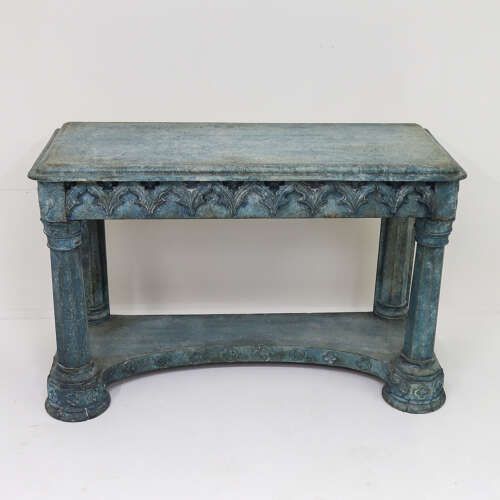


Blue Painted Console Table
A blue painted console table brings colour and character to a hallway or reception room, offering a surface for lamps and ornaments.
Blue Painted Console Table
A blue painted console table represents a diverse group of wall-abutting and freestanding occasional tables shaped by European regional traditions. The search phrase blue painted console table captures items ranging from English country house pieces to Swedish folk tables and Italian neoclassical designs.
Most examples found in the inventory utilise pine, timber and painted wood, often featuring characteristic forms such as demi-lune shapes, bow ends and rectangular side table formats. Makers across the eighteenth and nineteenth centuries applied paint to simple softwoods and hardwoods alike to transform utilitarian furniture into decorative furnishing.
Regional variations span from French provincial styling and Gothic Revival details to rustic farmhouse aesthetics and English country interpretations. Buyers encounter these versatile surfaces functioning as hall tables, serving tables, and lamp tables across periods like the Georgian era, Victorian epoch and Edwardian decades.
How they were made
Construction relies primarily on pine and assorted timber carcasses assembled using traditional joinery appropriate to the period of origin. Workshops built these tables to stand against walls or function as central room fixtures using sturdy framing and substantial wooden tops.
Surface decoration involves layers of paint applied over wood, sometimes complemented by marble inserts or brass hardware details. Over generations, these painted finishes acquired natural patination through daily use in domestic and commercial settings.
Blue Painted Console Table Retail Price Guide 2026
Typical asking prices for blue painted console table among the pieces listed under this phrase on Sellingantiques today, from the lower quarter to the upper quarter. They describe what is for sale here now, not the wider market.
One historic piece began its life serving florists before finding a second act as a decorative household table.
What varies in quality
Quality in a blue painted console table rests on the integrity of the timber frame and the originality of the painted surface. Untouched period pigment holds greater interest than later decorative overpainting applied to older structural carcasses.
Proportion and stylistic cohesion distinguish superior regional pieces from basic utility furniture, particularly in carved details, leg turnings, and marble top integrations. The harmony between the form, such as a serpentine or demi-lune shape, and its historical paint layer determines the standing of an individual table.
The Blue Painted Console Table Glossary
- Demi-lune
- A half-moon shape characteristic of console and card tables designed to sit flush against a wall.
- Console table
- A table supported by brackets or legs against a wall, frequently utilised in hallways and reception rooms.
- Potboard dresser base
- A traditional English dining room or kitchen base featuring a low lower shelf used for storing ceramics.
- Gusatvian
- The Swedish neoclassical style developed during the late eighteenth century, known for pale painted finishes and restrained classical motifs.
Blue Painted Console Table: Frequently Asked Questions
Where should I place a console table?
These narrow tables suit entrance halls, corridors, and living rooms where floor space is limited. They provide a convenient surface for lighting, mirrors, and decorative objects without obstructing pathways.
Positioning a console against a wall allows the piece to anchor a room while offering practical display space.
How do I care for painted wood?
Painted wooden furniture requires gentle dusting with a dry or slightly damp cloth to protect the historic surface. Avoid chemical cleaning products that can lift or dull original paint layers.
Keeping tables away from direct heat sources and strong sunlight preserves the stability of the timber and pigment.
What is the difference between a console and a side table?
Console tables historically stand against a wall and sometimes require wall fixing for stability. Side tables are generally freestanding items designed to be accessed from multiple sides.
Both forms appear frequently in regional European furniture traditions with painted finishes.
How can I identify the period of a painted table?
Dating relies on construction methods, timber choice, and the character of the paint layer. Eighteenth-century pieces often display hand-sawn boards and early pigment composition, while Victorian and Edwardian examples show later manufacturing traits.
Comparing stylistic cues like Gothic revival arches or Gustavian restraint helps place an item within its era.