

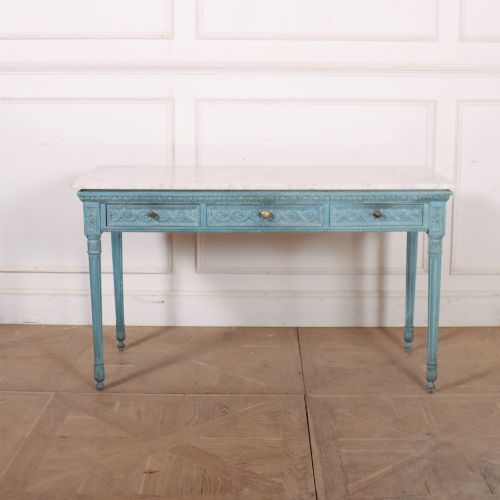
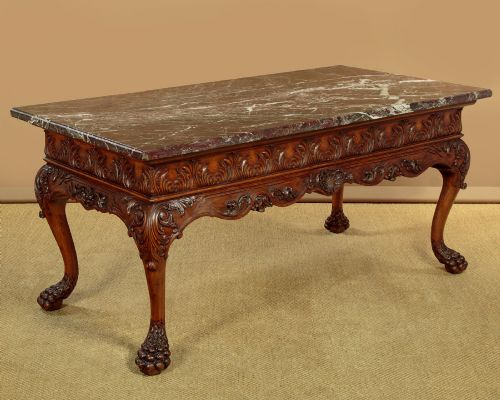
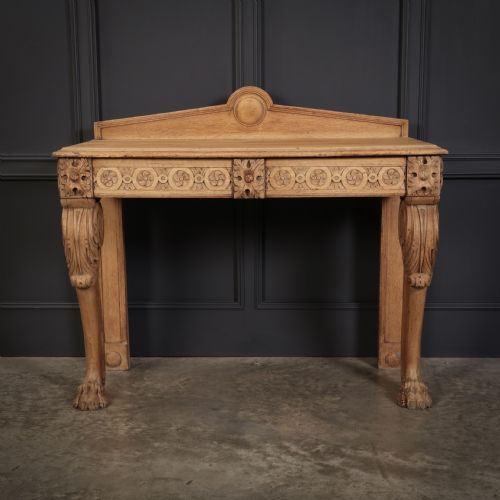


Carved Frieze Console Table
A carved frieze console table brings architectural presence and surface utility to a hallway or reception room.
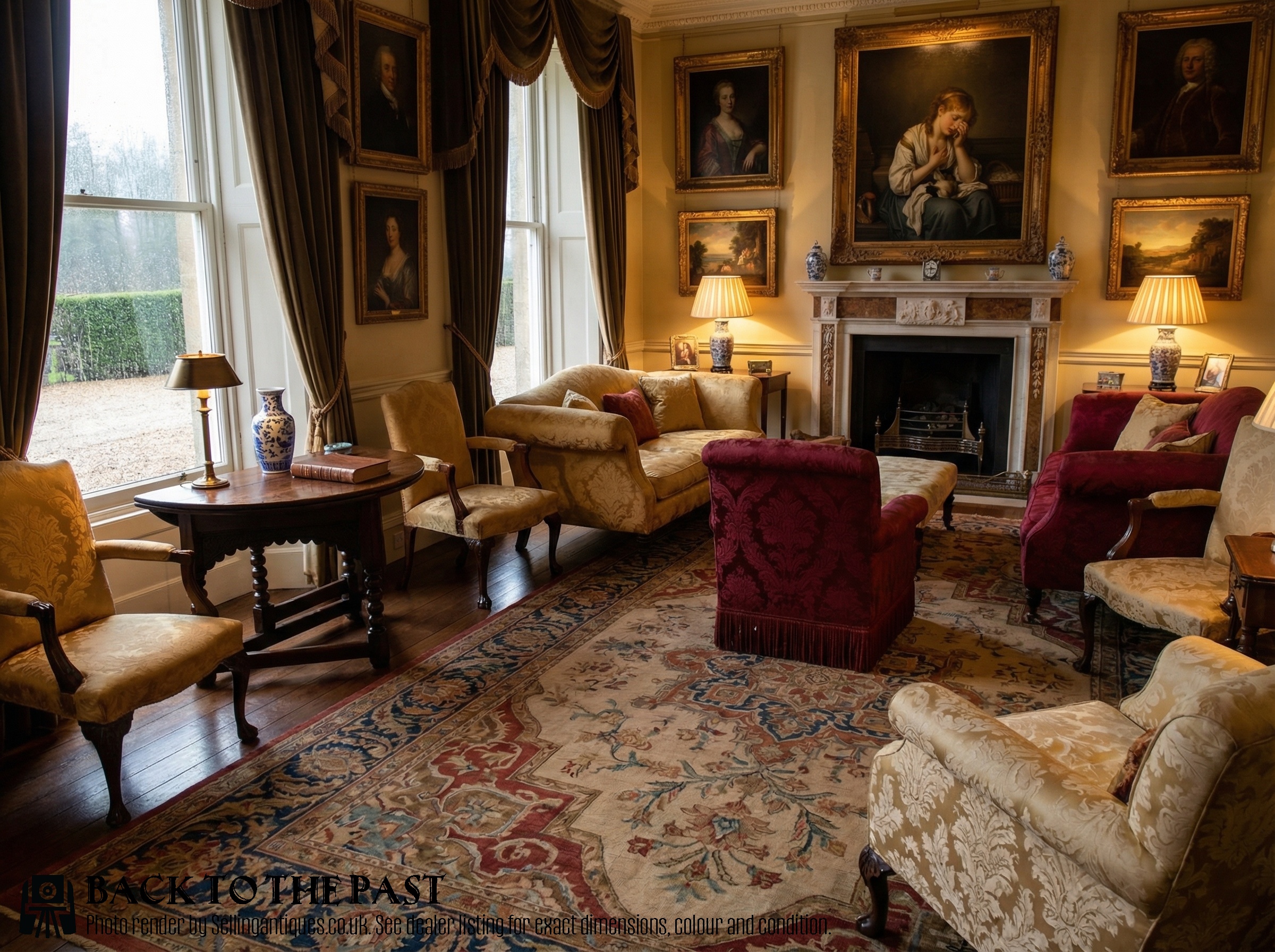
Carved Frieze Console Table
A carved frieze console table sits flush against a wall, combining structural support with decorative carving along the upper rail beneath the top. When you search for a carved frieze console table, you encounter forms spanning the 17th century through the 19th century and into the early 20th century, including revival styles.
The pieces listed on this page appear as console tables, side tables, sofa tables, serving tables, and writing tables. Materials recorded in these examples include oak, mahogany, walnut, rosewood, brass, marble, painted wood, and flame mahogany veneer.
Origins and design vocabularies stretch across English, Italian, Spanish, Scandinavian, and Flemish traditions. Revival movements such as Neoclassical, Gothic Revival, Renaissance Revival, and Empire Revival heavily influence the visual language of these pieces.
Materials and construction
Makers utilised solid hardwoods like oak, mahogany, walnut, and rosewood, frequently employing figured veneers such as flame mahogany to create varied surface patterns. Structural integrity relied on traditional joinery applied to tables designed for domestic utility.
Carved ornamentation defines the frieze section beneath the top surface, executed directly into the timber. Additional elements incorporate marble surfaces and brass fittings where designated by the design period.
Carved Frieze Console Table Retail Price Guide 2026
Typical asking prices for carved frieze console table among the pieces listed under this phrase on Sellingantiques today, from the lower quarter to the upper quarter. They describe what is for sale here now, not the wider market.
Stylistic influences represented across the listings incorporate Neoclassical, Victorian, Gothic Revival, Italian Neoclassical, Renaissance Revival, George II Revival, and Empire Revival.
Evaluating quality and execution
Quality rests in the depth and sharpness of the carved frieze work, where crisp hand-chiselling separates superior examples from routine production. The choice of timber grain, particularly in figured rosewood and flame mahogany veneers, dictates the visual impact of the top surface.
Structural harmony between the frieze, legs, and top determines the success of the piece, alongside the integrity of materials such as inset marble slabs. Consistency in period details, whether Neoclassical, Gothic Revival, or Empire Revival, marks the distinction between fine cabinetmaking and standard manufacture.
The Carved Frieze Console Table Glossary
- Console table
- A table designed to stand against a wall, traditionally supported by wall brackets or front legs. These pieces anchor hallway spaces and narrow rooms.
- Frieze
- The central horizontal band situated directly beneath the top of a table. In these pieces, this area carries the carved decoration.
- Sofa table
- A rectangular table traditionally placed against the back of a sofa or used freestanding. Examples often feature drop leaves and frieze drawers.
- Flame mahogany veneer
- A thin slice of mahogany timber displaying a distinct flickering flame-like grain pattern. Cabinetmakers applied this to enhance visual depth on prominent surfaces.
- Revival style
- An artistic movement drawing inspiration from historical periods such as the Neoclassical, Gothic, or Renaissance eras. Makers reinterpreted these earlier aesthetics for contemporary domestic interiors.
Carved Frieze Console Table: Frequently Asked Questions
Where should I place a console table?
A console table fits naturally against a hallway wall or in a reception room where floor space is restricted. Its shallow depth provides a surface for display without obstructing movement through the room.
Because these tables are designed to stand against a wall, they anchor an entryway or complement the rear of a freestanding sofa when utilising sofa table variants.
How do I care for antique wood tables?
Maintain timber surfaces by dusting with a dry cloth and avoiding direct sunlight or excessive heat sources that cause wood to split. Natural waxes help nourish older finishes without building up heavy residue.
Protect marble tops from acidic spills and moisture by using coasters, ensuring the stone maintains its original polish over time.
What is the difference between a console and a side table?
A console table is specifically shaped to stand against a wall, historically requiring wall fixings in earlier periods, whereas a side table is a more versatile freestanding form. Both serve similar functional roles in domestic settings.
Within this selection, the terms often overlap depending on the proportions and intended placement within a room layout.
How can I identify revival styles?
Revival styles draw upon historical design vocabularies from earlier centuries, such as Neoclassical, Gothic Revival, or Empire Revival. Makers incorporated these classical motifs into pieces produced during the 19th and early 20th centuries.
Examining the specific carved motifs, leg forms, and construction methods helps distinguish an original period piece from a later revival interpretation.