

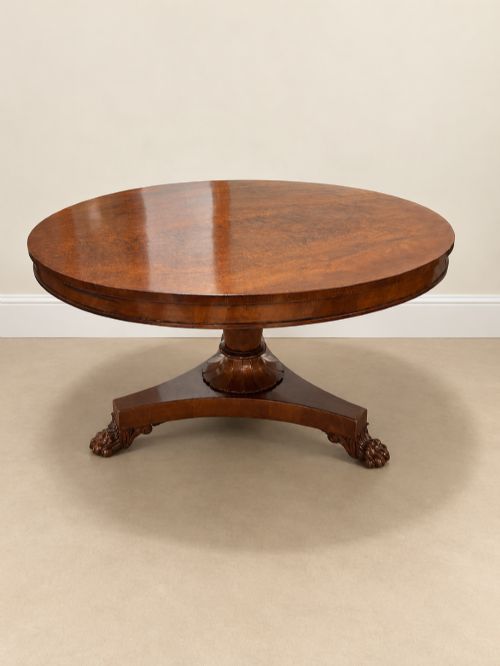
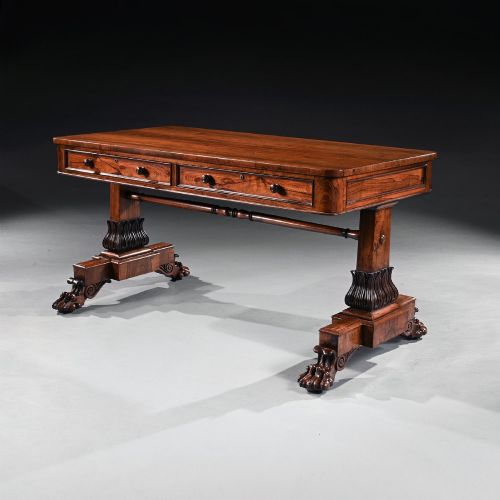
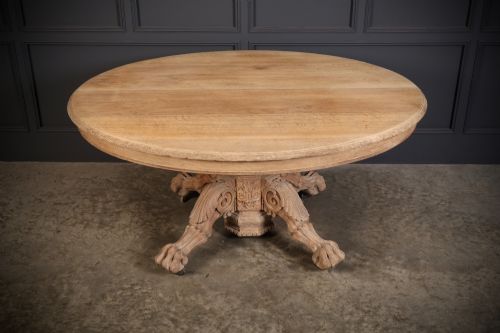

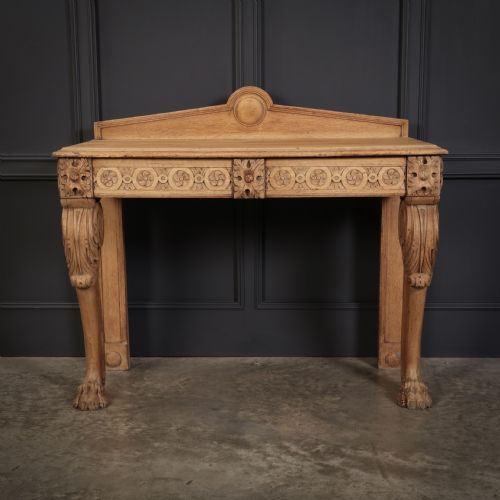


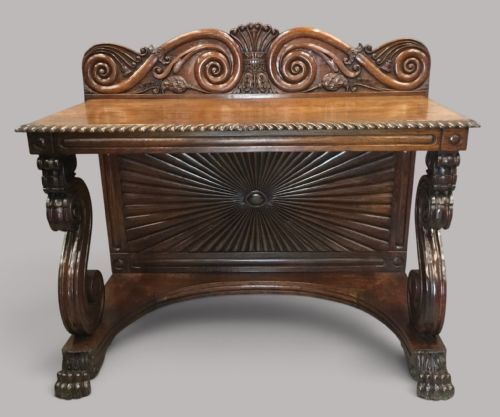


Carved Lion Paw Table
These carved lion paw table pieces combine robust structural timber with muscular animal feet, offering a sturdy surface for a hallway or study.
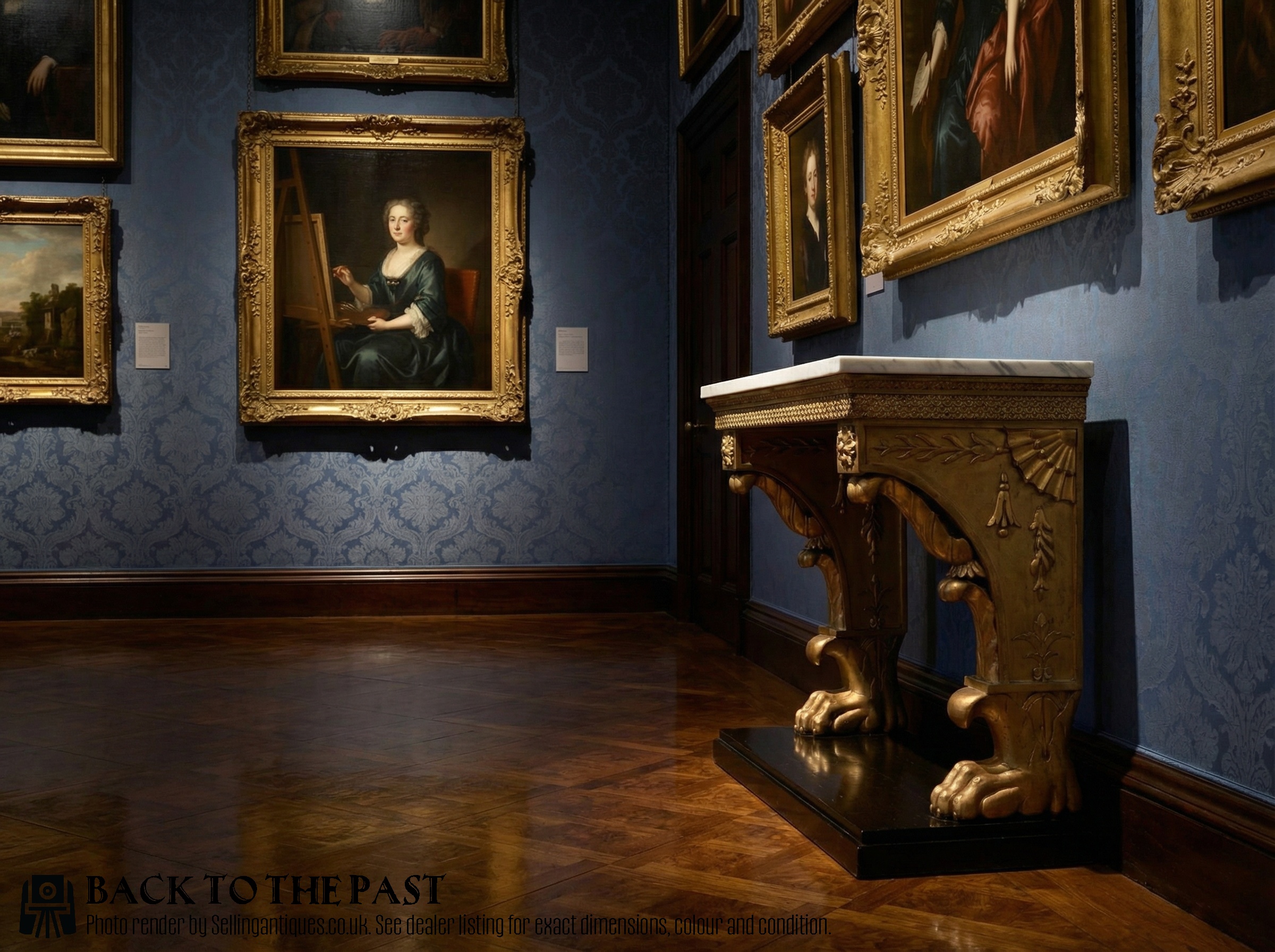
Carved Lion Paw Table
A carved lion paw table serves as a sturdy surface for a hallway, dining room, or drawing room, taking the form of console tables, centre tables, writing desks, and dining tables. When searching for a carved lion paw table, buyers encounter heavy timber framing raised upon prominent animalistic supports.
The selections span from the eighteenth century through the Victorian era, drawing on Regency, George IV, and Italian Baroque Revival styles. Most pieces present a substantial top of mahogany, marble, oak, or flame mahogany veneer, resting upon carved feet that mimic the stance of a beast.
How they were made
Cabinetmakers constructed these tables using dense timbers such as mahogany, rosewood, oak, and padouk, often applying flame mahogany veneer over secondary woods. Giltwood, gesso, and brass appear as decorative finishes or structural mounts, complementing the primary timber.
Carving the wooden feet required skilled hand work to define the claws, fur, and muscular tension of the lion paw. Marble slabs, including breccia marble and inlaid specimen marble, were selected for heavy tabletops and secured within wooden frames or gilt supports.
Carved Lion Paw Table Retail Price Guide 2026
Typical asking prices for carved lion paw table among the pieces listed under this phrase on Sellingantiques today, from the lower quarter to the upper quarter. They describe what is for sale here now, not the wider market.
One unexpected nineteenth century table pairs fierce lion paw feet with a flowing mermaid tail, combining terrestrial power with marine mythology.
What varies in quality
The distinction between ordinary and superior pieces rests upon the depth and vigour of the carving on the lion paw supports. Crisp detailing in the claws and knuckles indicates a master hand, whereas flat or mechanical chiselling yields a stiff appearance.
Material selection also dictates value, with thick slabs of breccia marble, rich flame mahogany veneer, and heavy giltwood surfaces elevating the presence of the table. Proportion and stability across large console, centre, and dining forms complete the measure of quality.
Mack Williams and Gibton·Gillows
The Carved Lion Paw Table Glossary
- Console table
- A table designed to stand against a wall, frequently secured to it with brackets or resting on heavy front feet.
- Centre table
- A freestanding table intended to occupy the middle of a room, finished with detail on all sides.
- Flame mahogany veneer
- A thin slice of mahogany timber featuring a flamelike grain pattern, applied to a stable secondary wood core.
- Breccia marble
- A multicoloured marble composed of angular fragments embedded in a contrasting matrix, common on top surfaces.
- Giltwood
- Timber that has been coated with a thin layer of gold leaf or gilt paint for a lustrous metallic finish.
Carved Lion Paw Table: Frequently Asked Questions
Where should I place a centre table?
A centre table belongs in the middle of a spacious room where people can walk around it completely. It functions as a display surface for lamps, books, or decorative objects.
Because these tables feature detailed carving on all sides, they command attention from every angle rather than hiding against a wall.
How do I care for a marble top?
Marble surfaces require gentle cleaning with a damp cloth and mild soap to protect the stone from acidic stains. Avoid placing lemon juice or wine directly onto the marble.
Waxing is unnecessary for stone, but wooden bases beneath the top benefit from occasional polishing with suitable timber wax.
Are these tables sturdy enough for daily dining?
Many examples function well for meals, particularly large dining and library tables constructed from solid mahogany or oak. Their heavy frames and broad paw feet distribute weight effectively.
Delicate console or giltwood tables serve better as decorative side furniture rather than heavy daily work surfaces.
How do I distinguish Regency from Victorian pieces?
Regency pieces often display restrained classical lines, architectural dignity, and refined gilt or mahogany finishes dating from the early nineteenth century. Victorian examples from later decades tend to adopt heavier proportions and exuberant revival styles.
Looking closely at the timber choice and the sharpness of the paw carving helps reveal the period of manufacture.