


Antique Marble Console
When choosing an antique marble console, you select a substantial wall or side table designed to anchor a room with stone and timber.
Antique Marble Console
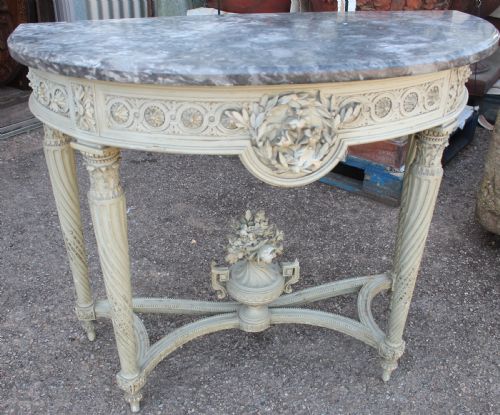
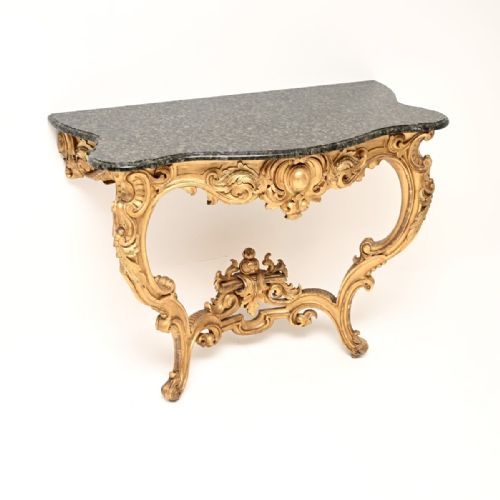
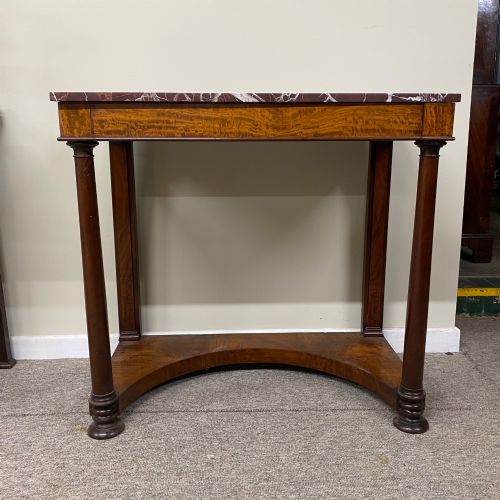
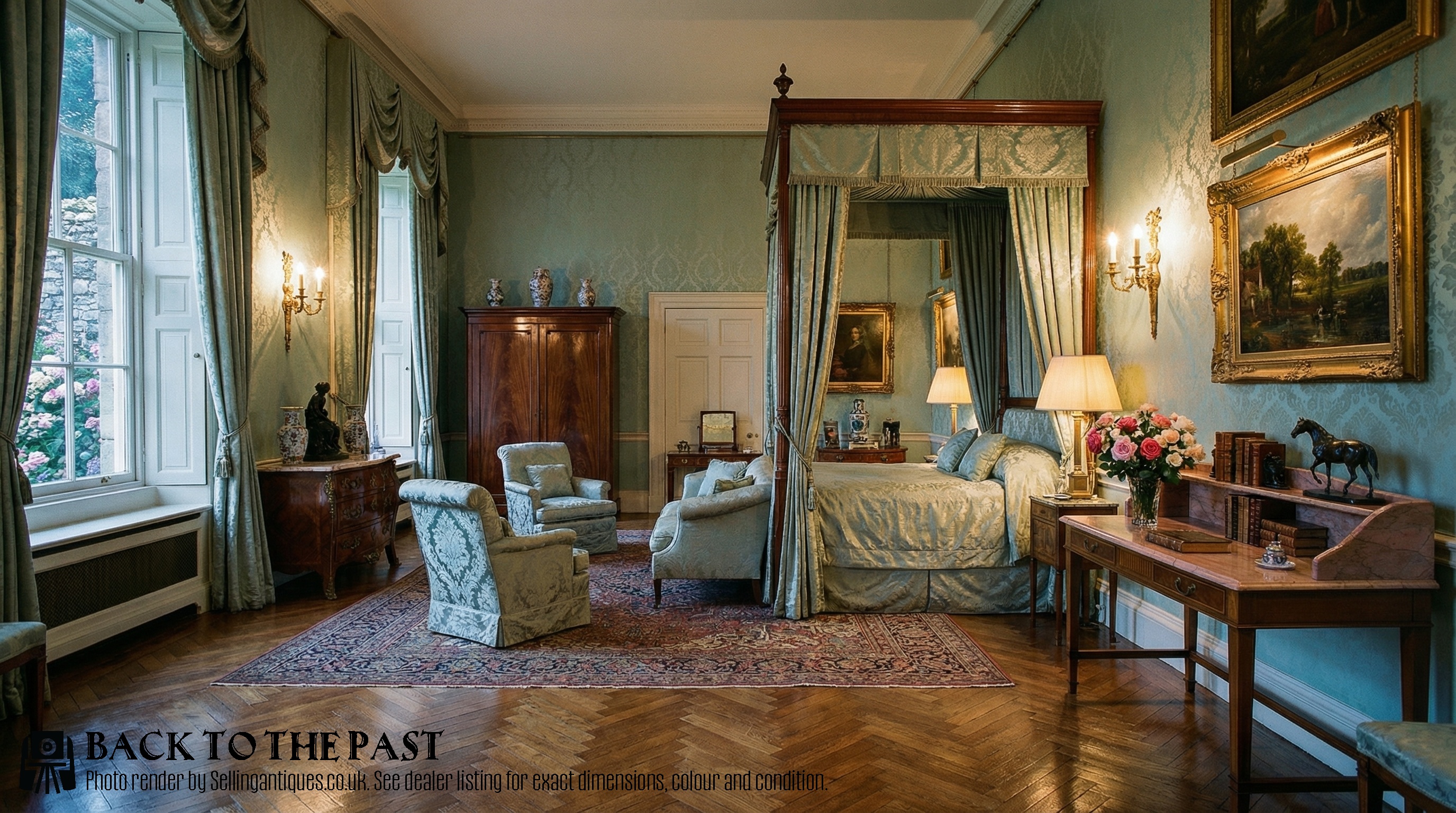
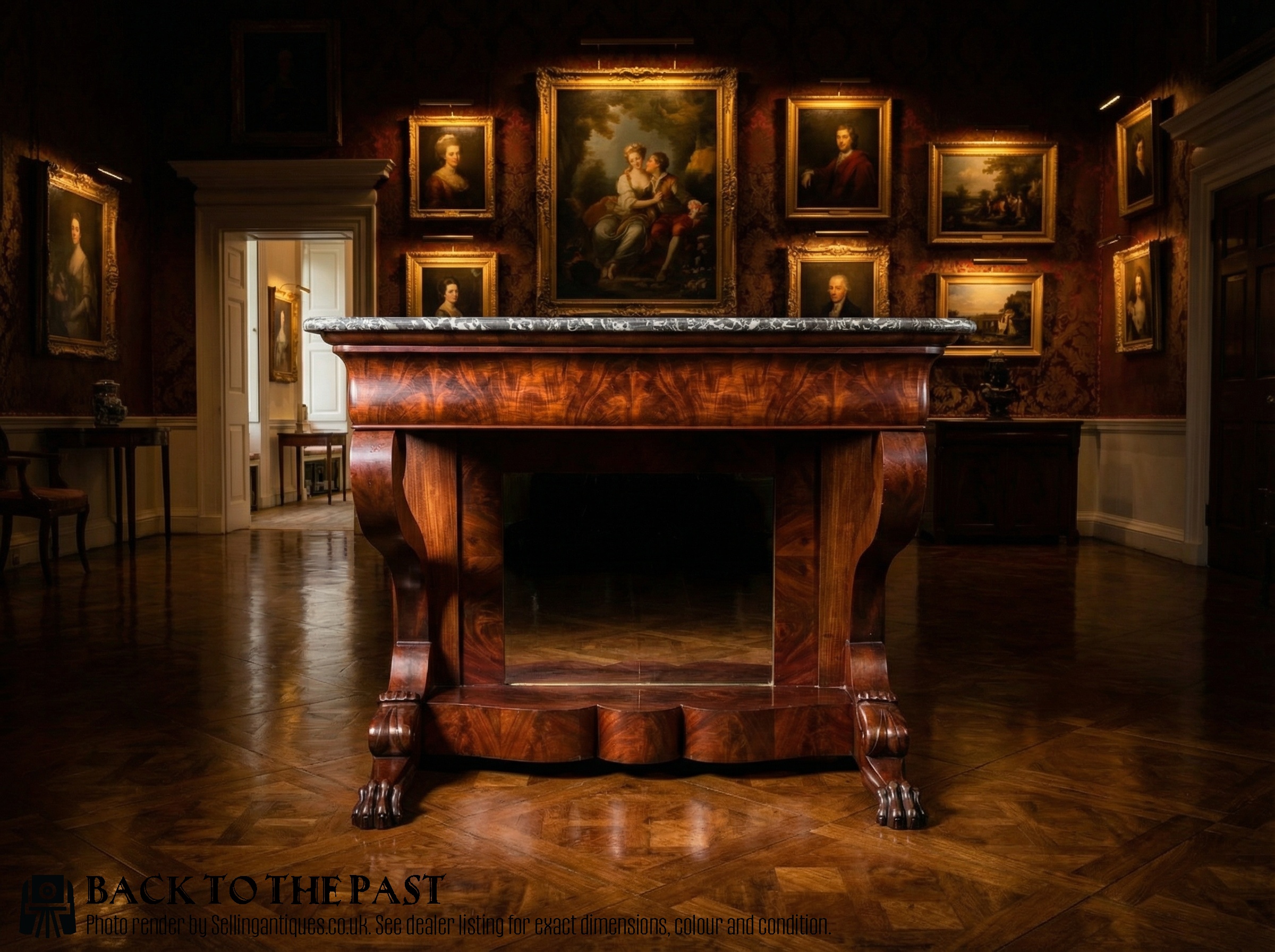
An antique marble console stands primarily against a wall as a decorative and functional surface, frequently accompanied by a matching pier mirror. These pieces emerge in various forms, including serpentine fronts, break-front designs, and smaller hall tables.
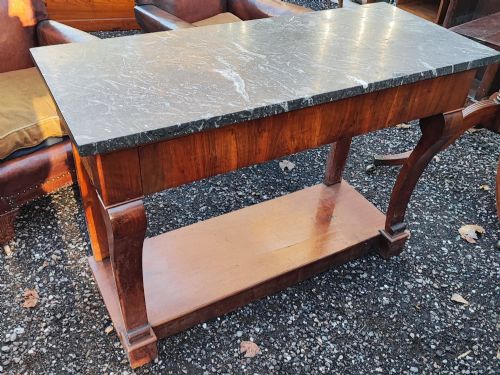
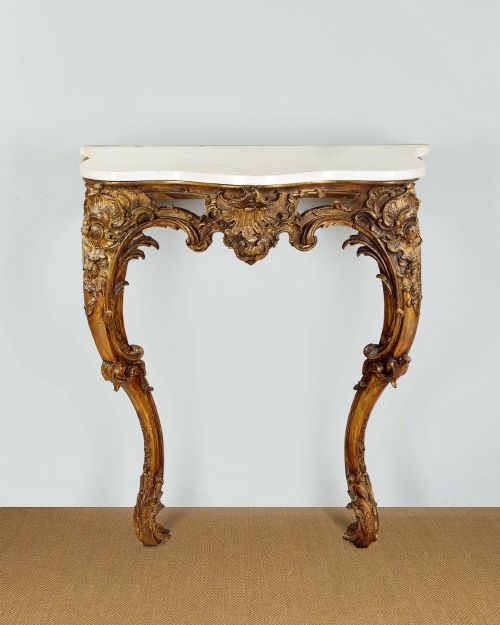
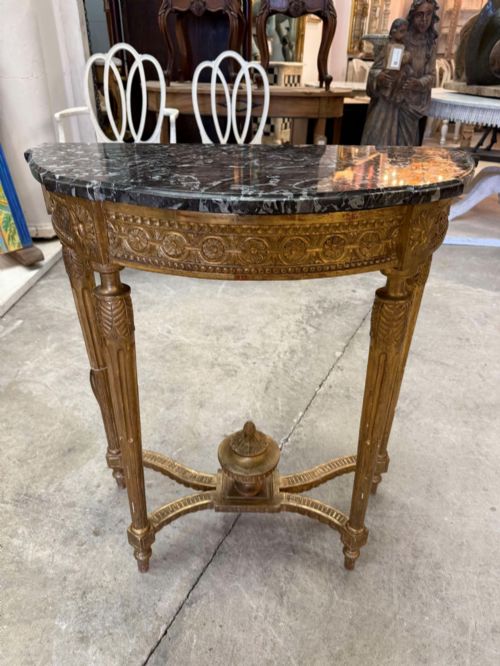
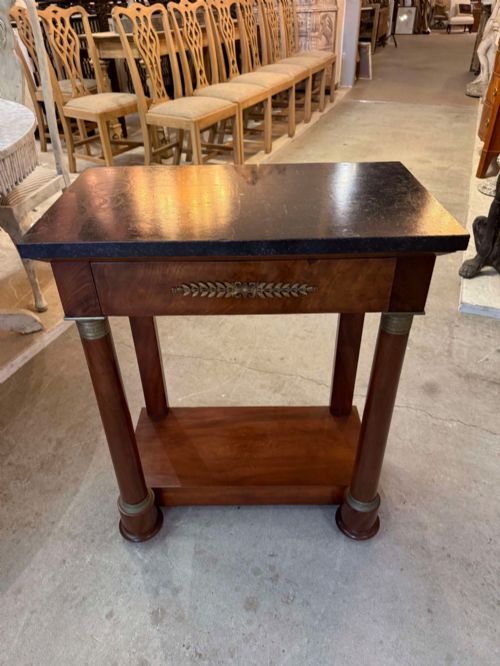
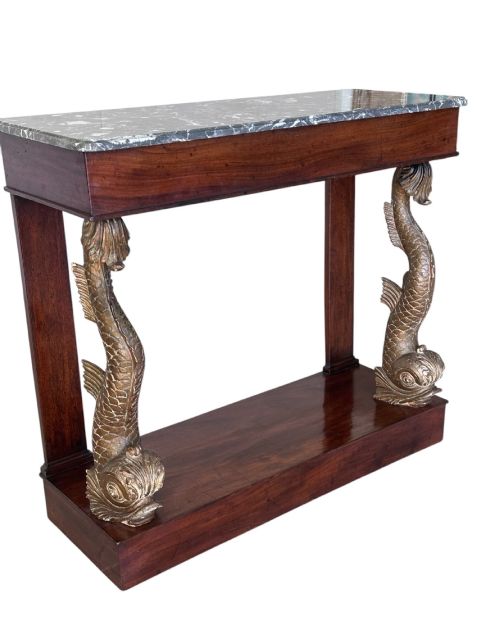
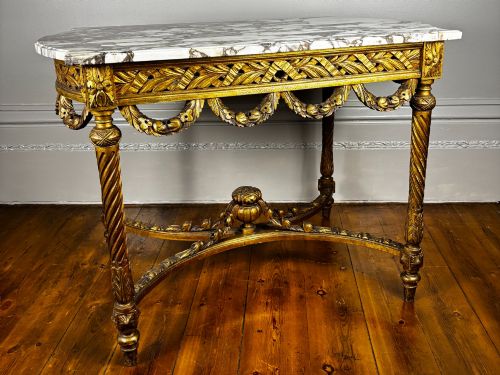
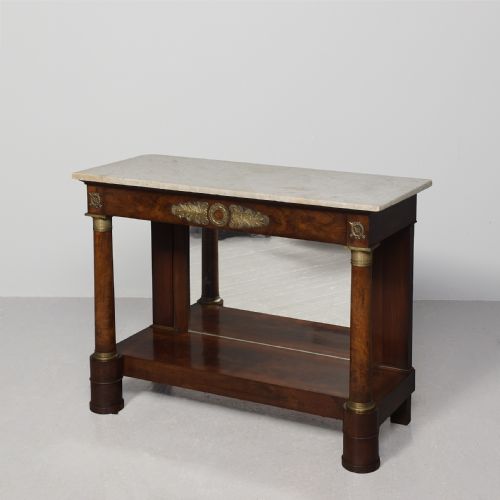
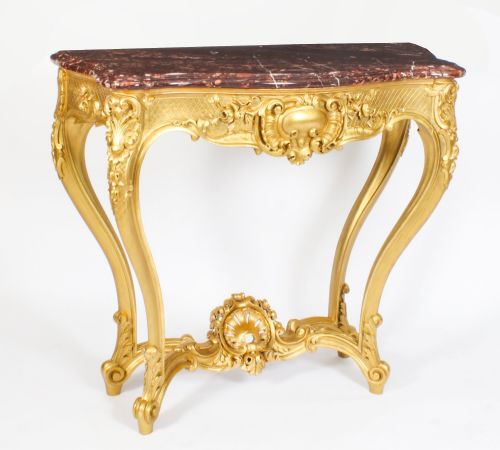
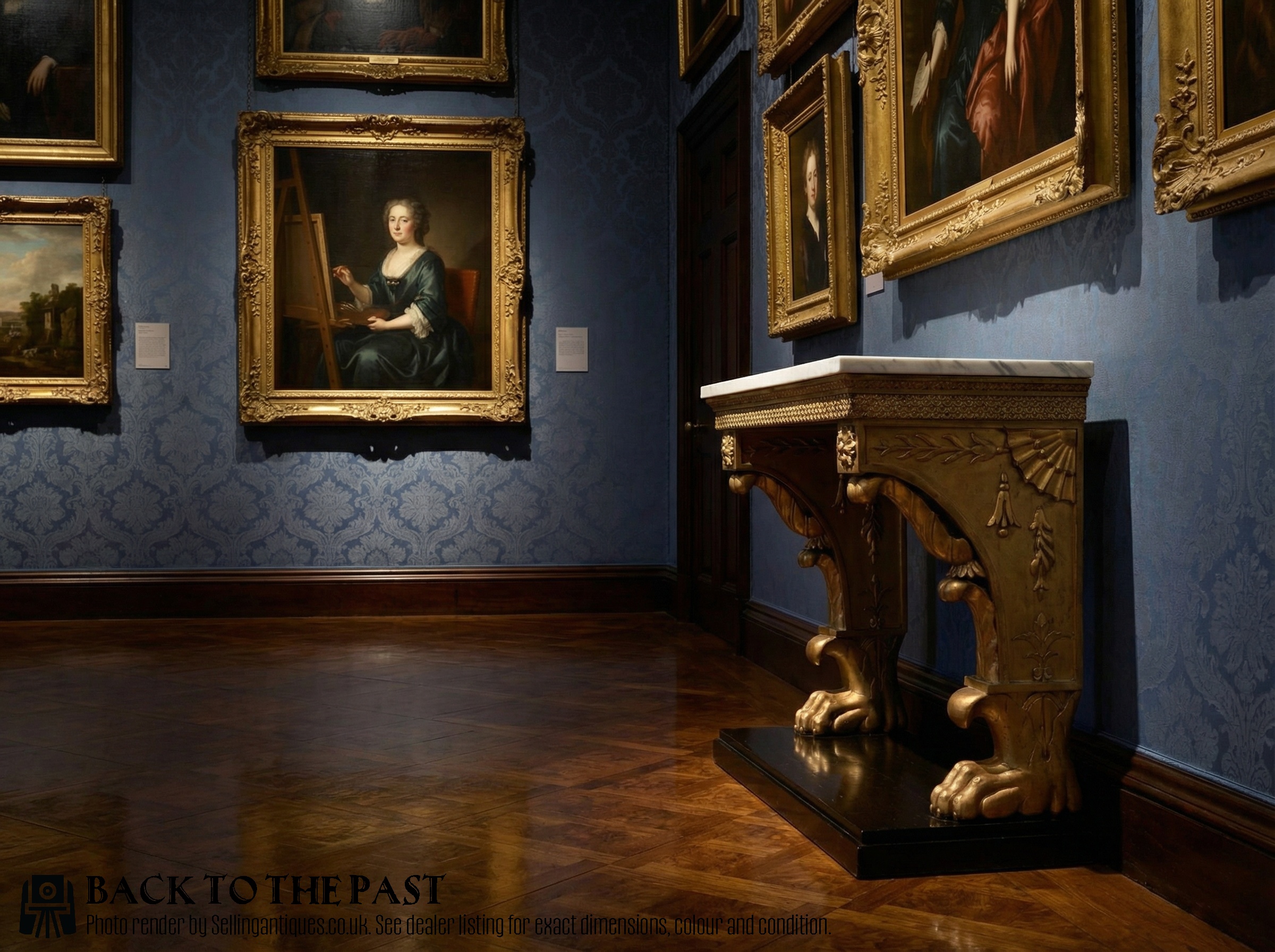
The selection ranges from eighteenth-century Italian giltwood examples to nineteenth-century French empire and Victorian mahogany pieces. Buyers frequently encounter French and Italian designs featuring heavy carved woodwork paired with figured stone slabs.
Makers and workshops across Britain and continental Europe produced these tables for formal reception rooms, hallways, and drawing rooms. The surviving inventory demonstrates a strong preference for eighteenth and nineteenth-century craftsmanship.
Materials and construction
Carpenters utilised dense timbers such as mahogany, walnut, and oak to build the structural chassis and legs, often applying gesso and gold leaf to the show surfaces. Giltwood frames required intricate hand-carving in softwoods before gilding was applied.
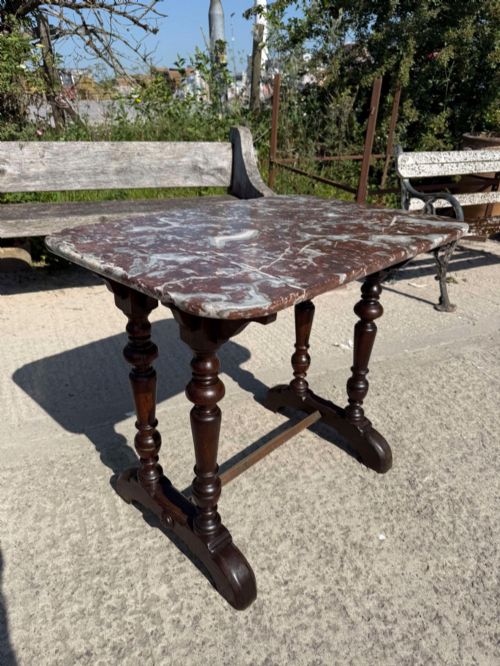
Slabs of marble, including Carrara and figured varieties like breche d'alep, were heavily polished and fitted precisely into the timber or iron framework. Wrought iron and brass also appear in specific regional French and English workshop pieces.
Cabinetmakers employed dovetail joints for drawers and reinforced the wall-mounted structures to support the considerable weight of the stone tops.
Antique Marble Console Retail Price Guide 2026
Typical asking prices for marble console among the pieces listed under this phrase on Sellingantiques today, from the lower quarter to the upper quarter. They describe what is for sale here now, not the wider market.
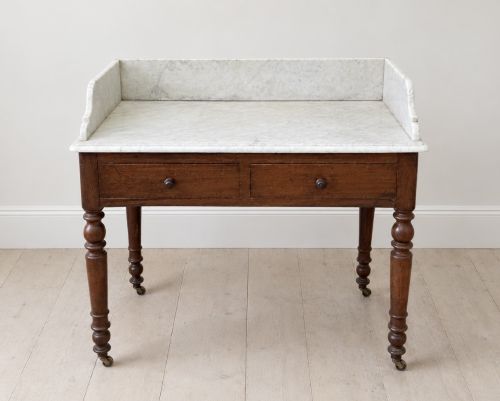
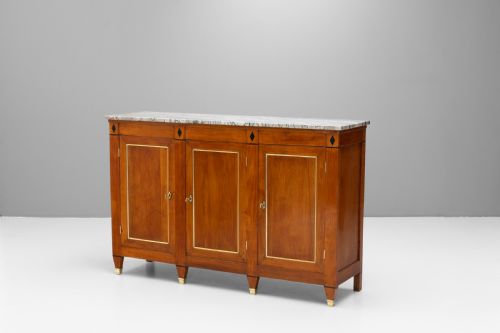
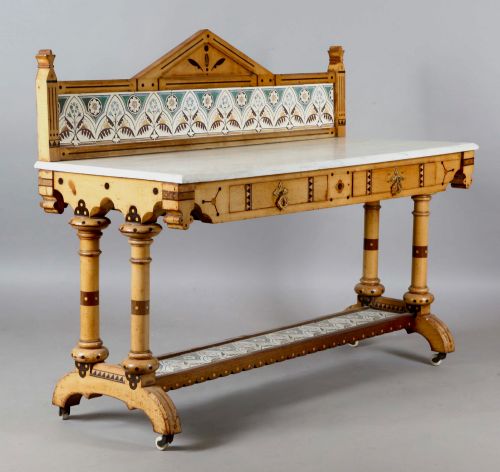
Form variations on this page span from French Empire console tables to Victorian washstands and Georgian serving tables.
Assessing quality and execution
The depth and crispness of the hand-carving on giltwood or wooden frames distinguish superior examples from standard production pieces. Fine execution shows sharp undercutting on acanthus leaves and scrolls rather than soft, moulded gesso contours.
The geological character and thickness of the marble slab significantly influence the stature of the console. Uniformity in the timber grain and the original retention of gold leaf or patination indicate high workshop standards.
Maison Millet·Krieger Paris·Lamb of Manchester
The Antique Marble Console Glossary
- Console table
- A table supported by brackets or scroll legs attached to a wall, designed to display decorative objects.
- Giltwood
- Timber that has been coated with a thin layer of gold leaf or gold paint over a prepared gesso ground. This finish defines many formal continental tables.
- Serpentine front
- A furniture front characterised by a wavy contour, curving outward in the centre and inward at the sides. It demands high skill from the cabinetmaker.
- Breche d'alep
- A specific multi-coloured quarried marble featuring brecciated fragments in brecciated tones of brown, cream, and purple. It frequently tops eighteenth-century French tables.
Antique Marble Console: Frequently Asked Questions
How do I secure an antique marble console to the wall?
Many console tables were originally designed as wall brackets or tables that rely on structural fixing for stability due to the weight of the stone top. Metal brackets or manufacturer straps attached to the rear framework secure the piece safely against plaster or masonry.
Consult a professional restorer or joiner to ensure the fixings match the weight distribution of the specific timber and stone combination.
What is the difference between a console and a side table?
Console tables traditionally anchor directly against a wall and often feature two front legs with rear brackets, whereas side tables stand independently on four legs. Console tables also tend to emphasise decorative wall presentation rather than general utility.
In historical listings, the terms overlap considerably depending on whether the piece was built for a narrow hallway or a drawing room pier space.
How should I clean an antique marble top?
Regular dusting with a dry, soft cloth prevents particulate accumulation on the polished stone surface. Avoid acidic cleaners, vinegar, or citrus solutions, which etch and ruin the historical polish of calcium-based stones.
Warm water and a neutral soap applied sparingly, followed by immediate drying, maintain the natural finish without damaging the porous material.
Are these tables suitable for heavy daily use?
While the marble top provides a durable, heat-resistant surface for serving or display, the antique wooden or gilt frames require careful placement away from high-traffic zones. Delicate carved gesso and gold leaf can chip if bumped repeatedly by foot traffic or furniture.
Positioning the console in a hallway or drawing room protects the structural integrity of the joints while preserving the surface finish.