

18th Century Console
An 18th century console brings architectural presence and refined craftsmanship to a room, offering a surface designed originally to stand against a wall.
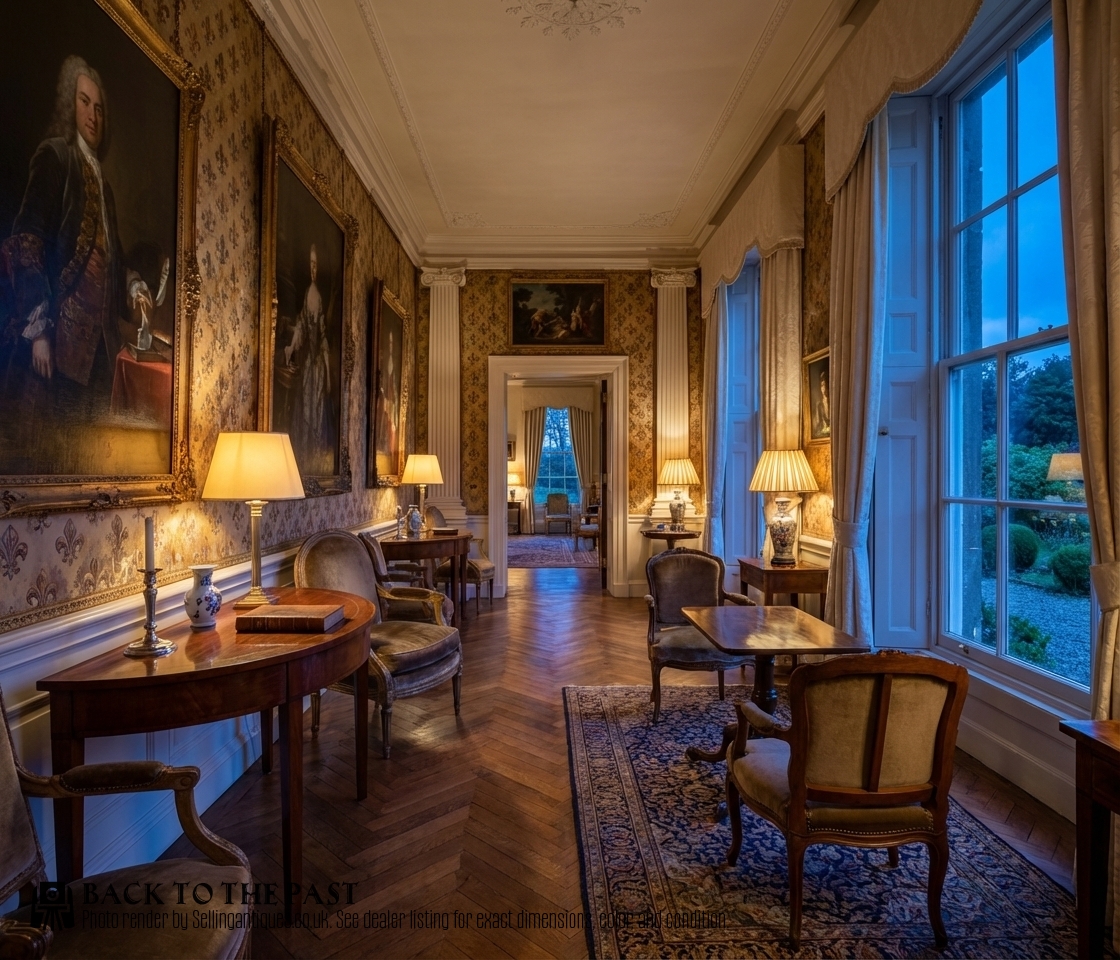
18th Century Console
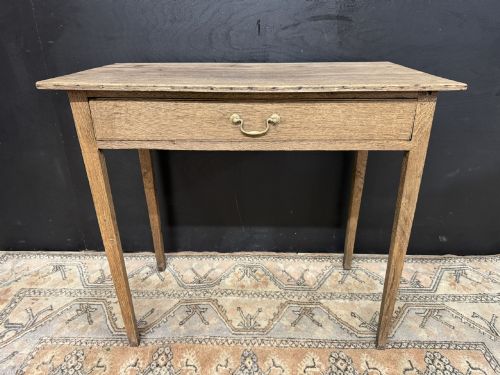
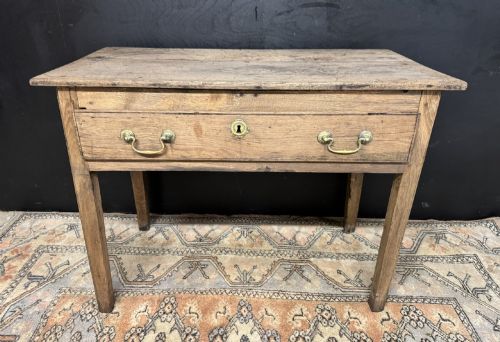
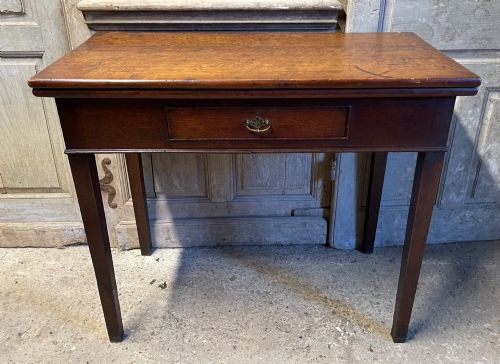
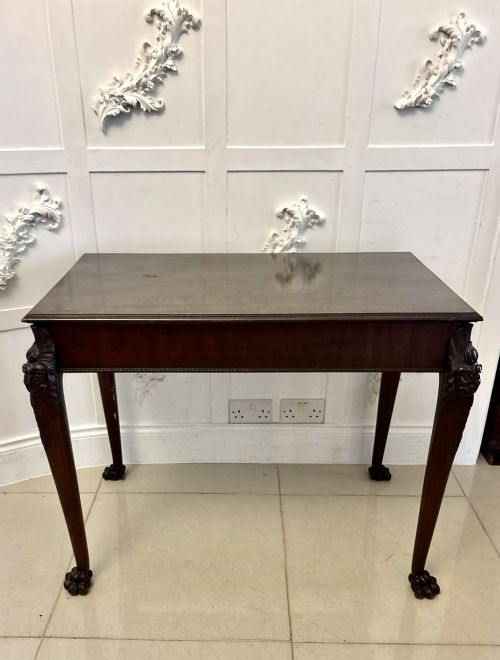
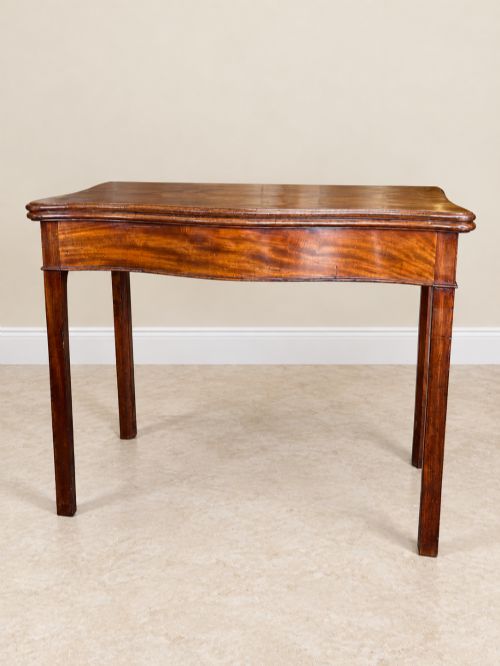
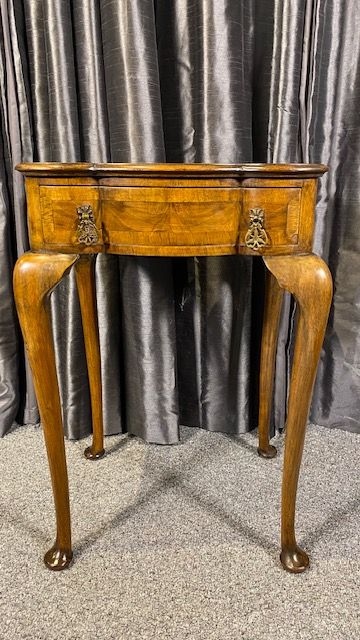
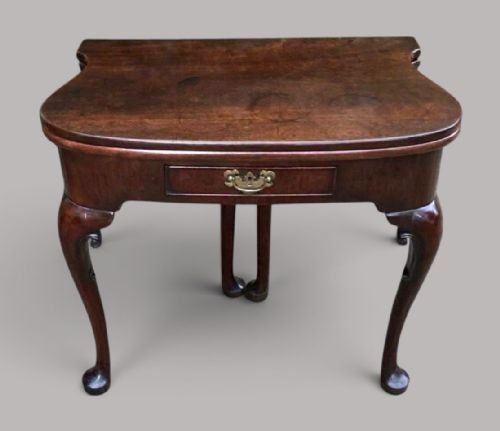
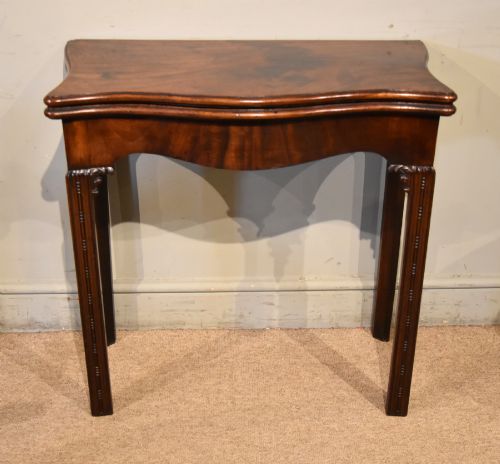
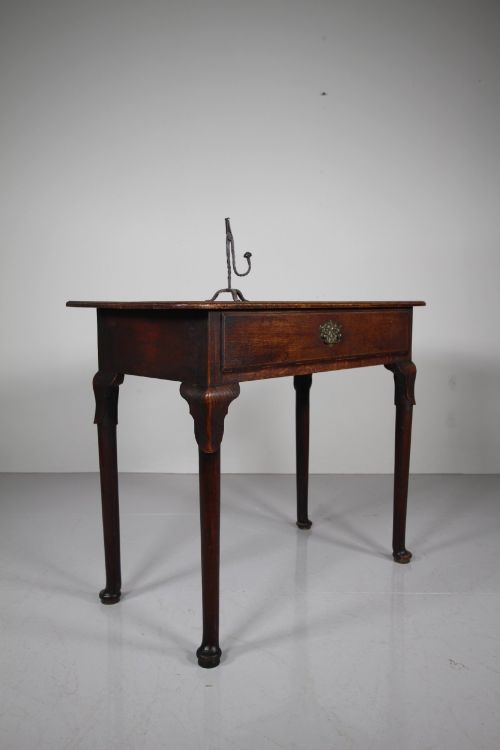
When searching for an 18th century console, buyers encounter tables built for formal reception rooms and domestic spaces alike, often taking the form of demi-lune shapes, fold-over card tables, or wall-mounted tables.
The selections recorded here encompass English, French, Italian, and Spanish origins, displaying regional timber choices and decorative idioms ranging from restrained Georgian lines to elaborate continental carving.
Many examples function as serving tables or display surfaces, while others integrate marquetry or painted finishes that reflect the changing tastes of the period.
Materials and construction
Cabinetmakers of the period relied heavily on solid hardwoods such as mahogany, oak, and walnut, frequently utilising softer secondary timbers for internal framing and drawer linings.
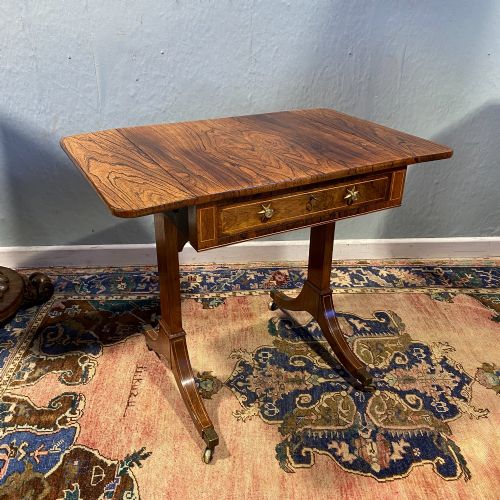
Decorative surfaces were enhanced through elaborate techniques including veneer work in burr woods, satinwood, and kingwood, alongside intricate inlay and marquetry.
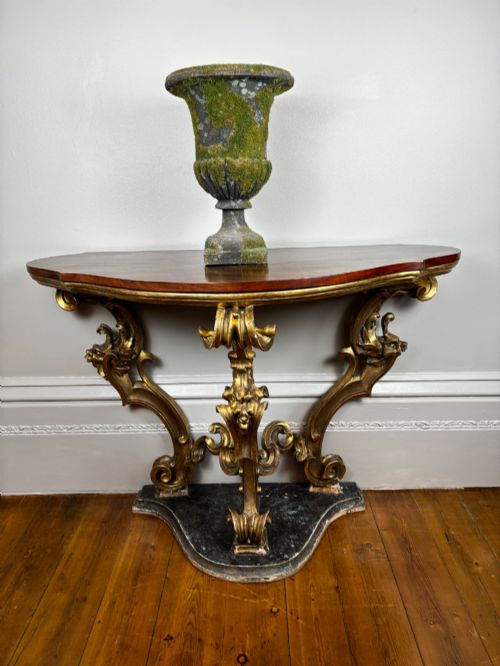
Giltwood consoles combined carved wooden structures with applied gold leaf, frequently paired with thick marble slabs fitted directly to the upper frame.
18th Century Console Retail Price Guide 2026
Typical asking prices for 18th century console among the pieces listed under this phrase on Sellingantiques today, from the lower quarter to the upper quarter. They describe what is for sale here now, not the wider market.
Card tables often conceal secret compartments behind swing legs designed to hold loose coins and gaming counters.
Evaluating craftsmanship
The distinction between standard utility pieces and superior examples rests in the selection of figured timber veneers, the crispness of hand-carved mouldings, and the structural integrity of the joints.
Higher grade tables demonstrate careful grain matching across expanses like demi-lune tops, alongside sophisticated design elements such as crossbanding and finely executed stringing.
Continental pieces achieve their standing through the depth and fluidity of their carved foliage, gilding quality, and the weight of their original marble inserts.
The 18th Century Console Glossary
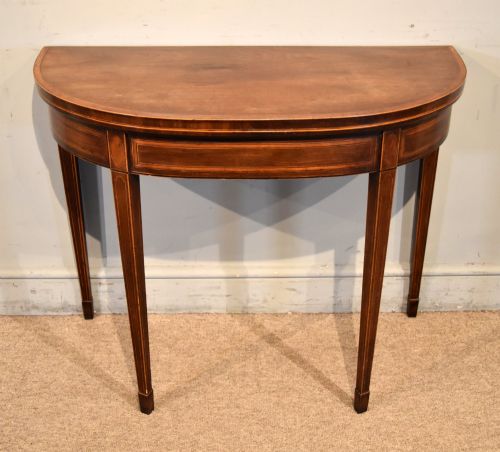
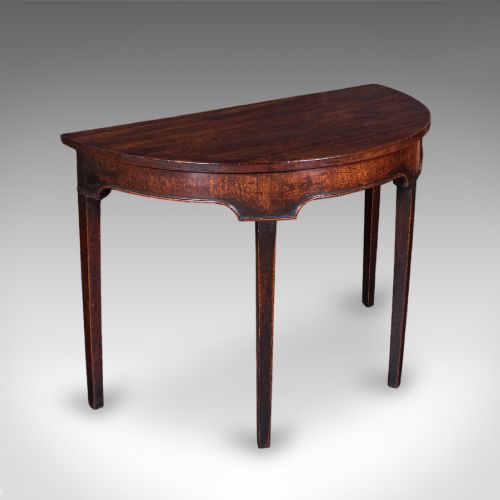
- Demi-lune
- A half-moon shape popular for console tables designed to sit flush against a wall. These tables frequently pair together to form a circular dining table.
- Marquetry
- An art form utilising fitted pieces of wood veneer to create pictorial or geometric designs on a furniture surface. Craftsmen selected contrasting timbers to achieve tonal depth.
- Giltwood
- Timber that has been coated with thin sheets of gold leaf over a prepared gesso ground. This treatment was common on grand continental console tables.
- Crossbanding
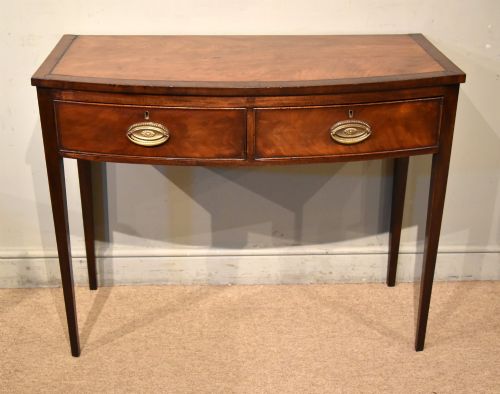
- A border technique where veneer strips are laid perpendicularly to the main grain of the table top. It creates a defined visual frame around the central panel.
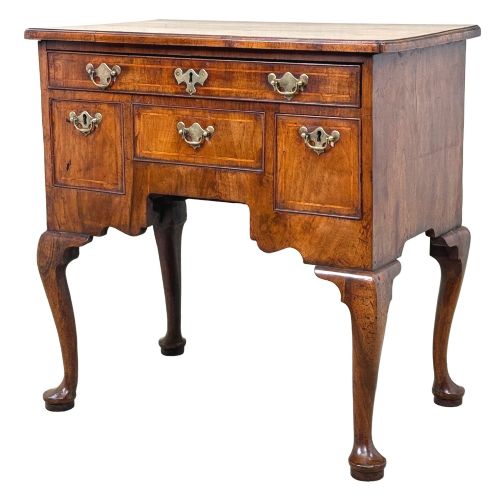
- Lowboy
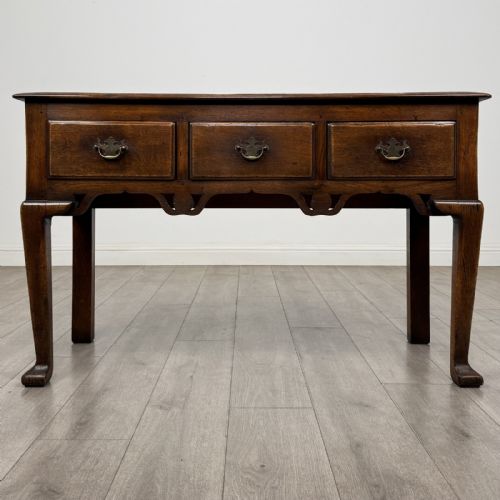
- A small oak or walnut table featuring drawers, commonly used as a dressing or side table during the early eighteenth century.
18th Century Console: Frequently Asked Questions
How were console tables used?
Console tables served primarily as decorative side pieces in formal rooms, positioned against walls beneath mirrors or paintings. They held decorative objects, lighting, or provided a surface for serving.
Fold-over variants additionally functioned as card tables for evening entertainment, opening out to reveal baize or polished wood playing surfaces.
How do I distinguish walnut from mahogany pieces?
Walnut furniture predominates in the earlier decades of the eighteenth century, displaying rich, warm brown tones with intricate grain patterns and occasional burr figuring. It yields a softer visual texture than later timbers.
Mahogany rose in prominence during the Georgian era, offering a denser, heavier substance that allowed for sharper carving and deeper reddish-brown hues.
Are marble tops original to these tables?
Many Italian and French console tables were constructed specifically to carry heavy marble slabs, which rested directly within the wooden frame. These stone surfaces were chosen to withstand moisture and display continental decorative styles.
English variants more commonly utilised solid timber or veneered wood tops, though exceptional side tables occasionally incorporated stone inserts.