

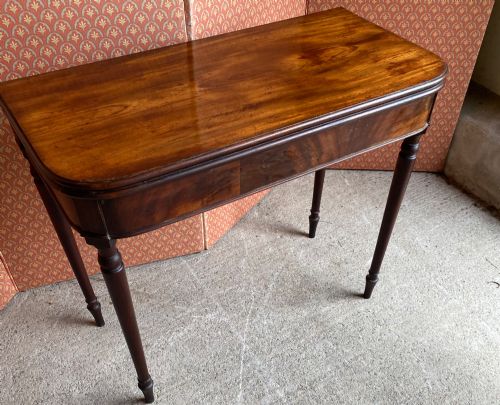
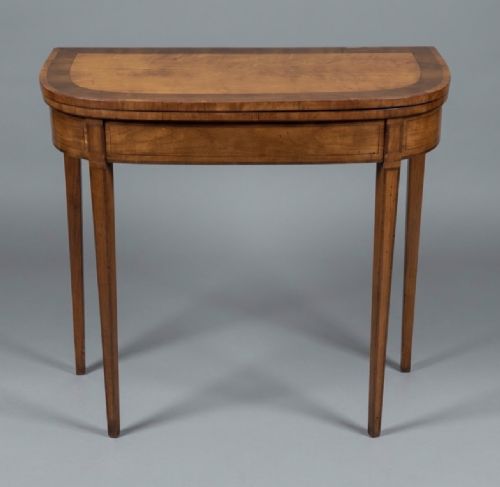
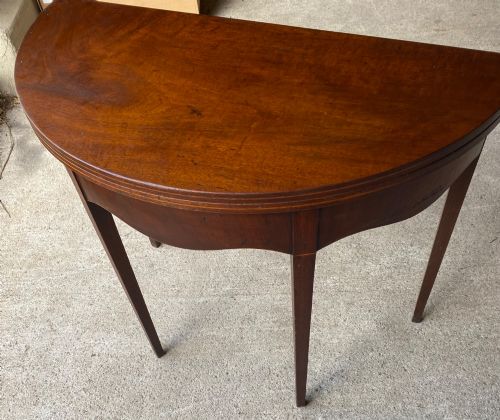
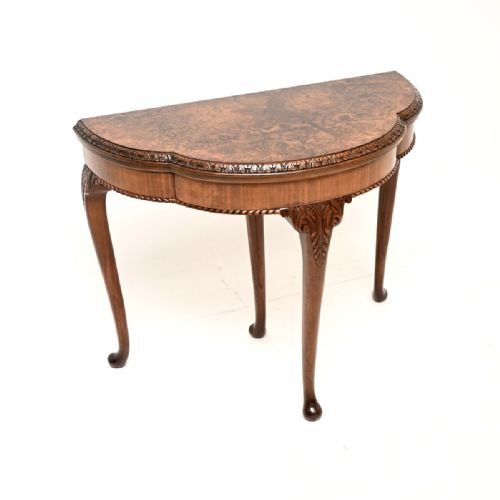
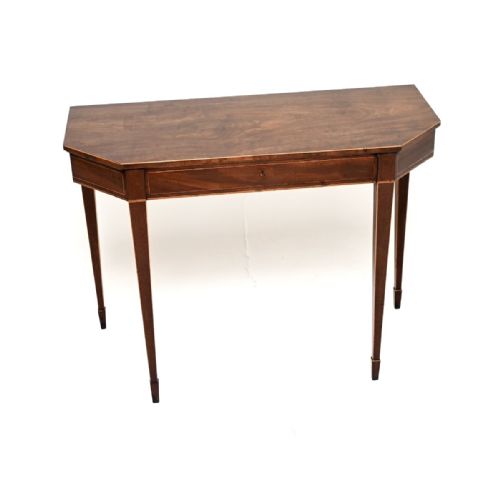
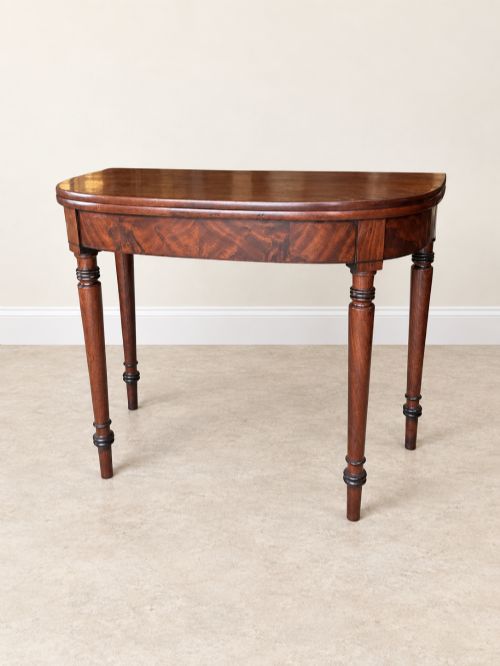
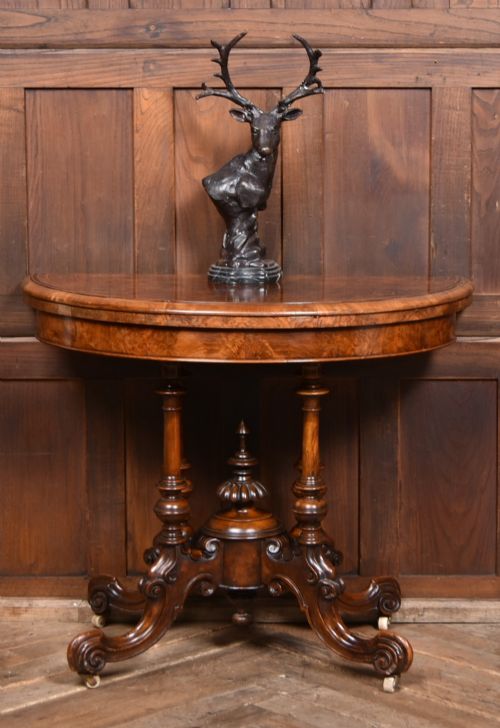
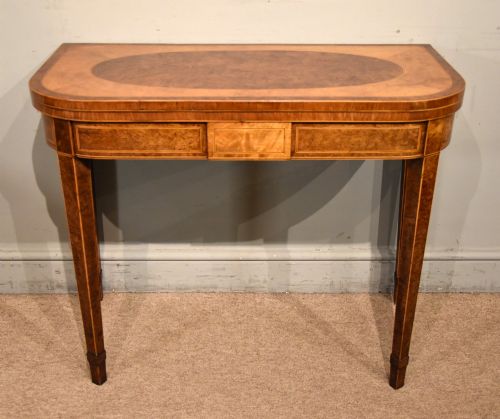
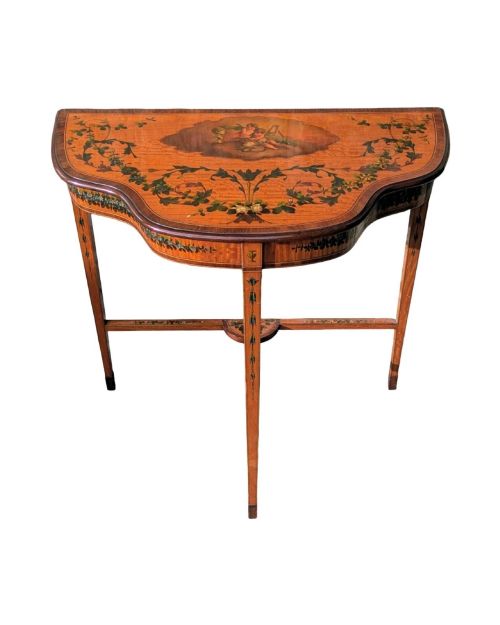
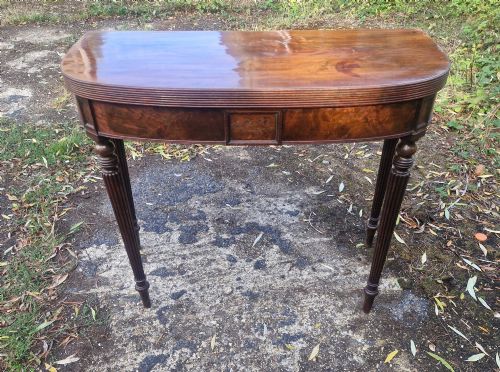
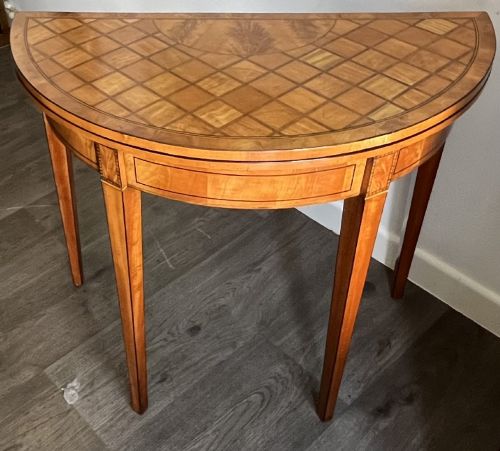
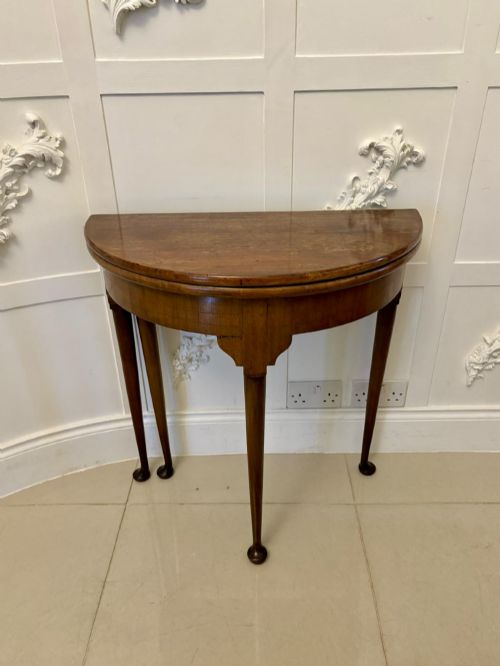
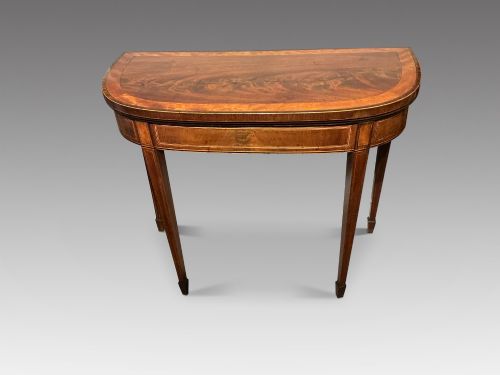
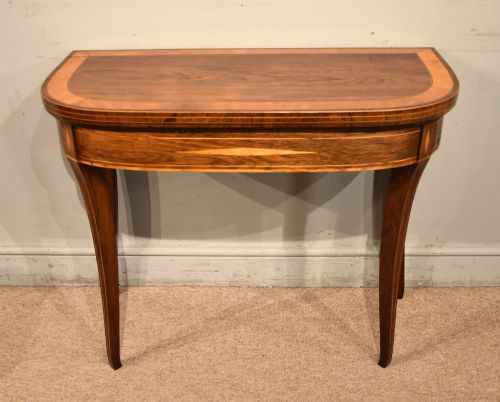
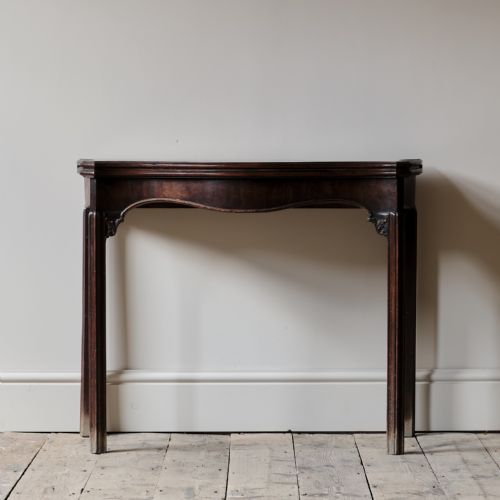
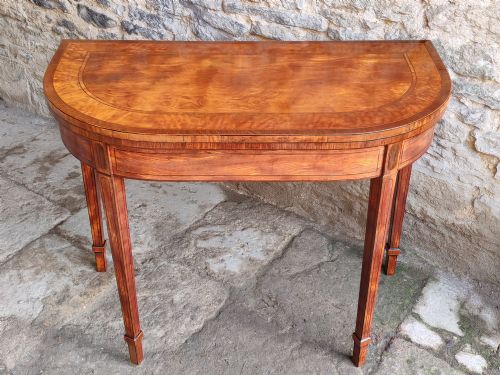
Demilune Card Table
A demilune card table brings a graceful half-round profile and a fold-over top for card games into a room with genuine period character.
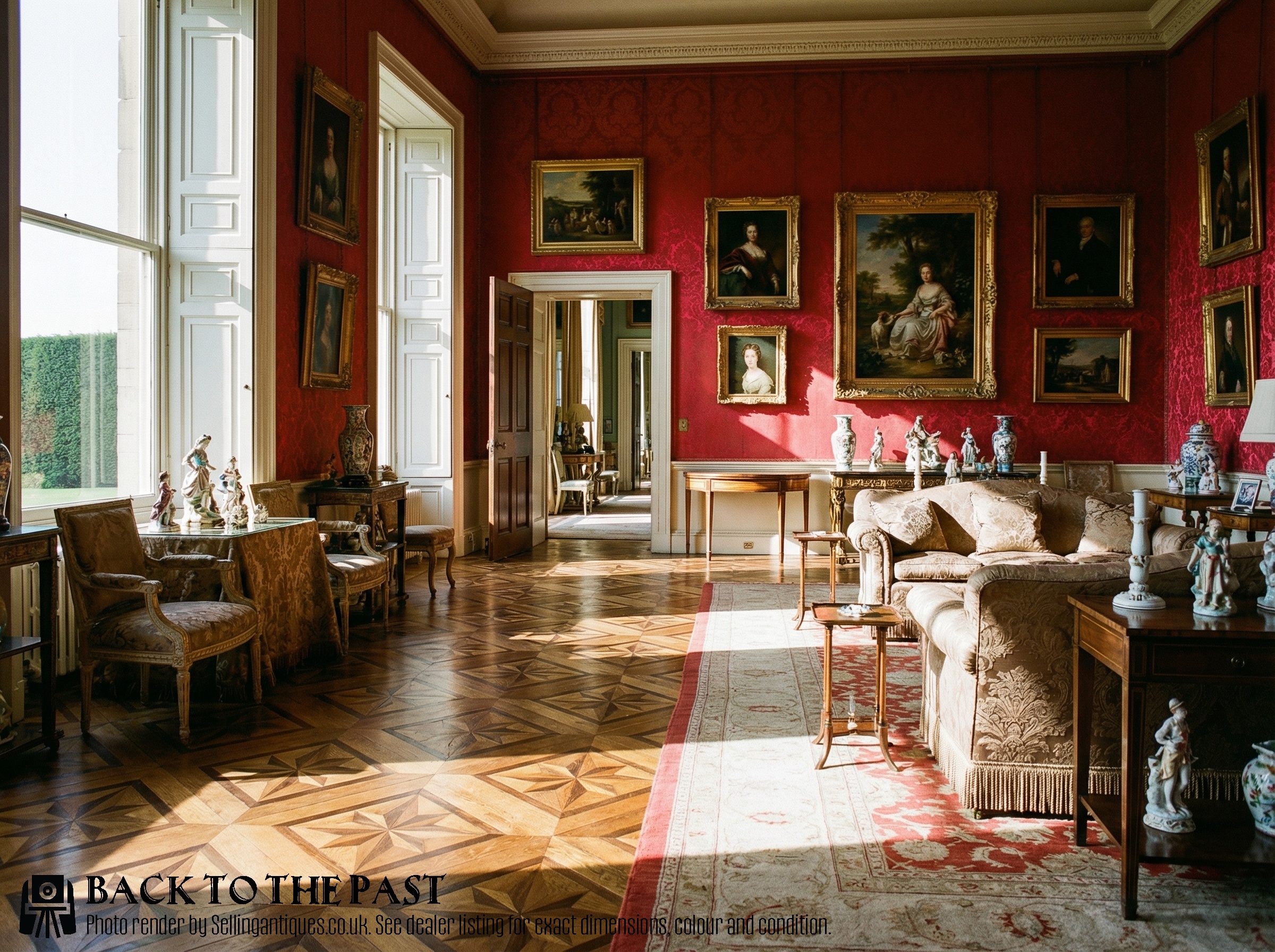
Demilune Card Table
A demilune card table provides a half-moon shape designed to sit flush against a wall when closed, opening to a full surface for gaming or tea.
The pieces appearing here span the Georgian, Regency, and Victorian eras, alongside Edwardian and later revivals.
Mahogany and satinwood dominate the earlier examples, while burr walnut and rosewood appear frequently in nineteenth-century interpretations.
Timber selection and construction
Cabinet makers utilised solid timbers alongside careful veneers, selecting Honduras mahogany, walnut, and satinwood for their natural figure.
Inlay work often incorporates boxwood and satinwood stringing, creating geometric borders and contrasting panels on the fold-over tops.
Turning and joinery methods evolved from eighteenth-century straight legs to reeded or saber supports in the Regency period.
Demilune Card Table Retail Price Guide 2026
Typical asking prices for demilune card table among the pieces listed under this phrase on Sellingantiques today, from the lower quarter to the upper quarter. They describe what is for sale here now, not the wider market.
Many tables conceal a hidden recess beneath the folding top, originally intended for storing playing cards and counters.
Indicators of refinement
The quality of a demilune card table rests upon the crispness of the timber's figure and the precision of the inlay work.
Subtleties in the hinge mechanism, the stability of the swing leg, and the depth of the mahogany grain distinguish superior workshops from standard production.
Bruce & Burns of Edinburgh·Gillows
The Demilune Card Table Glossary
- Demilune
- Having a half-moon or semicircular shape. This profile allows the furniture to stand compactly against a wall.
- Fold-over
- A hinged tabletop that doubles the surface area when opened. This design characterises both card and tea tables.
- Inlay
- Pieces of contrasting timber or other materials inserted into a recess in the primary wood. It defines decorative borders on many tabletops.
- Veneer
- A thin layer of figured wood applied to a secondary timber base. Cabinet makers used this technique to display striking grain patterns.
- Reeded
- Carved with parallel convex mouldings resembling bundled plant stems. This decorative turning appears frequently on Regency legs.
Demilune Card Table: Frequently Asked Questions
How do these tables function?
These pieces operate with a hinged top that folds open to reveal a baize or polished wood surface for games. A rear leg swings outward from the frame to support the extended leaf.
When closed, the flat back allows the furniture to rest neatly against a wall as a console or side table.
Where should I place one?
The flat straight edge fits securely against any hallway or living room wall. They work well beneath mirrors or paintings.
Opening the top requires clearance around the piece for guests to sit or stand comfortably.
How do I identify the period?
Georgian examples often display straight tapering legs and subtle mahogany veneers. Regency pieces introduce saber legs, brass mounts, and rosewood.
Edwardian versions typically show revival styling with lighter satinwood marquetry.
Are these items purely decorative?
Every piece retains its original mechanical function for folding and supporting a surface. Many owners use them daily for writing or display.
The sturdy timber construction handles normal domestic use reliably.