

Vintage Games Table
A vintage games table offers a dual-purpose surface for social leisure, bringing traditional craftsmanship and refined timber work into the modern room.
What a vintage games table is
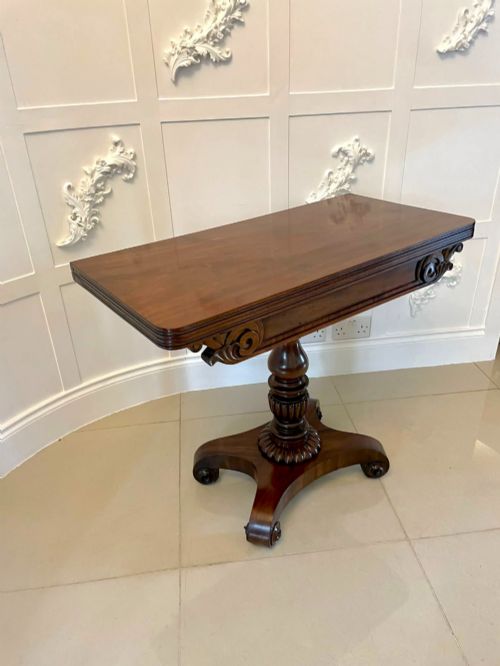
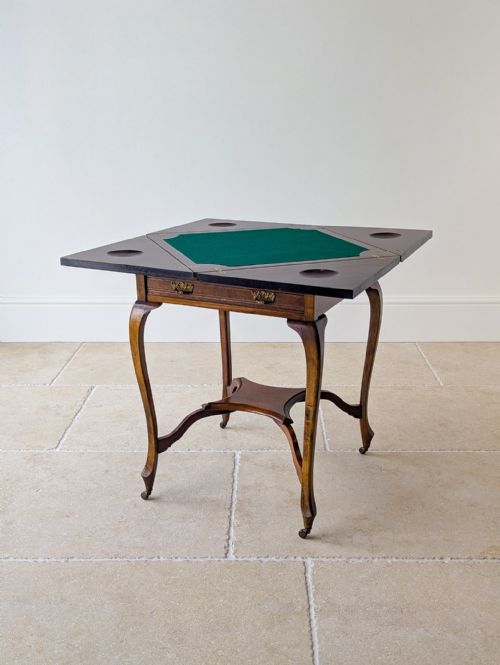
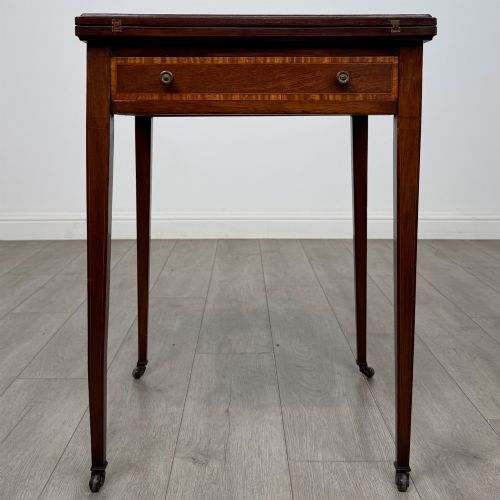
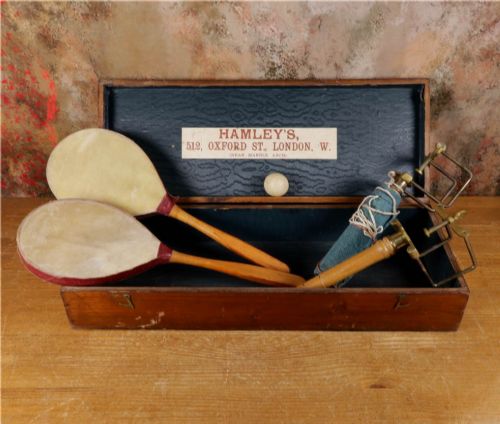
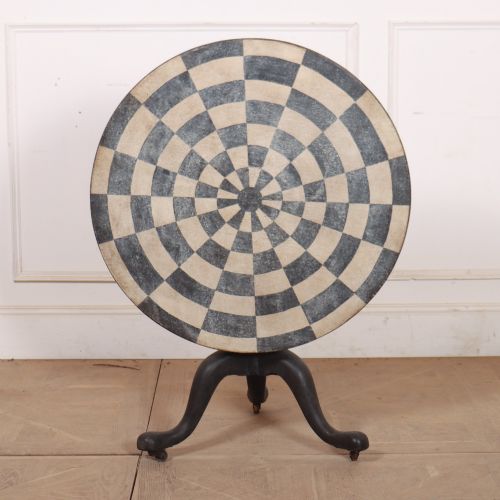
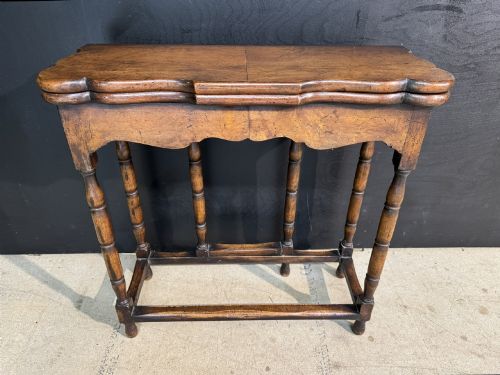
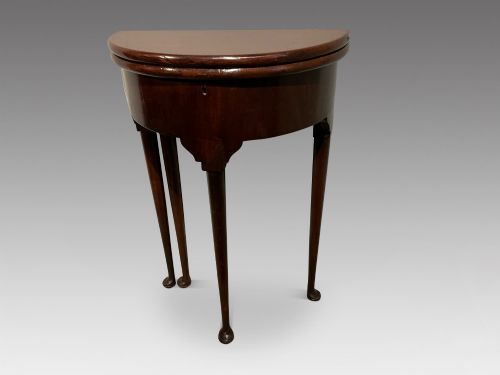
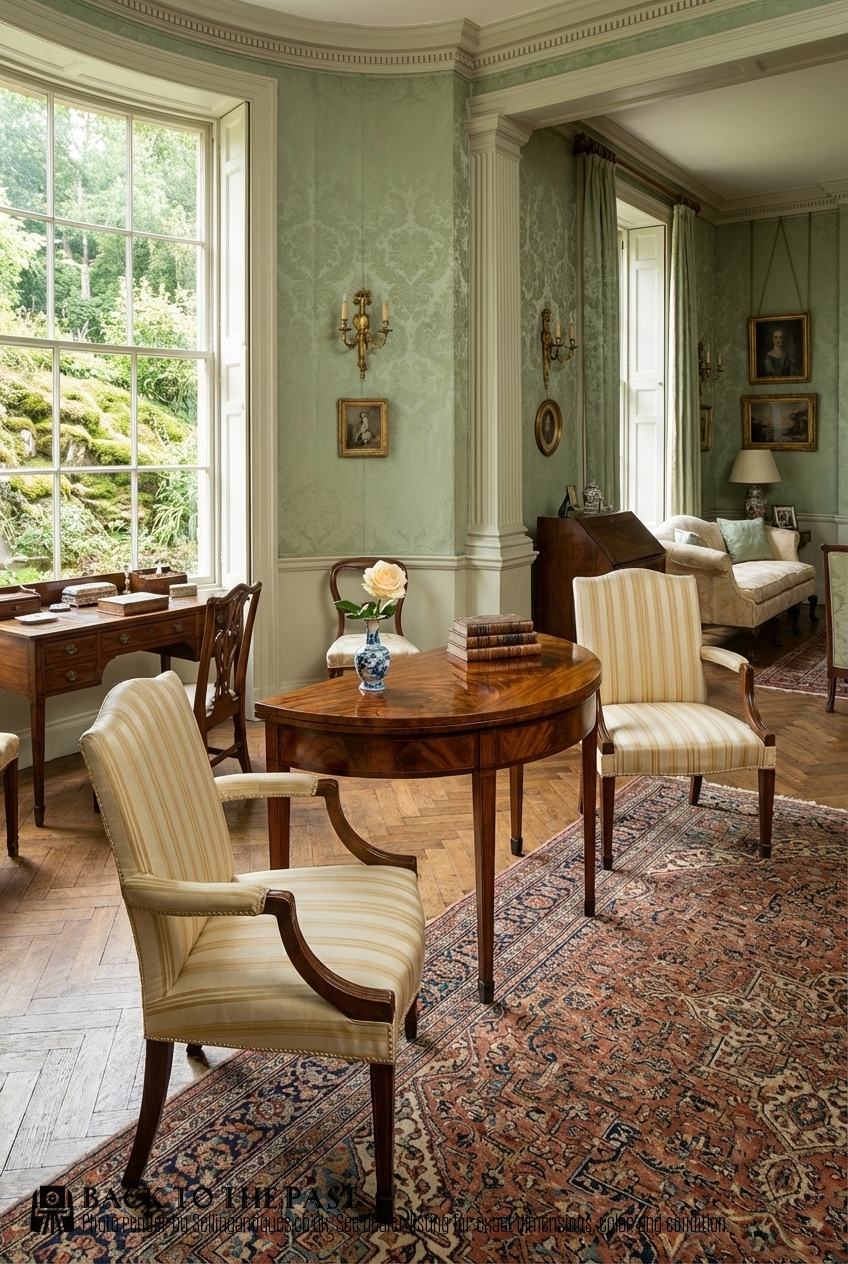
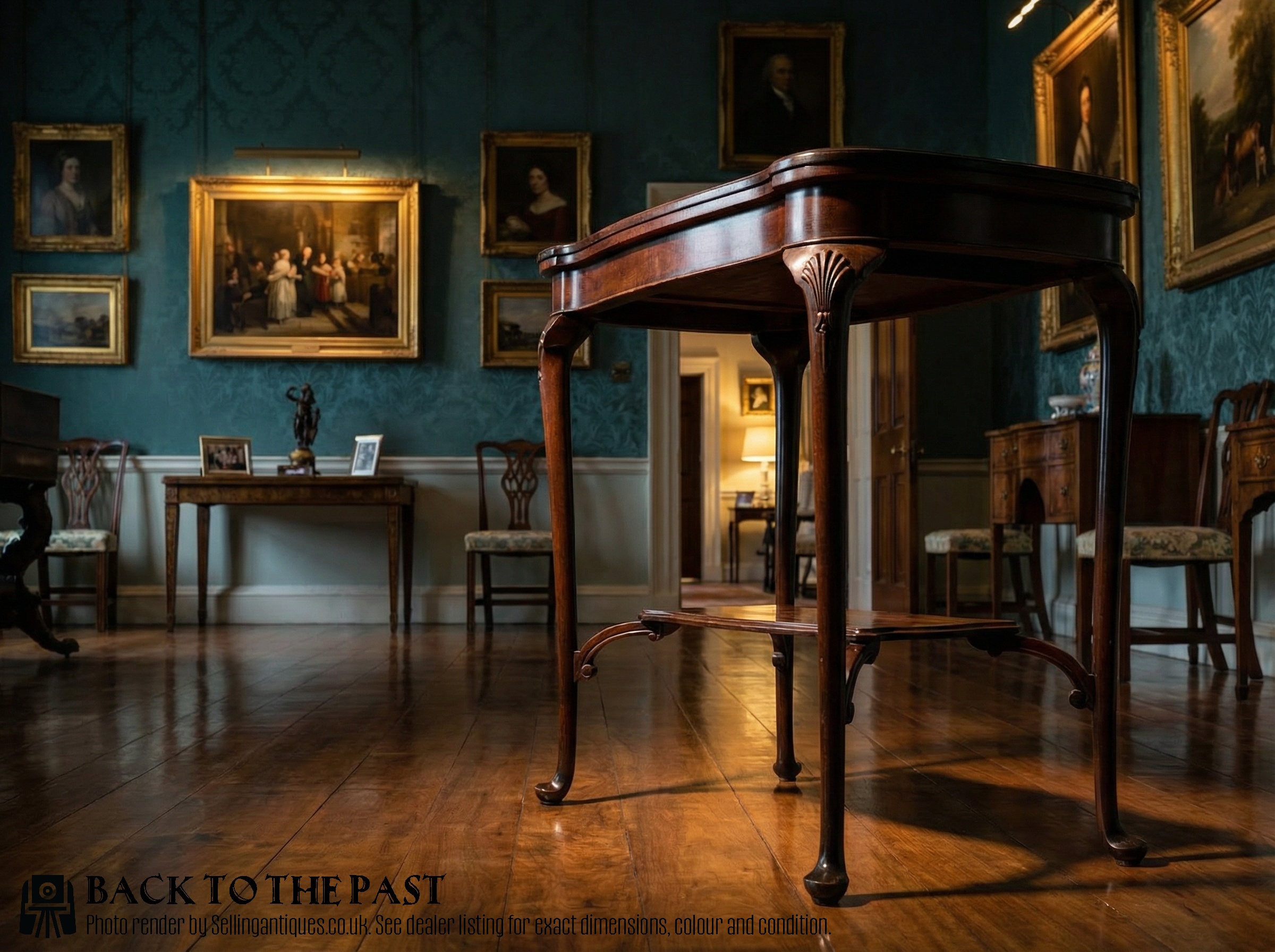
A vintage games table is a multifunctional piece of furniture designed for leisure and display, most commonly taking the form of a fold-over card table, side table, or sofa table. These pieces emerge from periods spanning the eighteenth century through to the nineteen-thirties, reflecting shifting domestic habits and social pastimes.
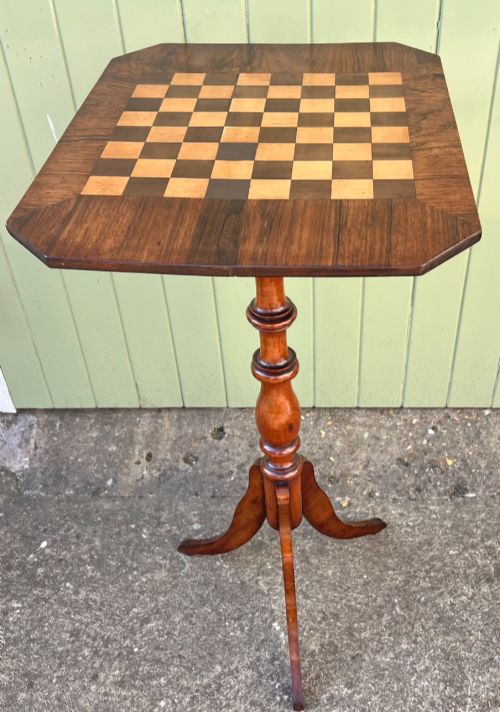
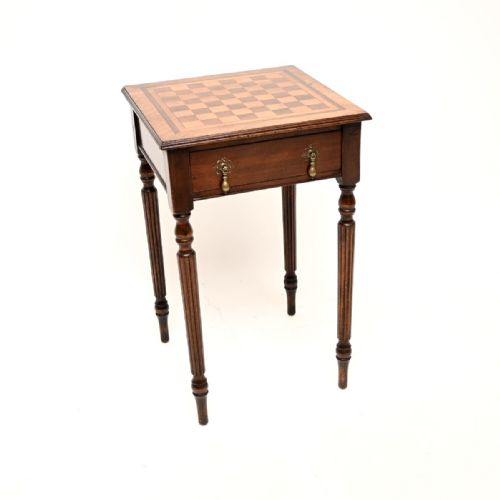
The versions most frequently met on this page include Sheraton revival models, nineteenth-century rosewood chess tables, and Edwardian Queen Anne style tables. They combine everyday utility with specialist surfaces intended for cards, chess, and board games.
Makers and designers drew upon historical idioms such as Regency revival, Louis XV manner, and Sheraton styles, producing varied silhouettes from demi-lune shapes to rectangular folding tops.
How they were made
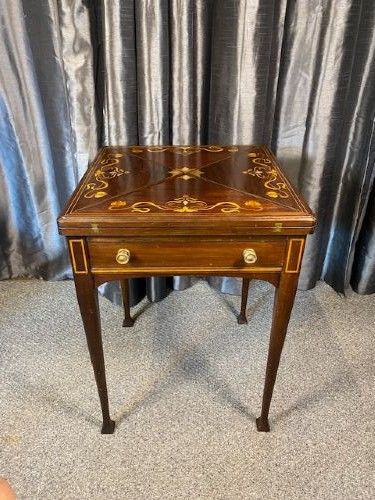
Cabinet makers constructed these tables using dense timbers such as mahogany, rosewood, kingwood, and walnut, frequently applying boxwood, ebony, and specialised wood inlay to ornament the surfaces. Crossbanding and intricate veneers provide geometric and botanical borders.
Construction techniques rely on traditional joinery to support folding tops, pivoting leaves, and concealed compartments designed for playing pieces and cards.
Retail Price Guide 2026
Typical UK retail prices for vintage games table, calculated from the Sellingantiques database of over a million retail prices indexed since 2003. This retail price guide relies exclusively on Sellingantiques data; no external sources or auction records are used, so the figures do not describe the wider market.
The listings span the eighteenth century, nineteenth century, Edwardian era, and nineteen-thirties, featuring mahogany, rosewood, kingwood, and walnut.
What varies in quality
Quality rests in the precision of the timber selection, the crispness of the inlay work, and the stability of the folding mechanisms. Finer examples display tightly matched grain patterns and restrained decorative banding.
The refinement of the carving, the weight of the brass fittings, and the seamless integration of folding or pivoting leaves distinguish superior workshops from standard production.
Howard & Son's
The Vintage Games Table Glossary
- Demi-lune
- A half-moon shape used for card tables designed to sit flush against a wall when closed. This silhouette was particularly popular in eighteenth and nineteenth-century Sheraton designs.
- Crossbanding
- A strip of veneer applied perpendicularly to the grain of the main surface, creating a contrasting border. It frames the top of mahogany and walnut tables.
- Inlay
- The technique of embedding contrasting woods, such as boxwood and ebony, into the primary timber of the top. This creates geometric lines and decorative motifs.
- Sofa table
- A long, narrow table traditionally placed in front of a sofa, often featuring drop leaves and drawers. They frequently double as games or writing surfaces.
Frequently Asked Questions
What is a vintage games table used for?
These tables were built to accommodate card games, chess, and general entertaining in the home. When closed, they functioned as side tables or console surfaces.
Their dual-purpose nature made them adaptable to formal drawing rooms and sitting spaces alike.
How do I identify the period of a games table?
Dating relies on the combination of timber choice, structural style, and decorative motifs such as inlay. Eighteenth-century pieces often feature Sheraton lines, while Victorian versions favour rosewood and heavier proportions.
Revival styles from the Edwardian era and nineteen-thirties borrow freely from earlier Queen Anne and Georgian aesthetics.
Are all vintage games tables meant for cards?
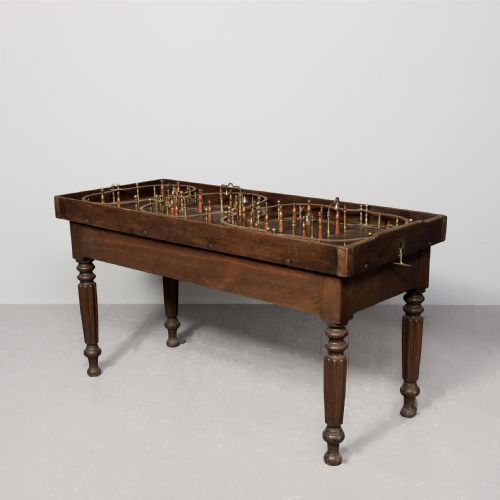
While card tables and fold-over variations are the most common, specialised forms exist for specific pastimes. Some surviving examples incorporate dedicated chess boards or multi-functional compartments.
Sofa tables and side tables with game tops offer similar versatility without dedicated boards.
How should I care for a wood inlaid table?
Maintain the timber by keeping it away from direct sunlight and sudden temperature changes, which can dry out veneers and inlays. Regular dusting with a soft, dry cloth preserves the polished finish.
Avoid placing damp items directly onto antique polished surfaces to protect the historical finish.