

Sheraton Revival Furniture
Sheraton Revival furniture brings the refined neoclassical elegance of the eighteenth century into late Victorian and Edwardian interiors through lighter woods and delicate painted decoration.
Sheraton Revival Furniture
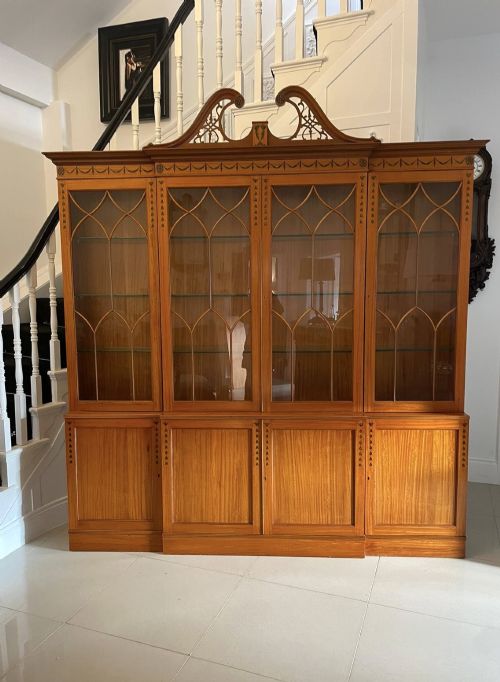
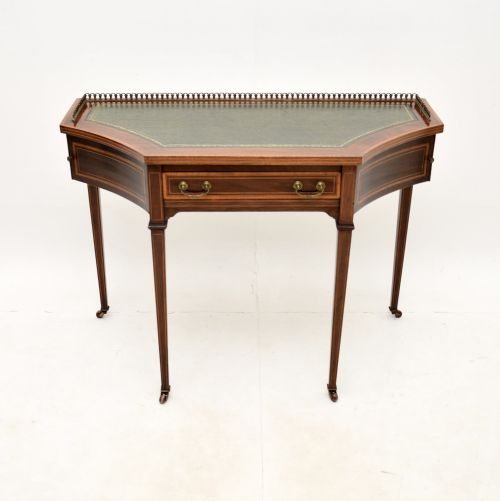
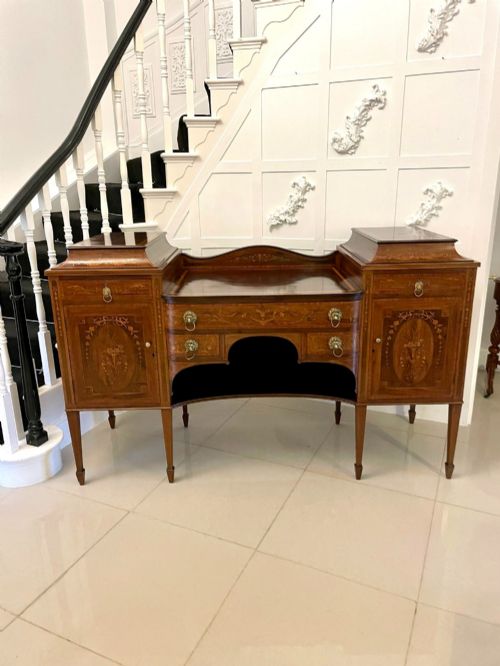
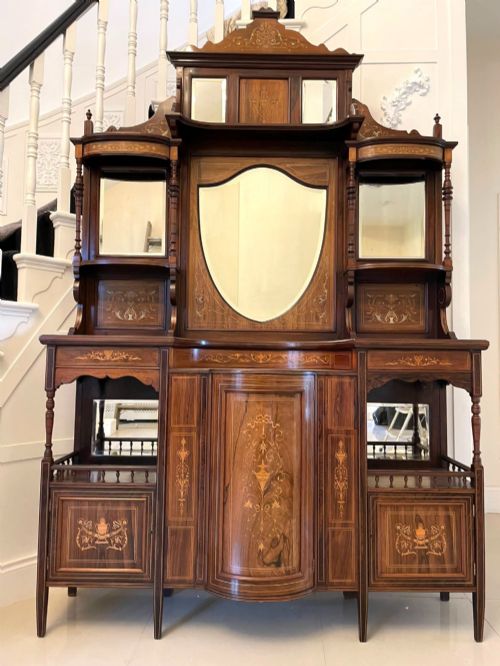
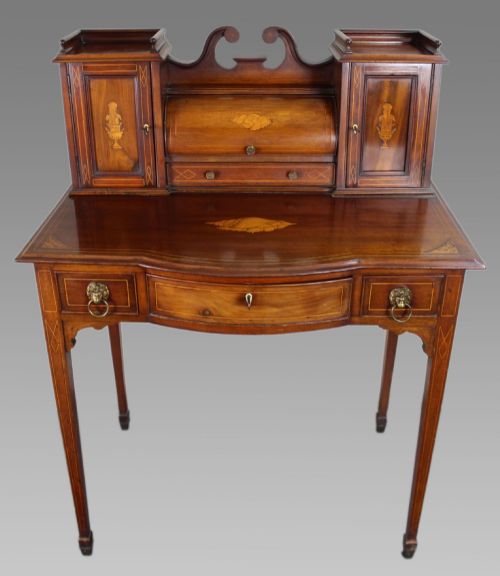
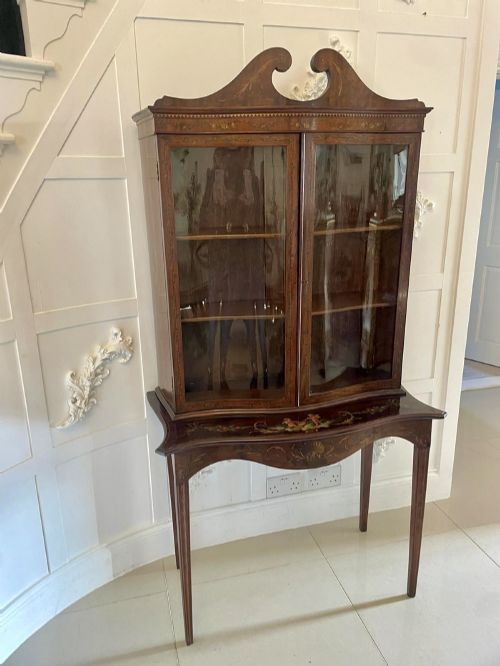
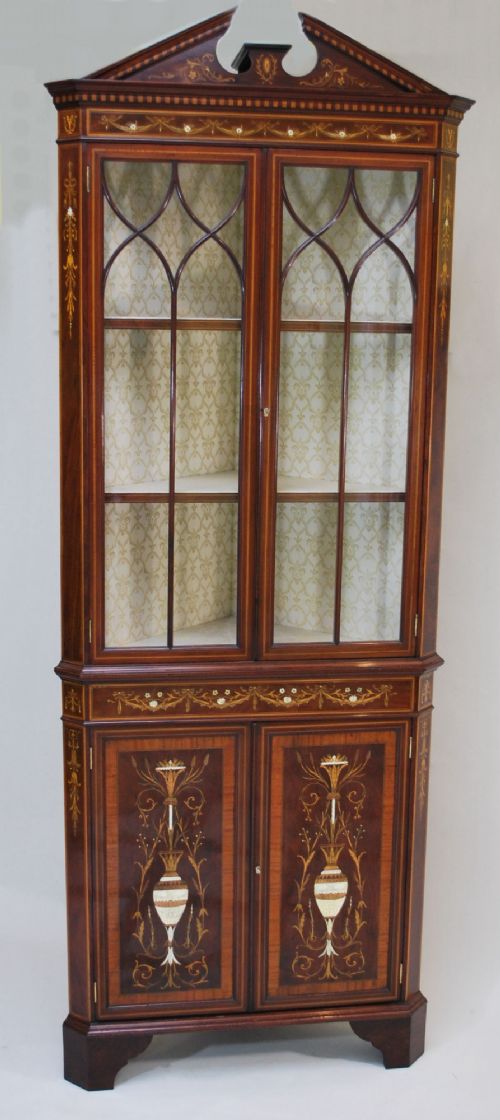
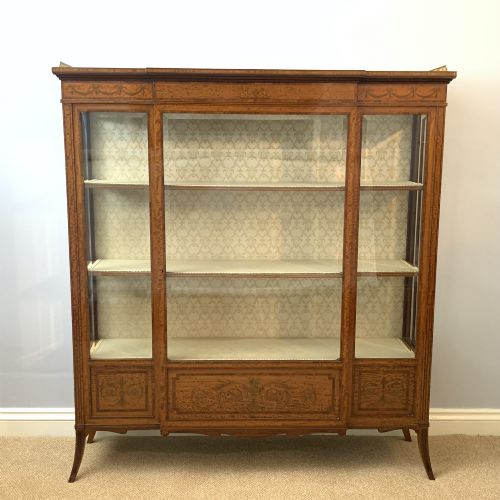
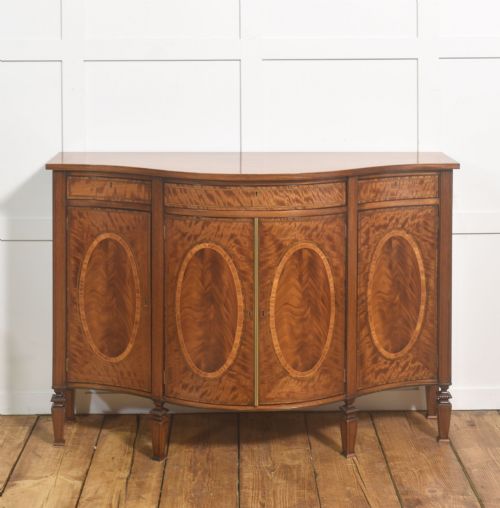
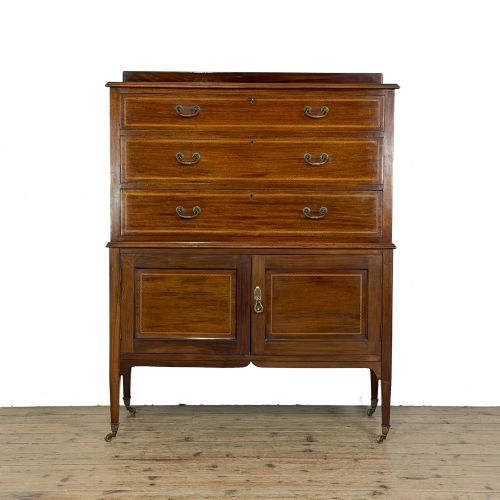
When you search for Sheraton Revival furniture, you encounter pieces predominantly made during the Edwardian period and late nineteenth century, alongside examples from the nineteen-thirties. The selection includes display cabinets, side cabinets, writing desks, occasional tables, sideboards, corner cabinets, chests of drawers, armchairs, and bookcases.
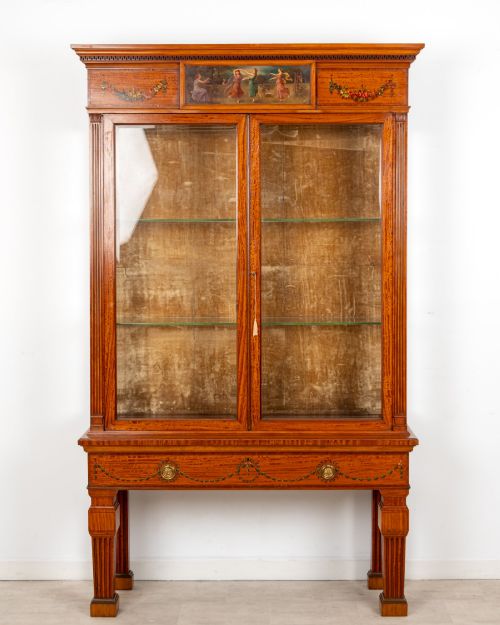
You are most likely to meet satinwood and mahogany display cabinets, writing tables, and sideboards featuring delicate inlay work. These items replicate the lighter proportions and graceful classical lines associated with Thomas Sheraton's designs, adapted for the domestic requirements of Victorian and Edwardian homes.

Materials and construction
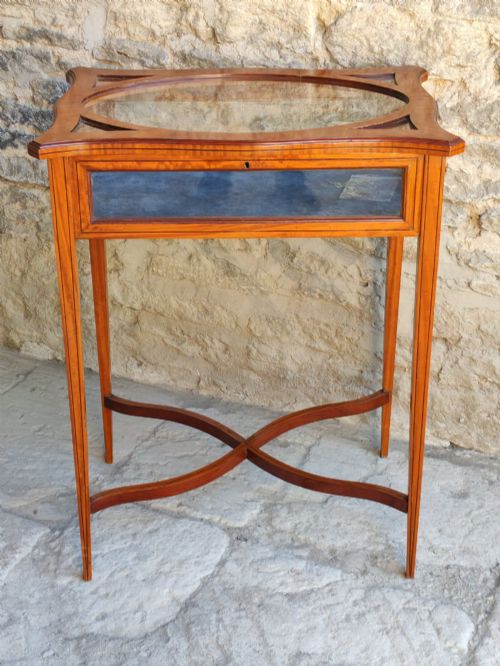
Cabinet makers utilised fine timbers such as satinwood and mahogany as primary surfaces, often enhanced with contrasting inlay, marquetry, and painted decoration. Brass fittings, glass panels for display doors, and leather inserts for writing surfaces complete the construction of these pieces.
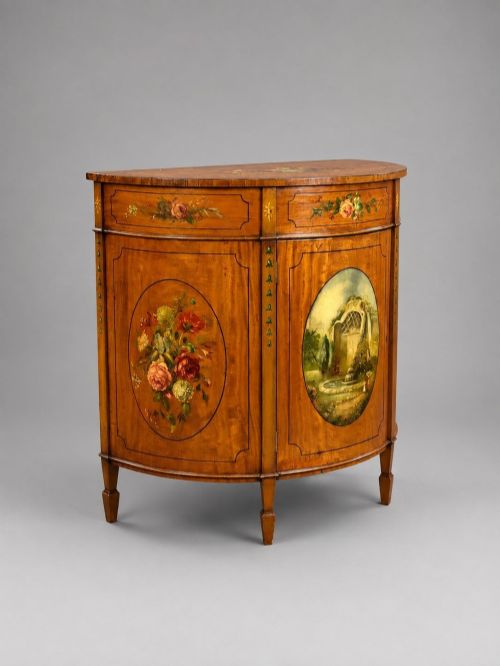
The combination of light veneers, detailed bandings, and hand-painted motifs requires precise joinery and cabinet-making skill. Workshops applied decorative paintwork directly onto the timber ground, producing smooth panels adorned with classical urns, swags, and floral details.
Sheraton Revival Furniture Retail Price Guide 2026
Typical asking prices for sheraton revival furniture among the pieces listed under this phrase on Sellingantiques today, from the lower quarter to the upper quarter. They describe what is for sale here now, not the wider market.
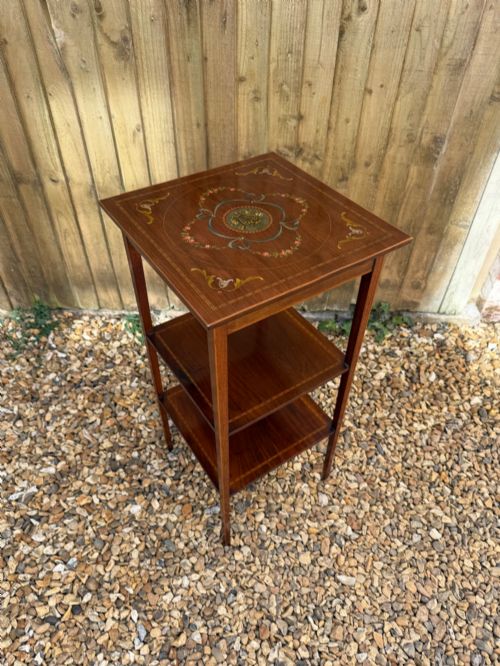
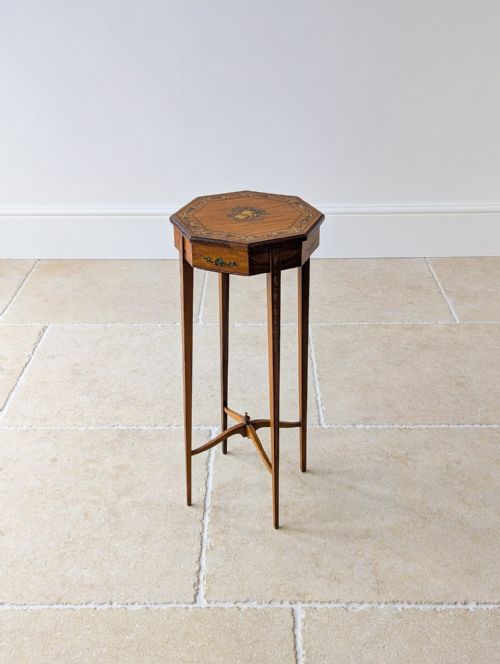
Even the household candle stand received the full Sheraton treatment, painted with delicate florals to illuminate the Edwardian hallway.
Distinctions in craftsmanship
The degree of refinement in the painted decoration and the crispness of the marquetry inlay distinguish individual pieces. Superior examples exhibit finely detailed hand-painted scenes and botanical motifs rather than simple stencilled patterns.
The selection of cabinet timbers and the depth of the figure in the satinwood or mahogany play a significant role in overall quality. Better pieces also retain original painted surfaces and matching hardware without later alterations.

Hewetsons London·Hampton And Sons·Edwards And Roberts·J Shoolbred·James Hicks
The Sheraton Revival Furniture Glossary
- Satinwood
- A hard, yellow timber with a lustrous sheen, frequently used as a primary veneer on high-status Edwardian and late Victorian cabinets. It provides a pale, reflective ground for painted decoration and darker wood inlay.
- Marquetry
- The art of applying pieces of veneer to a structure to form decorative patterns and pictorial designs. Craftsmen cut contrasting woods like rosewood and mahogany to create geometric or floral motifs.
- Astral glazing
- A method of dividing glass panels within cabinet doors using slender wooden bars called astrals. This technique creates delicate geometric patterns across display cases and bookcase fronts.
- Demi-lune
- A half-moon shape utilised for the top and base of side tables and cabinets. This curved form allows furniture to sit flush against a wall while offering a softer profile than a rectangle.
- Etagere
- A set of open shelves supported by columns or legs, designed for displaying decorative objects. These tiered stands appear in both mahogany and satinwood across the nineteenth and early twentieth centuries.
Sheraton Revival Furniture: Frequently Asked Questions
What is Sheraton Revival furniture?
Sheraton Revival furniture consists of pieces made primarily during the late Victorian and Edwardian eras that imitate the neoclassical style popularised by designer Thomas Sheraton in the late eighteenth century.
These items favour lighter woods, particularly satinwood and mahogany, combined with inlaid banding and hand-painted floral or classical motifs rather than the heavy dark oak typical of earlier periods.
How do I identify a piece?
Look for light-coloured satinwood veneers, tapered legs, and decorative elements such as painted ribbon swags, urns, and marquetry inlays. The construction methods, secondary timbers, and lock hardware typically align with late nineteenth or early twentieth-century manufacturing.
Makers' stamps or labels from established firms occasionally appear inside drawers or on cabinet backs to confirm the origin.
Where should I place these pieces?
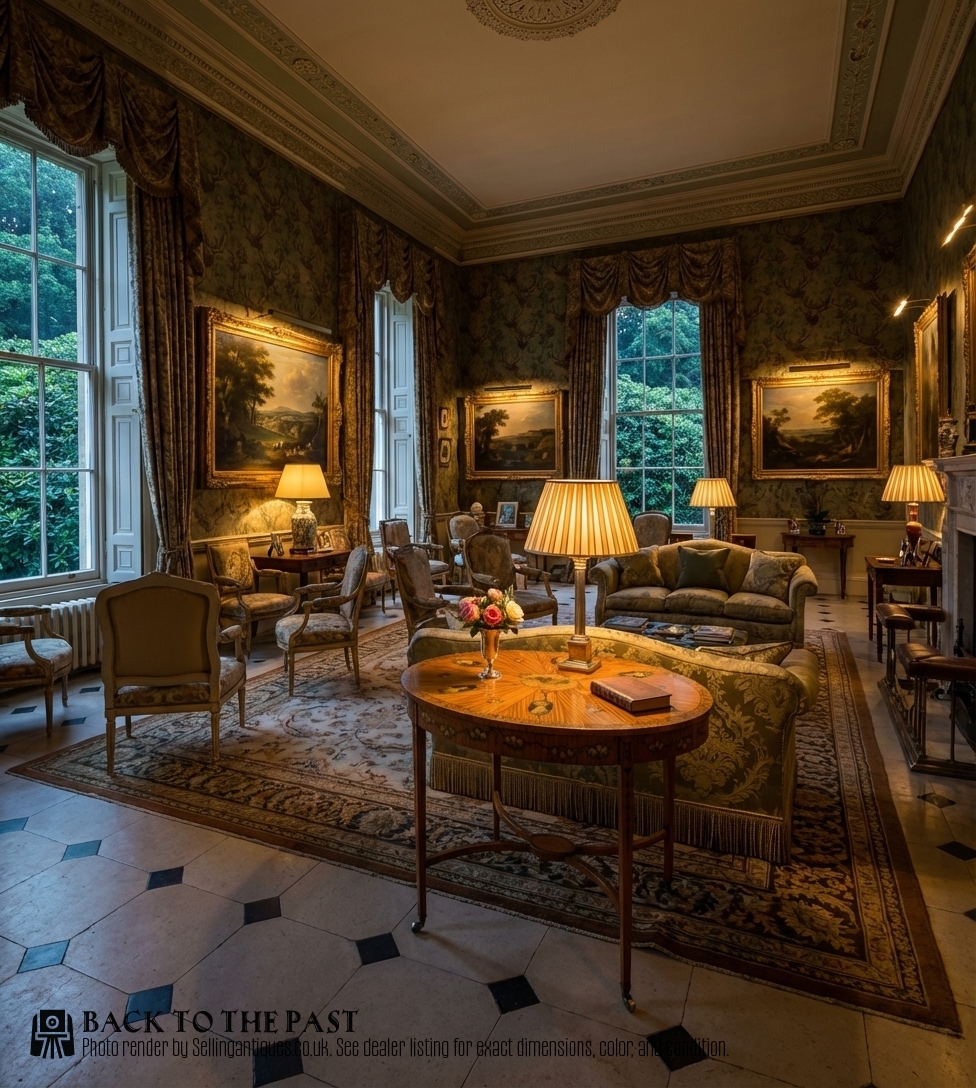
These items suit drawing rooms, studies, and bedrooms where their refined proportions and light tones do not overwhelm smaller spaces. Display cabinets and bookcases work well against neutral walls that highlight the painted decoration and figured timber.
Writing desks and occasional tables function practically as workspace or display surfaces while maintaining historical character.
Are painted surfaces original?
Original painted decoration shows natural integration with the timber surface, matching the age and wear patterns of the rest of the piece. Fine brushwork and gentle craquelure in the varnish indicate period execution rather than later re-decoration.
Examining the piece under magnification helps determine whether the floral motifs and classical scenes date from the original manufacture around nineteen hundred.