



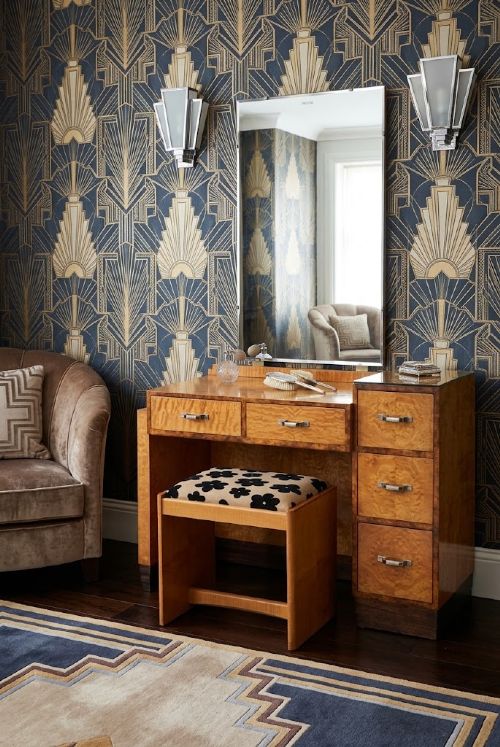
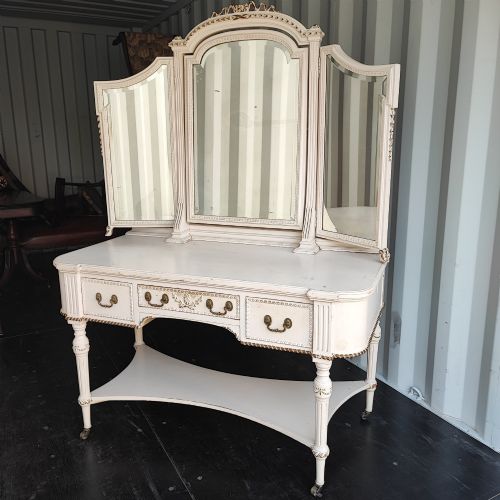
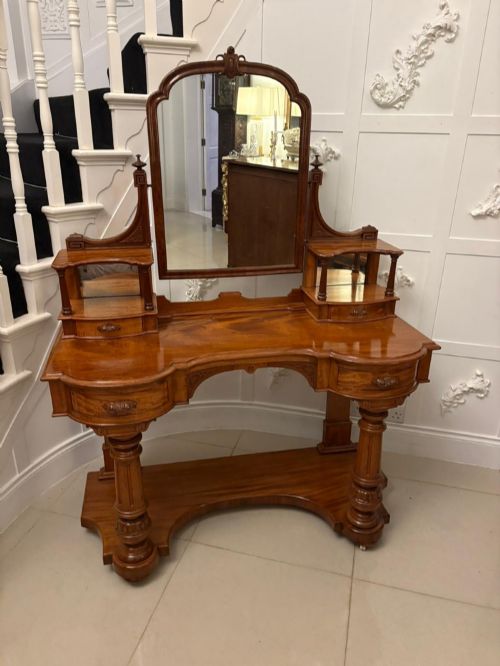
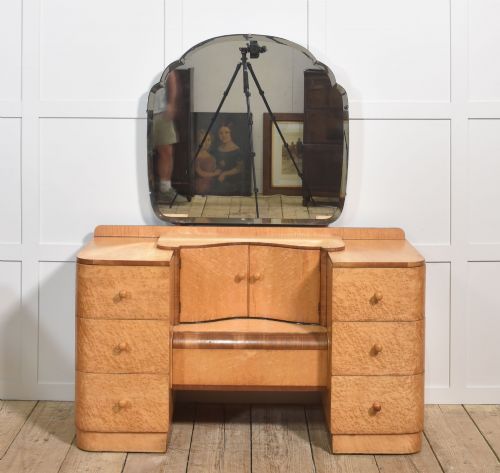


Vintage Makeup Table
A vintage makeup table brings serious glamour to a bedroom while offering clever storage for daily routines.
Vintage Makeup Table
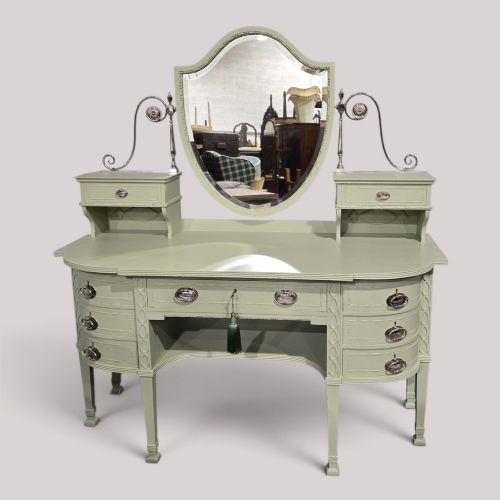
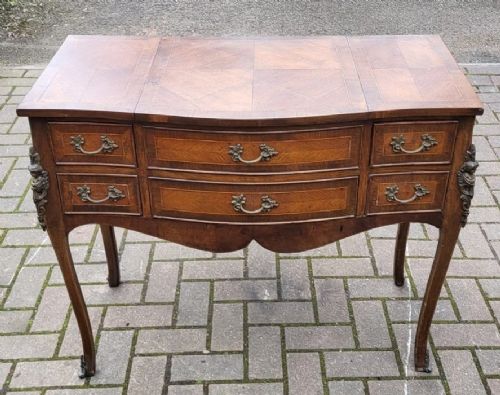
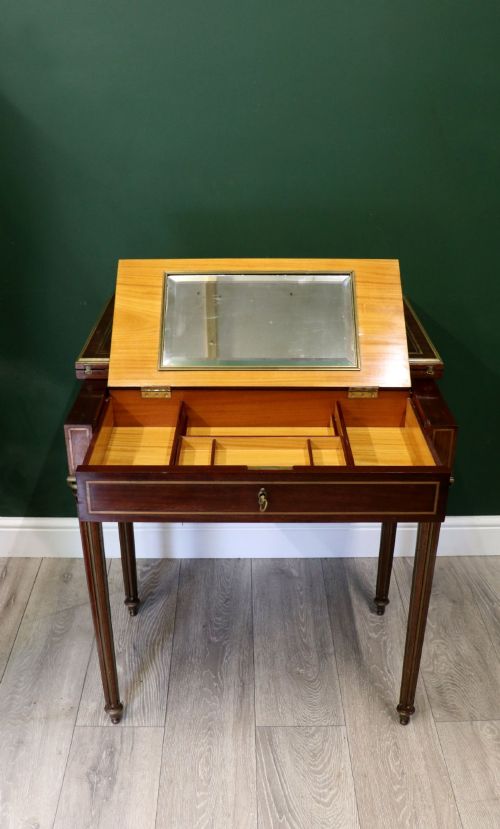
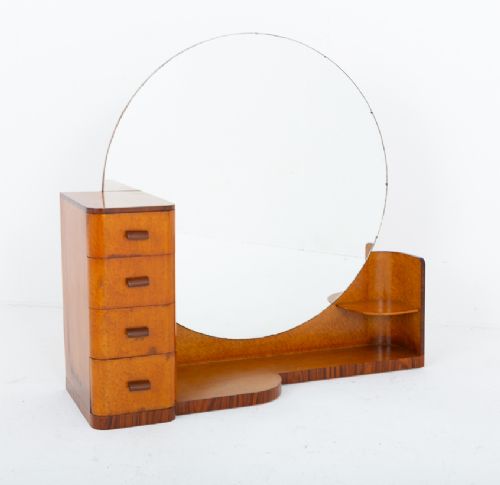
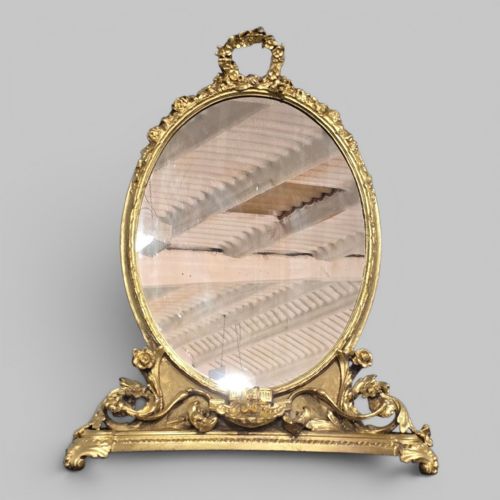
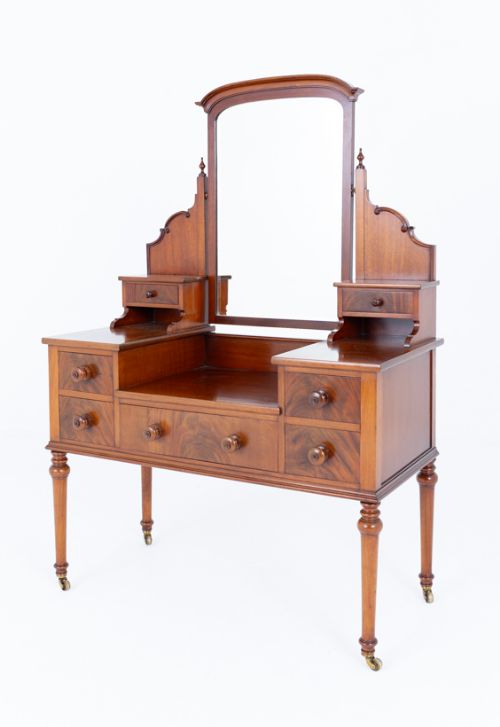
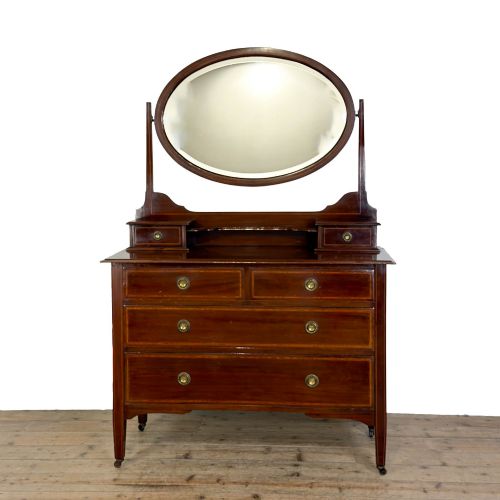
When searching for a vintage makeup table, you encounter dressing tables, vanity tables, and dressing chests spanning the Victorian, Edwardian, and Art Deco periods. These pieces serve as functional bedroom stations, often paired with matching stools or incorporating pivoting mirrors.
The pieces on this page draw from 18th-century roots through to the 1930s, showcasing forms from twin pedestal designs to simpler writing-style tables. Most examples rely on traditional timber construction combined with dedicated mirror glass.
Makers such as Maples of London and Paris, Maurice Adams, Harry and Lou Epstein, and Betty Joel appear among the listings, alongside numerous unlabelled English and French pieces. You will find styles ranging from restrained Georgian and Sheraton Revival to ornate Victorian, Louis XVI Revival, and striking Art Deco.
Materials and construction
Makers utilised a rich palette of timbers, notably mahogany, walnut, burr walnut, maple, birds-eye maple, sycamore, satinwood, and oak, frequently enhanced by lacquered Chinoiserie finishes or painted surfaces. Marble tops also feature on select continental pieces.
Construction techniques combine solid timber framing with decorative veneers to create figured grain patterns, particularly on Art Deco pedestal examples and Victorian pieces. Glass and brass components integrate into mirrors, handles, and easel backs.
Vintage Makeup Table Retail Price Guide 2026
Typical asking prices for vintage makeup table among the pieces listed under this phrase on Sellingantiques today, from the lower quarter to the upper quarter. They describe what is for sale here now, not the wider market.
The listings span from the 1850s Victorian era through Edwardian designs to 1930s Art Deco pieces.
Judging quality and execution
Quality rests in the selection of timbers and veneers, where heavily figured burr walnut, birds-eye maple, and pale mahogany elevate a piece visually. The presence of makers of note, such as Maples or Epstein, shifts a piece into a higher tier.
Execution shows in the integration of mirrors, whether triple folding, swivel, or gilt, and the survival of original upholstery on associated stools. The balance of proportions across pedestal frames and dressing chests dictates the overall success of the design.
Maples of London and Paris·Maurice Adams·Harry and Lou Epstein·Betty Joel·E A Taylor
The Vintage Makeup Table Glossary
- Pedestal dressing table
- A dressing table featuring banks of small drawers flanking a central kneehole space. These often date from the Victorian and Art Deco eras.
- Duchess dressing table
- A large Victorian dressing table style characterised by a large central mirror supported by smaller jewellery drawers. They often incorporate a serpentine or shaped base.
- Triple mirror
- A dressing table mirror comprising a central panel flanked by two adjustable side mirrors. This configuration allows multiple angles for grooming.
- Burr walnut
- Timber taken from a walnut tree growth, yielding intricate swirling grain patterns. It was favoured by makers for veneering prominent drawer fronts and surfaces.
Vintage Makeup Table: Frequently Asked Questions
How do I date a vintage makeup table?
Dating relies on combining the timber choices, construction methods, and stylistic cues present in the piece. For instance, satinwood and inlaid mahogany often point towards Edwardian or Sheraton Revival work, while burr walnut and geometric lines strongly suggest Art Deco.
Hardware, mirror mounts, and maker marks further refine the period. Comparing the structural carcass and drawer dovetails helps separate mid-Victorian examples from later 20th-century revivals.
Can I replace a missing mirror?
Sourcing a replacement mirror requires matching the original period style, whether that means a gilt Victorian frame or a frameless Art Deco shape. Many tables utilise specific brackets or pivoting pins that dictate the mounting style.
Using period-appropriate mirror glass helps maintain the visual integrity of the piece. Ensure the weight matches the supporting frame to prevent tipping or strain.
How do I care for wood surfaces?
Routine maintenance involves dusting with a soft, dry cloth and avoiding silicone-based polishes that build up over time. Natural wax feeds antique timber and preserves the sheen of mahogany and walnut veneers.
Keep tables away from direct sunlight and heat sources to prevent timber from splitting and veneers from lifting. Use coasters or mats to protect marble and polished wooden tops from moisture.
Are stools usually original?
Stools and chairs often experience heavy wear, leading to modern reupholstery or complete replacement over the decades. Pieces listed may feature new fabric covers while retaining their original frames.
Matching a stool to a dressing table involves looking at the timber species, leg style, and period details. Oak, mahogany, and sycamore stools are frequently paired with tables from corresponding decades.