





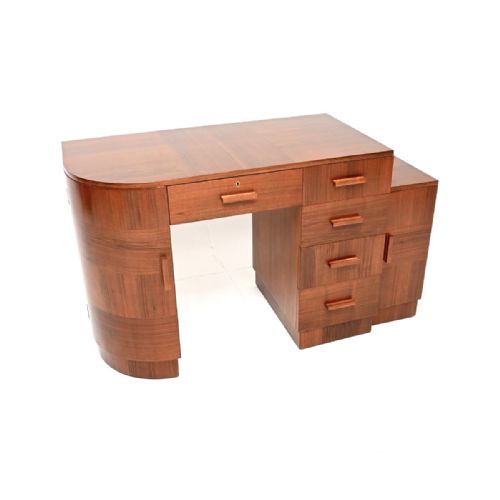


Art Deco Vanity Desk
An art deco vanity desk brings geometric symmetry and striking grain patterns straight to the bedroom.
Art Deco Vanity Desk
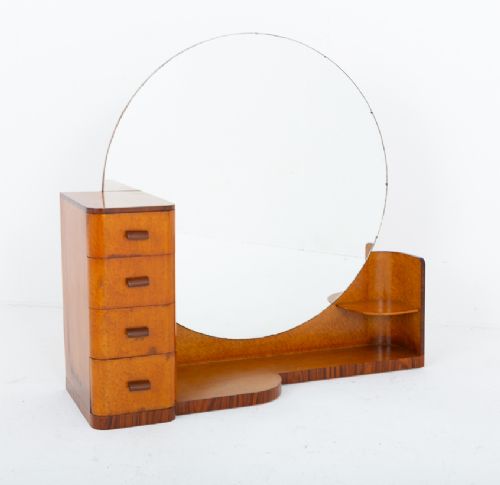
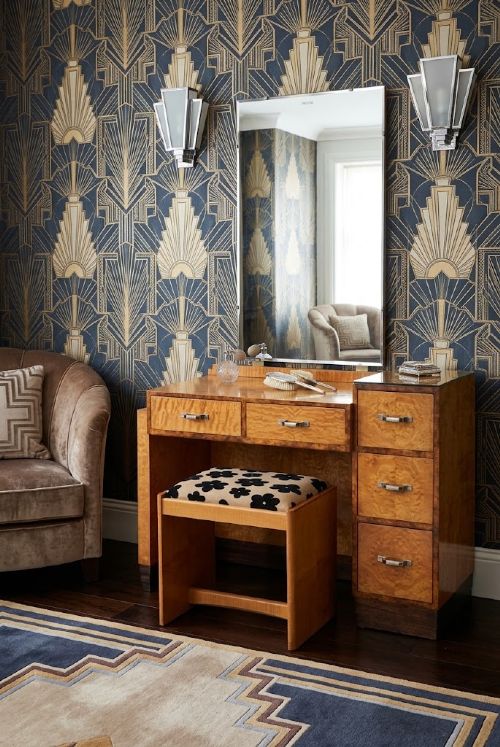
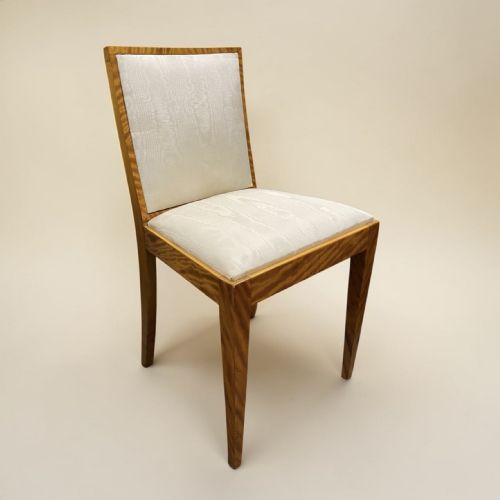
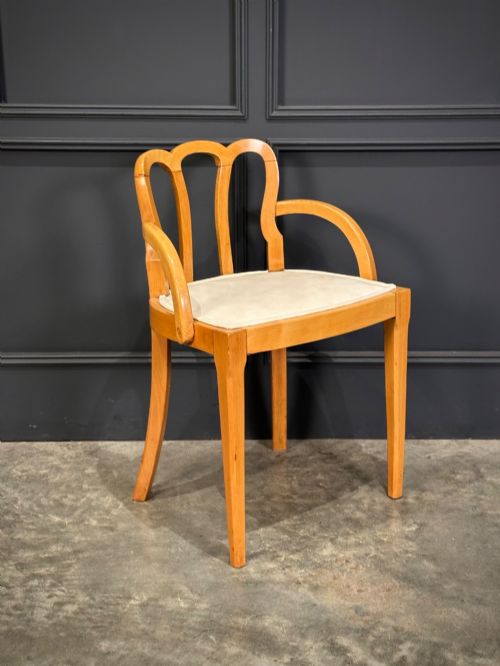
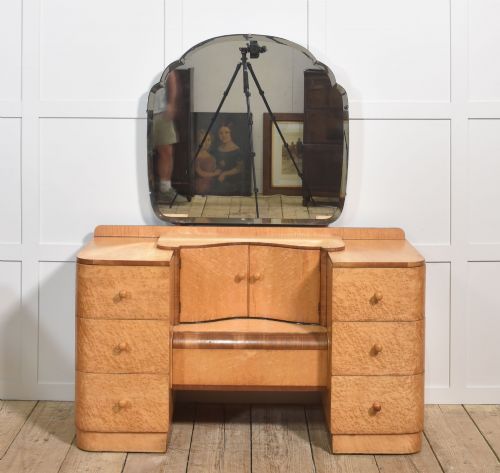
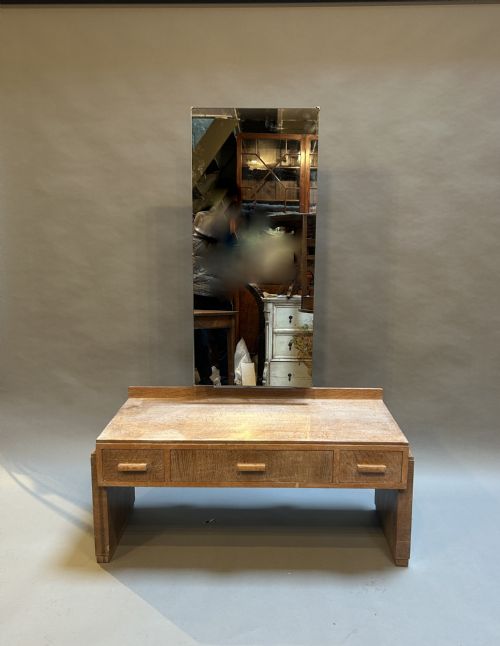
An art deco vanity desk is primarily found as a dressing table, pedestal desk, or dressing chest dating from the 1920s, 1930s, and 1940s. These pieces serve as functional bedroom furniture designed with integrated mirrors and fitted compartments for daily grooming.
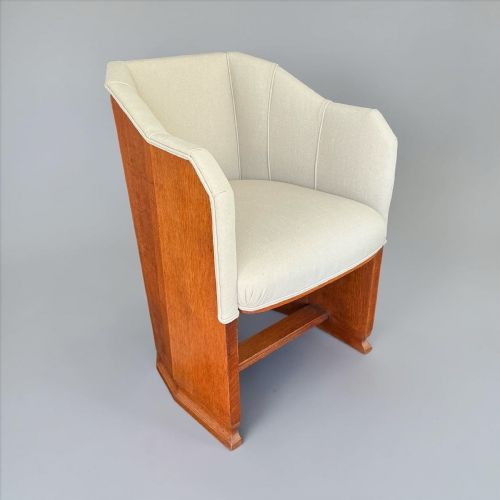
The most common form on this page is the walnut or burr walnut pedestal dressing table, often accompanied by a matching chair or featuring built-in glass elements. Makers of the period also utilised oak, maple, and mahogany to construct these distinct dressing stations.
While many examples adopt a pure Art Deco aesthetic, variants stretch from Edwardian influences to Swedish Grace and Queen Anne Revival styles. Buyers encounter both streamlined modernist designs and more unusual kidney-shaped or campaign-style variants.
How they were made
Cabinet makers utilised striking veneers such as burr walnut, birdseye maple, and figured walnut over solid timber cores to achieve symmetrical, repeating grain patterns across the front drawers and pedestals. Glass and polished metal handles or trim were frequently incorporated to punctuate the wooden surfaces.
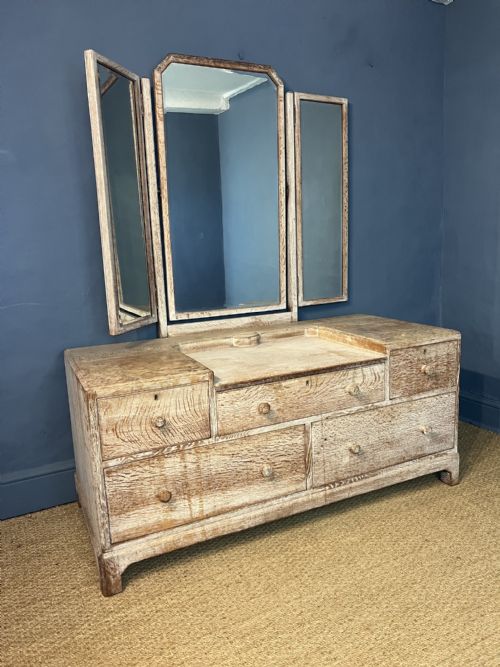
Construction techniques combined traditional carcase joinery with modern modernist silhouettes, occasionally incorporating painted finishes or limed oak treatments. Selected pieces integrated curved wooden forms and built-in tilting mirrors supported by matching wooden or metal frames.
Art Deco Vanity Desk Retail Price Guide 2026
Typical asking prices for art deco vanity desk among the pieces listed under this phrase on Sellingantiques today, from the lower quarter to the upper quarter. They describe what is for sale here now, not the wider market.
Early competitive sailing presentation boxes occasionally share the spotlight with bedroom chairs and trinket chests.
What varies in quality
Quality rests heavily on the selection and bookmatching of the wood veneers, where superior examples display continuous, mirrored grain patterns across multiple drawers. The choice of underlying timber, such as solid figured walnut rather than simpler oak, sets the tier of the piece.
The distinction between standard production and top-tier workshop output lies in the subtlety of the hardware, the integration of original mirrors, and the precision of curved or kidney-shaped joinery.
Bath Cabinet Makers·Heals·Harry and Lou Epstein·Betty Joel·Rowley Gallery·W.M.F.
The Art Deco Vanity Desk Glossary
- Burr walnut
- A wood veneer taken from the burl growth of a walnut tree, producing swirling, highly decorative grain patterns. It is frequently seen on high-end 1930s dressing tables.
- Pedestal desk
- A freestanding desk or dressing table supported by two separate stacks of drawers on either side of the kneehole. This layout defines many larger Art Deco bedroom pieces.
- Swedish Grace
- A refined Scandinavian architectural and design movement bridging Neoclassicism and functionalism during the 1920s. It yields elegantly restrained furniture forms.
- Campaign style
- Portable or modular furniture historically designed for travel, characterised by recessed brass handles and reinforced corners. Some Art Deco desks adopt this utilitarian aesthetic.
- Limed oak
- Timber treated with a specialised white-wash finish to highlight the open grain texture. This finish appears on modernist pieces from the 1930s.
Art Deco Vanity Desk: Frequently Asked Questions
How do I identify an authentic piece?
Authentic pieces rely on period construction methods, traditional timber veneers like burr walnut, and characteristic hardware from the 1920s and 1930s. Look for integrated mirrors and symmetrical geometric lines that define the era.
Examining the drawer linings and secondary woods helps confirm age, distinguishing genuine period workshop output from later reproductions.
Were these desks used for writing or grooming?
Many dressing tables and vanity desks served dual purposes, featuring fold-down writing surfaces, integrated mirrors, and partitioned drawers for both cosmetics and correspondence.
The inclusion of a central mirror usually indicates a vanity function, while pedestal variants often served equally well as office writing desks.
How do I care for walnut veneer?
Burr and figured walnut veneers require stable room humidity and protection from direct sunlight to prevent the polish from fading and the veneer from lifting. Dust gently with a dry, soft cloth.
Avoid silicone-based polishes, opting instead for traditional beeswax applied sparingly to maintain the natural lustre of the wood.
What is Swedish Grace style?
Swedish Grace is a sophisticated design movement that preceded strict modernist functionalism, combining classical proportions with clean, simplified lines. In vanity desks, this translates to slender legs and subtle geometric curves.
Pieces in this style offer a lighter visual footprint compared to heavy English pedestal dressing tables.