



Campaign Writing Desk
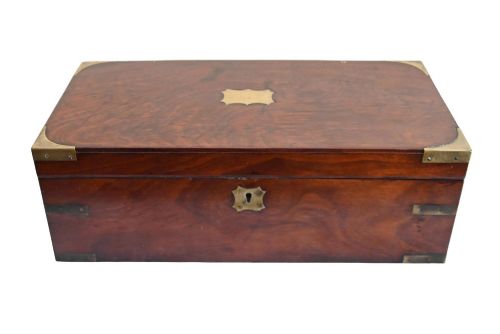
A campaign writing desk provides portable writing accommodation for officers on the move, combining sturdy timber frames with protective brass corners.
Campaign Writing Desk
A campaign writing desk encompasses portable writing slopes, fold-out tables, and modular secretaire chests designed for easy transport by military officers and travellers. The pieces on this page span the Georgian, Regency, and Victorian periods, alongside later Edwardian interpretations.
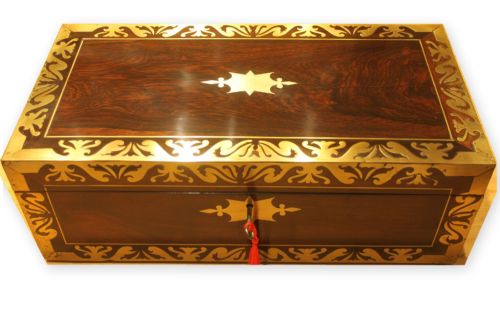
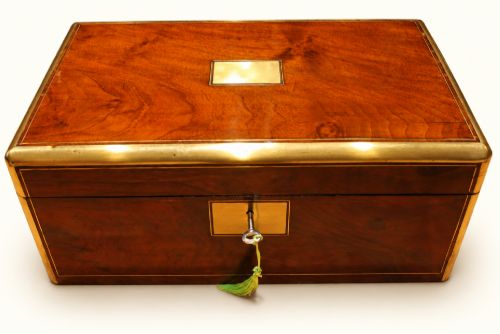
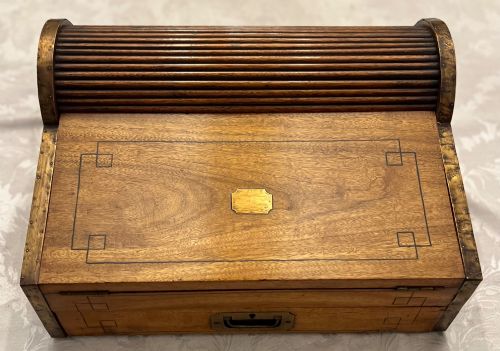
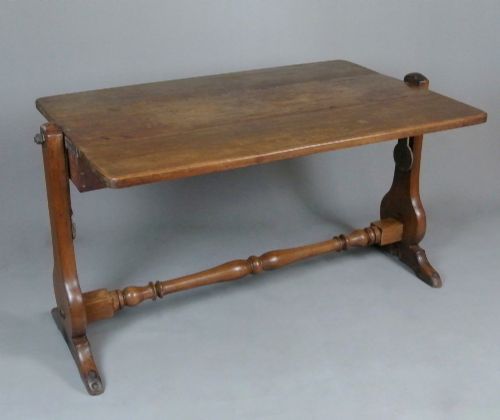
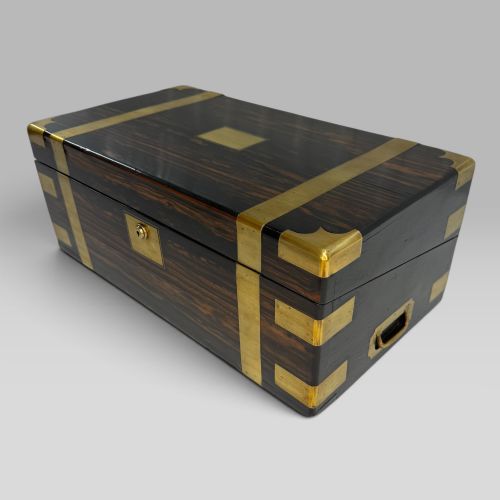
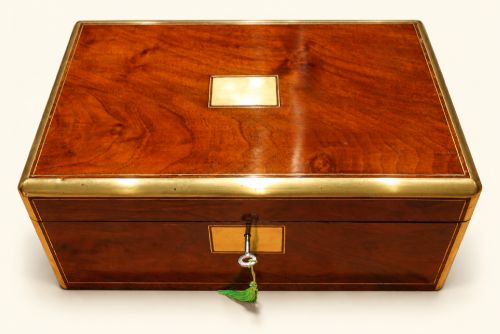
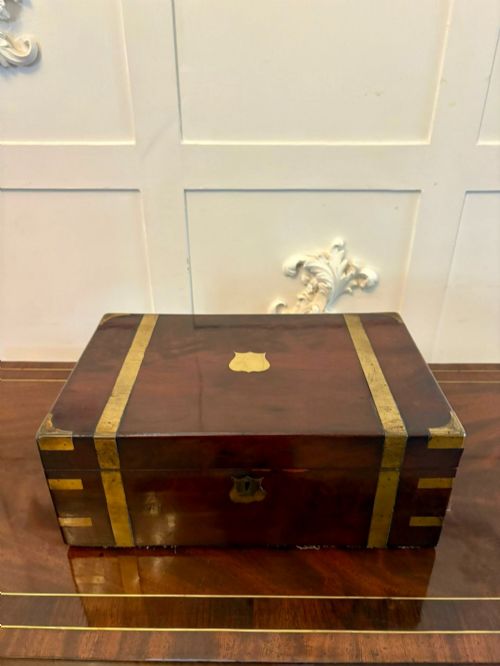
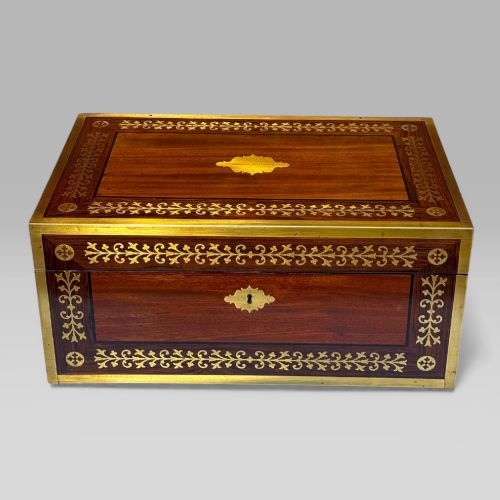
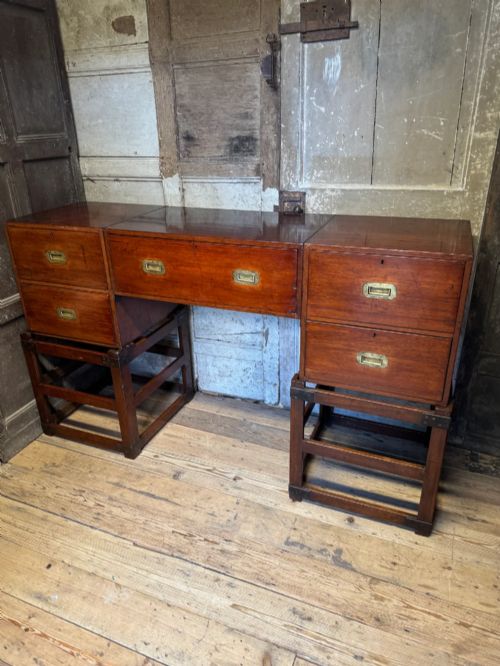
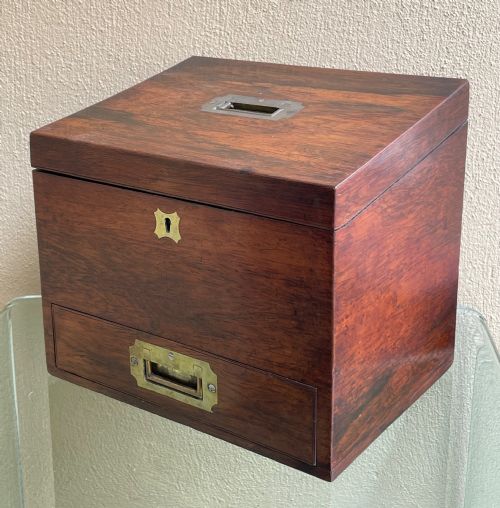
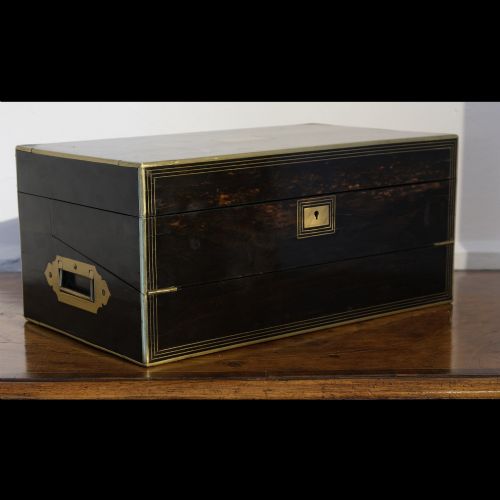
Most examples take the form of tabletop writing boxes bound in brass, though larger three-part desks, pedestal tables, and military chest hybrids also appear frequently. These versatile items served officers in the field, aboard ships, and in colonial outposts.
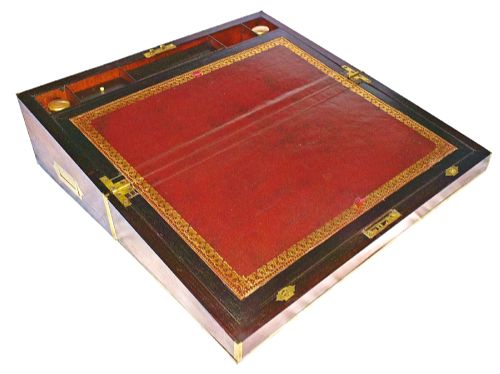
Solid timbers such as mahogany, teak, and camphor wood predominate, often paired with fitted interiors containing secret compartments, inkwells, and leather-lined writing surfaces.
Materials and construction methods
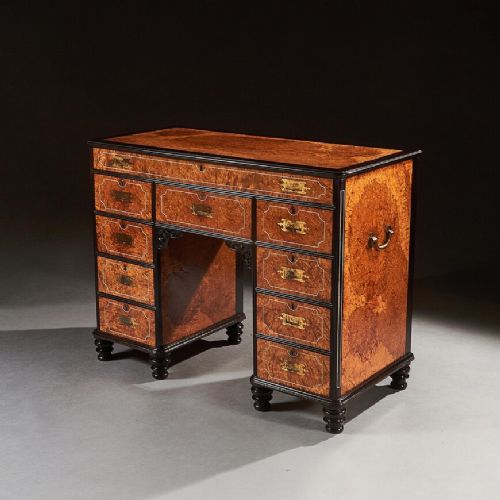
Cabinet makers built these pieces using durable timbers like mahogany, rosewood, walnut, and teak, selected for their resistance to splitting in varied climates. Secondary woods and exotic veneers including amboyna, satinwood, and ebony add decorative contrast.
Robust brass reinforcement corners, recessed carrying handles, and flush strap hinges protect the edges and allow sections to pack down securely. Secret drawers, hidden spring mechanisms, and inset leather writing surfaces demonstrate precise interior carpentry.
Campaign Writing Desk Retail Price Guide 2026
Typical asking prices for campaign writing desk among the pieces listed under this phrase on Sellingantiques today, from the lower quarter to the upper quarter. They describe what is for sale here now, not the wider market.
Many campaign desks conceal tiny secret drawers behind false pigeonhole partitions, designed to outsmart sticky-fingered subordinates.
Evaluating craftsmanship and condition
Superior execution shows in the precision of the brass inlay, the snug fit of dovetailed drawer joints, and the integrity of the secondary internal fittings. Finer examples retain original working locks, keys, and fully fitted compartments with intact secret drawers.
Timber selection and figure also dictate standing, with richly grained burr walnut, amboyna, or solid camphor wood elevating a piece above standard mahogany models. The presence of documented maker attributions further distinguishes exceptional items.
Gillows
The Campaign Writing Desk Glossary
- Writing Slope
- A portable box with a hinged sloping lid that opens to reveal a writing surface and storage compartments. These often fold flat to create a desktop writing area.
- Secretaire Chest
- A chest of drawers where the top drawer pulls out and drops down to form a fitted writing desk with small drawers and pigeonholes. This combines bedroom storage with working office space.
- Brass Bound
- Furniture edged and cornered with recessed brass strips and brackets to withstand rough transport. This reinforcement protects vulnerable timber edges during military campaigns.
- Camphor Wood
- An aromatic timber frequently utilised for campaign furniture due to its natural insect-repellent properties. It provides a stable, fragrant carcase for travel chests.
- Secret Drawers
- Concealed compartments hidden behind false panels or accessed through hidden spring releases within the desk interior. Makers used these to secure valuables and sensitive documents.
Campaign Writing Desk: Frequently Asked Questions
What is a campaign writing desk?
A campaign writing desk is a portable piece of furniture designed for military officers, travellers, and officials on active service. These compact items dismantle or fold into secure boxes for transit.
They typically feature reinforced brass corners, recessed handles, and fitted internal compartments for stationery, ink, and personal documents.
How were these desks used?
Officers utilised them in military tents, aboard naval vessels, and during colonial postings to maintain correspondence and records. The folding design allowed a working office to be packed up quickly.
When opened, the sloping lid or drop-front provided a stable writing surface above hidden storage wells and secret drawers.
How do I date a campaign desk?
Dating relies on timber choices, brasswork styles, and construction techniques characteristic of Georgian, Regency, and Victorian cabinet making. Earlier pieces often feature solid mahogany or teak with hand-cut dovetails.
Mid-to-late 19th-century examples frequently incorporate burr veneers, elaborate brass inlay, and standardised hardware manufactured as trade supplies grew.
Where should I place one at home?
These desks sit comfortably as functional writing tables in studies, living rooms, or bedrooms, taking up less floor space than standard freestanding desks. Tabletop versions rest securely on side tables or chests.
Keeping them away from direct heat sources and strong sunlight protects the antique timbers and prevents the leather writing surfaces from drying out.