

Antique Portable Desk
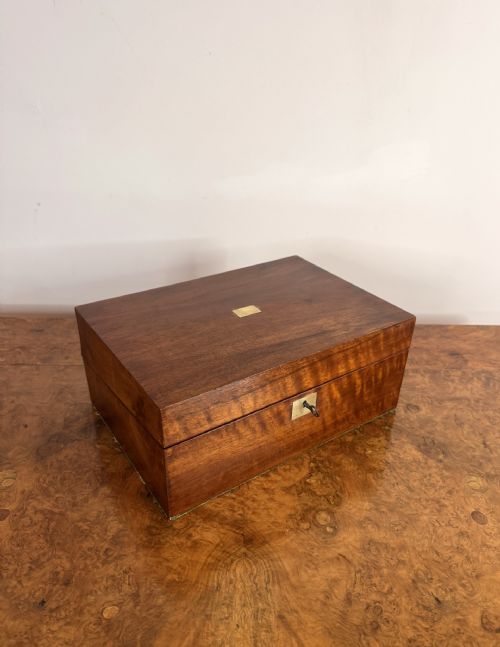
An antique portable desk offers a practical answer to travel writing, taking the form of fitted writing slopes and folding tables that suit daily use.
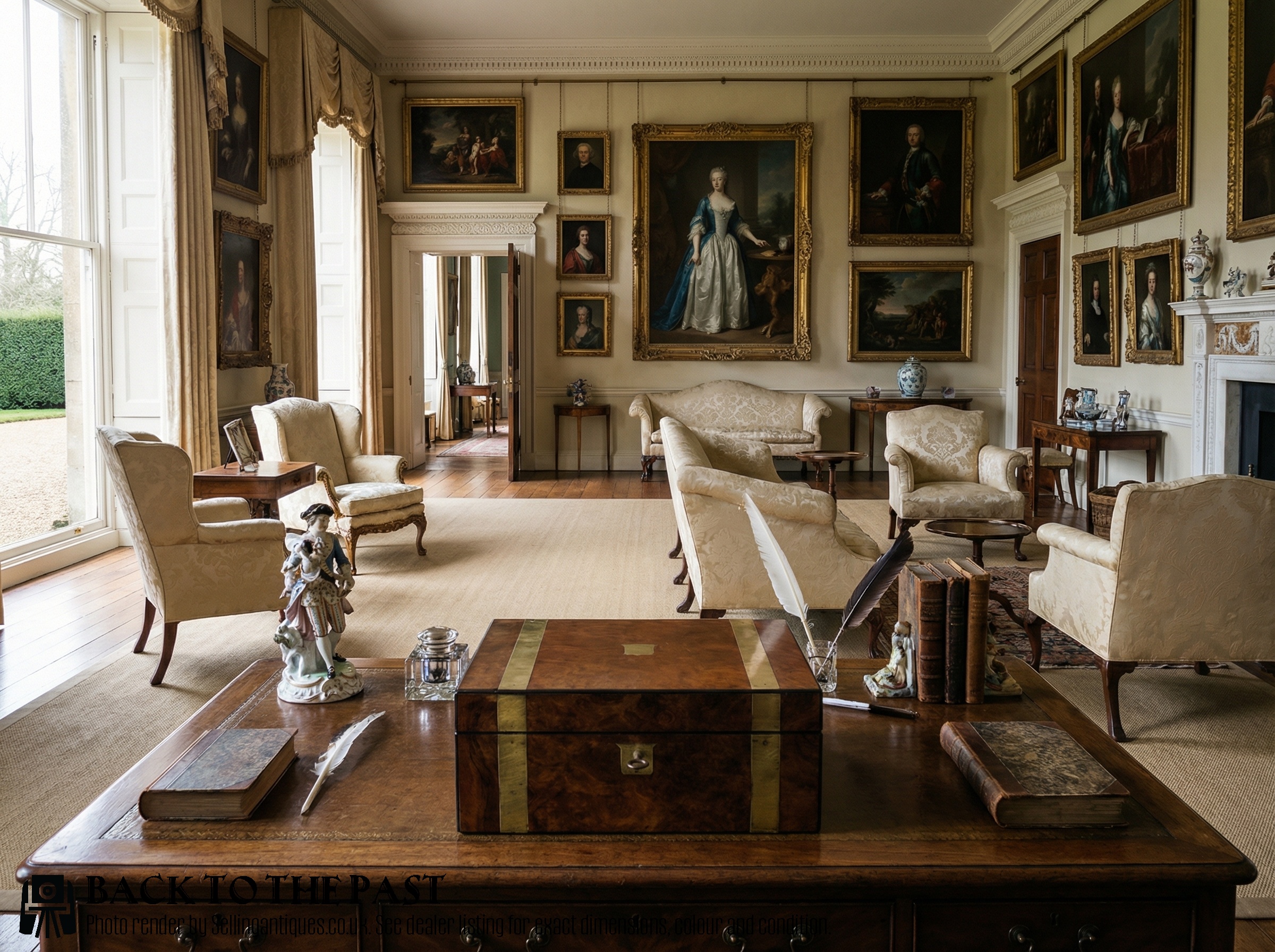
Antique Portable Desk
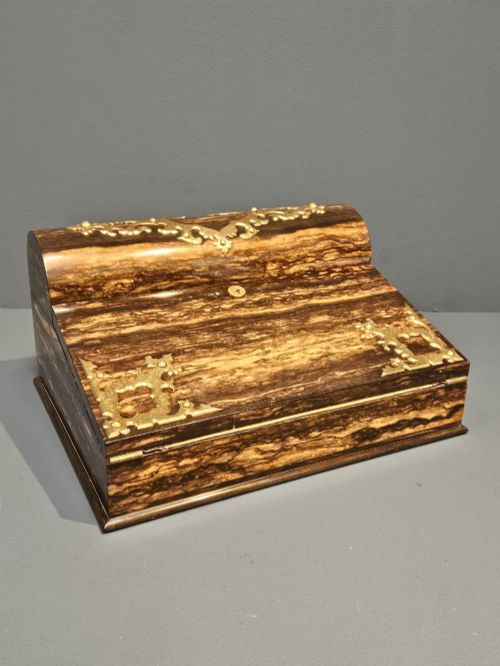
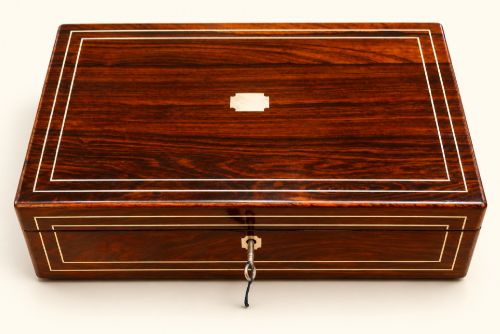
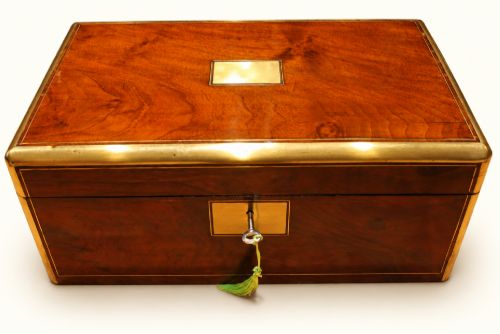
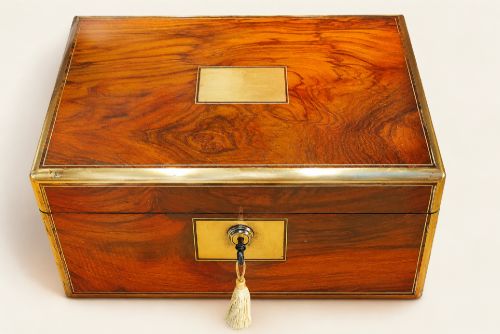
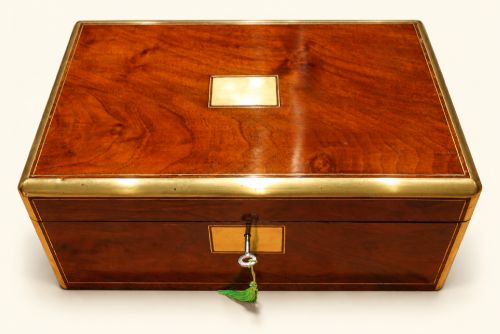
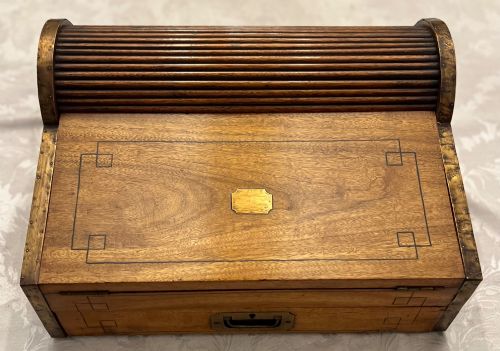
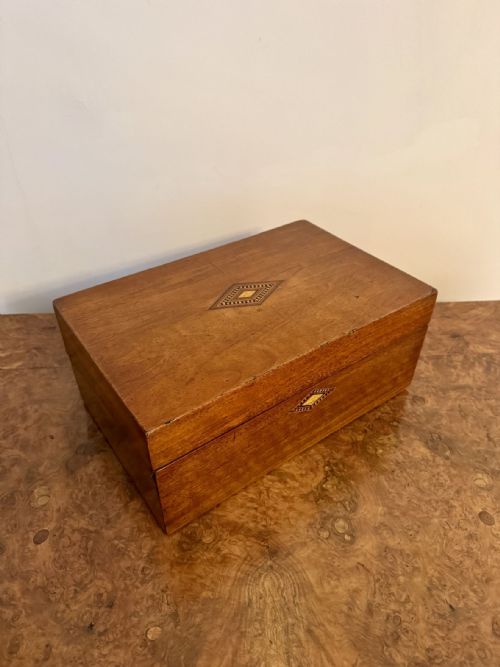
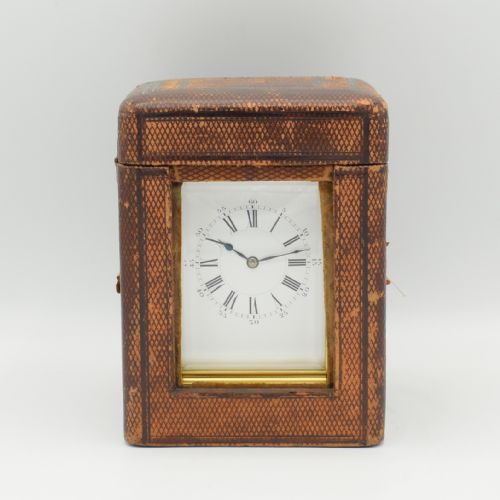
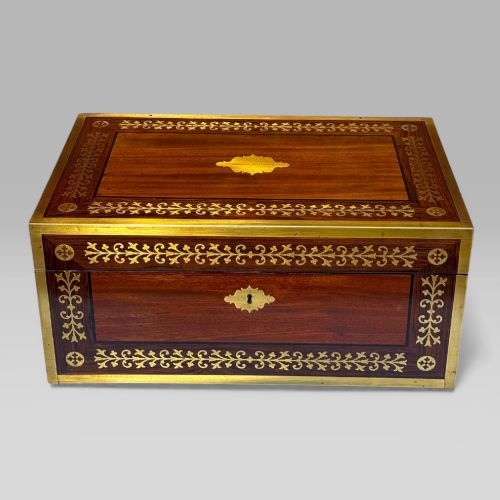
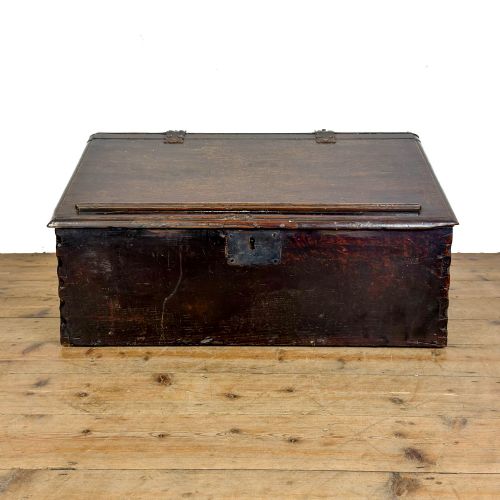
When a buyer investigates an antique portable desk, they encounter wooden boxes designed to fold open into writing surfaces, alongside campaign tables and travelling bureaux built for movement. The pieces visible here span the seventeenth century through to the early twentieth century, drawing on Georgian, Victorian, and campaign styles.
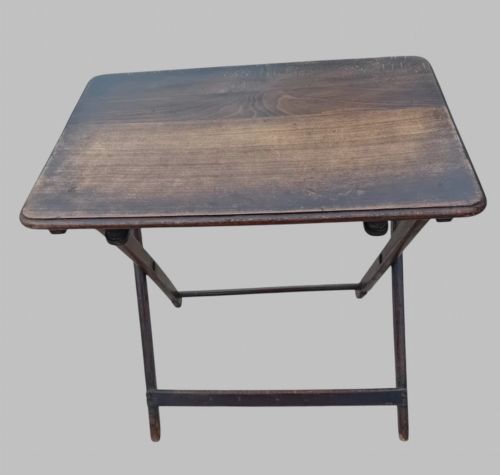
Beyond standard boxes, the selection includes folding tables, coaching tables, and specialised travelling cases that reflect historical needs for mobile administration. Each item balances portability with a stable surface for ink and paper.
How they were made
Joiners constructed these pieces primarily in dense hardwoods such as mahogany, walnut, oak, and rosewood, ensuring the structure withstood travel. Brass bound corners, flush carrying handles, and reinforced hinges protected the wood from knocks during transit.
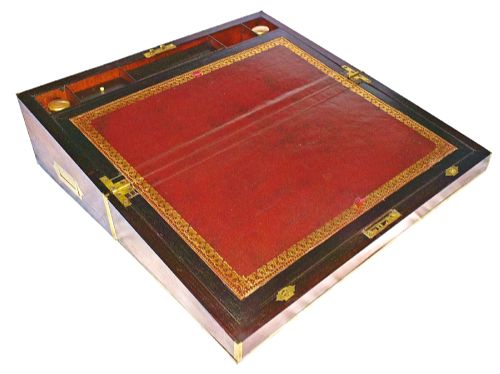
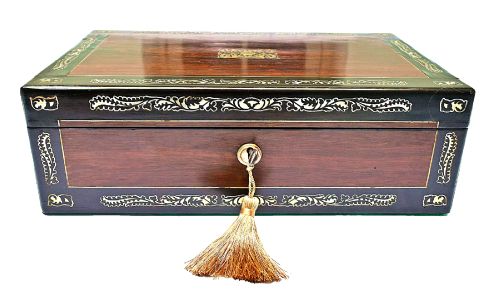
Interiors combined fine cabinetmaking with utilitarian mechanics, incorporating secret drawers, velvet or leather writing pads, and specialised compartments for inkwells and pens. Inlaid brass and enamel details often embellished the exterior surfaces of finer boxes.
Antique Portable Desk Retail Price Guide 2026
Typical asking prices for portable desk among the pieces listed under this phrase on Sellingantiques today, from the lower quarter to the upper quarter. They describe what is for sale here now, not the wider market.
Materials span brass, mahogany, glass, leather, enamel, walnut, rosewood, and iron across the nineteenth and eighteenth centuries.
What varies in quality
The standard of an antique portable desk rests on the precision of its joinery and the integrity of its brass hardware. Superior examples maintain tight joints and smooth folding actions despite decades of opening and closing.
Fittings dictate the distinction between basic utility and high craftsmanship, particularly the presence of functioning locks by makers like Bramah, original glass inkwells, and deeply figured timber veneers. The cleverness of hidden compartments and the clever arrangement of internal stationery slots also elevate a piece.
Henri Jacot·Pickford of London·Latshea & Sons Edinburgh·Veritas Lamp Works·J.C Vickery of London·Asprey London
The Antique Portable Desk Glossary
- Writing slope
- A portable box with a slanted lid that folds down to create a writing surface. These objects usually contain compartments for ink and pens beneath the hinged flap.
- Campaign style
- Furniture designed for military officers on the move, characterised by folding frames, recessed brass handles, and robust construction. Pieces built in this manner dismantle or fold flat for transport.
- Bargueño
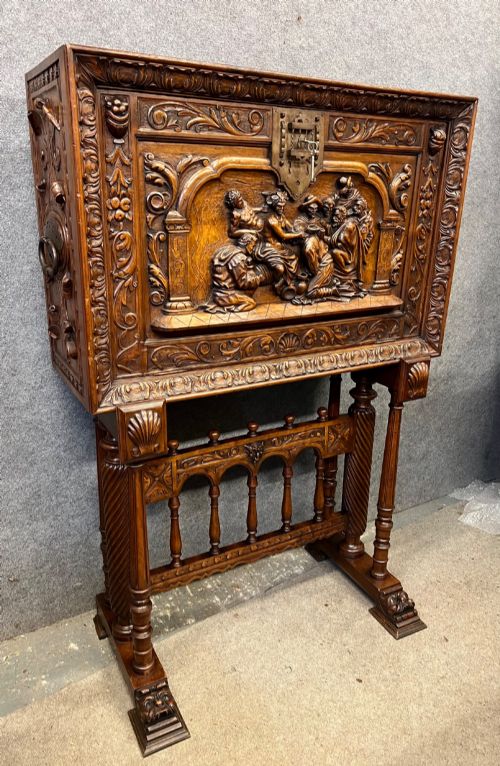
- A Spanish cabinet with a drop-front writing flap and numerous small drawers inside. These ornate units sit upon dedicated tables or stands.
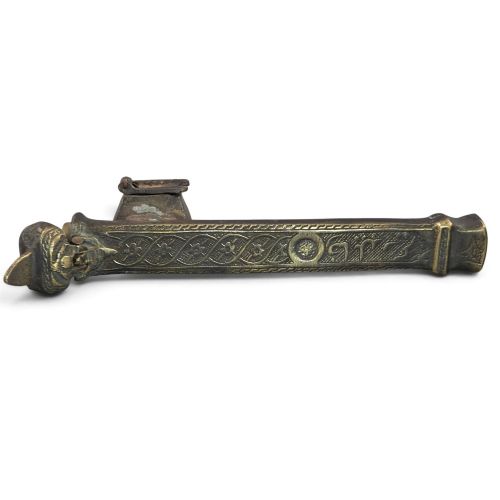
- Divit Qalamdan
- A traditional travelling pen case and inkholder combined into a single portable unit. Originating from the Middle East, these items often feature detailed brass or metalwork.
- Bramah lock
- A high-security lock patented by Joseph Bramah, commonly found on superior nineteenth-century boxes. This mechanism utilises cylindrical keys and complex internal channels.
Antique Portable Desk: Frequently Asked Questions
How do I use an antique portable desk today?
These boxes function well as laptop stands, decorative storage for stationery, or compact writing desks in smaller rooms. The internal compartments keep modern pens and notebooks organised.
Opening the slope provides a firm writing angle, while closed boxes sit neatly on side tables as conversation pieces.
How can I tell a campaign desk from a standard desk?
Campaign desks feature structural elements intended for easy disassembly and transport. Look for recessed brass drawer pulls, corner brackets, and folding legs.
Standard desks remain rigid and heavy, whereas campaign versions utilise clever hardware to separate into lighter sections.
Where were portable desks used historically?
Owners utilised these desks during military campaigns, sea voyages, and travel by carriage or train. Officers, diplomats, and writers relied on them to maintain correspondence on the move.
The sturdy construction protected important documents from dust, moisture, and rough handling.