



Regency Writing Slope
A regency writing slope provides a portable desk built for correspondence, fitted with a sloping writing surface and compartments for ink and paper.
Regency Writing Slope
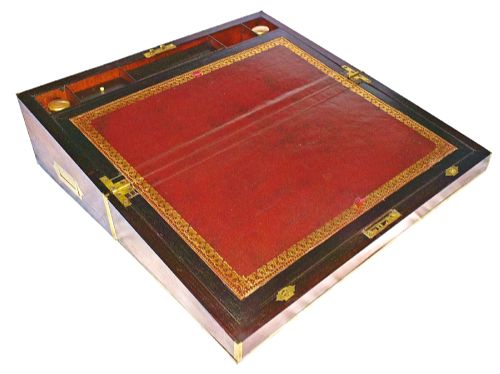
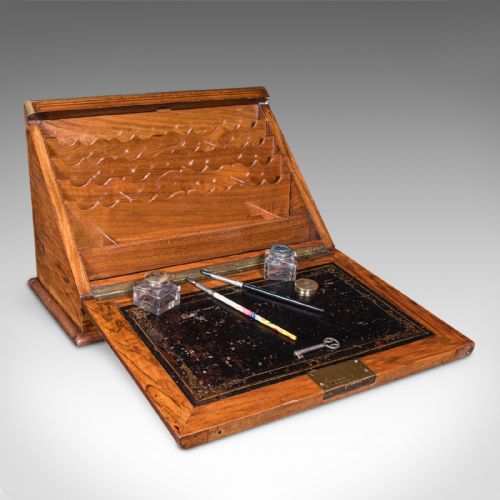
A regency writing slope is a portable box that opens to reveal an angled writing surface lined with leather, designed for travel or domestic correspondence during the early nineteenth century.
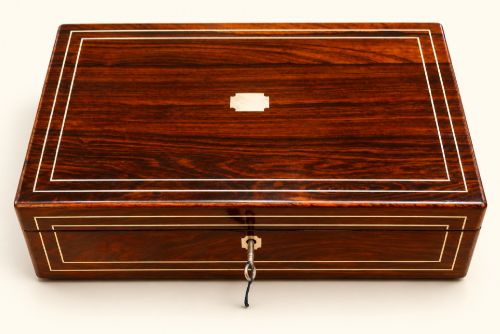
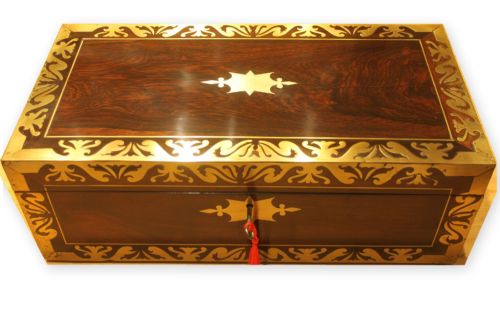
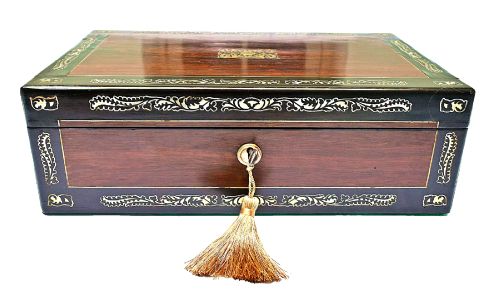
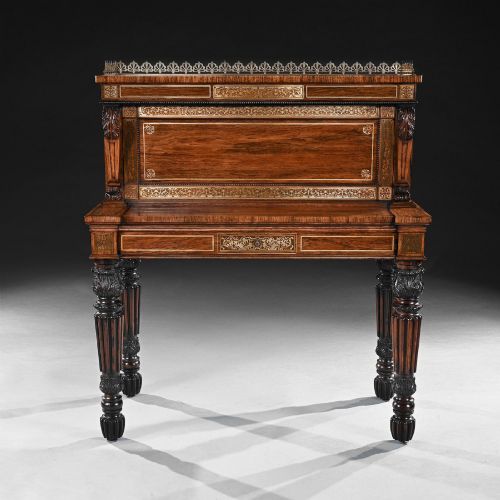
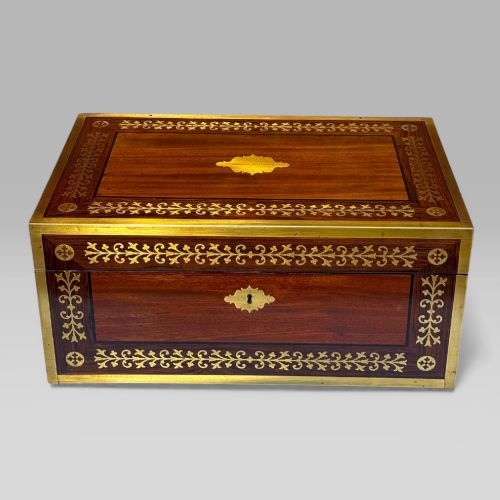
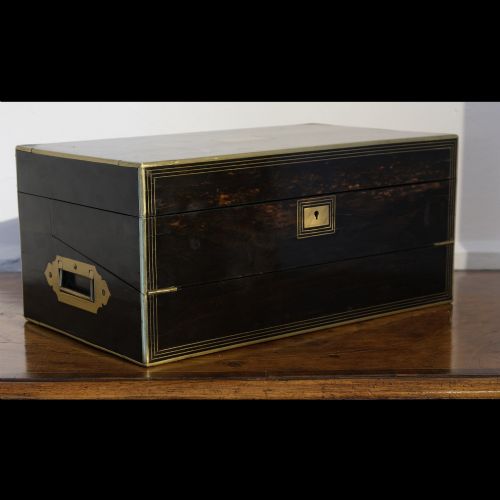
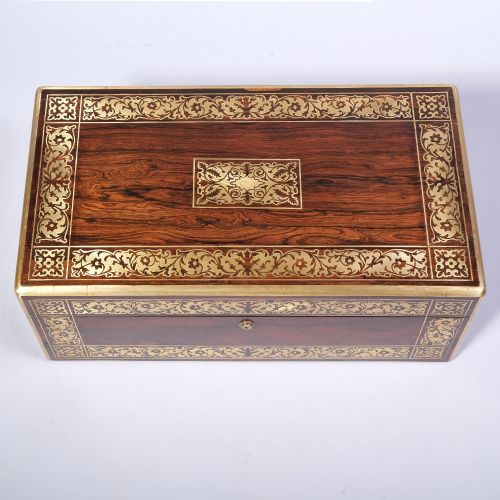
The version most commonly encountered on this page is constructed from rich timbers like mahogany or rosewood, frequently reinforced with brass binding or intricate inlay.
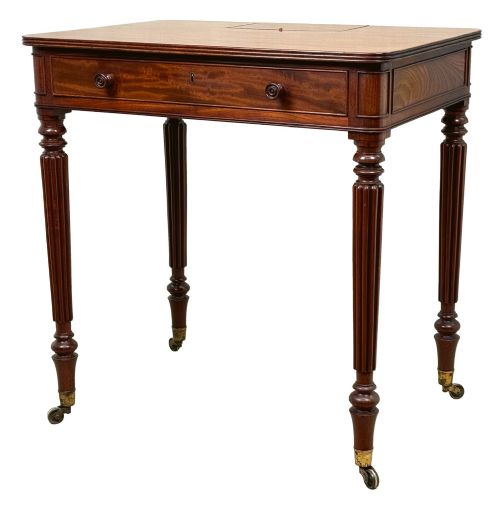
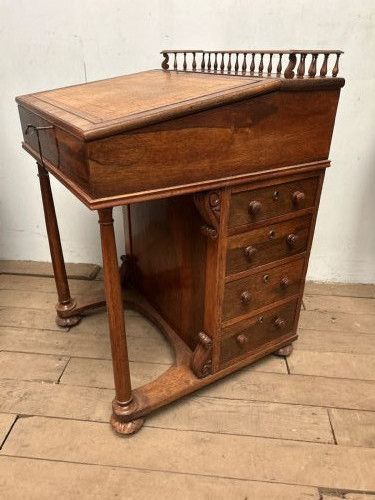
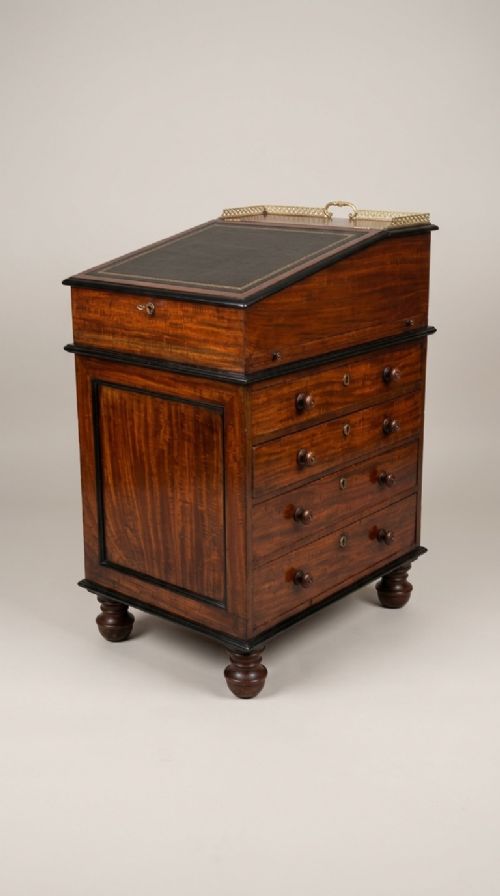
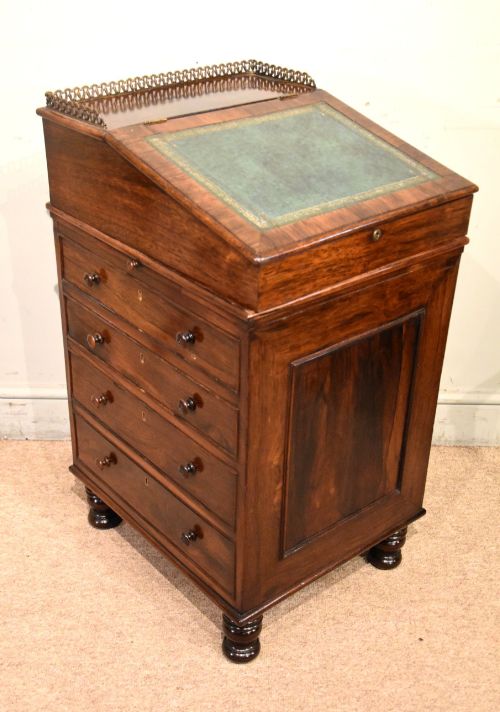
These pieces encompass various forms including compact campaign boxes, document cases, and fitted Davenport desks originating from the Georgian, Regency, and William IV periods.

How They Were Made
Cabinet makers utilised dense hardwoods such as mahogany, rosewood, walnut, and coromandel to construct the structural carcasses of these portable desks.
Brass was frequently employed for external corner brackets, strapwork, and delicate inlay to protect the wood and add decorative contrast during transit.
Interiors were thoughtfully fitted with secret drawers, pen trays, and glass inkwells, often lined with tooled leather across the folding writing surfaces.
Regency Writing Slope Retail Price Guide 2026
Typical asking prices for regency writing slope among the pieces listed under this phrase on Sellingantiques today, from the lower quarter to the upper quarter. They describe what is for sale here now, not the wider market.
The listings demonstrate a strong presence of rosewood and mahogany, frequently complemented by brass inlay and campaign styling from the Georgian and Regency periods.
What Varies in Quality
Quality rests upon the selection of timber veneers and the precision of the brass inlay work set into the wood.
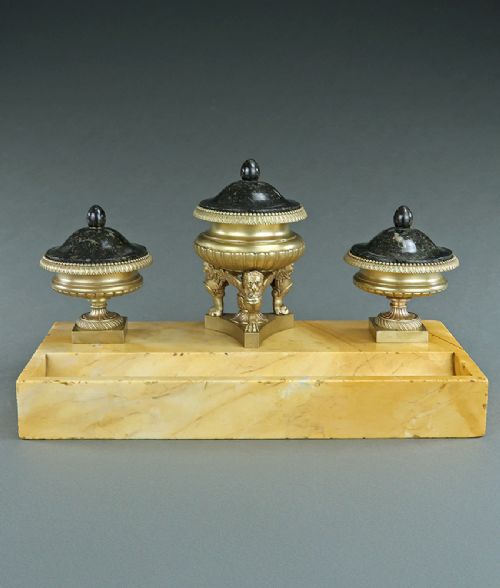
Finer examples feature fully integrated secret compartments, original fitted accessories such as ormolu inkwells, and superior internal stationery storage.
The overall structural integrity of the folding hinge mechanism and the retention of original leather surfaces distinguish standard pieces from exceptional ones.
Gillows of Lancaster·Gillows Oxford Street Workshop·George Austin Dublin
The Regency Writing Slope Glossary
- Writing slope
- A portable box with a hinged, slanted lid designed to hold writing materials and provide an angled surface for correspondence.
- Davenport desk
- A compact small desk featuring a sliding or sloping top above a pedestal of side drawers, popular during the Regency era.
- Campaign style
- Furniture constructed for military travel, characterised by brass corners, flush handles, and robust portability.
- Secret drawers
- Concealed compartments hidden behind false panels or accessed through internal release catches within the box.
- Brass inlay
- Ornamental metalwork embedded flush into the timber surface in geometric or foliate patterns.
Regency Writing Slope: Frequently Asked Questions
What is a regency writing slope?
A regency writing slope is a portable wooden box that opens to form an angled writing desk, used during the early nineteenth century for letter writing and document storage.
These pieces typically feature compartments for inkwells, pens, and paper, often housing hidden secret drawers beneath the stationery fittings.
How were writing slopes used?
Writing slopes were placed on tabletops or used on the lap during travel, providing a sturdy, portable writing surface before fitted desks were common.
Owners stored correspondence, stamps, and sealing wax inside the box, folding the lid down to create the sloping writing plane.
How do I identify a Regency period piece?
Regency pieces often display characteristic details such as brass stringing, rosewood veneers, and campaign-style hardware designed for military or travel use.
Cabinet making from this period between the late eighteenth and early nineteenth centuries frequently incorporates classical revival styles and rich mahogany timbers.
What is a Davenport desk?
A Davenport desk is a specific form of small writing desk with a sloped top, usually supported by a pedestal of drawers on one side.
Developed in the early nineteenth century, these compact desks often incorporate sliding tops and fine rosewood or mahogany construction.