



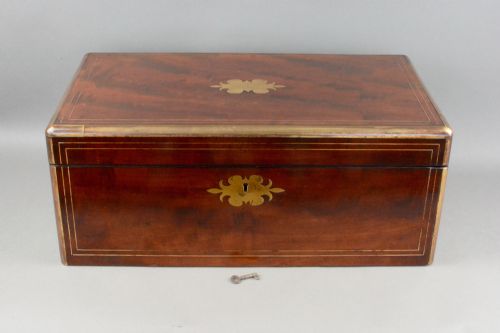


Nineteenth Century Lap Desk
Nineteenth century lap desk examples combine portable practicality with fine timber, offering a tangible link to correspondence and travel from the period.
Nineteenth Century Lap Desk
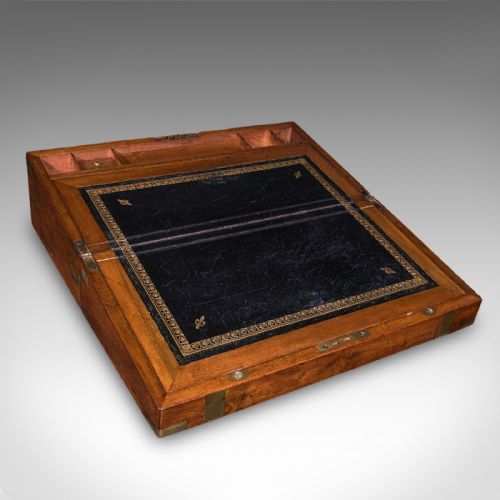
A nineteenth century lap desk serves as a portable writing box designed for travel and correspondence during the Regency and Victorian eras. These boxes fold open to form an angled writing surface, often lined with leather, and contain fitted compartments for inkwells, pens, and paper.
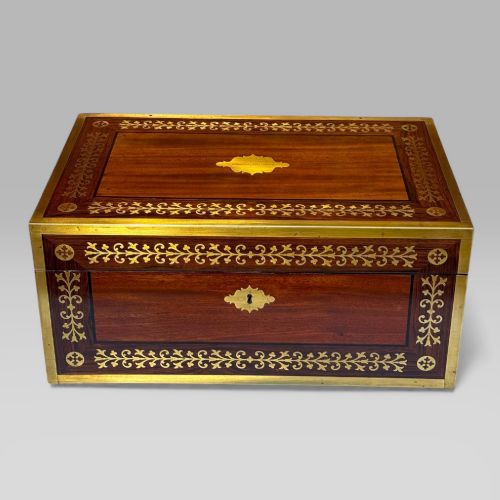
The versions most commonly met on this page span the 19th century, including Regency and Victorian periods, with forms ranging from standard writing slopes to campaign boxes and correspondence boxes. Timbers like mahogany and rosewood dominate, frequently accented with brass corner mounts or inlay.
Makers produced these pieces to function both on the move and within the home, leading to variations that include lectern conversions and Anglo-Indian designs incorporating antler or Vizagapatam work. The interior typically reveals clever storage solutions designed for personal stationery.
How they were made
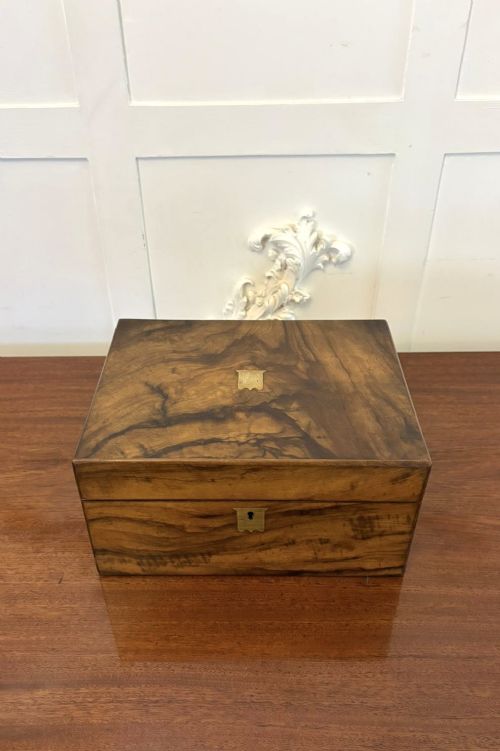
Craftsmen built nineteenth century lap desk pieces using dense hardwoods such as mahogany, rosewood, walnut, and satinwood, frequently applying contrasting veneers like ebony. These timbers provided the durability required for frequent travel while offering a polished surface for decorative finish.
Metalwork played a structural and decorative role, with brass bindings, corners, and inlay protecting the edges from impact during transport. Interior fittings integrated leather writing surfaces and specialised compartments tailored to hold ink securely.
Materials recorded in current listings include mahogany, rosewood, walnut, satinwood, brass, leather, ebony, mother of pearl, and antler.
What varies in quality
The quality of a nineteenth century lap desk depends heavily on the selection of timber and the precision of the cabinetwork. Finer examples display carefully matched wood grains, tight joinery, and well-integrated brass work that sits flush with the timber.
Interior complexity and the presence of specialised materials also divide standard production from superior pieces. The inclusion of fitted interiors with secret drawers, satinwood accents, or exotic additions like Vizagapatam work distinguishes finer items from simpler utilitarian boxes.
The Nineteenth Century Lap Desk Glossary
- Writing slope
- A box hinged to open at an angle, creating a slanted surface for writing letters. It typically includes internal storage for stationery and writing instruments.
- Campaign box
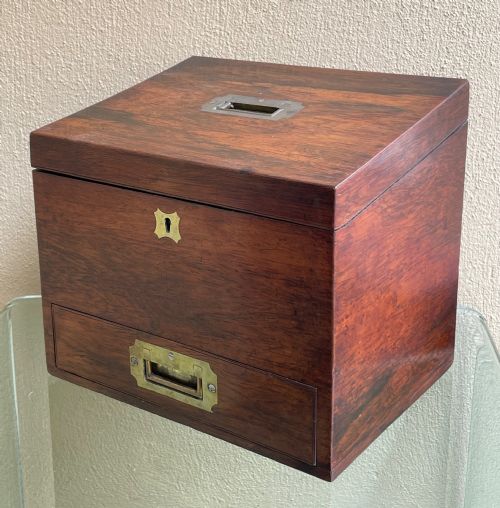
- A sturdy portable desk fitted with brass corners and recessed handles for transport during military or civil travel. These pieces prioritized durability and secure closure on the move.
- Vizagapatam
- A style of decorative craftsmanship originating in India, known for intricate carved panels and inlaid materials such as ivory or antler. Such work appears on select Anglo-Indian boxes of the period.
- Brass bound
- A construction method where brass strips and corner pieces are inset into the edges of wooden boxes to reinforce them against travel damage. This detail is characteristic of campaign furniture.
- Fitted interior
- An internal arrangement of small lidded compartments, pen trays, and inkwell slots designed to organise writing materials securely.
Nineteenth Century Lap Desk: Frequently Asked Questions
What is a nineteenth century lap desk?
A nineteenth century lap desk is a portable wooden box designed to hold writing materials and provide a slanted surface for writing while travelling or at home.
These pieces typically fold open to reveal a leather-lined writing plane alongside dedicated compartments for inkwells, pens, and letters.
How were they used in the past?
Owners used these boxes to write correspondence away from a stationary desk, carrying them between residences or during journeys.
The internal compartments kept paper and ink secure, while the sturdy exterior protected the contents from the rigours of travel.
How do I identify Regency pieces?
Regency era pieces often feature specific timber combinations like mahogany and rosewood, alongside distinct brass inlay patterns.
These boxes typically date from the early part of the 19th century and display clean, classical proportions.
What timber was used?
Craftsmen utilised dense hardwoods including mahogany, rosewood, walnut, and satinwood to construct these durable writing boxes.
Contrasting woods like ebony and decorative elements such as brass and mother of pearl frequently appear as accents.