





Brass Marquetry Box
A brass marquetry box brings tactile warmth and precise metallic detail into a room, offering a disciplined storage place for papers, tea or small treasures.
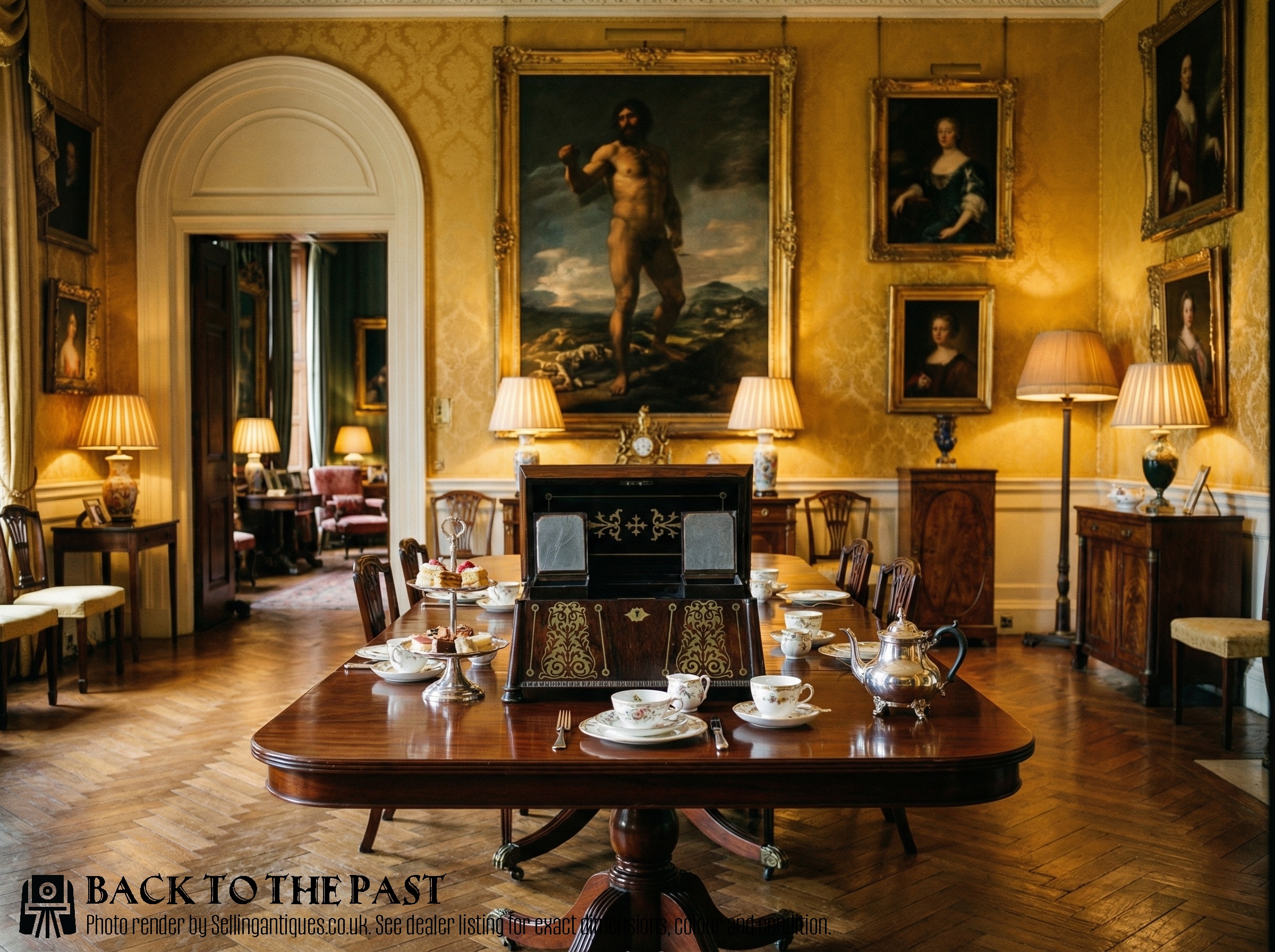
Brass Marquetry Box
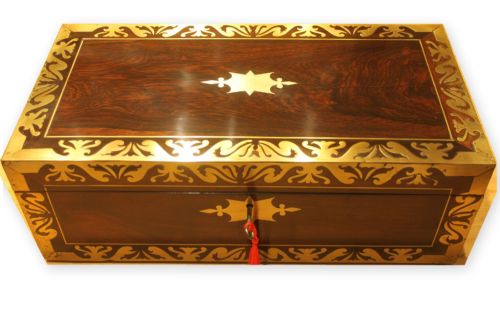
A brass marquetry box encompasses various utilitarian and decorative containers shaped by 18th century, Regency, and Victorian hands. These pieces typically take the form of tea caddies, writing boxes, and desk accessories designed to organise valuables or correspondence.
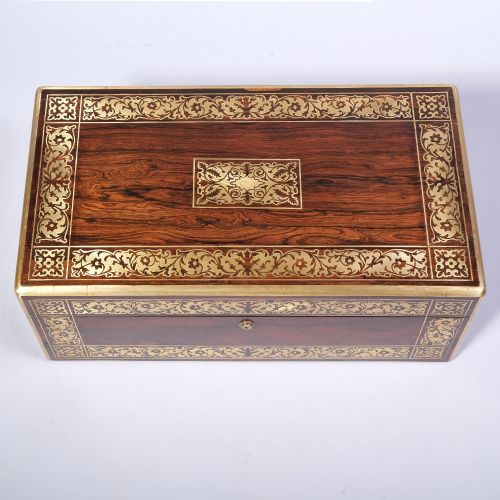
The most frequent encounter on this page is the rosewood tea caddy or writing box decorated with inlaid brass, reflecting the enduring popularity of Regency and mid 19th century styles.
Materials and technique
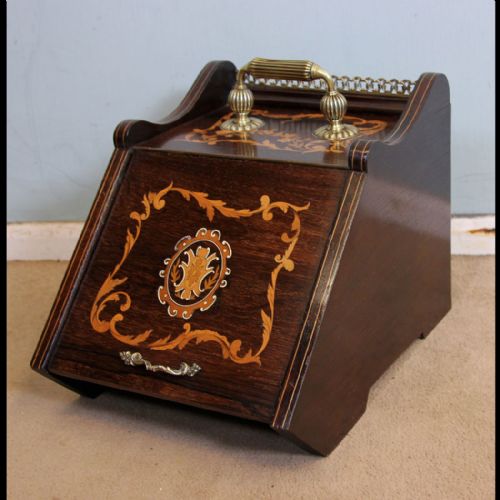
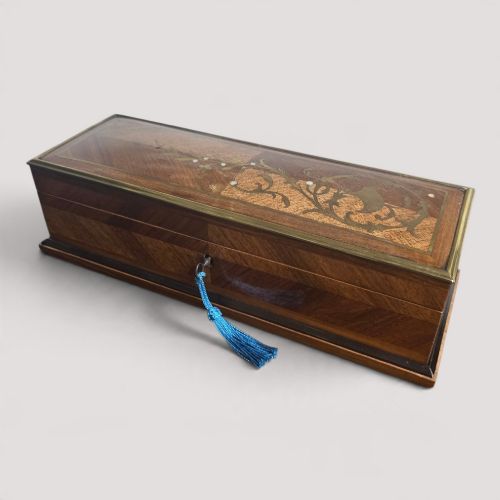
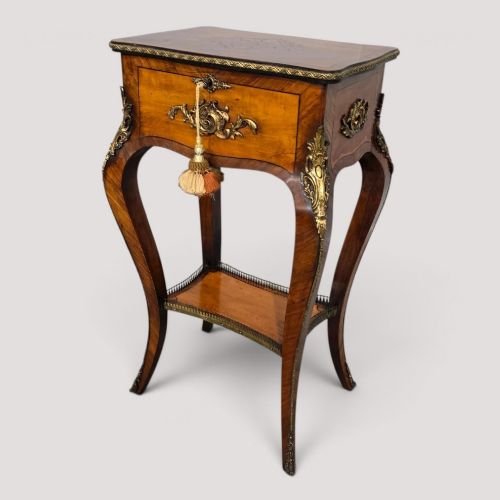
Cabinetmakers combined dense hardwoods such as rosewood, walnut, and mahogany with contrasting veneers of boxwood or exotic grains to form the carcase. Into these wooden surfaces, artisans recessed thin sheets of brass, creating intricate linear patterns or complex figurative scrolls.
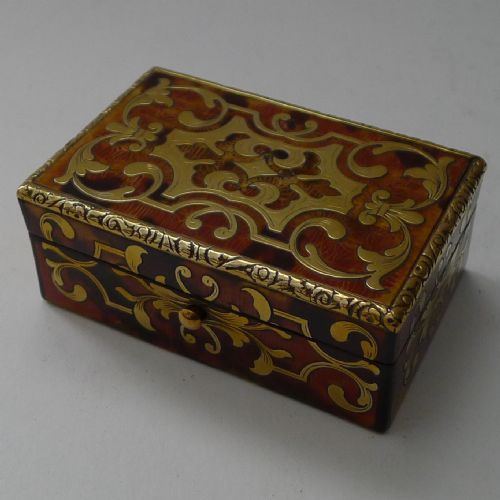
Alternative luxury surfaces appeared when tortoiseshell or ebonised wood served as the foundation for elaborate brass inlay work, occasionally complemented by glass inserts or mother of pearl details.
Brass Marquetry Box Retail Price Guide 2026
Typical asking prices for brass marquetry box among the pieces listed under this phrase on Sellingantiques today, from the lower quarter to the upper quarter. They describe what is for sale here now, not the wider market.
A ballot box listed here offers a discreet glimpse into 19th century voting habits where secret ballots required elegant containment.
Gradations of execution
The standard of a piece rests upon the precision of the brass inlay into the wood ground, where tighter joints and smoother flush surfaces separate meticulous workshops from standard production. Master makers achieved continuity along curved contours and corners without lifting the metal.
Interior fittings dictate the upper tier of quality, seen in original cut crystal compartments, fitted stationery tiers, and functioning locks with matching keys that indicate a complete, unaltered survival.
Lund Of Cornhill·Whytock & Reid·Nicole Freres
The Brass Marquetry Box Glossary
- Boulle
- A form of marquetry consisting of tortoiseshell and brass inlay, developed extensively in France during the 17th century and revived in the 19th century. This technique creates a rich contrast between dark organic shell and gleaming metal.
- Tea Caddy
- A small container originally utilised for storing loose tea leaves securely under lock and key when tea was an expensive commodity. Many examples feature internal compartments and mixing bowls.
- Marquetry
- Decorative veneer work arranged in geometric or pictorial patterns across a wooden surface. Craftsmen cut thin slices of contrasting wood, metal, or shell to fit tightly together.
- Tantalus
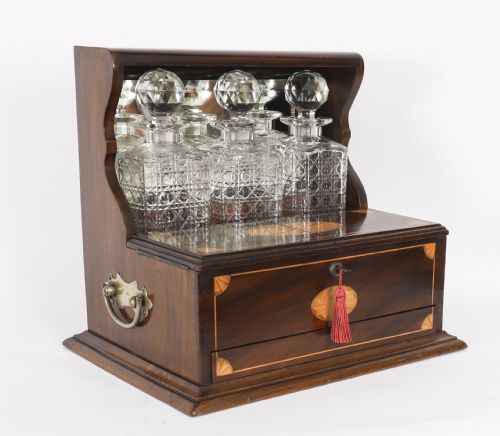
- A locked drinks cabinet displaying decanters through a wooden and metal framework that prevents removal without a key. They gained popularity during the Victorian period for safeguarding spirits.
- Writing Box
- A portable sloping desk hinged to open flat, fitted with compartments for inkwells, pens, and stationery. These boxes provided a stable surface for correspondence during travel.
Brass Marquetry Box: Frequently Asked Questions
How do I care for rosewood and brass?
Maintain a stable indoor humidity and avoid placing the wood near direct heat sources to prevent the timber from shrinking and loosening the metal inlay.
Apply a microcrystalline wax occasionally to protect the polished surface while leaving the brass unpolished to preserve its natural patination.
What were tea caddies used for?
Households utilised these locked containers to protect expensive black and green teas from theft and dampness in the dining room or parlour.
Servants typically kept the key, measuring out the leaves for each pot to control consumption.
How do I distinguish Regency from Victorian boxes?
Regency pieces often display restrained geometric brass stringing and classical proportions set against dark rosewood grounds.
Victorian examples tend towards denser decoration, incorporating elaborate floral scrolls, Boullework, or eclectic revival styles influenced by French fashions.
Can I use an antique writing box today?
These boxes adapt well to holding modern stationery, fountain pens, or small keepsakes on a desk or dressing table.
Ensure the interior velvet or leather liners are treated gently and avoid storing damp items that might stain the aged wood.