



Dark Wood Tea Chest
A dark wood tea chest brings tactile warmth to a room, offering sturdy construction and handsome grain in a compact form.
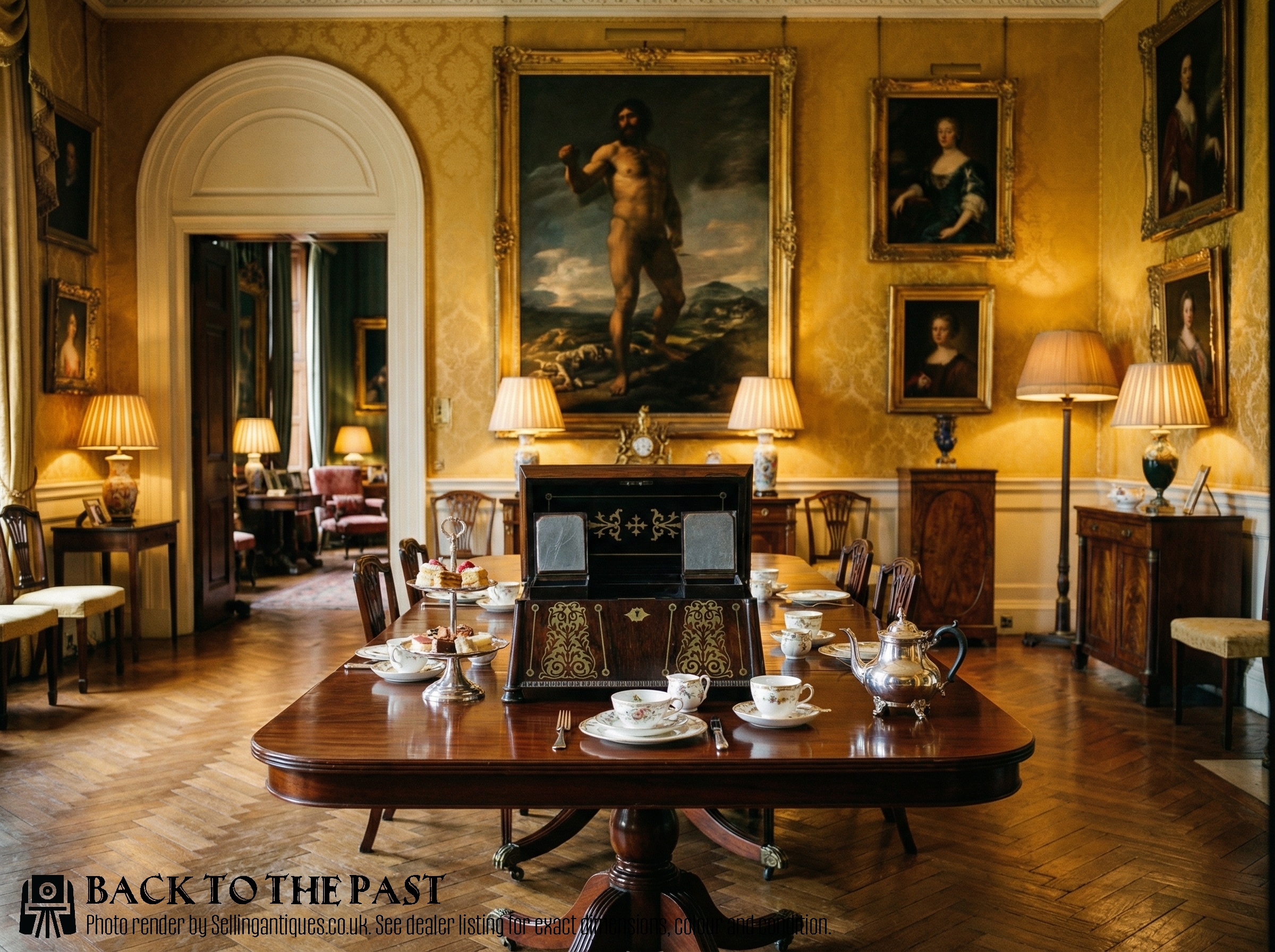
Dark Wood Tea Chest
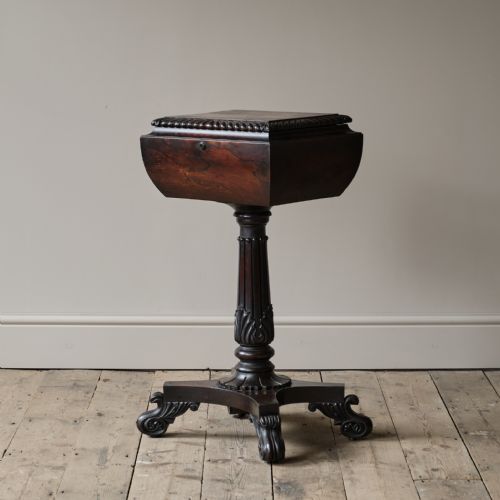
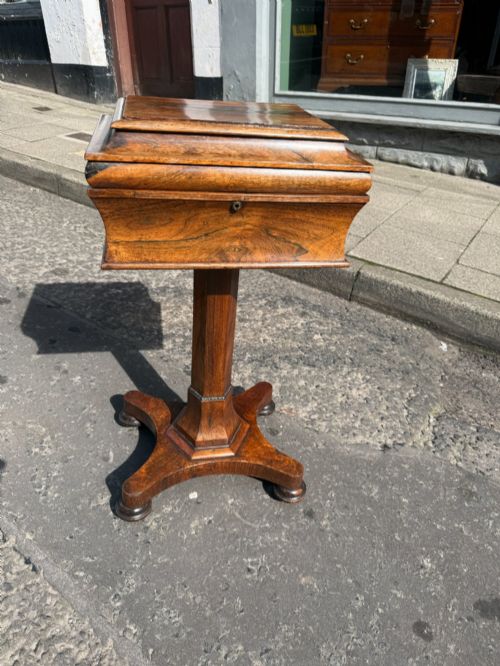
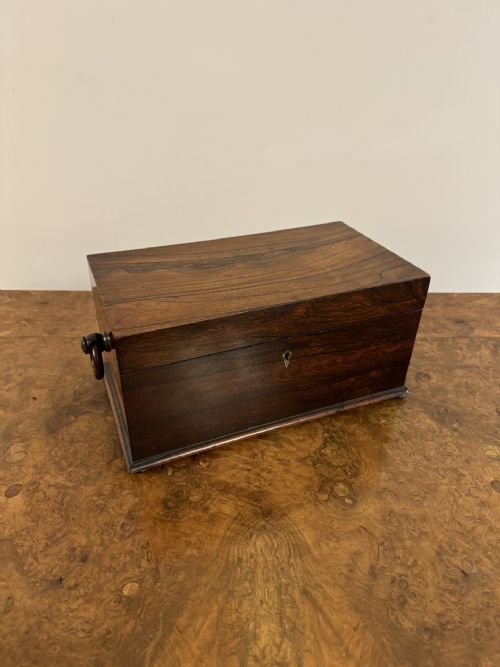
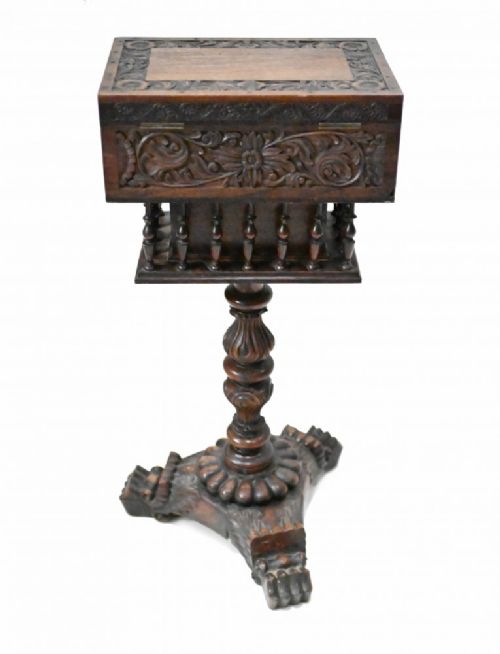
When you search for a dark wood tea chest, you encounter items designed to store precious tea leaves securely during Georgian, Regency, and Victorian periods. These pieces take the form of tabletop tea caddies and freestanding teapoys, often featuring compartmented interiors for different blends.
The objects serve as functional storage containers and decorative boxes alike, transitioning easily into keepsake boxes or stationery cases today. The designs range from plain mahogany boxes to elaborate brass-inlaid and parquetry-decorated containers.
Distinctions in quality
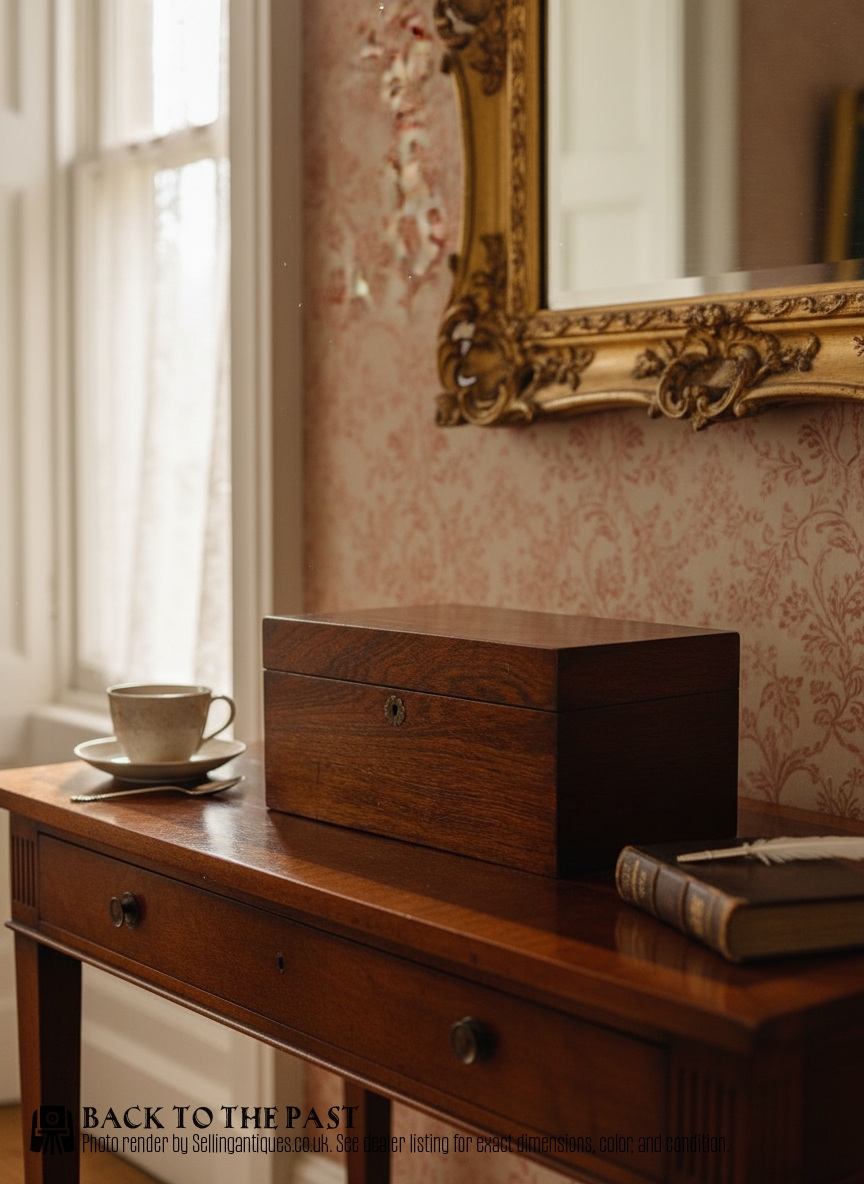
Quality rests primarily in the precision of the cabinetwork and the selection of timber veneers. Finely figured rosewood grain and crisp brass inlay indicate superior workshop output.
The integrity of the interior fittings, such as original mixing bowls, fitted lids, and functioning locks with matching keys, elevates an example above simpler utilitarian boxes.
Dark Wood Tea Chest Retail Price Guide 2026
Typical asking prices for dark wood tea chest among the pieces listed under this phrase on Sellingantiques today, from the lower quarter to the upper quarter. They describe what is for sale here now, not the wider market.
Some nineteenth century tea chests housed secret compartments that required pressing hidden wooden springs to release the catch.
Gillows
The Dark Wood Tea Chest Glossary
- Tea caddy
- A small box or chest designed to store loose tea leaves securely under lock and key. These containers often featured internal compartments to separate different varieties of tea.
- Teapoy
- A pedestal table or a large box fitted on a stand, intended to hold tea equipment. Examples frequently incorporate storage boxes with internal caddies.
- Sarcophagus form
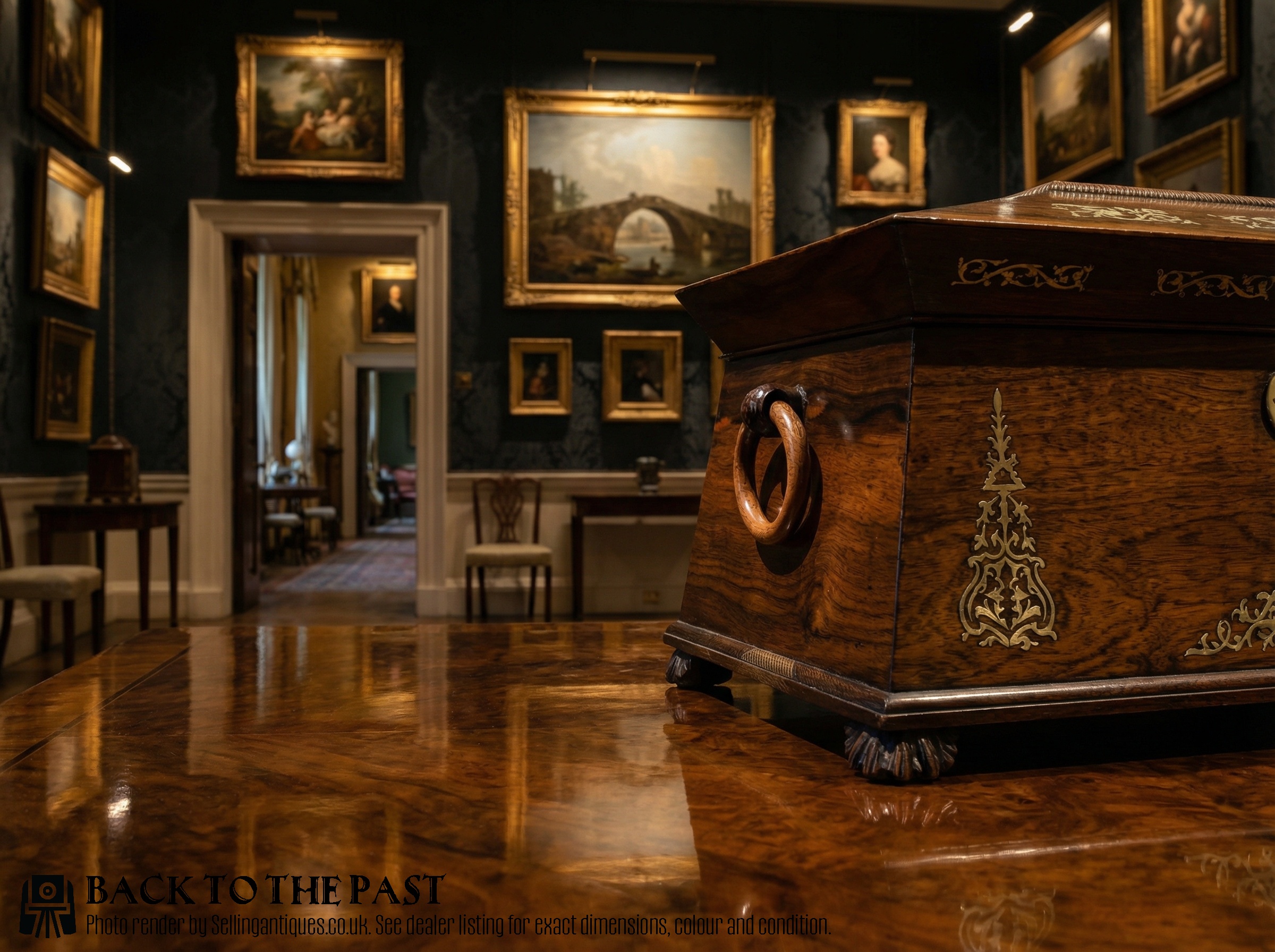
- A box shape featuring a domed or peaked lid and sloping sides reminiscent of a classical stone coffin. This silhouette proved popular during the Regency period.
- Tunbridge Ware
- Woodworking characterised by tiny mosaic tiles assembled from different coloured woods to create pictorial or geometric surface decoration. The technique gained prominence in Kent during the nineteenth century.
- Parquetry
- A geometric mosaic of wood pieces used for decorative veneer on furniture and box surfaces. Artisans arranged contrasting timbers to form precise patterns.
Dark Wood Tea Chest: Frequently Asked Questions
What is a dark wood tea chest used for today?
These boxes function well as decorative desktop storage for letters, photographs, and small personal trinkets. Their compartmentalised interiors help organise modern accessories while adding period character to a room.
Placed on a side table or chest of drawers, they introduce rich dark timber tones and historical craftsmanship into domestic spaces.
How do I tell a Regency tea caddy from a Victorian one?
Regency pieces often feature architectural sarcophagus shapes with bold brass stringing, lion mask handles, and dense rosewood veneers. They reflect a classical aesthetic popular in the early nineteenth century.
Victorian examples frequently showcase more varied surface decoration, including Tunbridge Ware mosaic panels, coromandel construction, and sometimes simpler rectangular proportions.
Are original mixing bowls usually present inside?
Original glass or crystal mixing bowls are occasionally retained, but many surviving chests have lost them over the decades. The bowls were used to blend different varieties of tea before brewing.
Replacement bowls are common, so collectors focus primarily on the condition of the wooden box and its internal fittings.