
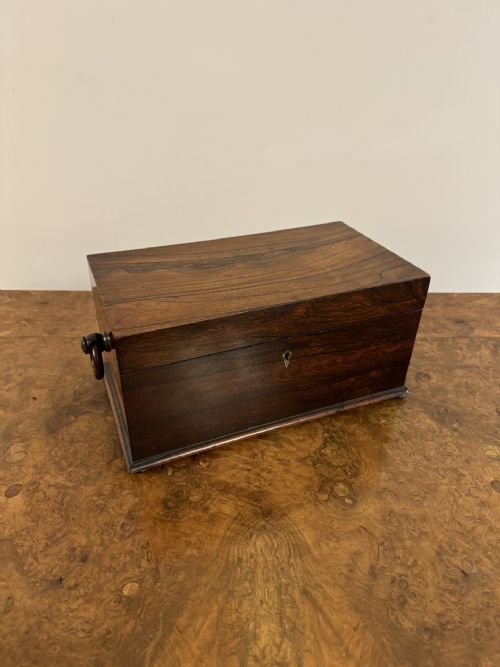
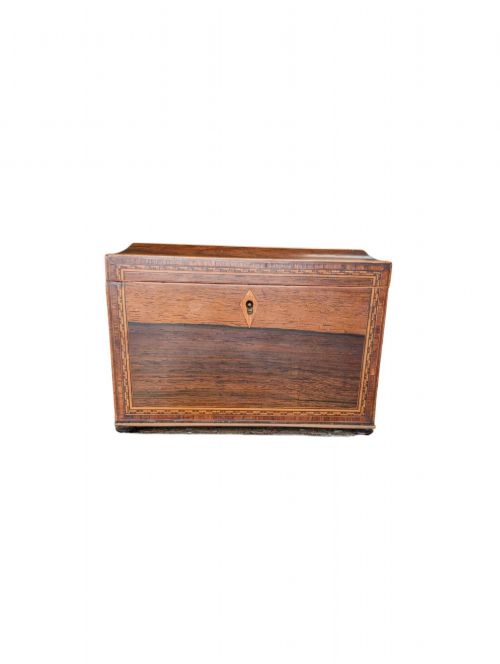


Rosewood Storage Box
Rosewood storage box pieces span the Regency, Georgian and Victorian periods, offering heavy timber figure and polished brass work designed to hold tea, letters and jewels.
Rosewood Storage Box
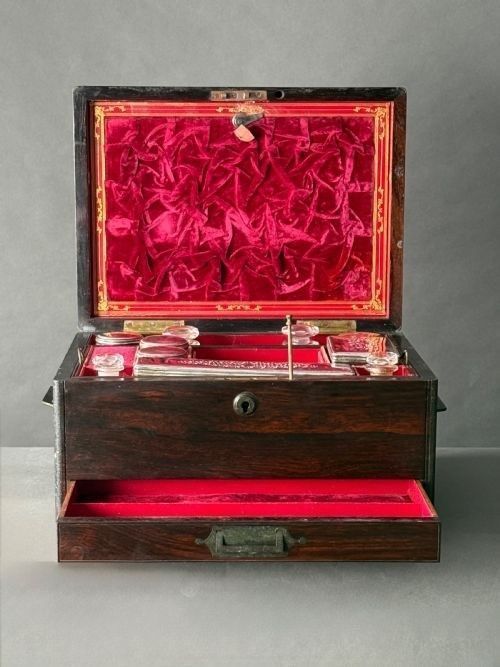
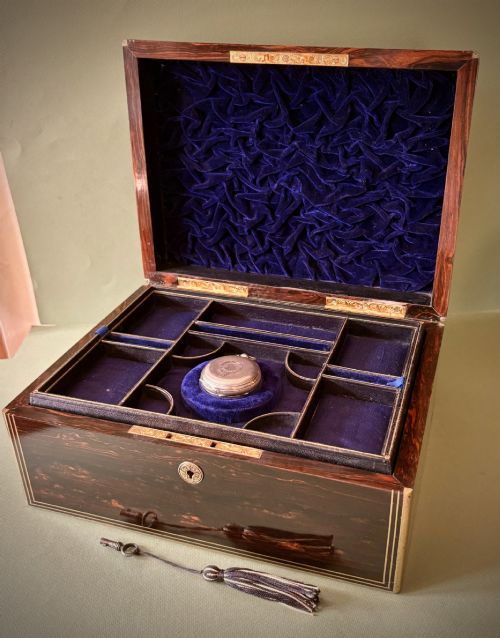
A rosewood storage box is a timber container made to hold tea, jewellery, sewing gear or documents, often shaped as a sarcophagus or rectangular chest. When you search for this phrase, you meet items spanning the Georgian, Regency, William IV and Victorian eras, alongside Edwardian examples.
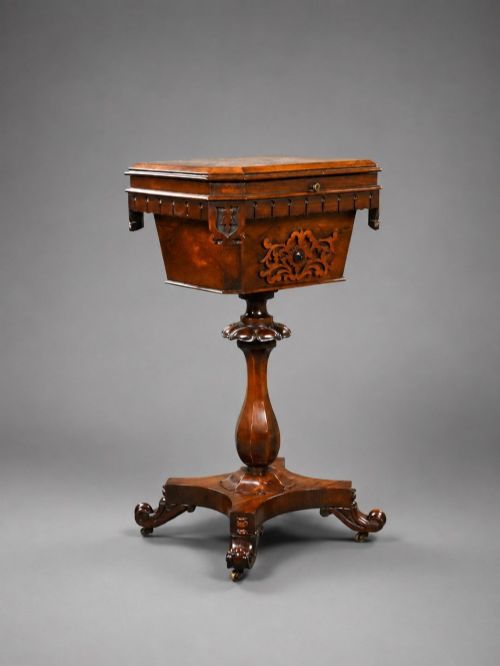
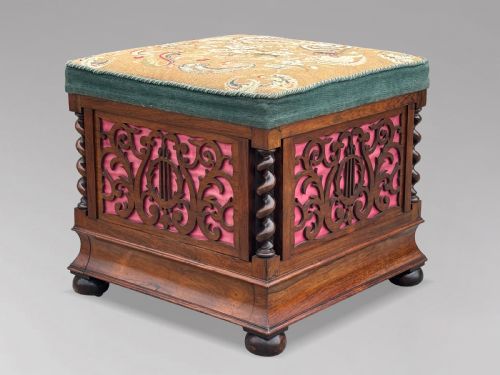
The version most likely to appear on this page is the tea caddy or jewellery box, constructed in rich dark timber with fitted compartments inside. Pieces also include larger work tables, ottomans, footstools and coal scuttles utilising the same dense wood.
Origins vary from English workshops to Anglo-Indian studios and Chinese production, showing how widely the timber travelled. Many domestic examples date from the middle of the nineteenth century when utilitarian containers doubled as decorative drawing room objects.
How they were made
Cabinet makers built these pieces using solid rosewood or thick veneers laid over secondary timbers, often shaping the bodies into sarcophagus curves or clean rectangular lines. Brass mounts, lion mask handles and campaign straps reinforced the corners and added structural weight.
Decoration relied on contrasting materials such as boxwood stringing, satinwood parquetry, mother of pearl inlay and detailed Tunbridge Ware mosaic panels. Interiors were lined with velvet, fabric or leather, while bone escutcheons protected the keyholes for locks.
Rosewood Storage Box Retail Price Guide 2026
Typical asking prices for rosewood storage box among the pieces listed under this phrase on Sellingantiques today, from the lower quarter to the upper quarter. They describe what is for sale here now, not the wider market.
Listings on this page include rosewood storage pieces from the Georgian, Regency, William IV, Victorian, and Edwardian periods.
What varies in quality
Quality rests in the precision of the cabinet work, from the tight mitre joints of the timber to the crispness of the brass inlay and parquetry. Superior examples display dense, well-figured rosewood grain that has been polished to a deep lustre rather than masked by heavy finish.
Internal fitting dictates the grade of the piece, separating simple open boxes from fully fitted jewellery chests and tea caddies complete with mixing bowls, covered compartments and working locks with original keys.
The Rosewood Storage Box Glossary
- Sarcophagus form
- A box design featuring a steep sloping lid and a stepped plinth base, popular during the Regency and William IV periods. This shape gave smaller containers monumental architectural presence.
- Tunbridge Ware
- Small wooden objects decorated with mosaic patterns made from thousands of tiny tinted wood blocks. These pictorial or geometric designs required immense patience to assemble.
- Parquetry
- Geometric patterns formed by fitting small pieces of veneer together on a surface. Makers used contrasting timbers like boxwood and satinwood to create crisp optical effects.
- Teapoy
- A small stand or large container originally used to store and lock away expensive loose tea leaves. They often sat beside the fireplace in formal drawing rooms.
- Escutcheon
- A small plate surrounding the keyhole of a box or cabinet. These shields were usually fashioned from brass or bone to protect the surrounding timber from wear.
Rosewood Storage Box: Frequently Asked Questions
What were rosewood storage boxes used for originally?
These boxes served practical domestic purposes in wealthy households, holding high-value commodities like tea leaves, writing paper, sewing equipment and precious jewellery. Because tea and correspondence were expensive or private, the containers were fitted with locks and keys to restrict access.
Over time, many of these containers transitioned from purely functional objects into decorative mantel or table display pieces within nineteenth-century drawing rooms.
How do I tell a Regency box from a Victorian one?
Regency boxes often favour architectural forms like the sarcophagus shape, clean brass banding, and classical stringing in boxwood or satinwood. They date from the early part of the nineteenth century and lean toward restrained classical lines.
Victorian pieces, by contrast, frequently incorporate heavier surface decoration including mother of pearl inlay, Tunbridge Ware mosaics, and elaborate floral marquetry reflecting mid-century tastes.
Are the interiors usually original?
Interiors vary significantly, with many surviving examples retaining their original silk, velvet, or paper linings alongside fitted wooden trays and compartments. Some pieces have undergone professional relining over the decades to replace worn fabrics while preserving the original layout.
Checking the partitions reveals whether the box was built for sewing tools, correspondence, or tea storage.
How should I care for antique rosewood furniture and boxes?
Rosewood requires stable humidity levels and protection from direct sunlight to prevent the dense timber from drying out or splitting. Gentle dusting with a dry lint-free cloth maintains the surface without the need for heavy silicone polishes.
Occasional application of microcrystalline wax helps nourish the polished finish and preserves the brass mounts.