



Parquetry Wooden Box
A parquetry wooden box brings geometric precision and cabinet-maker skill to everyday storage, holding tea, stationery or letters with quiet authority.
Parquetry Wooden Box
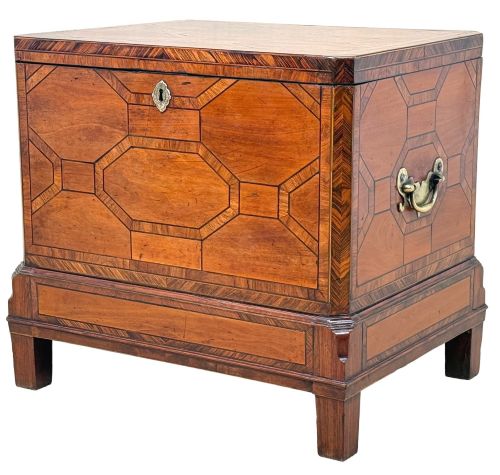
When you search for a parquetry wooden box, you encounter a specialised form of small container built to house precious domestic items. The examples gathered here span centuries of craftsmanship, ranging from Georgian tea caddies to Victorian sewing boxes and stationery cases.
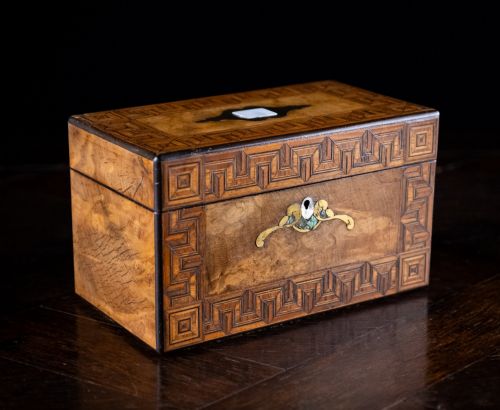
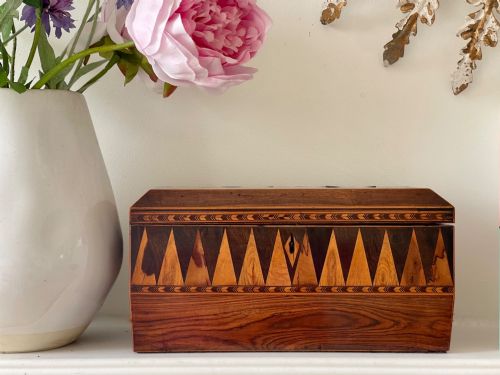
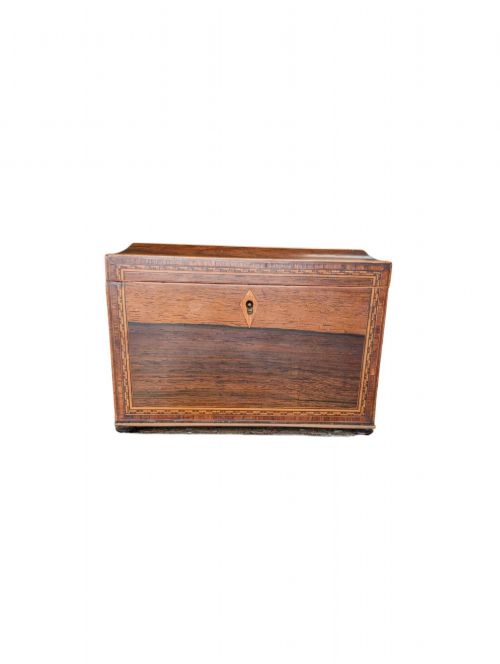
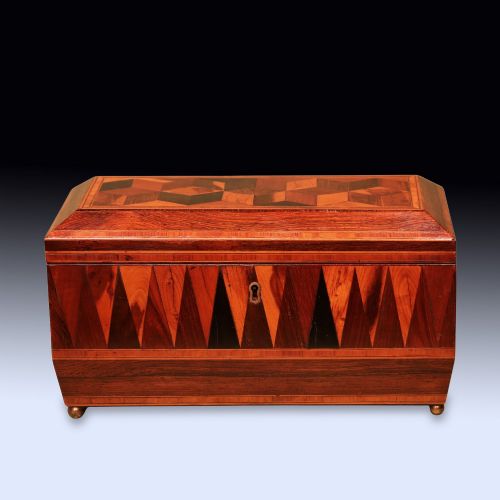
The version you meet most frequently on this page is the nineteenth-century Victorian or Regency box, constructed in walnut, rosewood or mixed woods. These pieces serve as tea caddies, correspondence boxes and keepsake chests, showing varied geometric patterns across their lids.
Makers designed these objects for specific functional roles within the domestic interior, incorporating fitted interiors, compartments and secret drawers. Their survival reflects the high regard in which contemporary owners held such decorative storage.
Materials and construction
Cabinet-makers constructed these pieces using dense hardwoods such as walnut, rosewood and kingwood as a structural base. They applied contrasting veneers of satinwood, boxwood and brass to create intricate surface patterns.
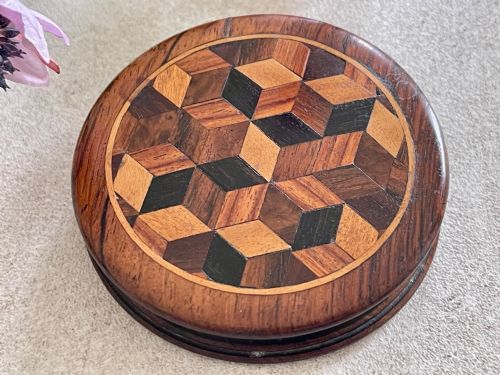
Tunbridge Ware examples utilised specialised wood mosaic techniques, assembling thousands of tiny tinted wood blocks to form pictorial or geometric motifs. Artisans then polished the finished surfaces to highlight the natural grain and colour variations of each timber.
Parquetry Wooden Box Retail Price Guide 2026
Typical asking prices for parquetry wooden box among the pieces listed under this phrase on Sellingantiques today, from the lower quarter to the upper quarter. They describe what is for sale here now, not the wider market.
Listings feature items from the Georgian, Regency and Victorian periods, incorporating walnut, rosewood, satinwood and boxwood.
Distinctions in quality
The standard of a parquetry wooden box rests primarily on the precision of the veneer work and the complexity of the geometric layout. Superior pieces exhibit tight joints between individual wood tiles without visible gaps or filler.
Makers who incorporated fitted interiors with original compartments, working locks and matching key escutcheons produced items of higher ambition. The choice of exotic timbers and the inclusion of fine Tunbridge Ware mosaic panels further elevate the standing of a piece.
Henry Hollamby·Edmund Nye
The Parquetry Wooden Box Glossary
- Parquetry
- A geometric mosaic of wood pieces used for decorative veneer on floors and furniture. It relies on precise cutting of contrasting timbers to form patterns.
- Tunbridge Ware
- Woodware decorated with mosaic patterns made from many small pieces of naturally coloured woods. It originated in Kent during the eighteenth and nineteenth centuries.
- Tea Caddy
- A small box or chest designed to store tea leaves safely. They often included internal lidded canisters and mixing bowls.
- Writing Slope
- A portable desk with a hinged sloping lid that opens to reveal a flat writing surface and storage for paper and ink. These often featured parquetry inlay.
- Sarcophagus form
- A box shape featuring a domed or stepped lid rising from a rectangular base, reminiscent of classical stone coffins. Regency makers favoured this profile for tea containers.
Parquetry Wooden Box: Frequently Asked Questions
What were parquetry wooden boxes used for?
These boxes served specific household storage needs, particularly for holding expensive tea leaves, writing materials, sewing equipment and personal letters.
Their secure compartments and fitted interiors protected delicate items from moisture and theft in the domestic setting.
How do I identify a Tunbridge Ware box?
Tunbridge Ware boxes feature distinctive mosaic decoration made from tiny blocks of naturally coloured wood arranged to create geometric patterns or pictorial scenes.
Many examples include a maker label on the base or interior, often associated with workshops in Tunbridge Wells.
What woods are common in these boxes?
Cabinet-makers utilised a range of domestic and exotic timbers, including walnut, rosewood, kingwood, satinwood and boxwood.
Contrasting shades of these woods allowed craftsmen to build up the intricate geometric patterns characteristic of parquetry.
How should I care for an antique wooden box?
Keep the box away from direct sunlight and dramatic fluctuations in temperature or humidity to prevent the wood and veneer from warping or cracking.
Apply a minimal amount of appropriate microcrystalline wax occasionally to feed the timber and maintain the polished surface.