





Walnut Stationery Box
A walnut stationery box brings order to a desk through rich timber and disciplined Victorian craftsmanship.

Walnut Stationery Box
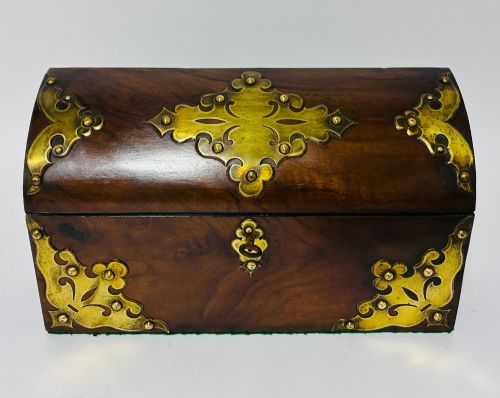
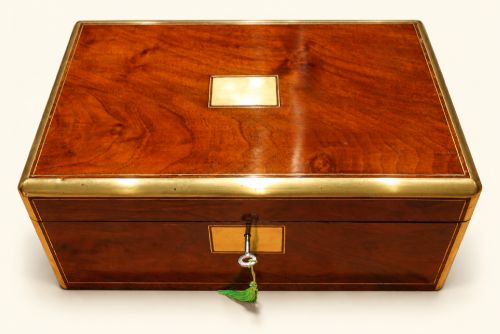
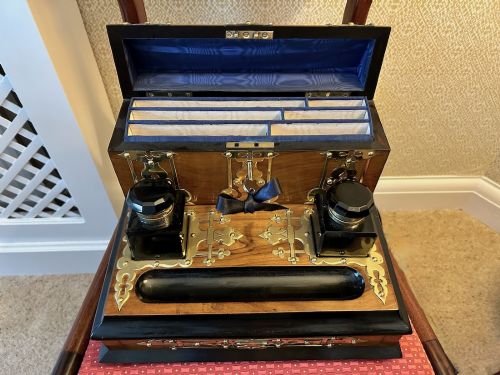
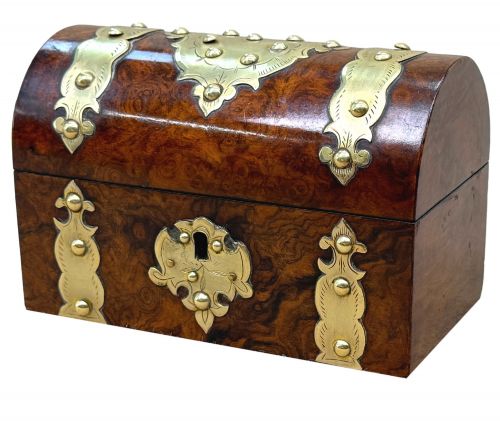
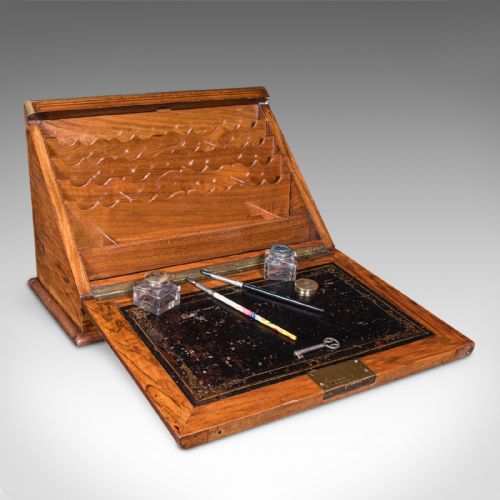
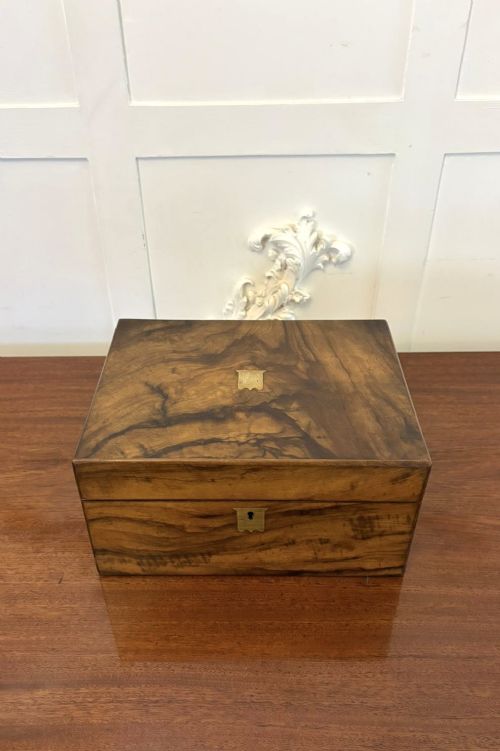
A walnut stationery box organises letters, envelopes and writing paper upon a nineteenth-century desk. The walnut stationery box most frequently met here dates from the Victorian period, appearing as a dome top box, a drop front cabinet or a correspondence chest.
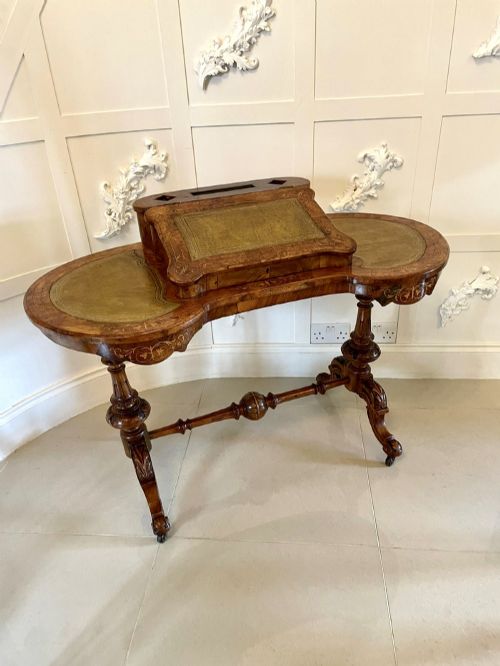
Makers often combined the stationery box with a writing slope or incorporated secret drawers for private papers. Pieces range from modest desktop caskets to large, fitted cabinets designed for country house studies.
The form evolved from Georgian writing desks into compact, portable or desktop receptacles. Surviving examples reflect the high administrative demands of the Victorian era.
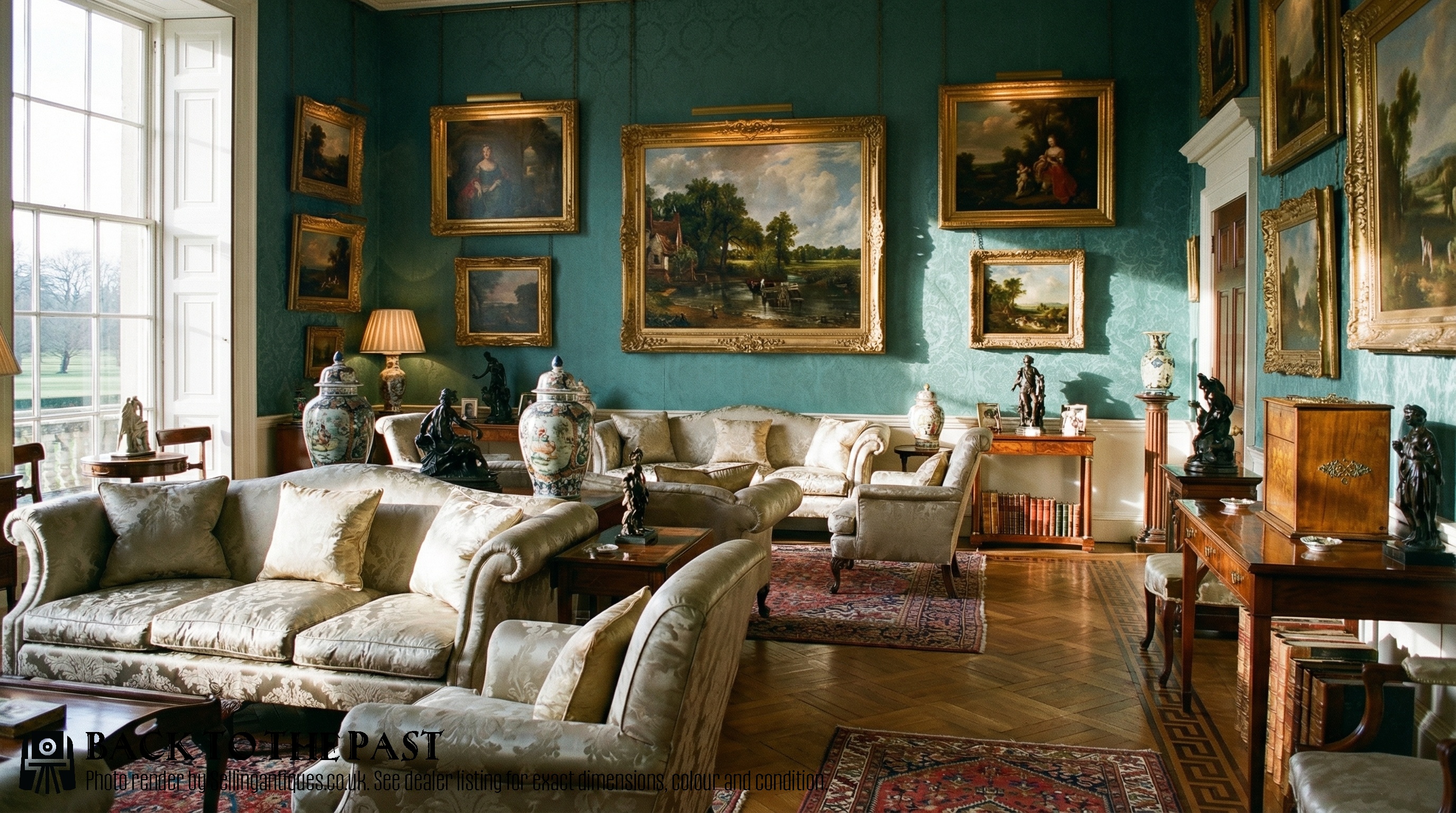
How they were made
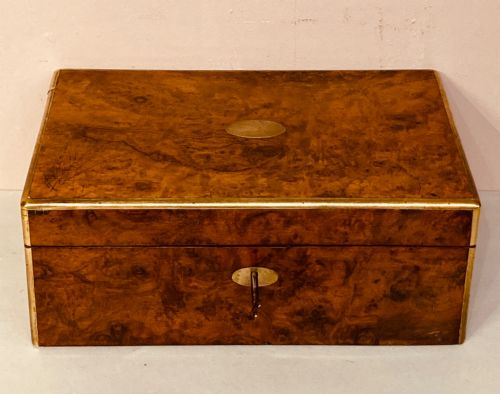
Carpenters selected burr walnut and figured walnut veneers for their swirling grain patterns, laid over solid pine or mahogany carcases. Brass mounts, banding and corner pieces reinforced the structure while adding structural contrast.
Interiors frequently combined velvet or leather writing surfaces with satinwood compartments, glass inkwells and porcelain components. Specialised makers employed dovetail joinery and applied parquetry or Tunbridge ware mosaic inlays for decorative detail.
Walnut Stationery Box Retail Price Guide 2026
Typical asking prices for walnut stationery box among the pieces listed under this phrase on Sellingantiques today, from the lower quarter to the upper quarter. They describe what is for sale here now, not the wider market.
Secret drawers tested the owner's memory just as much as their correspondence.
What varies in quality
The choice of timber grain dictates initial visual impact, with densely figured burr walnut commanding greater respect than plain timber. Finely executed brass binding, flush hinges and substantial lock mechanisms indicate superior workshop standards.
Interior complexity separates standard production from exceptional pieces. The presence of Bramah locks, hidden compartments, complete internal partitions and matching desk accessories elevates a box's standing.
Edmund Nye·Trussell Brighton·Mappin & Webb·Asprey
The Walnut Stationery Box Glossary
- Burr walnut
- Timber taken from the wart or burl of a walnut tree, yielding intricate and swirling grain patterns. It was sliced into thin veneers for high-status furniture and boxes.
- Writing slope
- A desktop box with an angled lid that opens to reveal a flat or sloping surface for correspondence. Many include storage wells for pens and ink.
- Tunbridge ware
- Wood mosaic decoration produced in Kent, forming geometric or pictorial designs from tiny wooden tesserae. It often appears on nineteenth-century box lids.
- Bramah lock
- A high-security cylindrical lock patented by Joseph Bramah in the eighteenth century. These mechanisms were fitted to secure valuable correspondence.
- Parquetry
- Geometric wood-block patterning applied to surfaces in repeating designs. Makers used contrasting timbers to create optical depth on box lids.
Walnut Stationery Box: Frequently Asked Questions
What is a walnut stationery box?
A desktop container designed to hold envelopes, writing paper and correspondence in an orderly fashion. They were essential desk accessories in nineteenth-century offices and homes.
Most examples feature hinged lids or drop fronts that reveal fitted internal dividers. Walnut timber, particularly burr and figured varieties, was the preferred material for these desk companions.
How did Victorians use them?
Victorians used these boxes to keep personal and business correspondence sorted before postage became fully automated. They sat upon library tables, Davenport desks and writing tables.
Many boxes doubled as writing slopes, allowing the owner to pen letters directly on the angled lid. Secret drawers inside provided secure storage for confidential papers.
How do I date a piece?
Dating relies on observing styles, construction methods and materials recorded across the Victorian, Georgian and Regency periods. Brass banding, dome tops and gothic revival motifs point towards specific decades of the nineteenth century.
Maker marks, lock types such as Bramah mechanisms, and inlay styles like Tunbridge ware also help narrow down the manufacturing era.
How do I care for walnut wood?
Keep walnut boxes away from direct sunlight and steady heat sources to prevent the timber and delicate veneers from drying out. Maintain a stable room temperature.
Dust the surface gently with a dry, soft cloth and occasionally apply a suitable wax polish to nourish the antique grain.