




Brass Strapped Box
A brass strapped box brings tactile structure and enduring travel history into a room.
Brass Strapped Box
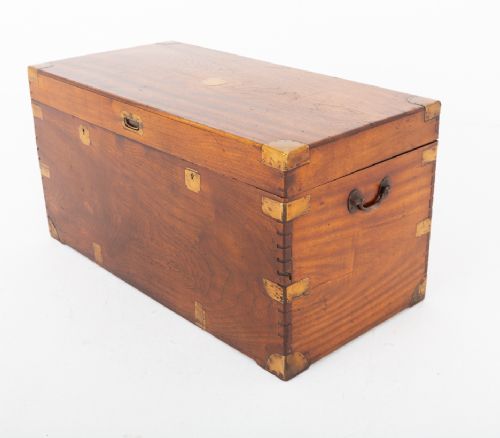
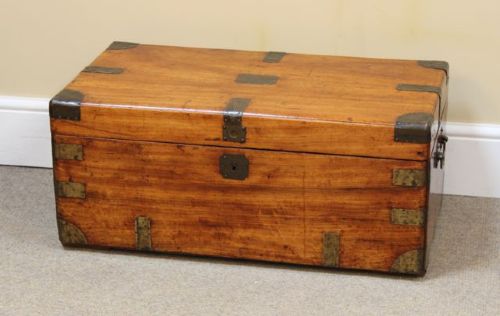
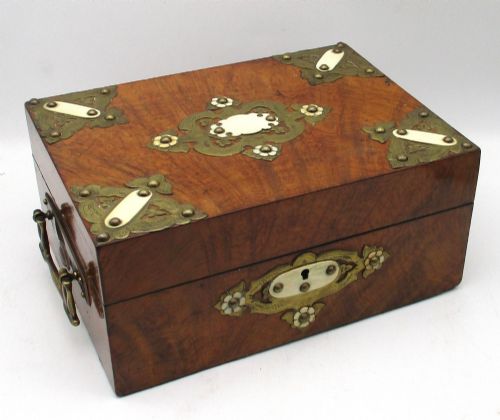
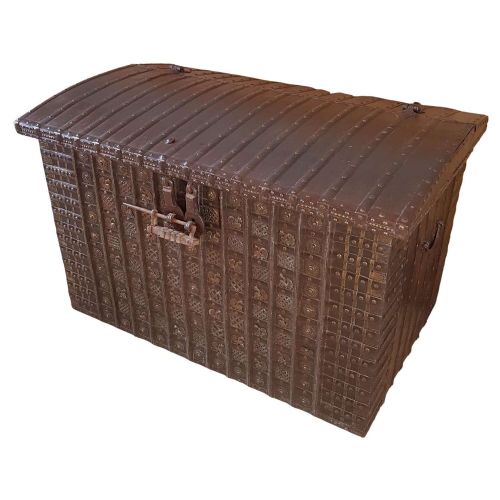
A brass strapped box encompasses robust trunks, travelling chests, stationery cabinets, writing slopes, and wine coolers produced across the eighteenth, nineteenth, and early twentieth centuries. These pieces originate from domestic workshops, colonial outposts, and Scandinavian country houses, reflecting utilitarian travel and refined stationary storage.
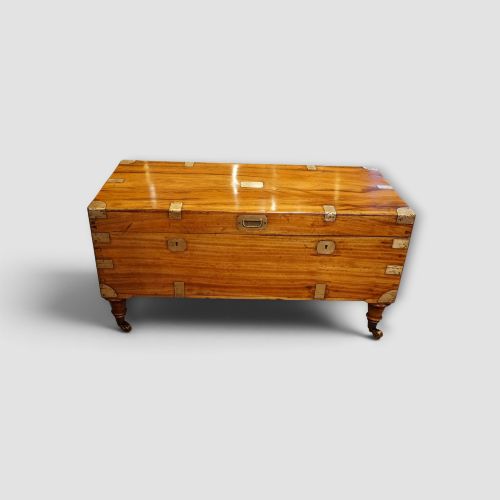
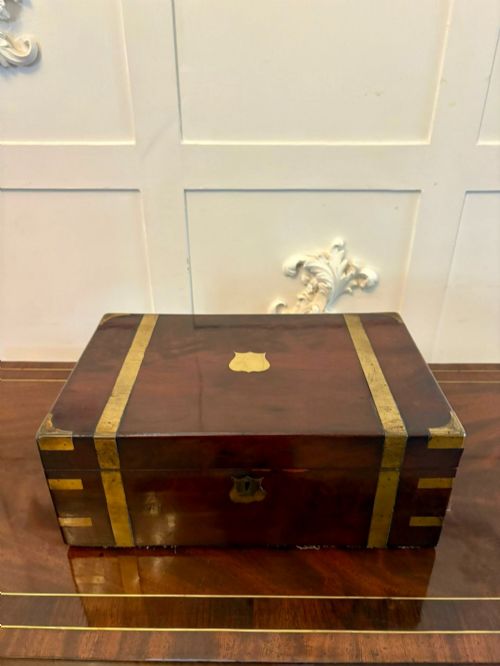
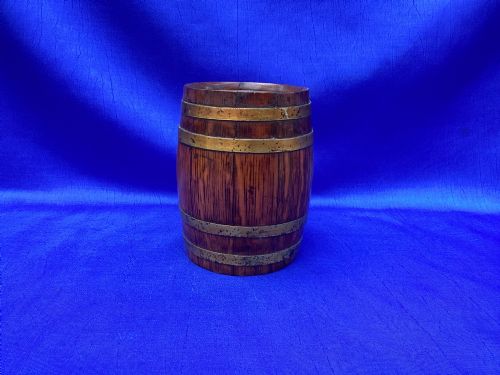
The versions most frequently met on this page are nineteenth-century Victorian and Georgian examples constructed for military officers, merchants, and gentlemen on the move. Forms range from large camphor wood trunks and iron-banded dowry chests to compact walnut writing boxes and oak cigar humidors.
Materials and Construction
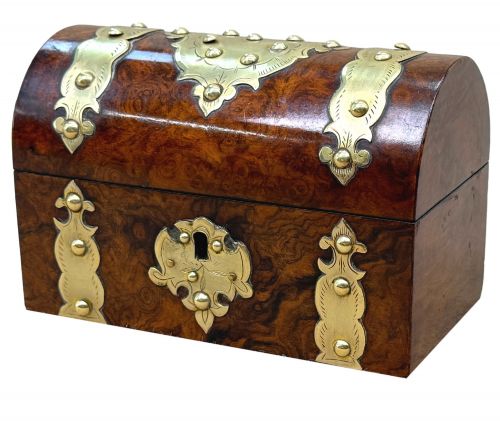
Construction relies heavily on durable hardwoods such as teak, mahogany, oak, camphor wood, and walnut, often ornamented with burr walnut or coromandel veneers. These robust timbers provide the structural integrity required for long journeys and daily handling.
Metal reinforcement defines the aesthetic and function of these pieces, utilising brass straps, corner brackets, and iron banding secured with flush screws or rivets. Specialised items further incorporate interior fittings such as velvet-lined slopes, leather writing surfaces, and pietra dura inlays.
Brass Strapped Box Retail Price Guide 2026
Typical asking prices for brass strapped box among the pieces listed under this phrase on Sellingantiques today, from the lower quarter to the upper quarter. They describe what is for sale here now, not the wider market.
Listings feature pieces spanning the Georgian, Victorian, and Edwardian periods, constructed from teak, mahogany, oak, camphor wood, and walnut.
Judging Quality
Quality rests in the precision of the metalwork integration and the selection of timber figure. Superior examples display perfectly flush brass strapping, hand-dovetailed corner joints, and well-figured burr walnut or teak grain.
Internal complexity and original hardware elevate a piece significantly. Working locks with matching keys, complete fitted stationery compartments, and original inscriptions or armorial brass plaques separate standard storage containers from exceptional officer's chests.
C.G. Hope Hastings
The Brass Strapped Box Glossary
- Campaign trunk
- A sectional or reinforced travelling chest designed for easy transport by military officers on active service.
- Cellarette
- A lockable container used for storing wine bottles near the dining table, often heavily bound in brass.
- Writing slope
- A portable slant-topped box that opens to reveal a slanted writing surface, inkwells, and storage compartments.
- Pietra dura
- An artistic technique using cut and fitted polished coloured stones to create geometric or pictorial designs on wood.
- Stationery box
- A desk accessory featuring tiered or pigeonholed interiors designed to hold writing paper and envelopes.
Brass Strapped Box: Frequently Asked Questions
What were brass strapped boxes originally used for?
These boxes and chests served primarily as secure travel luggage for military officers, diplomats, and merchants journeying across the globe. Their robust metal reinforcement protected personal belongings, papers, and valuables against rough handling during transit.
Smaller domestic variations remained in homes to store stationery, cigars, or cutlery, combining practical security with decorative display in a study or drawing room.
How do I identify a military campaign box?
Military campaign pieces typically feature recessed brass drop handles, reinforced brass corner brackets, and sturdy construction timbers like camphor wood or teak. Many were built in two sections to allow easier loading onto pack animals or ships.
Look for original owner inscriptions, government broad arrow marks, or specialised internal compartments tailored for travel inkwells and folding writing ledges.
What timbers are most common on these boxes?
Teak and camphor wood appear frequently on pieces originating from colonial routes and India, valued for their resistance to moisture and insects. Mahogany and oak dominate domestic British production through the Georgian and Victorian eras.
Decorative items often showcase finer veneers including burr walnut, coromandel, and rosewood, contrasting sharply against the bright polished brass strapping.
How should I care for a wooden box with brass mounts?
Keep the wood nourished by applying a microcrystalline wax periodically, avoiding silicone-based polishes that can degrade antique finishes. Maintain stable room humidity to prevent the timber from shrinking and loosening the fitted brass straps.
Polish the brass mounts sparingly using a dry cloth or a dedicated metal cleaner applied carefully with a cotton bud to avoid staining the surrounding wood.