



Chinese Camphor Chest
A Chinese camphor chest is a fragrant wooden trunk built for travel and storage, valued for its natural insect-repelling properties.
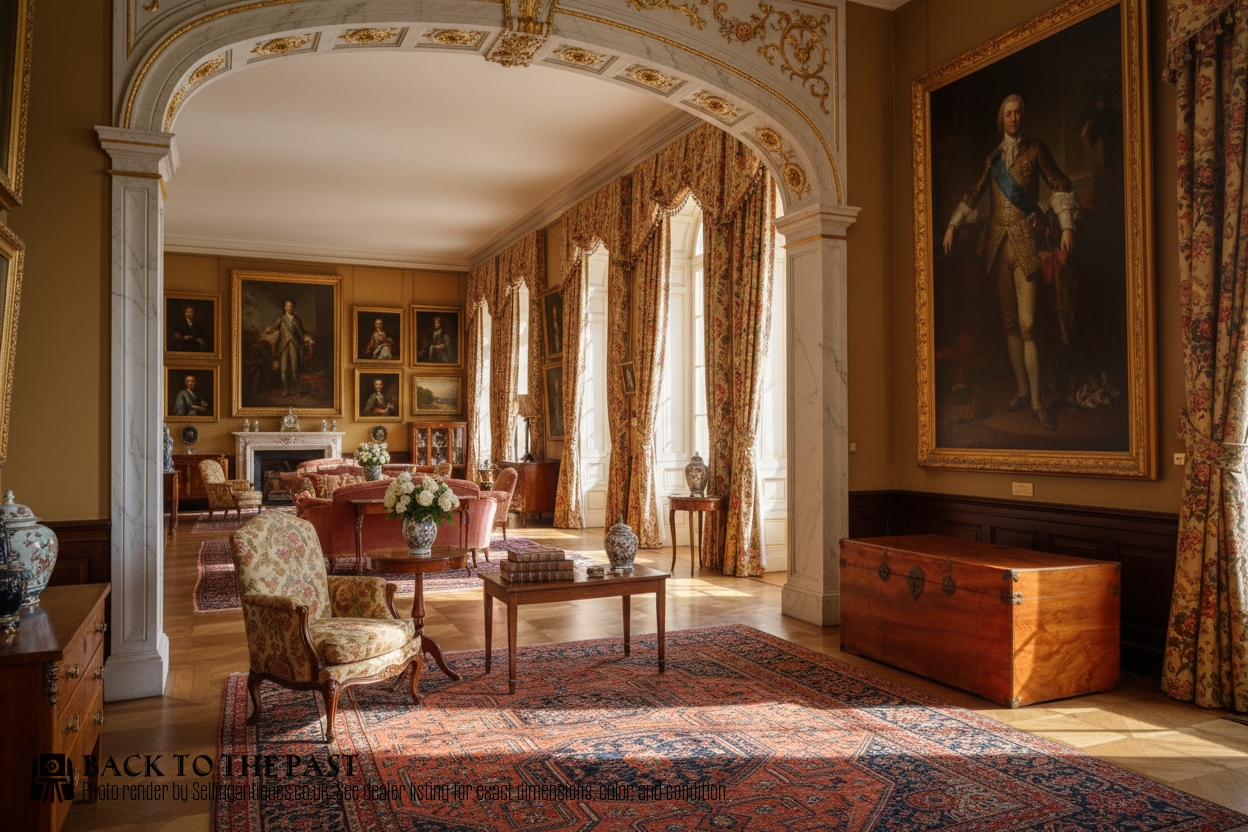
What a Chinese camphor chest is
A Chinese camphor chest functions primarily as a sturdy trunk, blanket box, or storage chest designed for domestic possessions and travel. These pieces emerge across the nineteenth and early twentieth centuries in styles spanning traditional Chinese carving, Chinese export, military campaign, and Art Deco influences.
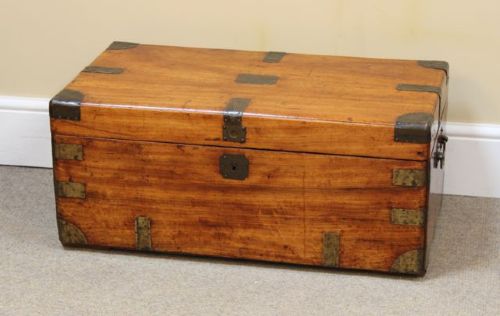
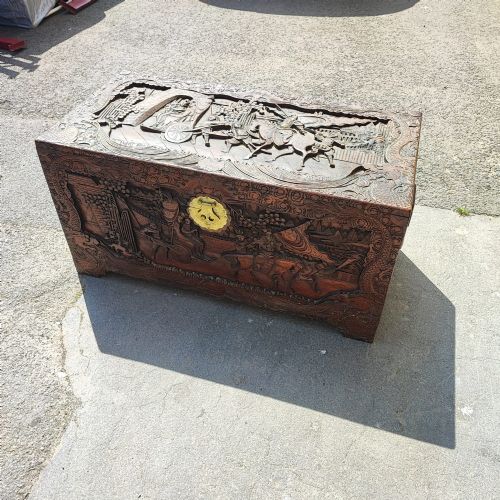
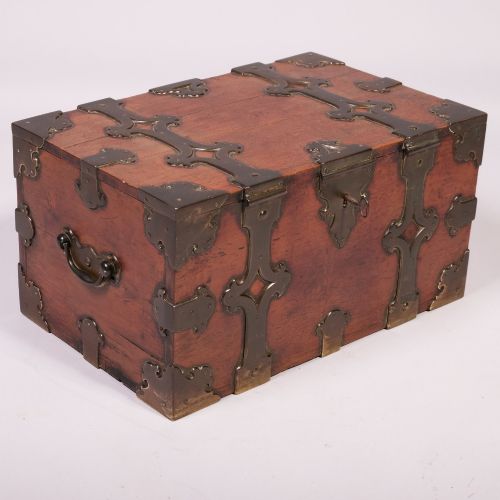
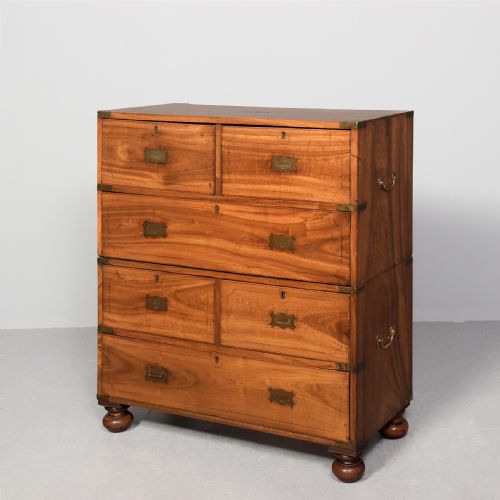
The most common examples encountered on this page take the form of heavy wooden trunks or blanket boxes featuring deep exterior carvings of figures, landscapes, or foliage. Variants include campaign chests fitted with brass hardware, tables incorporating chest bases, and secretaire chests with fitted interior drawers.
Origins trace directly to workshops in China producing items for export, colonial use, and international trade, often passing through ports such as Hong Kong. Buyers select these chests for their robust construction, aromatic timber, and dual utility as decorative furniture and functional storage.
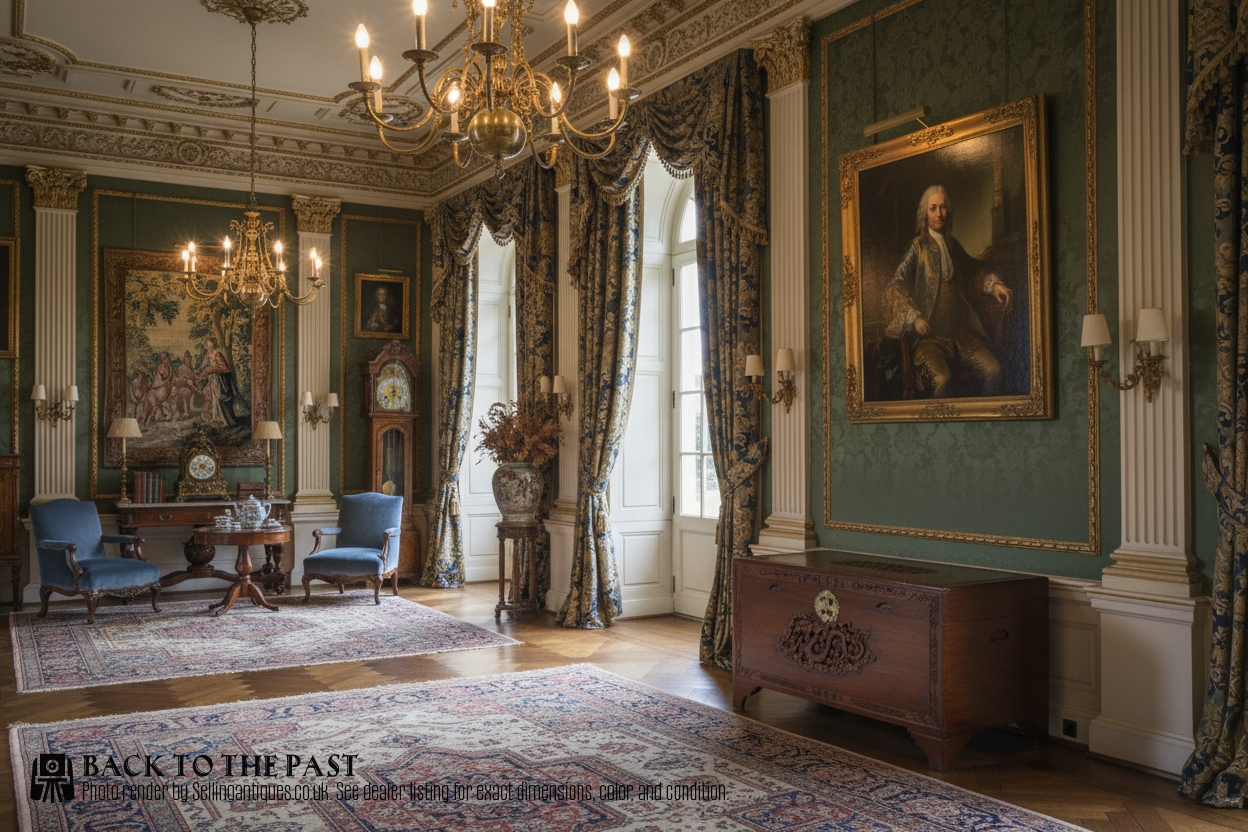
Materials and construction
Makers construct these chests primarily from solid camphor wood, occasionally combining it with oak, soapstone, or ebony inlay. The timber yields a distinct, lasting aroma that protects stored textiles from moths and insects.
Metalwork plays a structural and decorative role, with heavy brass mounts, binding, and corner pieces reinforcing the wooden carcase for travel. Surface decoration relies on hand-carved relief panels depicting scenes, floral motifs, or geometric borders, alongside painted finishes or limed treatments on later twentieth-century examples.
Retail Price Guide 2026
Typical UK retail prices for chinese camphor chest, calculated from the Sellingantiques database of over a million retail prices indexed since 2003. This retail price guide relies exclusively on Sellingantiques data; no external sources or auction records are used, so the figures do not describe the wider market.
Listings feature camphor wood, brass, oak, and soapstone across nineteenth-century and early twentieth-century periods.
Distinctions in quality
Quality rests in the depth and precision of the hand carving and the integrity of the solid timber construction rather than simple age. Finer pieces display crisp, highly detailed relief work across the exterior panels without shallow or mechanical cutting.
Hardware execution further separates tiers of production, with substantial, hand-beaten or cast brass fittings securely integrated into the design. The condition of the internal cedar or camphor surfaces and the tightness of the lid closure determine the preservation of the characteristic wood scent.

The Chinese Camphor Chest Glossary
- Camphor wood
- An aromatic hardwood native to Asia, utilised for furniture and trunks because its natural oils repel insects. The timber ranges in tone and holds a potent scent.
- Campaign chest
- A portable trunk or chest made in sections with recessed brass handles and corner brackets, designed for military officers on the move. These pieces break down or feature secure carrying hardware.
- Chinese export
- Goods manufactured in China specifically for Western markets, blending traditional Asian forms and motifs with European furniture requirements. These objects date largely from the nineteenth and early twentieth centuries.
- Secretaire chest
- A chest of drawers or trunk featuring a fitted writing drawer that drops down to reveal small compartments and pigeonholes. It combines storage with a compact writing surface.
- Limed oak
- Timber treated with a white or pale pigment rubbed into the grain to lighten the surface colour. This finish appears on later twentieth-century interpretations.
Frequently Asked Questions
What were camphor chests originally used for?
These chests served primarily as travelling luggage, wedding trunks, and secure storage boxes for clothing and valuable textiles during long voyages at sea.
The natural fragrance of the camphor wood protected stored garments from moths, damp, and insects while allowing merchants and officers to transport personal possessions safely.
Does the wood lose its scent over time?
Camphor wood retains its distinct aroma for decades, though the scent can soften on the exterior surfaces as the timber ages and dries.
Lightly sanding the interior of the chest opens the wood pores and revitalises the natural fragrance without damaging the structural integrity.
Can I use a camphor chest as a coffee table?
Many people repurpose these low chests as living room coffee tables because their flat lids and sturdy construction provide a practical surface.
This placement keeps the decorative carvings visible while offering hidden storage space for blankets and household items within the living area.