





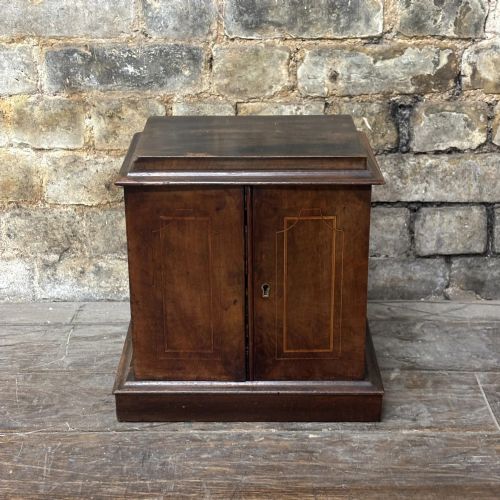
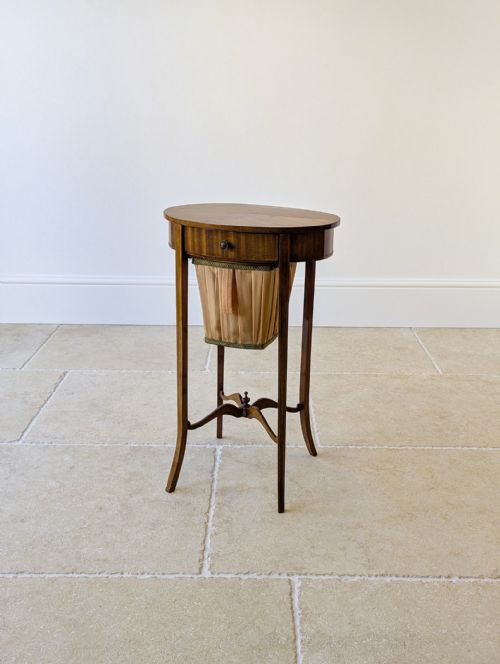
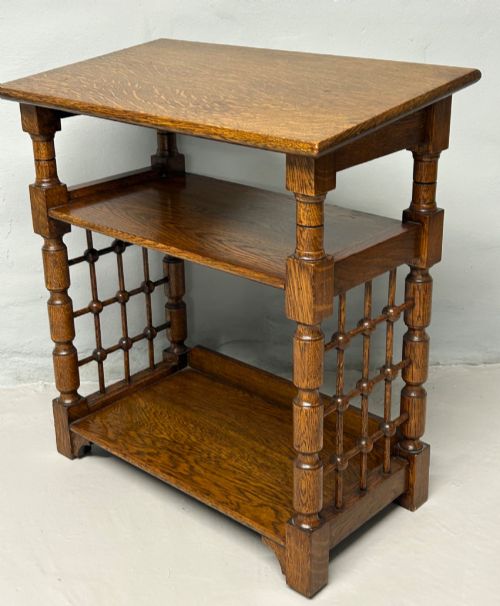
Antique Desk Companion
An antique desk companion keeps order on a writing table, bringing together inkstands, stationery cases and filing cabinets from the nineteenth and early twentieth centuries.
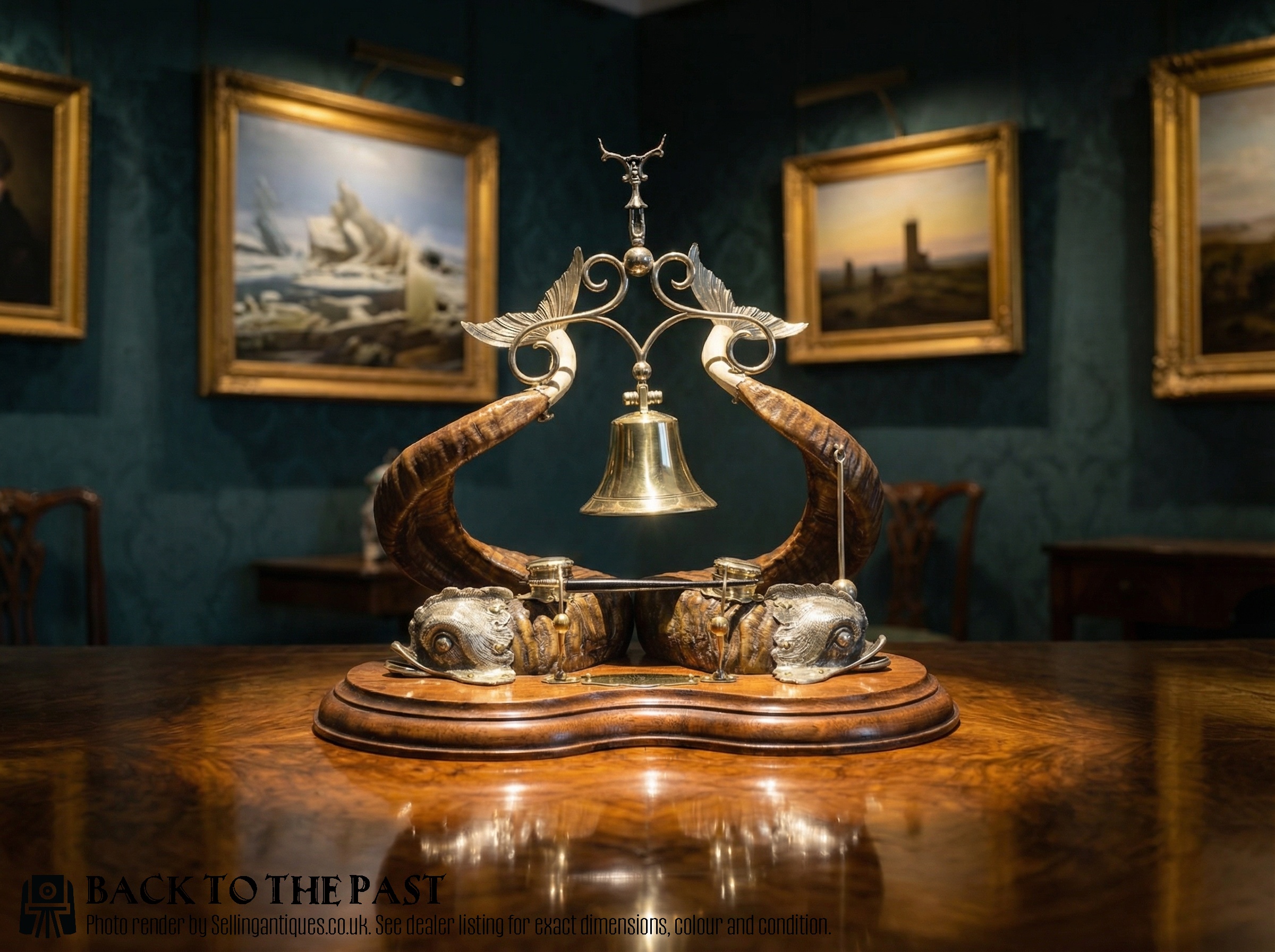
Antique Desk Companion
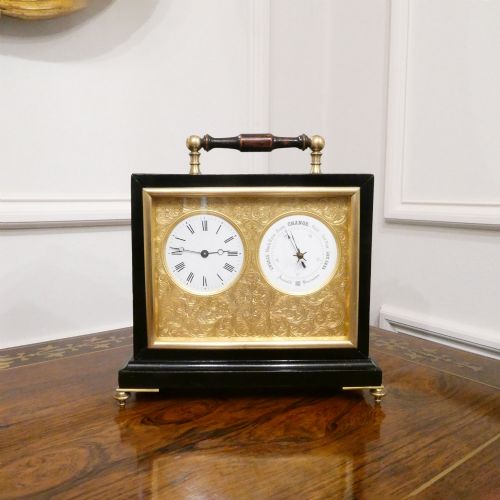
An antique desk companion encompasses the varied apparatus once used to manage correspondence, documents and time in the study. Pieces on this page span the Victorian, Edwardian and Art Deco periods, alongside earlier Regency and Georgian examples.
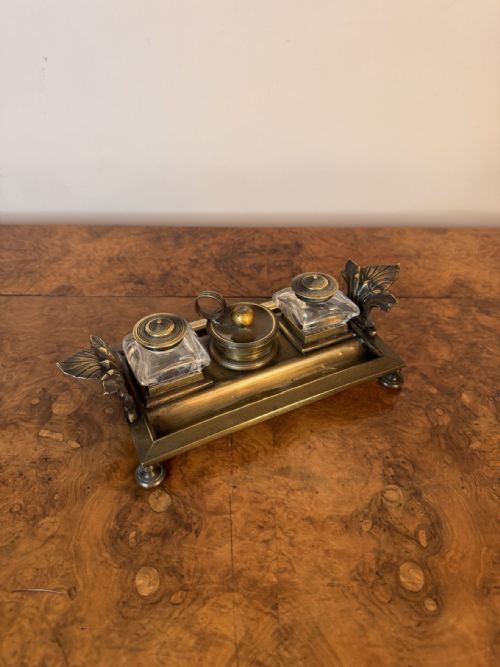
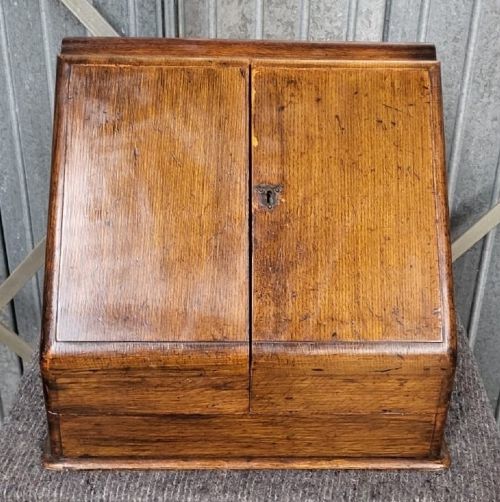
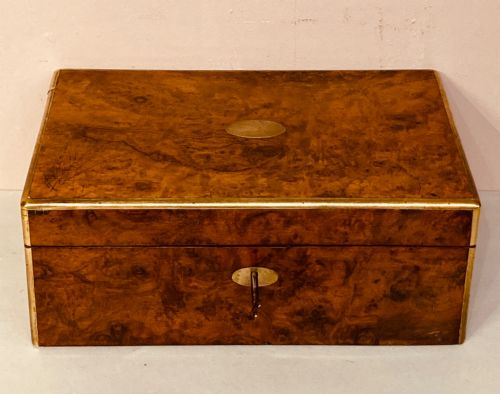
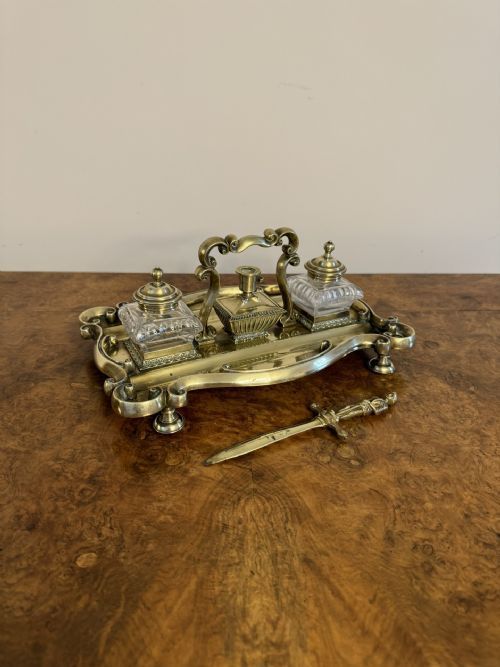
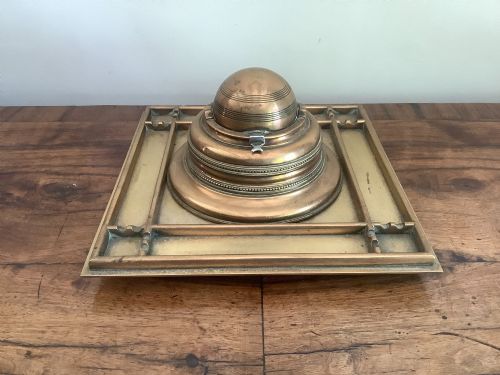
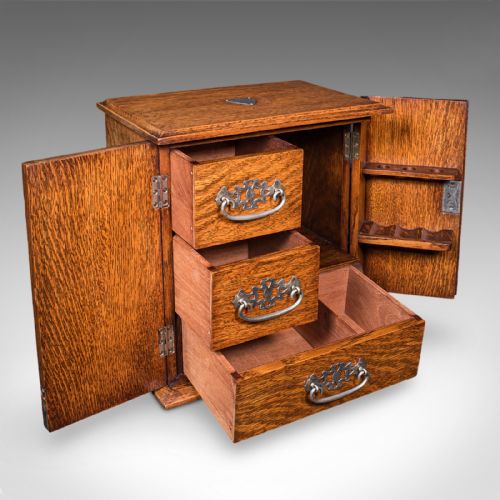
The objects take many functional forms, ranging from oak tambour front filing cabinets and burr walnut writing slopes to brass-mounted double inkstands and green onyx desk stands. Smaller accessories such as pincushions, book stands and stationery cabinets also appear.
Most items date from the nineteenth and early twentieth centuries, reflecting the domestic and office habits of the Victorian and Edwardian eras. Materials and styles shift from heavy Victorian brass and walnut to lighter Edwardian oak and geometric Art Deco onyx.
Evaluating the Pieces
Quality rests on the selection of timber veneers, the precision of brass inlays and the completeness of fitted interiors like original cut glass inkwells and internal drawers. Finer examples retain matching sets of accessories and uncompromised mechanisms.
The execution of decorative elements, from carved woodwork to mounted hardware, distinguishes standard utility items from more ambitious cabinet work produced by established makers.
Antique Desk Companion Retail Price Guide 2026
Typical asking prices for desk companion among the pieces listed under this phrase on Sellingantiques today, from the lower quarter to the upper quarter. They describe what is for sale here now, not the wider market.
Lund of London·Walker And Hall·Marson And Jones
The Antique Desk Companion Glossary
- Inkstand
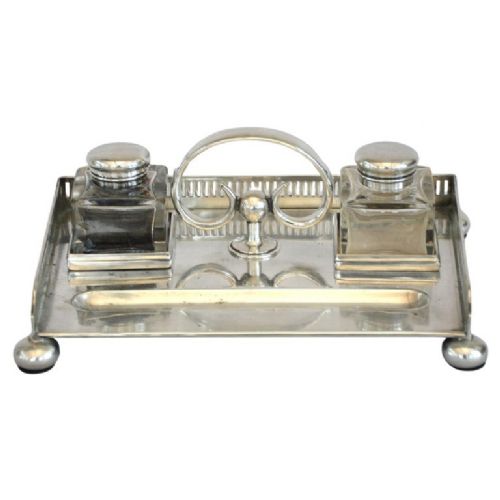
- A tray or stand holding one or more inkwells, often with compartments for pens and stamps. These desk accessories sit at the centre of most writing arrangements.
- Writing Slope
- A portable desk box with a sloping lid that opens to reveal a slanted writing surface and storage for paper. Many incorporate secret compartments and internal ink bottles.
- Stationery Cabinet
- An upright wooden box designed to hold envelopes, writing paper and ledgers in vertical slots. Edwardian and Victorian versions frequently include built-in calendars or drop-down fronts.
Antique Desk Companion: Frequently Asked Questions
What is an antique desk companion?
An antique desk companion refers to portable or stationary accessories designed for writing tables and offices. These items include inkstands, stationery cases, writing slopes and small filing cabinets.
They served practical purposes in managing correspondence, holding ink and organising documents before the widespread adoption of modern office equipment.
How do I date an antique desk set?
Dating relies on stylistic clues, timber choices and manufacturing methods associated with periods like the Victorian, Edwardian and Art Deco eras. Maker marks and applied hardware also help narrow the decade of production.
Later pieces often feature simpler lines and different metalwork compared to heavily carved mid-nineteenth-century examples.
Where should I place a desk companion?
These pieces fit naturally on a study desk, library table or mantelpiece depending on their specific form. Inkstands and stationery boxes suit active writing spaces while small cabinets sit neatly on side tables.
Keeping them away from direct heat sources protects vulnerable timbers and prevents the warping of wooden veneers.
Are inkwells usually original to the stand?
Many inkstands retain their matching cut glass or crystal inkwells, though replacements do occur over time. Original glass matches the apertures and collar mounts precisely.
Examining the base of the wells and the fit within the stand helps confirm whether the components belong together.