


Antique Writing Set
An antique writing set gathers the essential tools of correspondence into a single desk accessory, offering inkwells, stationery compartments and pen rests crafted for the nineteenth-century desk.
Antique Writing Set
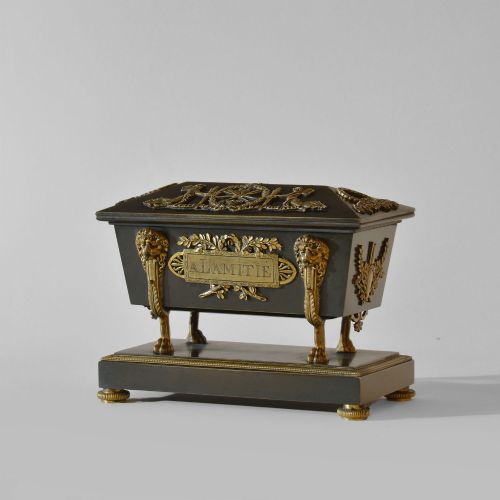
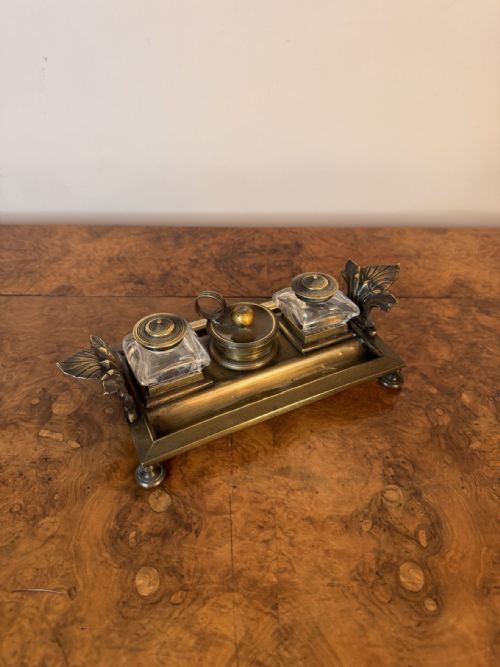
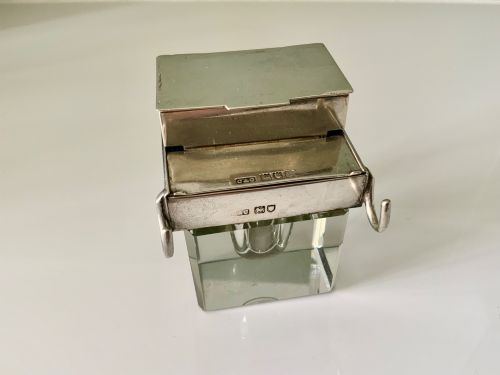
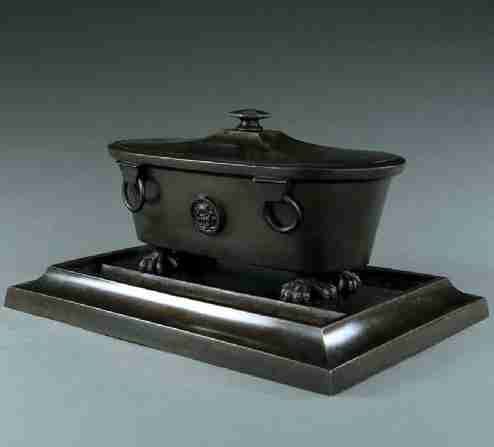
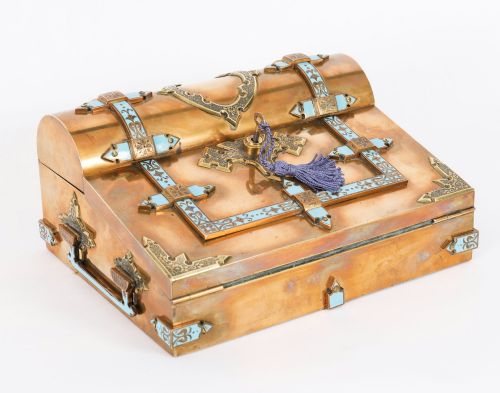
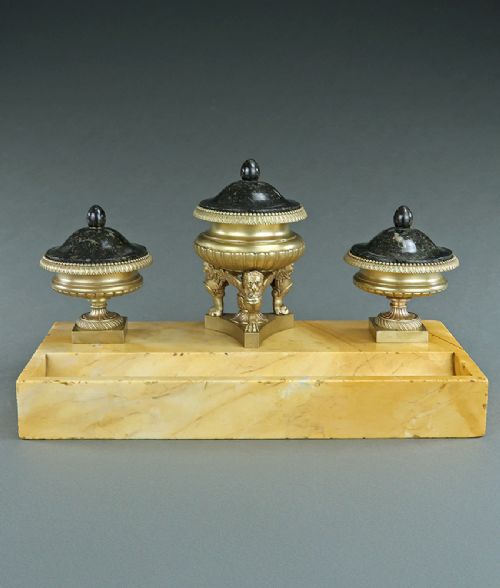
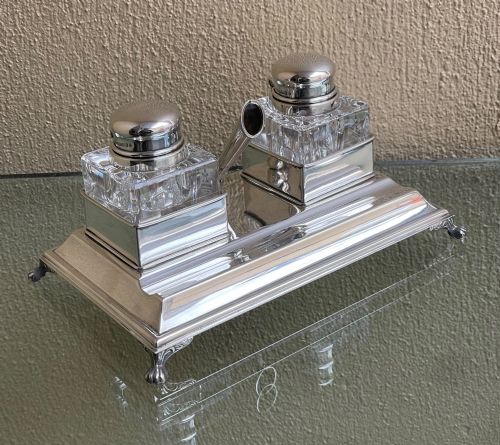
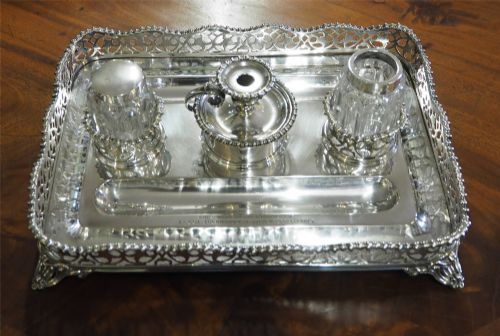
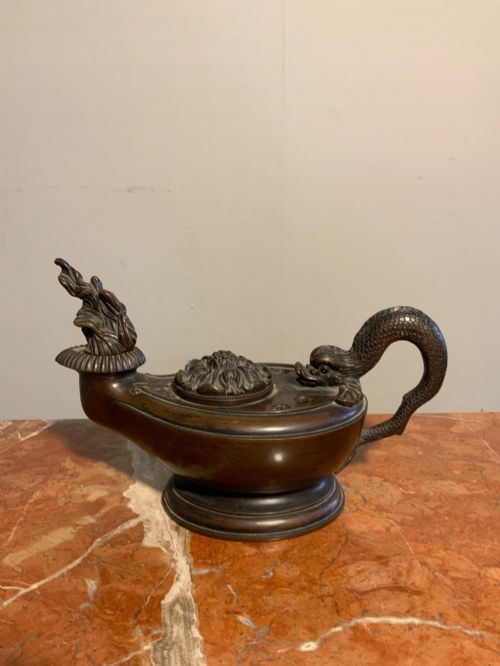
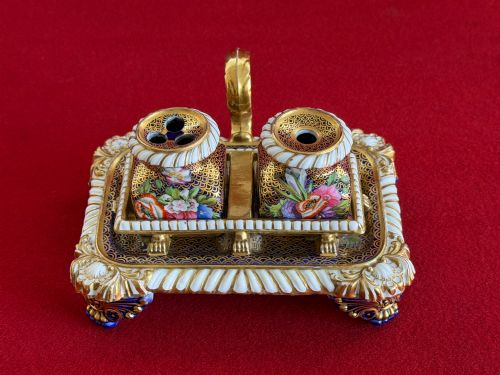
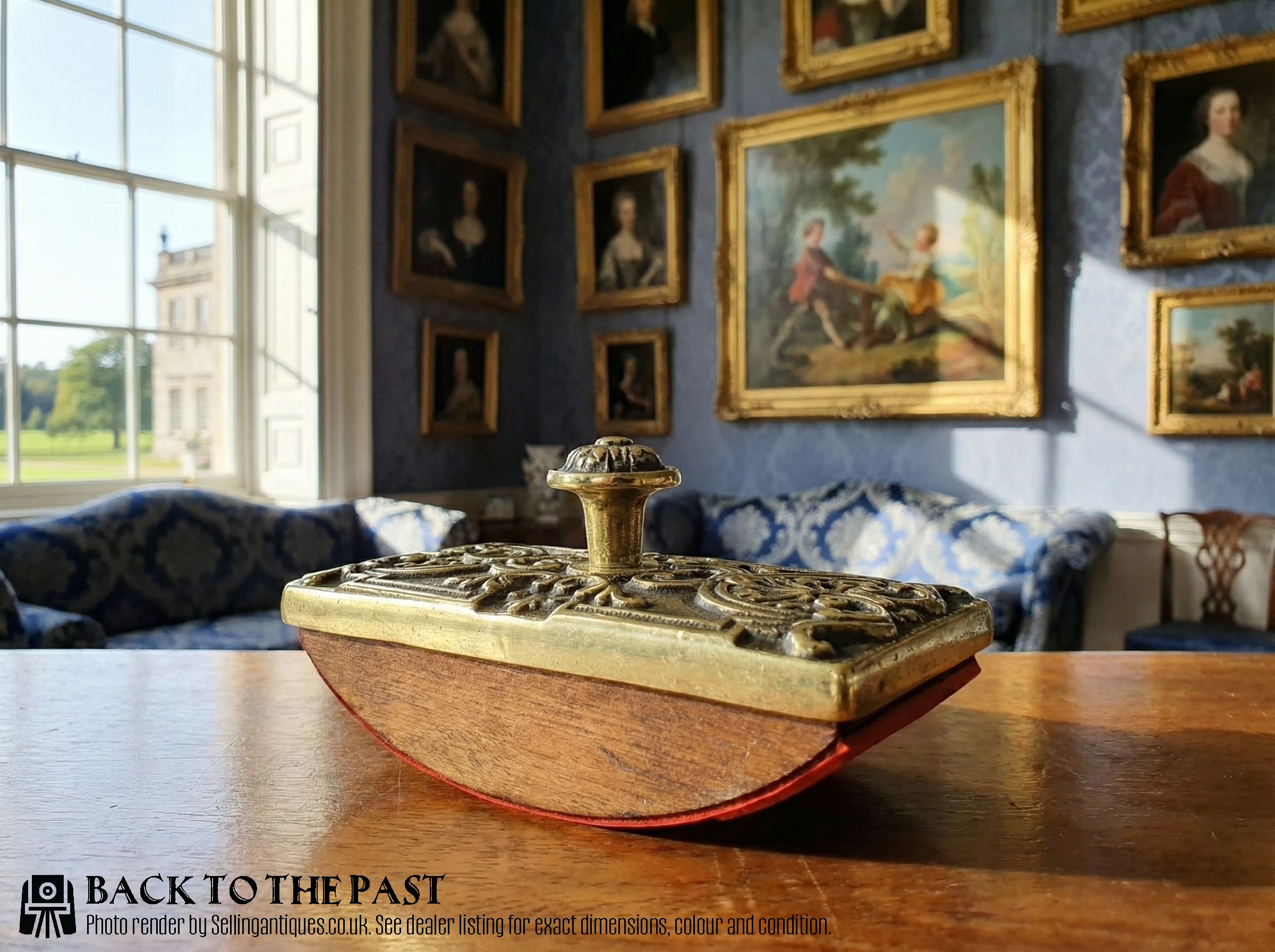
When searching for an antique writing set, collectors encounter a diverse range of desk accessories, including portable writing slopes, stationary boxes and desktop inkstands. The pieces on this page span the Georgian, Regency, Victorian and Edwardian periods, featuring materials such as brass, sterling silver, burr walnut and cut glass.
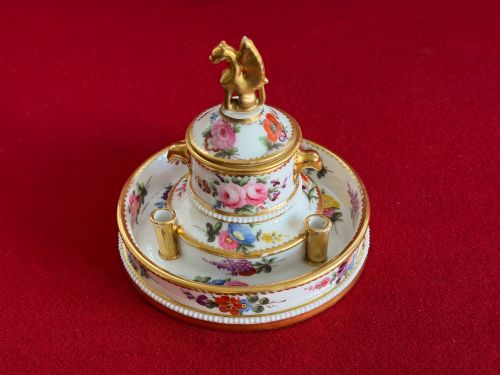
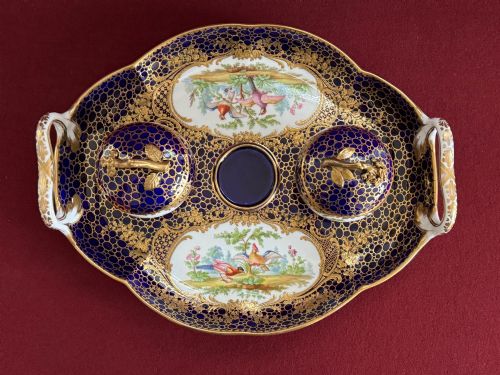
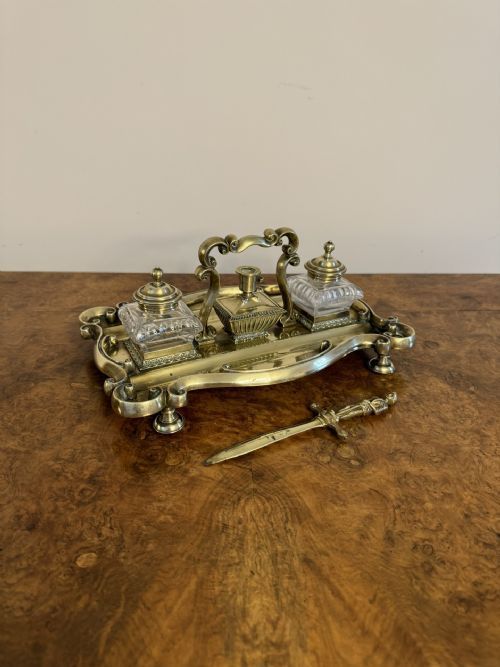
The most common formats on this page are inkstands and desk sets equipped with glass or ceramic inkwells, often accompanied by matching taper sticks, vesta cases or pen trays. Examples range from simple brass and oak desk tidies to elaborate Boulle work and tortoiseshell compartments designed for the formal study.
Originating from English, French and continental workshops, these items reflect the writing habits of past centuries when correspondence required liquid ink, powdered sand and sealed wax. Surviving pieces demonstrate the evolution of desktop organisation from portable lap desks to permanent library furnishings.
Materials and construction
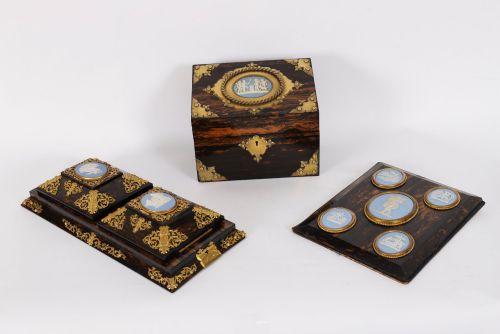
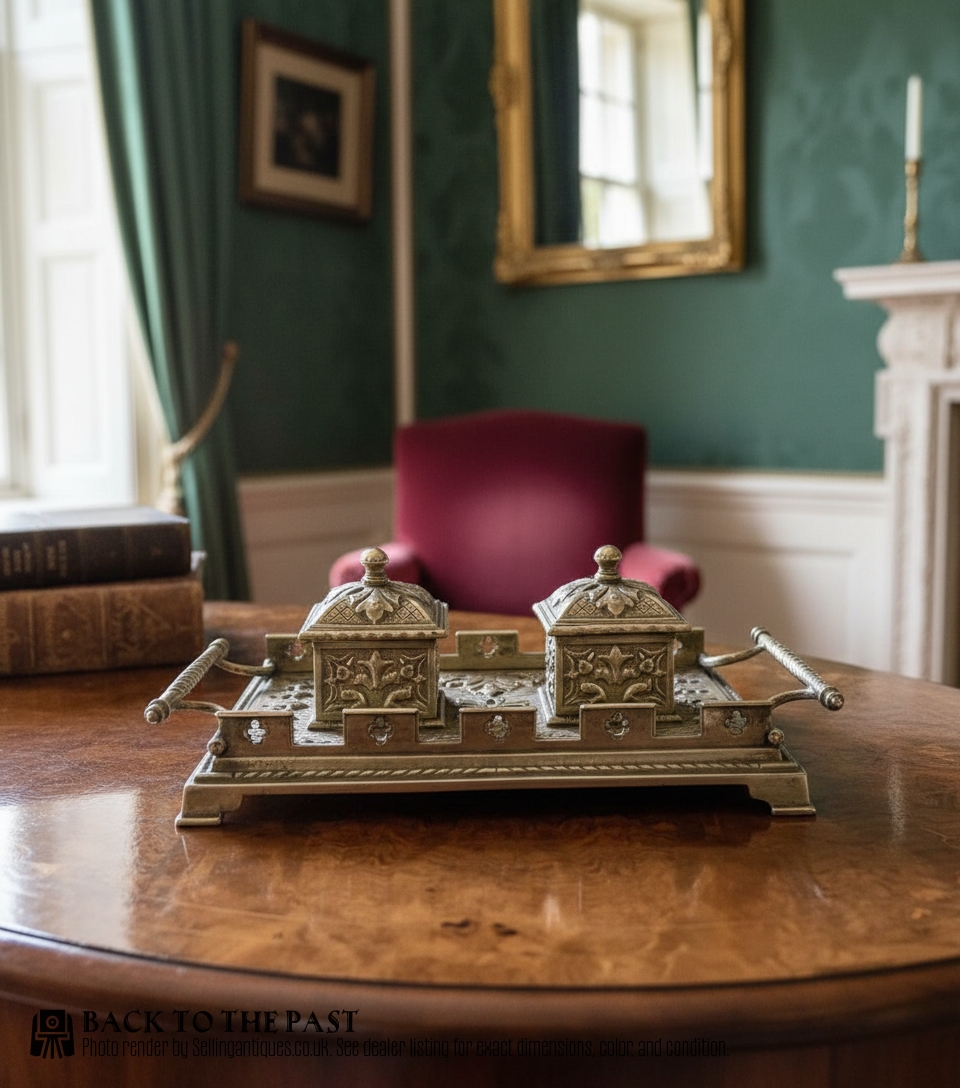
Cabinetmakers utilised dense timbers like walnut, coromandel, mahogany and maple for structural desk boxes, frequently incorporating brass stringing, tortoiseshell or boulle marquetry. Interior fittings often involved fitted leather writing surfaces, velvet linings and hand-blown cut glass inkwell inserts.
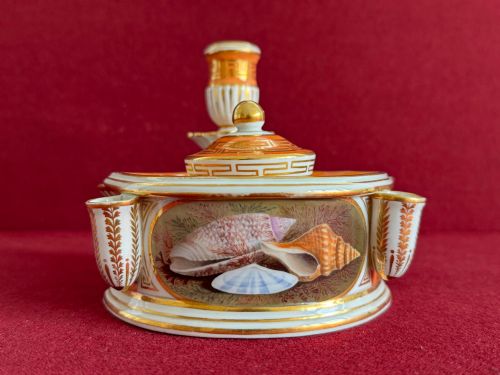
Metalwork components rely on cast brass, ormolu, bronze and sterling silver, sometimes embellished with champlevé enamel, agate cabochons or Ashford marble. Ceramics appear as hand-painted porcelain, Dutch Delft faience and Spode or Flight Barr & Barr bodies fitted into bronze or wooden frames.
Antique Writing Set Retail Price Guide 2026
Typical asking prices for writing set among the pieces listed under this phrase on Sellingantiques today, from the lower quarter to the upper quarter. They describe what is for sale here now, not the wider market.
Desk accessories occasionally take avian forms, including hand-carved oak and Black Forest wooden owls.
Factors that distinguish quality
The distinction between standard desk accessories and superior pieces rests on the precision of the joinery, the weight of the cast metals and the complexity of the decorative surface work. Superior examples exhibit finely detailed brass mounts, hand-carved wooden motifs and undamaged crystal glass ink inserts with matching silver or brass collars.
Maker attribution and material integration heavily influence the standing of a desk set. Pieces featuring documented makers, precious tortoiseshell panels, or combination elements like integrated chambersticks and sealing wax vesta compartments represent the upper echelon of nineteenth-century desk furnishings.
Elkington·Mercier Frères·Henry Matthews·Wilkinson & Co·Walker And Hall·Flight Barr & Barr·Sampson Mordan & Co·Lund of London
The Antique Writing Set Glossary
- Standish
- A portable or stationary desk stand holding inkwells, sanders, and penholders. This term typically applies to Georgian and early Victorian silver or brass writing trays.
- Vesta Case
- A small pocket or desk box designed to hold matches and safety matches. They frequently appear in Edwardian silver combinations alongside sealing wax compartments.
- Boulle Work
- Marquetry consisting of tortoiseshell and brass or pewter inlay, developed in seventeenth-century France and revived during the Napoleon III period.
- Ashford Marble
- A dark limestone inlaid with coloured fluorite, malachite, and other minerals to form floral patterns. It was produced in Derbyshire during the nineteenth century.
- Champlevé
- An enamelling technique where troughs are carved into a metal surface and filled with vitreous enamel before firing. It is commonly found on nineteenth-century bronze desk sets.
Antique Writing Set: Frequently Asked Questions
What is the difference between an inkstand and a desk set?
An inkstand specifically centres around one or more inkwells mounted on a tray or base, often accompanied by a pen groove or taper stick.
Desk sets usually encompass a broader collection of matching accessories, which can include blotters, stationery racks, letter openers and companion boxes alongside the inkwells.
How do I date a Victorian writing set?
Dating relies on stylistic clues, manufacturing techniques and, where present, English silver hallmarks or maker marks stamped onto the metal mounts.
Early nineteenth-century pieces often favour Regency neoclassical lines or heavy ormolu, while later Victorian items embrace ornate Gothic, Egyptian Revival or Aesthetic Movement motifs.
Are the inkwells removable for cleaning?
Most inkwells in nineteenth-century desk sets lift out of their fitted wooden, brass or marble bases to allow for cleaning and ink replenishment.
Original glass inserts feature ground glass collars designed to sit securely within their metal or wooden housing.
What wood types are common in antique desk stands?
Walnut, coromandel and mahogany form the primary structural timbers for nineteenth-century desk boxes and stationery cabinets.
Burr walnut and maple were frequently selected for their decorative grain patterns, often highlighted with brass inlay or ebony banding.