

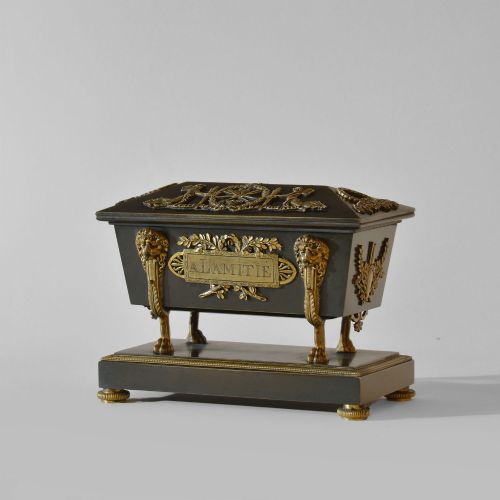
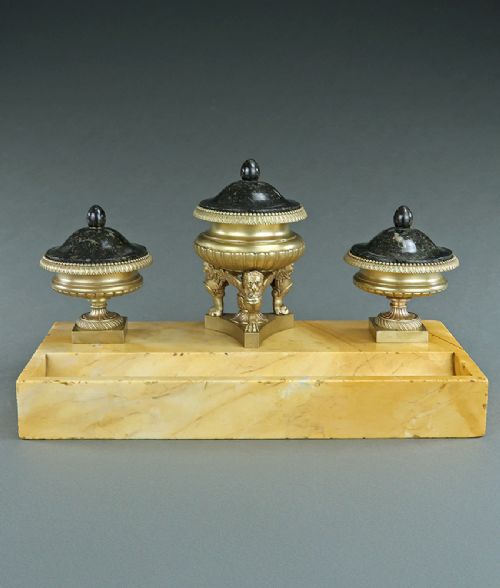


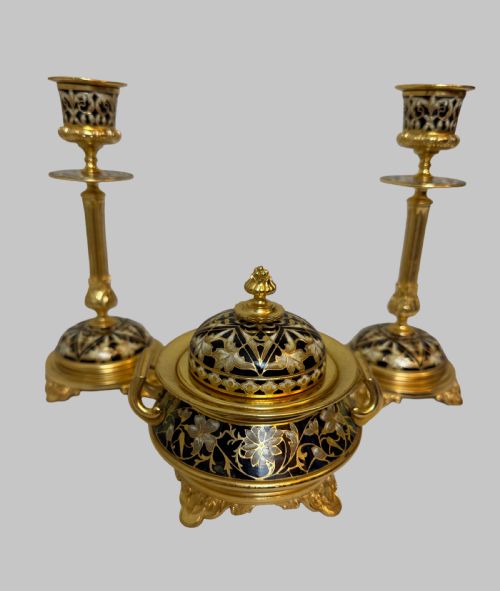


Gilt Bronze Inkstand
These gilt bronze inkstand pieces are opulent desk accessories that bring grand nineteenth-century French style to a working surface.
Gilt Bronze Inkstand
A gilt bronze inkstand is a substantial desk accessory designed to hold writing materials during the nineteenth century. These pieces combine heavy metallic mounts with functional inkwells, often incorporating cut glass or enamel containers.
The versions most commonly met on this page originate from France during the nineteenth century, including specific dates around eighteen sixty. They span stylistic influences from the French Empire, Second Empire, Neoclassical, Chinoiserie, and Art Nouveau periods.
Beyond standalone inkstands, related desk accessories appear as complete desk sets, desk clocks, and combined inkwell clock pieces. Materials frequently partner the primary bronze with marble, onyx, or vert marble bases.
How they were made
Maker workshops produced these items using cast metal finished with gilding or ormolu, creating a bright metallic sheen. This metalwork was then mounted onto stone foundations such as marble, onyx, or vert marble.
Interiors and ink containers utilised cut glass or glass, sometimes complemented by decorative lacquer or enamel details. Assembly involved securing the bronze mounts to the stone bases with threaded fasteners or pins.
Gilt Bronze Inkstand Retail Price Guide 2026
Typical asking prices for gilt bronze inkstand among the pieces listed under this phrase on Sellingantiques today, from the lower quarter to the upper quarter. They describe what is for sale here now, not the wider market.
Listings feature nineteenth-century French items pairing ormolu with marble, onyx, glass, and malachite across desk sets and clocks.
What varies in quality
Quality separates ordinary cast pieces from those of outstanding quality through the crispness of the chasing and the depth of the ormolu gilding. Superior examples exhibit sharper relief in the cast ornamentation and heavier, more solid stone bases.
The integration of materials also defines the tier of the piece, where harmonious combinations of malachite, fine cut glass, and enamel elevate the design. Maker attribution, such as signed works by identified bronziers, further distinguishes the upper range.
A Marionnet·Moser
The Gilt Bronze Inkstand Glossary
- Gilt bronze
- Metal cast into decorative shapes and coated with a layer of gold. It provides a durable and bright finish suitable for formal nineteenth-century desk accessories.
- Ormolu
- Synonym for gilt bronze widely used in French metalwork. The term describes the high-grade mercury gilding technique popular on nineteenth-century decorative objects.
- Vert marble
- A deep green stone quarried for decorative architectural and furniture use. It forms a heavy, contrasting base for gilt metal mounts.
- Chinoiserie
- European artistic style reflecting Chinese motifs and techniques. It appears on pieces utilising decorative lacquer alongside bronze mounts.
- Escapement
- The internal mechanism regulating movement in a clock. In combined desk pieces, specialised escapements like the chaff-cutter regulate timekeeping.
Gilt Bronze Inkstand: Frequently Asked Questions
What is a gilt bronze inkstand?
A gilt bronze inkstand is a decorative nineteenth-century desk accessory made from cast metal with a gold-coloured finish. These items were built to hold inkwells and writing implements on formal writing desks.
Most examples seen here originate from French workshops and incorporate stones like marble or onyx alongside glass ink containers.
How were these inkstands used?
These pieces served as the central writing station on a nineteenth-century desk, holding the ink necessary for quill or pen use. They kept the inkwell secure and provided a stable surface for dipping pens.
Desk sets often included matching trays and supplementary containers for sand or stamps, forming a complete suite of writing tools.
How do I live with one?
Living with a gilt bronze inkstand involves placing it on a secure desk or surface away from direct moisture and harsh cleaning chemicals. Dusting the intricate bronze mounts gently with a soft brush preserves the gilding.
The glass ink inserts can be lifted out for safe cleaning, ensuring the stone and metal parts remain dry.
How can I tell periods apart?
Periods are identified by the prevailing decorative style of the bronze mounts and the choice of accompanying stone. Empire and Neoclassical pieces favour strict classical symmetry, while Second Empire and Art Nouveau introduce more flowing or ornate lines.
Dates around eighteen sixty place objects firmly in the mid-nineteenth century, distinct from earlier Regency or later twentieth-century reproductions.