





French Ormolu Inkwell
A French ormolu inkwell brings the weight of gilt metal and marble to a desk, offering a tactile piece of nineteenth-century writing furniture.
French Ormolu Inkwell
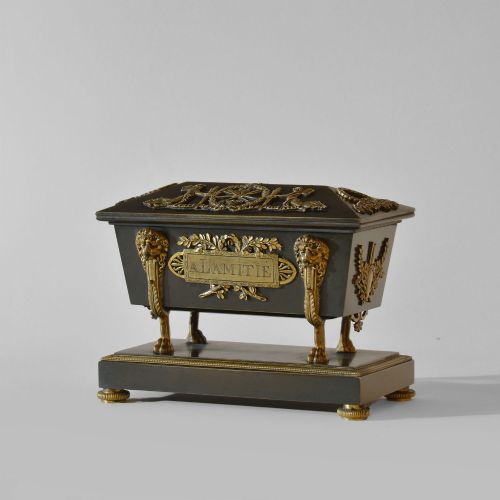
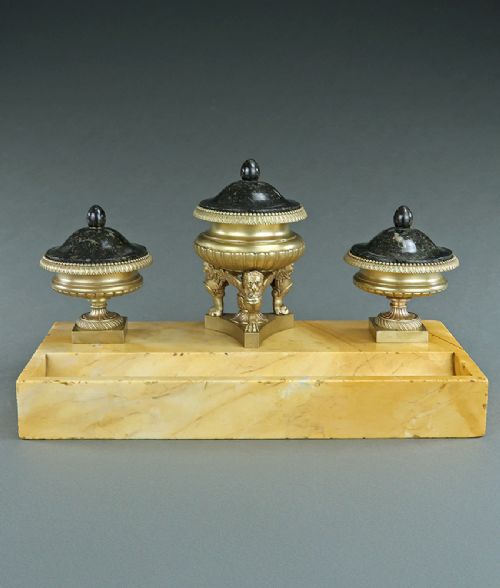
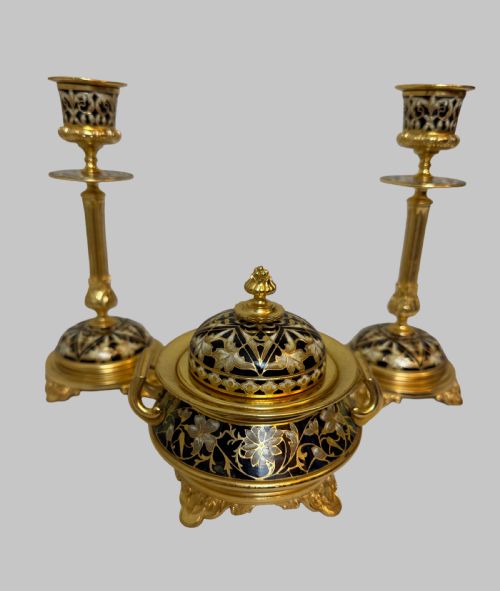
A french ormolu inkwell combines cast metal with stone bases, taking forms from simple desk stands to complex sets with candlestands and clocks.
Nineteenth-century examples dominate the selection, spanning Empire, Neoclassical, Second Empire, and Art Nouveau styles.
Many pieces incorporate figures or animals, including lions, emus, and playing kittens, alongside portrait busts such as Napoleon.
How they were made
Craftsmen cast bronze and ormolu into intricate decorative mounts, patinated bronze figures, and hinged lids for the ink reservoirs.
Bases utilise heavy stones such as Sienna marble, vert marble, and onyx marble, providing a solid foundation for the metalwork.
Certain pieces combine the gilt bronze with glass inserts for the inkwells or incorporate mahogany and shagreen into the desk set chassis.
French Ormolu Inkwell Retail Price Guide 2026
Typical asking prices for french ormolu inkwell among the pieces listed under this phrase on Sellingantiques today, from the lower quarter to the upper quarter. They describe what is for sale here now, not the wider market.
Desk sets occasionally depict playful animals, such as bronze kittens at play beside the ink.
What varies in quality
The crispness of the bronze chasing and the depth of the gilding set the finer pieces apart from standard production.
The selection and polish of the marble base, whether Sienna, vert, or onyx, indicate the maker's commitment to materials.
The complexity of the desk accessory group, such as paired candlestands or integrated timepieces, reflects higher ambition.
Albert Marionnet
The French Ormolu Inkwell Glossary
- Ormolu
- Gilded bronze, where a layer of gold is applied to a bronze base using mercury amalgamation or electroplating. This technique gives the metal its characteristic warm, golden sheen.
- Encrier
- A French term for an inkstand or inkwell. These pieces often include wells, pen trays, and sometimes matching candlesticks.
- Sienna marble
- A yellow-gold Italian marble with dark veining. It is frequently seen on nineteenth-century desk stands.
- Champlevé
- An enamelling technique where troughs are dug into the metal surface and filled with vitreous enamel. It appears on nineteenth-century desk sets alongside gilt bronze.
French Ormolu Inkwell: Frequently Asked Questions
How do I clean a gilt bronze inkstand?
Dust gently with a soft, dry brush to protect the delicate gilt surface and the surrounding marble.
Avoid all liquid cleaners and commercial polishes, which can strip the original mercury or electroplated gilding.
Were these used for daily writing?
These desk accessories served writing desks in formal nineteenth-century libraries and studies.
They held the ink required for quill and steel-nib pens before fountain pens became common.
How do I spot an Empire style piece?
Empire pieces draw on classical Greek and Roman motifs, featuring strict symmetry and martial or imperial symbols.
Look for austere architectural lines paired with rich ormolu mounts on dark marble bases.
What is the difference between an inkwell and an inkstand?
An inkwell is simply the small vessel that holds the ink.
An inkstand, or encrier, is a larger desk set that typically includes one or more inkwells alongside pen rests and sometimes candlesticks or bell mounts.