





Antique French Inkwell
An antique french inkwell brings the weight of the nineteenth-century writing desk into a modern interior.

Antique French Inkwell
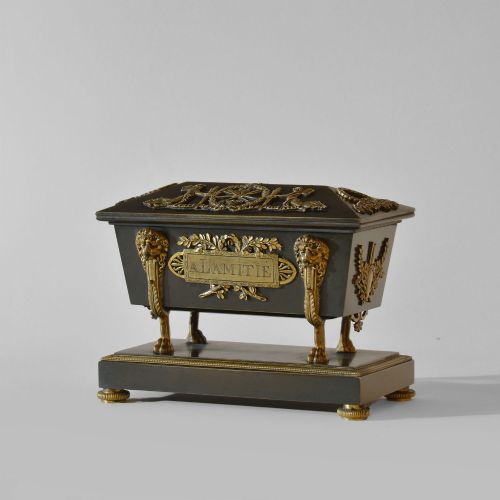
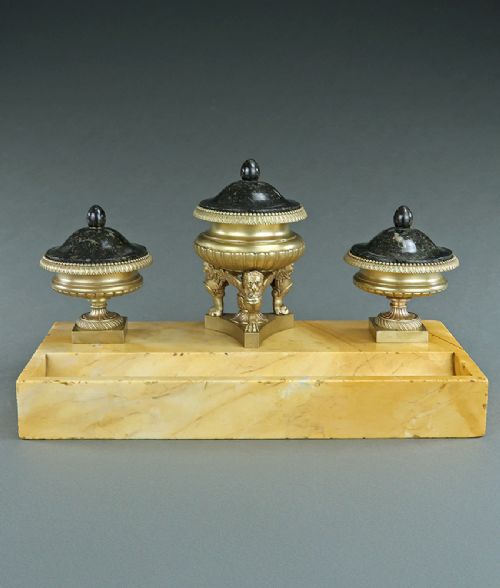
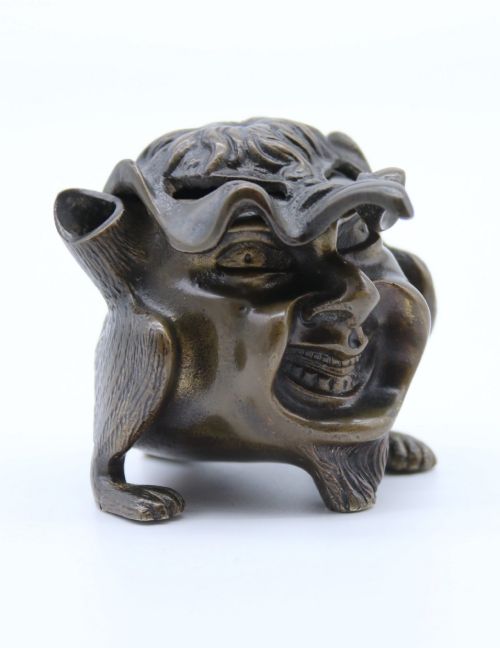
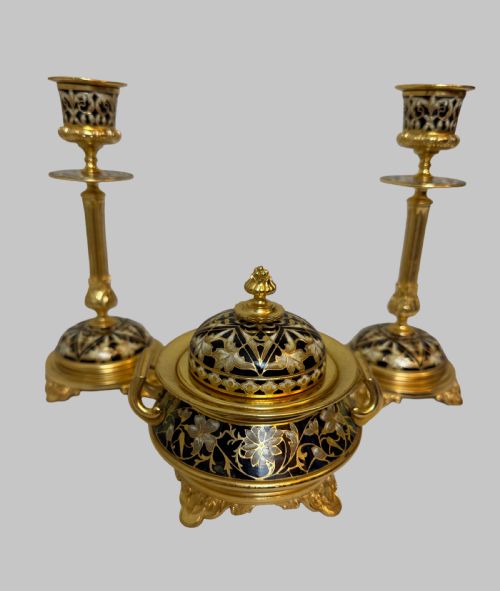
An antique french inkwell typically appears on this page as part of a desk stand, inkstand or desk set alongside matching candlesticks or pen trays. The forms range from simple brass and marble bases to elaborate figural compositions featuring animals, clowns, and mythological creatures.
Most examples date from the nineteenth century, spanning periods from the French Empire and Napoleon III eras through to the flowing lines of Art Nouveau. Buyers encounter single vessels and double inkwells mounted on heavy stone or cast metal platters.
Many pieces incorporate practical additions such as letter holders, desk bells, or integrated clocks, reflecting the high status of desk accessories in period offices and drawing rooms.
Materials and construction
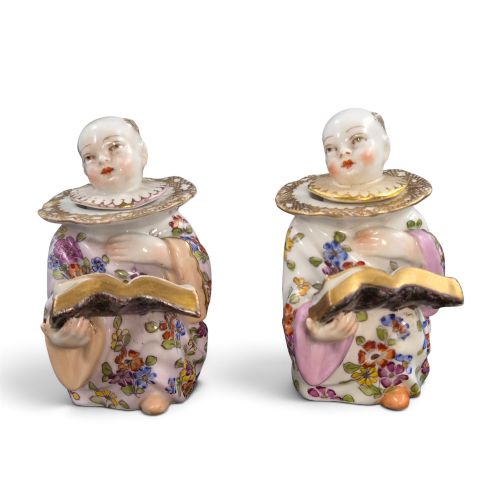
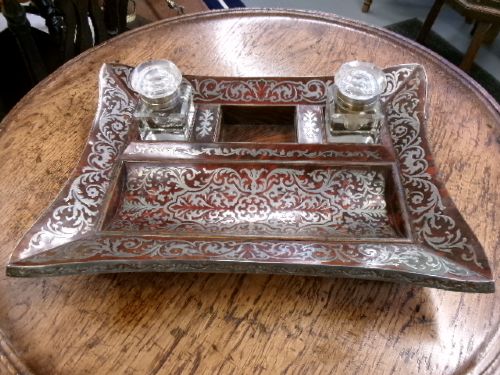
The primary structure of these objects relies on cast metals, specifically bronze, gilt bronze, ormolu, and brass, often paired with heavy bases of Sienna, vert, or onyx marble. Makers integrated porcelain, glass inserts for the ink reservoirs, and occasionally tortoiseshell or inlaid wood.
Decorative surface techniques include champlevé enamel, hand-chasing on gilded bronzes, and Boulle work brass and tortoiseshell marquetry. Figural models utilise lost-wax bronze casting to achieve detailed animal and human forms.
Antique French Inkwell Retail Price Guide 2026
Typical asking prices for french inkwell among the pieces listed under this phrase on Sellingantiques today, from the lower quarter to the upper quarter. They describe what is for sale here now, not the wider market.
Several inkwells take the form of playful animals, including poodles, bulldogs, elephants, and playing kittens.
Markers of distinction
Quality in these items rests upon the crispness of the metal chasing and the depth of the gilding on the bronze or ormolu mounts. Finer pieces demonstrate superior integration between the metalwork and the stone or marble base, avoiding crude joins.
Signed works by known founders or sculptors carry greater artistic weight, particularly when the figural casting displays anatomical precision rather than generic mass production. The presence of complete original glass ink inserts and matching accessories elevates a desk set.
Edmé Samson·Lefebvre of Belgium·Albert Marionnet·Jules Dalou·Maurice Dufrene·Ernest Louis ADIN
The Antique French Inkwell Glossary
- Ormolu
- Gilt bronze produced by applying a finely ground high-carat gold-mercury amalgam to a bronze object before firing. This technique creates a durable golden finish characteristic of French Empire and Napoleon III decorative metalwork.
- Champlevé
- An enamelling technique where troughs or cells are hollowed out of a metal surface and filled with vitreous enamel powder before firing. The piece is then polished flat to reveal the metal outlines framing the coloured glass areas.
- Encrier
- The French term for an inkstand or inkwell. It appears frequently in descriptions of desk accessories imported from France.
- Boulle work
- A form of marquetry consisting of tortoiseshell and brass inlay developed in France. It creates a contrasting pattern of dark organic shell against bright metallic lines.
- Grand Tour
- A cultural journey undertaken by nineteenth-century Europeans visiting classical sites. Souvenirs from these travels often influenced the Neoclassical design of desk stands.
Antique French Inkwell: Frequently Asked Questions
What is an encrier?
An encrier is the French term for an inkwell or a complete inkstand designed for a desktop.
These pieces often hold glass reservoirs alongside spaces for pens and sanders.
How do I date a desk set?
Dating relies on stylistic markers such as Neoclassical symmetry, Napoleon III opulence, or Art Nouveau asymmetry.
Materials like champlevé enamel and specific marble types also help narrow the production era.
Are the glass inserts usually original?
Many pieces retain their blown or moulded glass ink inserts, though replacements are common due to breakage over time.
Original liners fit flush within the bronze or marble collars.
What materials were used?
Maker workshops utilised cast bronze, brass, ormolu, and gilt copper mounted on heavy marble or wood bases.
Surface decoration frequently includes enamel, tortoiseshell, and hand-chased details.