




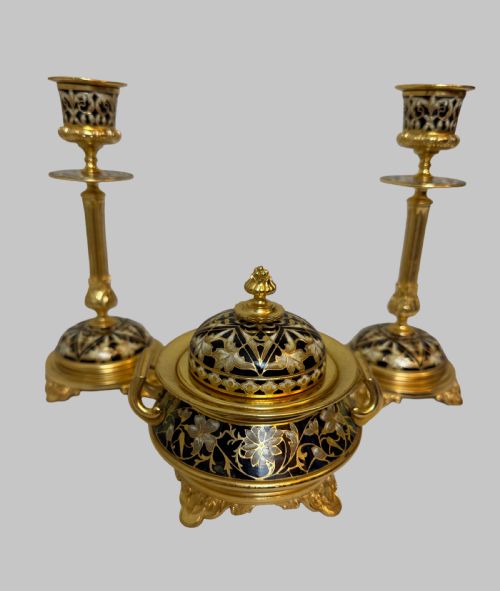


Antique Bronze Desk Set
An antique bronze desk set brings substantial weight and period craftsmanship to a workspace, combining inkwells, trays and candelstands in cast metal.
Antique Bronze Desk Set
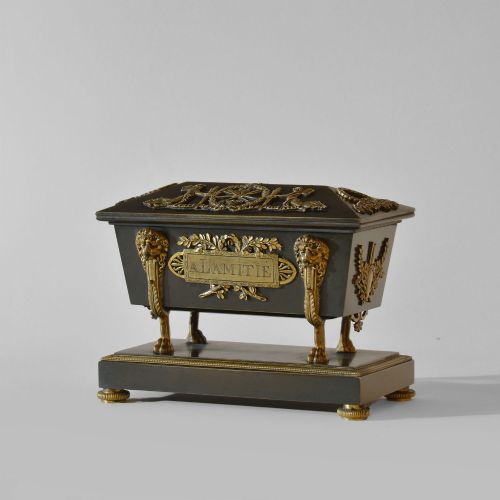
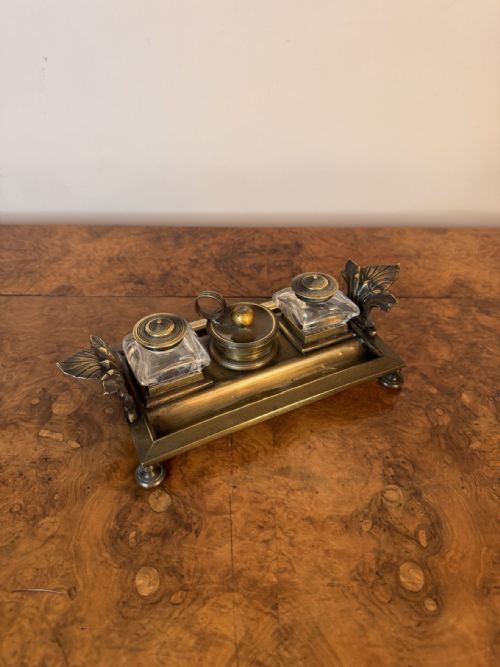
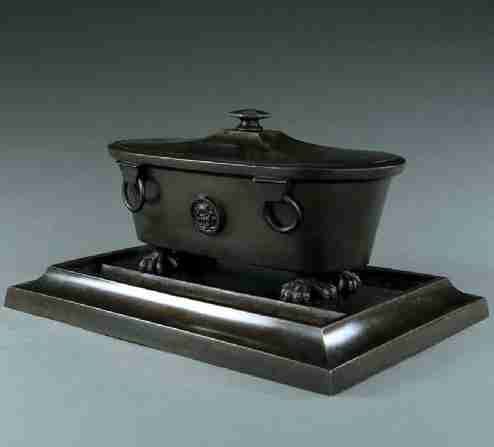
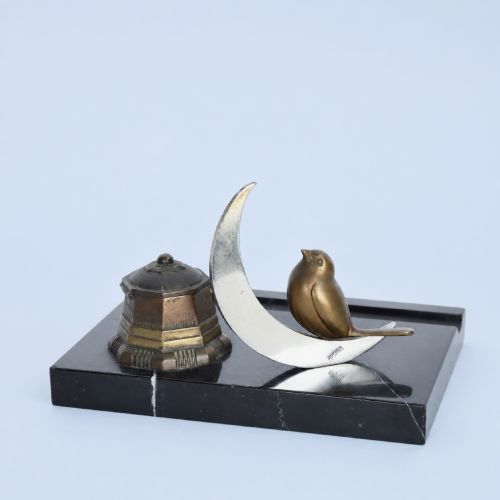
An antique bronze desk set comprises coordinated desk accessories cast in bronze, ormolu, or gilt bronze, frequently mounted on marble or onyx bases. These arrangements range from simple inkstands with integrated pen rests to elaborate garnitures incorporating candlesticks and stamp boxes.
The pieces appearing most often on this page originate from nineteenth-century France and Britain, spanning Victorian, French Empire, and Art Nouveau styles. Makers combined utility with ornamental sculpture, producing fitted pieces for correspondence and writing.
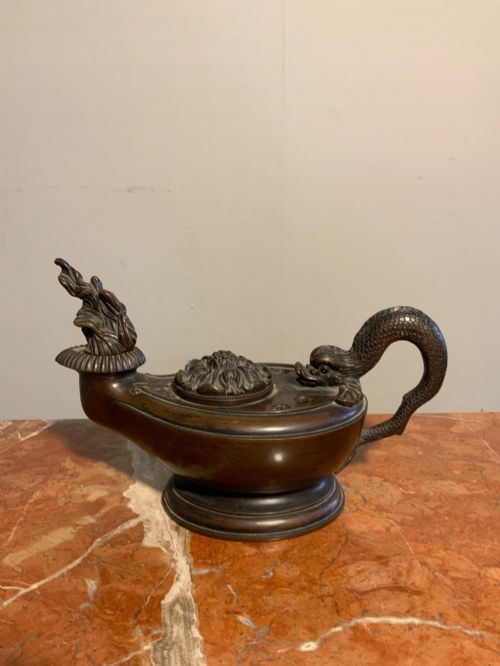
Compositions often feature figural elements, from birds and animals to neoclassical motifs, alongside glass ink inserts and champleve enamel decoration. Collectors encounter both single inkwells and multi-piece desk tidies.
How they were made
Foundry workers utilised traditional sand-casting and lost-wax methods to form the bronze and brass bodies of these desk accessories. Once cast, the metal received detailed hand-chasing to sharpen surface textures and decorative motifs before gilding or patination.
Gilt bronze and ormolu pieces underwent mercury gilding or electroplating to achieve a durable gold finish, while other items displayed cold-painted or natural bronze patinas. Artisans mounted these heavy metal components onto carved marble, onyx, or mahogany slate bases.
Antique Bronze Desk Set Retail Price Guide 2026
Typical asking prices for bronze desk set among the pieces listed under this phrase on Sellingantiques today, from the lower quarter to the upper quarter. They describe what is for sale here now, not the wider market.
Playful desk accessories include mischievous monkeys with glass eyes, emu inkwells, and playing kittens cast in gilded bronze.
What varies in quality
The refinement of the casting and hand-chasing dictates the clarity of ornamental details, separating sharp, expressive sculptural figures from softer, commercially produced variants. Superior pieces exhibit deeply undercut metalwork and meticulous finishing that conceals assembly joins.
Material integration also defines the upper tier, seen in heavier marble or onyx bases paired with thick, hand-cut crystal glass ink inserts rather than plain pressed glass. Signed works by established Parisian foundries or named artists consistently demonstrate higher standards of execution.
Mercier Frères·Tiffany Studios New York·Franz Bergmann·Lefebvre of Belgium·Albert Marionnet·Jules Dalou·Raingo Fres Paris·Ferdinand Berthoud
The Antique Bronze Desk Set Glossary
- Ormolu
- Gilded bronze produced by applying a gold and mercury amalgam to cast bronze, fired to leave a rich matte finish. This technique was widely employed on eighteenth and nineteenth-century French desk sets.
- Encrier
- A French term for an inkstand or inkwell desk set. These portable writing vessels often incorporate multiple ink pots, sanders, and pen trays.
- Champleve
- An enamelling technique where troughs or cells are hollowed out of the bronze surface and filled with coloured vitreous enamel before firing. It creates vibrant patterns across nineteenth-century ink stands.
- Garniture
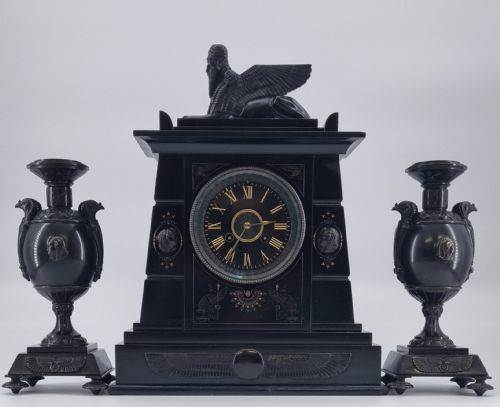
- A set of matching ornamental objects for a desk or mantelpiece, typically consisting of a central clock or stand flanked by matching candlesticks or urns.
- Spelter
- An alloy of zinc and lead cast to imitate bronze, frequently utilised for Art Deco figures and desk tidies mounted on marble bases.
Antique Bronze Desk Set: Frequently Asked Questions
What pieces belong in a desk set?
A complete desk set typically gathers an inkwell, a pen tray or rest, and sometimes a stamp box or letter rack into a unified arrangement. Many nineteenth-century examples also include matching candlesticks or blotters mounted on a shared stone base.
While some configurations are modest double inkstands, others form part of larger garnitures designed to coordinate every writing accessory on a library table.
How do I care for antique bronze?
Bronze requires minimal intervention to preserve its patination, needing only a gentle dusting with a soft, dry cloth. Moisture and chemical polishes should be avoided, as abrasive cleaners can strip the original surface gilding or dark patina.
Marble or onyx bases benefit from occasional wiping with a damp cloth, followed immediately by drying to protect the stone from staining.
How do I date a bronze desk set?
Dating relies on stylistic clues, manufacturing techniques, and any foundry marks or signatures stamped into the metal. Neoclassical and Empire pieces display rigorous symmetry and classical motifs, while Art Nouveau introduces flowing, organic plant lines and asymmetrical forms.
The evolution from heavy Victorian ormolu to streamlined Art Deco marble and spelter helps narrow the period of production.
Are ink inserts usually original?
Original glass or crystal ink inserts fit snugly into the bronze collars and often show minor rim nibbles or bottom wear consistent with age. Finding matching cut glass liners is common, though replacements are frequently utilised when original bottles were broken.
Examining the fit and the wear patterns inside the bronze collar helps determine if the glass has been with the piece long-term.