


Regency Desk Accessory
These pieces for regency desk accessory bring order to correspondence through inkstands, book stands and writing sets shaped by Georgian and Regency hands.
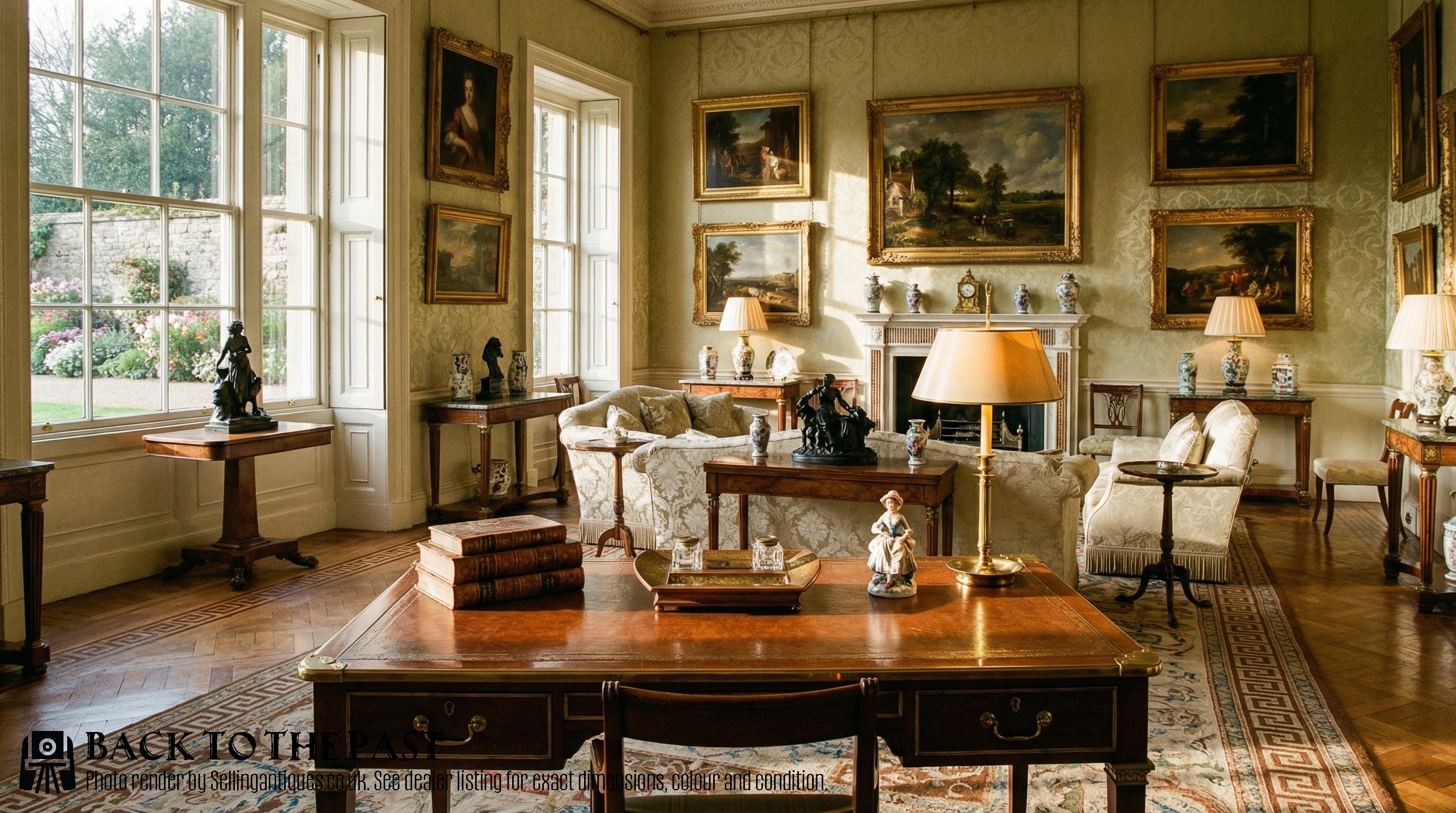
Regency Desk Accessory
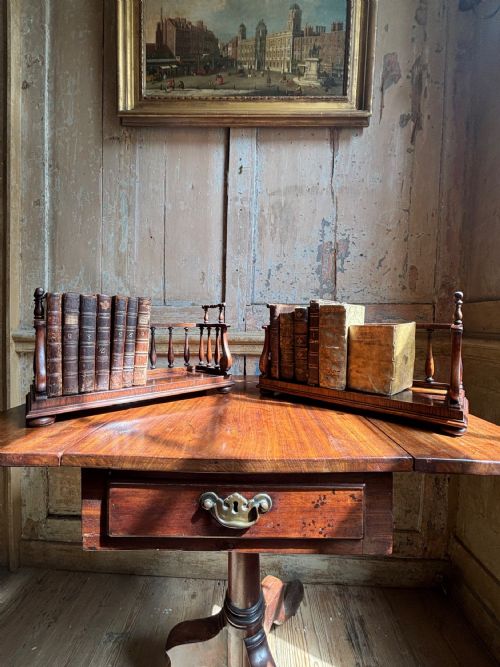
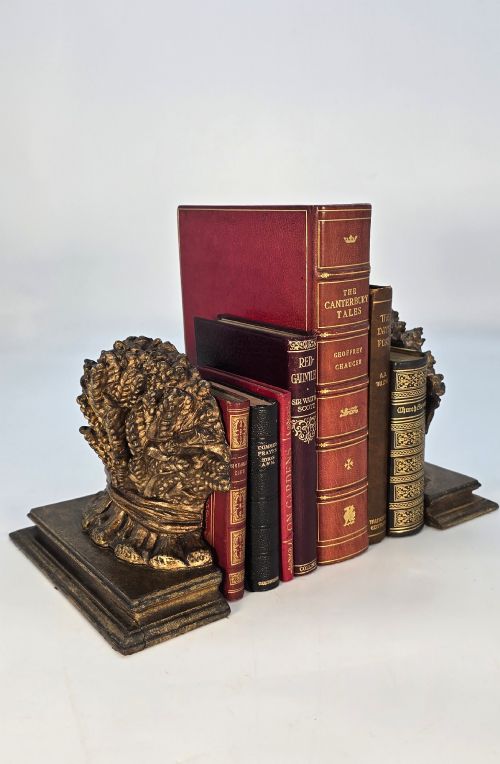
When seeking a regency desk accessory, you encounter items designed to equip the writing table of the nineteenth century. These utilitarian objects span inkstands, inkwells, book stands, bookends, pounce pots, letter openers, candle snuffers and writing slopes.
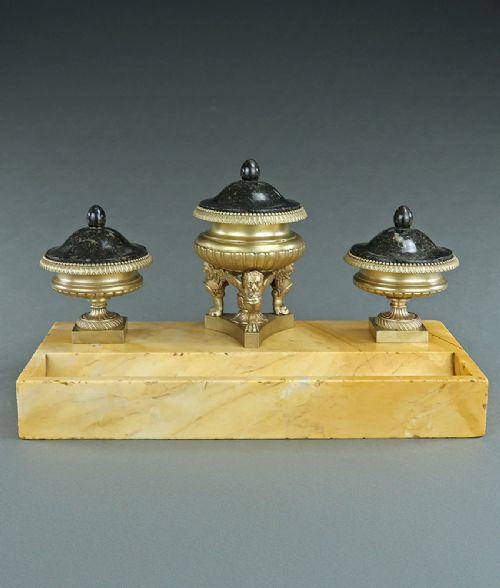
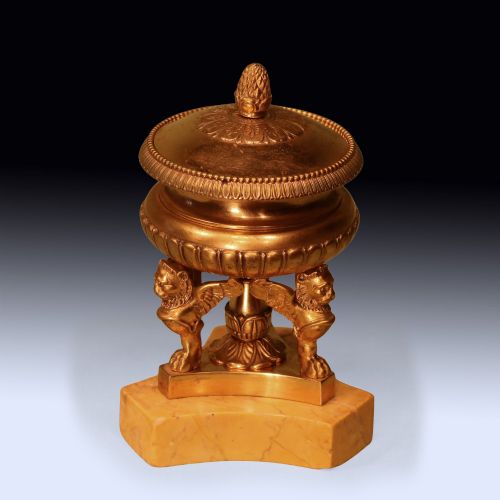
The objects on this page largely date from the Regency and Georgian periods, alongside related nineteenth-century adaptations. Rosewood bodies, porcelain bodies from factories such as Spode and Worcester, and marble bases dominate the selections.
Forms vary from compact single inkwells to substantial solid silver inkstands and brass-inlaid rosewood desk sets. Each piece served a distinct purpose in managing correspondence, illumination and reading material.
Materials and construction methods
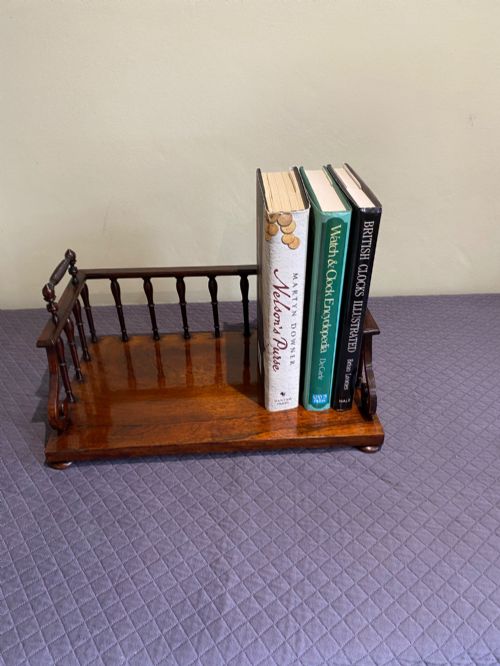
Cabinetmakers utilised dark timbers such as rosewood for book stands, carriers and writing boxes, often embedding brass inlay into the surfaces. Metalworkers fashioned items from sterling silver, Old Sheffield plate, ormolu and brass.
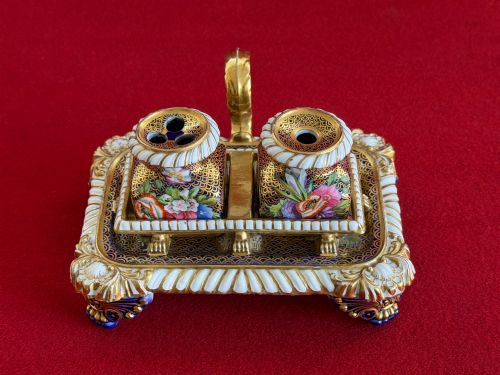
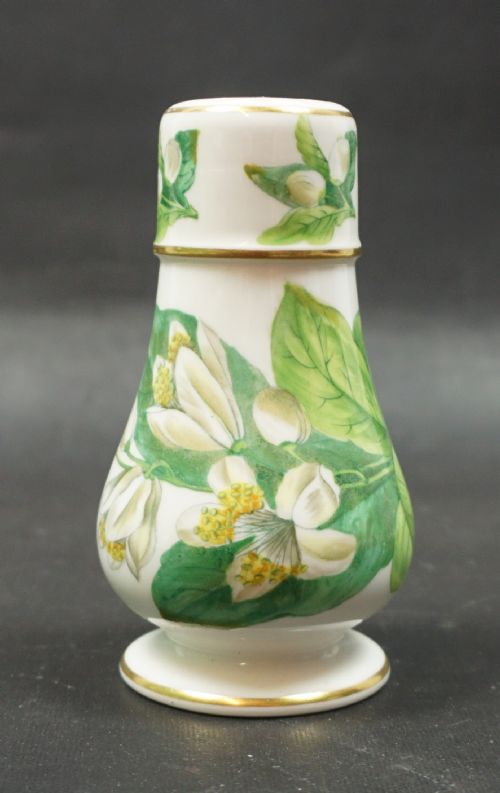
Ceramic pieces rely on porcelain bodies from makers like Flight Barr & Barr and Spode, decorated with hand-painted patterns or enamel. Stoneware and earthenware appear in forms such as Delftware and pearl ware.
A heavy miniature field gun stands ready for action alongside delicate porcelain inkwells and mother-of-pearl letter openers.
Distinctions in quality and execution
The calibre of a piece rests upon the precision of its joinery, the crispness of brass inlay and the integrity of mounts. Finely cast ormolu and fully hallmarked solid silver indicate workshops of high standing.
Ceramic quality shows in the hand-painted execution of factory patterns and the survival of the original glaze without restoration. Rosewood examples gain distinction from well-figured grain and retained internal fitments such as glass inkwells.
Spode Porcelain·Creswick·Flight Barr & Barr·Moses Brent
The Regency Desk Accessory Glossary
- Encrier
- A portable writing tray or inkstand fitted with inkwells and sanders. This French term typically describes Continental or neoclassical stone and marble examples.
- Pounce pot
- A small container with a perforated lid used to sprinkle resin powder over parchment to prevent ink from spreading. They frequently accompany inkstands in writing sets.
- Old Sheffield plate
- A composite material formed by fusing a thin sheet of silver to a thicker copper base. It is characteristic of high-quality Georgian metalwork before electroplating.
- Vinaigrette
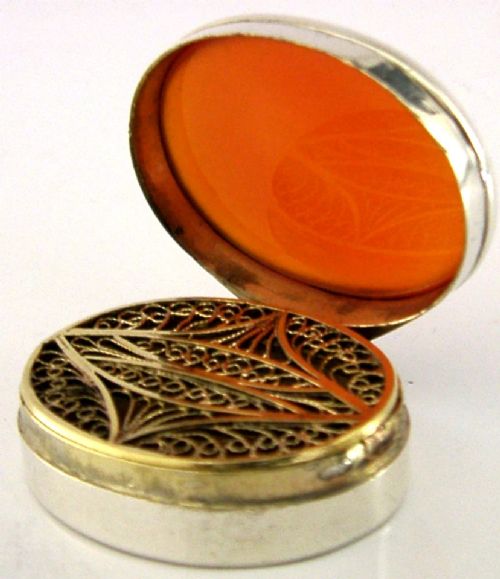
- A small ornamental box containing a sponge soaked in aromatic vinegar. These silver pieces often incorporated decorative agate or enamel lids.
- Writing slope
- A portable box with a slanted lid that folds down to form a writing surface, containing compartments for stationery, ink and pens.
Regency Desk Accessory: Frequently Asked Questions
What is an inkstand?
An inkstand is a desk tray designed to hold inkwells, pounce pots and pen holders in a single stable unit. They formed the centrepiece of formal writing desks during the Georgian and Regency eras.
Materials ranged from solid silver and Sheffield plate to porcelain and inlaid rosewood. Many incorporate compartments for wafers and sealing wax alongside the primary ink reservoirs.
How do I identify Regency desk items?
Regency desk items typically exhibit classical restraint, symmetrical forms and specific material combinations like rosewood paired with brass stringing. Neoclassical motifs such as Sienna marble bases and ormolu mounts frequently appear.
Cabinetry details often follow the manner of known makers like Gillows. Hallmarks on silver components or marked porcelain bodies help confirm the date of production.
What was a pounce pot used for?
A pounce pot held finely powdered cuttlebone, sand or resin that writers sprinkled over rough paper before writing. This powder smoothed the surface fibres so ink would not bleed.
Once writing was complete, another sprinkling of pounce or sand dried the wet ink. They were standard fittings on nineteenth-century inkstands before the widespread use of smooth wove paper.
How should I clean antique rosewood desk accessories?
Antique rosewood surfaces require gentle maintenance using a microfibre cloth to remove dust. Avoid modern liquid polishes or aggressive commercial cleaners that can degrade the wood grain or loosen brass inlay.
Wax formulated for antiques can be applied sparingly to nourish the timber. Protect items from direct sunlight and dramatic humidity changes to prevent the rosewood from splitting.