



Antique Ceramic Pen Holder
An antique ceramic pen holder brings centuries of hand-painted porcelain, earthenware and tin-glazed pottery straight to the writing desk.
Antique Ceramic Pen Holder
An antique ceramic pen holder encompasses desk accessories such as inkstands, inkwells, quill holders and brush pots designed for the writing desk or scholar's table. These pieces emerge from periods spanning the eighteenth and nineteenth centuries, including Regency and Victorian eras alongside Chinese Qing Dynasty productions.
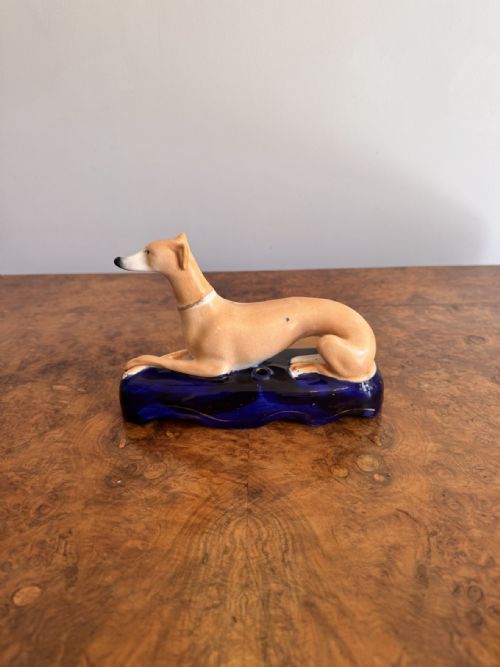
The most common forms on this page are Victorian Staffordshire figures featuring dogs such as whippets, greyhounds and dalmatians modelled with built-in quill holders. Alongside these English desk ornaments appear Dutch Delft tin-glazed items and Chinese porcelain brush pots decorated with official and scholar scenes.
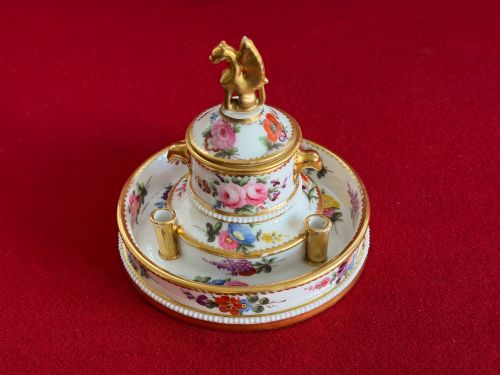
Buyers also encounter English porcelain from factories like Worcester and Spode, often taking the form of fitted inkstands. These diverse origins reflect both European domestic writing habits and Asian scholarly traditions preserved in ceramic.
How they were made
Potters shaped these objects from earthenware, porcelain and tin-glazed earthenware using traditional moulding and throwing techniques. Makers applied hand-painted overglaze enamel, blue and white pigments, and occasional gold leaf to decorate the surfaces before firing.
Chinese brush pots utilised fine porcelain painted with famille rose, famille verte or famille noire enamels during the Qing Dynasty. English Staffordshire figures and Dutch Delft inkstands relied on earthenware bodies finished with opaque white tin glazes or coloured lead glazes.
Antique Ceramic Pen Holder Retail Price Guide 2026
Typical asking prices for ceramic pen holder among the pieces listed under this phrase on Sellingantiques today, from the lower quarter to the upper quarter. They describe what is for sale here now, not the wider market.
Listings feature items from the eighteenth and nineteenth centuries, including Regency and Victorian periods alongside the Qing Dynasty.
What varies in quality
The complexity of the palette and the preservation of the enamel or glaze distinguish finer items from simpler production pieces. Well-executed gilding and intact glaze surfaces elevate the standing of both English desk sets and Chinese scholar objects.
Flight Barr And Barr·Spode
The Antique Ceramic Pen Holder Glossary
- Quill Holder
- A ceramic desk accessory specifically designed with channels or loops to rest writing quills when not in use. These often take figurative forms like animals.
- Inkstand
- A comprehensive desk set that combines an inkwell with pen holders or trays for sealing wax and sand. They represent the more elaborate tier of writing equipment.
- Brush Pot
- A cylindrical vessel, also known as a bitong, used in Asian scholarly traditions to hold writing brushes. They are frequently carved or painted with narrative scenes.
- Tin-Glazed Earthenware
- Pottery covered with a lead glaze made opaque by the addition of tin oxide. This white surface provided a smooth ground for painting.
- Famille Rose
- A palette of Chinese porcelain enamels dominated by opaque pink or rose colours introduced during the Qing Dynasty. It allowed for subtle gradations of tone.
Antique Ceramic Pen Holder: Frequently Asked Questions
What is the difference between a quill holder and an inkstand?
A quill holder focuses on providing a resting place for writing feathers alongside desk figures or vessels. An inkstand serves as a larger, unified base holding inkwells and compartments for accessories.
Inkstands usually command a more prominent position on a desk due to their multiple components, whereas quill holders often double as decorative figures.
How do I care for an antique ceramic pen holder?
Keep ceramic pieces away from direct sunlight and dust them gently with a soft, dry cloth. Avoid using liquid cleaners or soaking pieces with exposed overglaze enamels or gold leaf.
Stable indoor humidity prevents stress on older earthenware and porcelain bodies over time.
How can I tell a Chinese brush pot from an English piece?
Chinese brush pots generally take a cylindrical bitong form and feature traditional Qing Dynasty motifs like scholar scenes or famille enamels. English pieces tend to be earthenware animal figures or porcelain desk sets from factories like Worcester and Spode.
The paste, weight and decorative vocabulary clearly separate Asian scholar objects from Victorian Staffordshire pottery.
Were these items used daily?
These desk accessories served practical functions in writing rooms, offices and scholarly studies during the eighteenth and nineteenth centuries. Inkwells held liquid ink for daily correspondence while quill holders kept writing implements close at hand.
Many survived because they transitioned from utilitarian desk tools to decorative ornaments as writing habits changed.