


Victorian Earthenware Dog Figures
Victorian earthenware dog figures are charming ceramic companions from the nineteenth century, prized by collectors for their character and traditional English mantelpiece appeal.
Victorian Earthenware Dog Figures
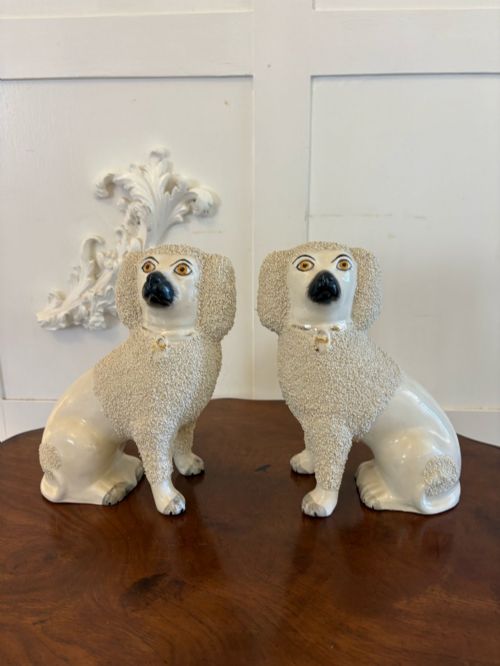
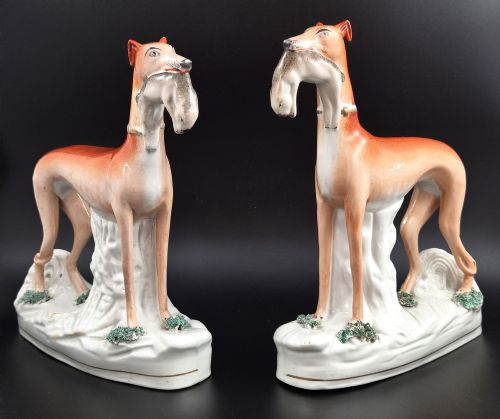
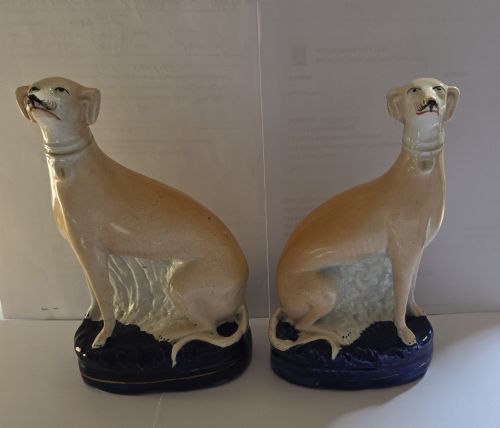
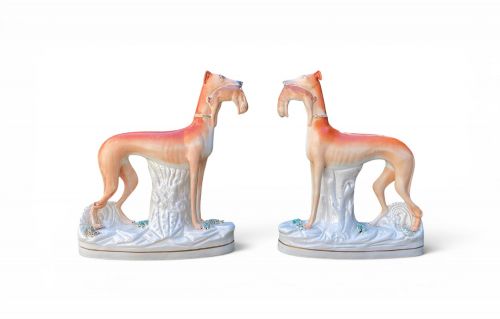
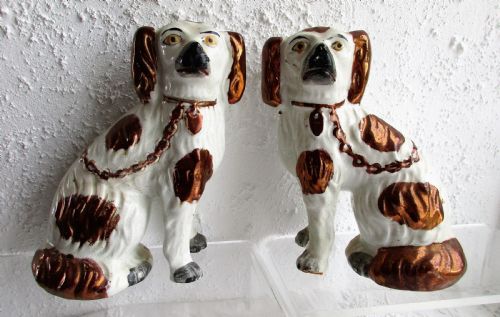
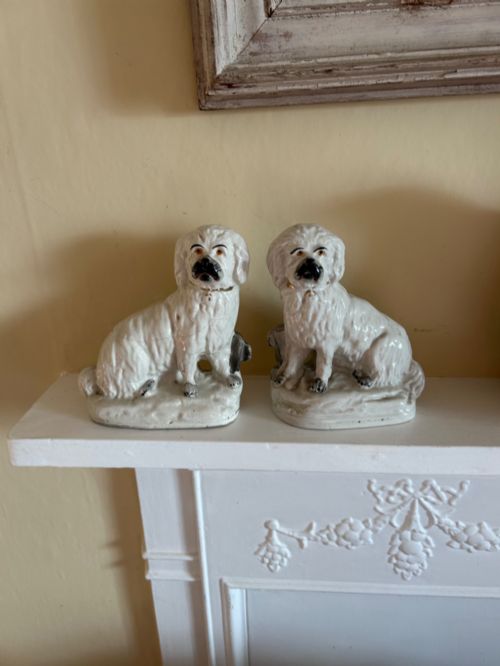
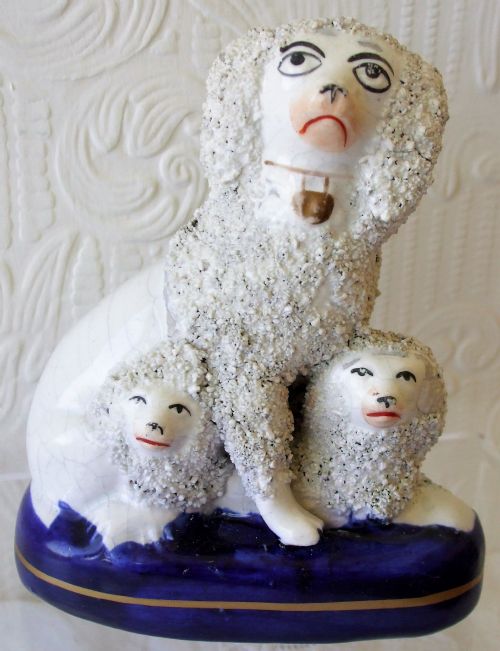
Victorian earthenware dog figures comprise a diverse collection of ceramic animals, most notably including pairs of spaniels, poodles, greyhounds, and pugs. These decorative figurines often appear as matched pairs, though individual figures, money boxes, quill holders, and clock groups also occur.
The objects stem predominantly from the nineteenth century, spanning periods from the Georgian era through to nineteen hundred. English traditional pottery and Victorian Staffordshire styles dominate the offerings, capturing breeds ranging from Maltese terriers to hunting dogs with hares.
How they were made
Moulds shaped the ceramic figures before firing and glazing, allowing workshops to produce consistent forms of dogs and figure groups. Artisans then hand-painted the enamel details onto the fired ceramic surfaces.
Listings feature earthenware and ceramic materials finished with enamel paint, lead glaze, and gold leaf.
What varies in quality
The standard of painting and enamel work distinguishes finer pieces from simpler examples, particularly in the rendering of facial expressions and markings. Crisp details in the moulding and careful application of glaze and gold leaf elevate certain figurines above standard production.
Scale and format also influence the character of the objects, with unusually large figures or functional forms like quill holders and money boxes demonstrating greater ambition by the potter.
Thomas Parr·Wooley
The Victorian Earthenware Dog Figures Glossary
- Earthenware
- A porous pottery body fired at lower temperatures, commonly utilised for nineteenth-century figures before being glazed.
- Lead glaze
- A glossy coating containing lead oxide applied to ceramic wares to provide a smooth, waterproof finish.
- Quill holder
- A desk accessory incorporating a figure with a receptacle designed to hold writing feathers.
- Staffordshire pottery
- Ceramic wares produced in the pottery towns of Staffordshire, famous for producing decorative animal figures.
Victorian Earthenware Dog Figures: Frequently Asked Questions
What are Victorian Staffordshire dogs?
Victorian Staffordshire dogs are ceramic mantelpiece figures shaped as popular breeds like spaniels and greyhounds. Potters produced them in large numbers across the nineteenth century.
Collectors often display these earthenware figures in pairs facing each other. They reflect Victorian tastes for domestic animal companions.
Are all these figures made in pairs?
Many of the dogs appear as matched pairs intended to sit at either end of a mantelpiece. However, solo figures, money boxes, and group scenes also exist.
Pairs typically depict mirror-image poses of breeds such as poodles, greyhounds, or spaniels. Single dogs often feature in more complex groups or functional objects.
What materials make up these figures?
The pieces consist of a ceramic earthenware body covered in a clear or coloured lead glaze. Artisans added enamel paint and occasional gold leaf for surface decoration.
This combination of clay, glaze, and enamel gives the figures their characteristic glossy finish. The materials remained standard across nineteenth-century Staffordshire production.
How do you date a Staffordshire dog?
Dating relies on stylistic clues, ceramic bodies, and specific glaze characteristics from the nineteenth century. Georgian examples tend to show earlier modelling styles.
Changes in painting techniques and breed popularity also help narrow down the period. Comparing known makers like Thomas Parr provides further chronological guidance.