




Earthenware Dog Statues
These earthenware dog statues bring character to a mantelpiece, offering the enduring charm of Victorian Staffordshire figures and continental ceramics.

Earthenware Dog Statues
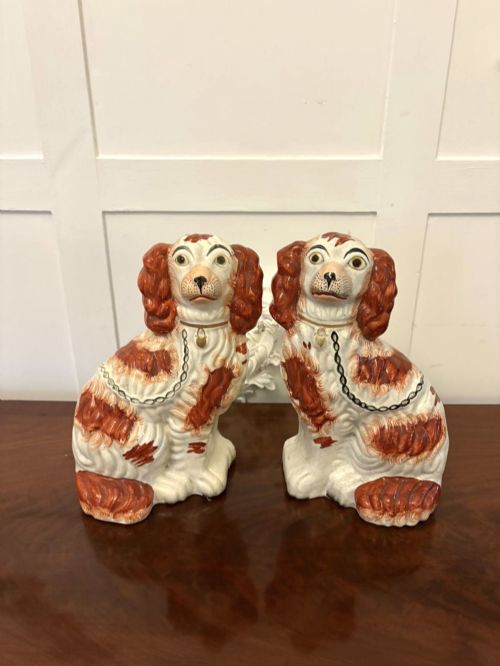
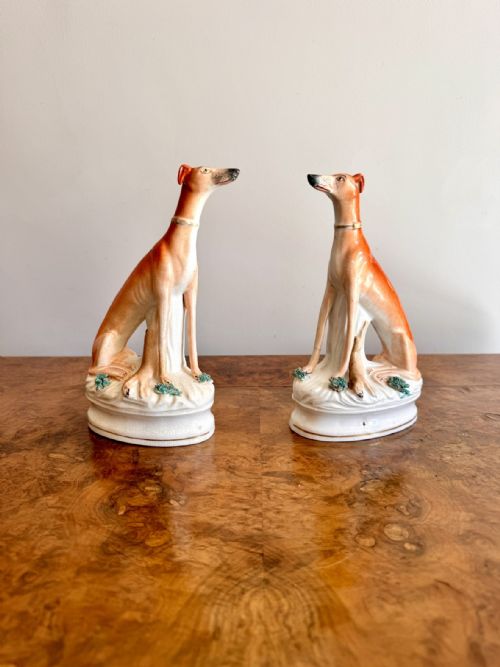
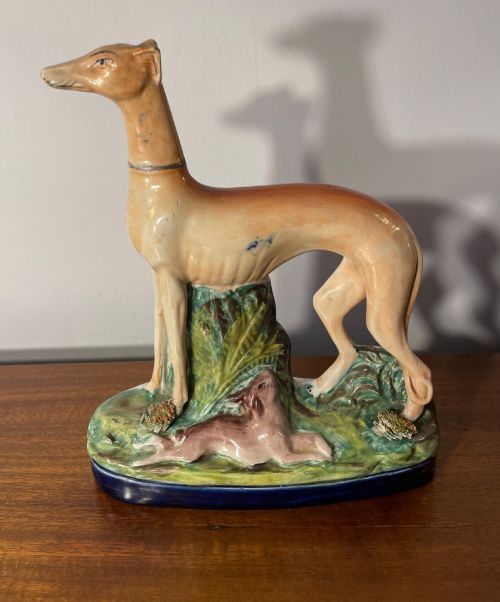
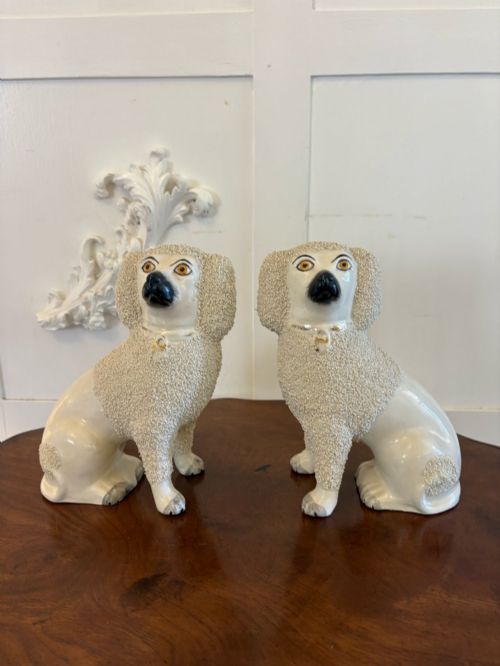
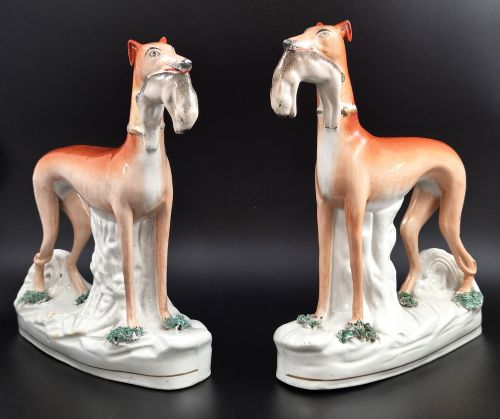
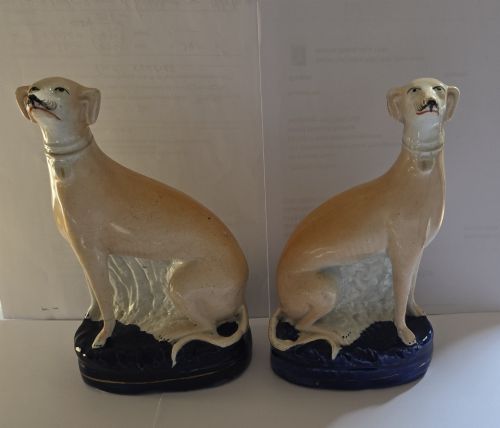
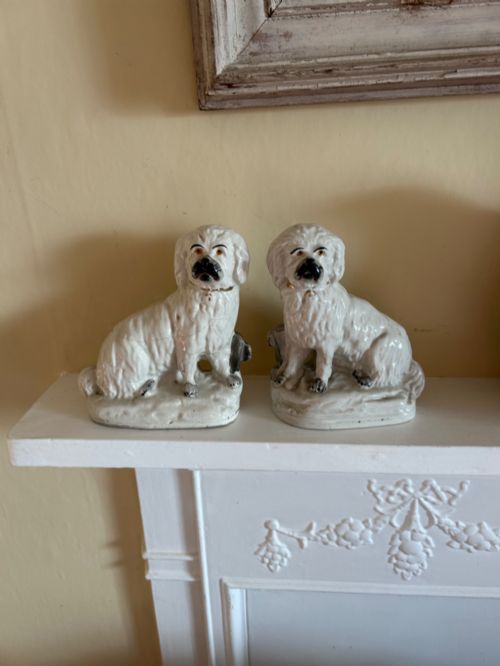
Earthenware dog statues encompass a variety of decorative figures, pottery groups, and sculptural desk accessories originating primarily from the nineteenth century. When buyers search for earthenware dog statues, they encounter a strong representation of Victorian Staffordshire models, including spaniels, poodles, greyhounds, and pugs.
Dating ranges from the Georgian era through the Victorian period and into the early twentieth century, reflecting diverse regional traditions. Buyers will find that Staffordshire spaniels and poodles dominate the selection, frequently presented in pairs intended for fireplace display.
Materials and Methods
Makers applied enamel paint and gilding by hand over the fired glaze, creating the distinctive facial expressions and coat markings seen on Staffordshire dogs. Certain continental and Asian examples utilise terracotta or specific regional porcelain and ceramic traditions, such as Kutani ware.
Earthenware Dog Statues Retail Price Guide 2026
Typical asking prices for earthenware dog statues among the pieces listed under this phrase on Sellingantiques today, from the lower quarter to the upper quarter. They describe what is for sale here now, not the wider market.
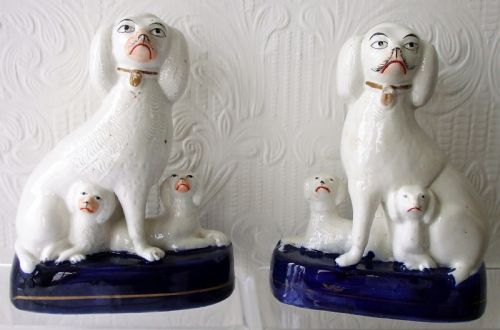
Several poodles arrive with tiny sculpted pups clinging faithfully to their sides.
Judging Quality
Quality in these figures depends upon the crispness of the moulding and the delicacy of the hand-painted details on the face and coat. Superior examples retain bright, well-applied enamel paint and precise gilt accents without excessive blurring or running of the glaze.
Wedgwood and Co Ltd·Bernard Bloch
The Earthenware Dog Statues Glossary
- Earthenware
- Porous pottery fired at lower temperatures than stoneware or porcelain. It serves as the primary ceramic body for nineteenth-century Staffordshire animal figures.
- Staffordshire
- A generic term for pottery manufactured in the region of Staffordshire, England. The term covers numerous independent potteries producing utilitarian and decorative figures.
- Lead glaze
- A glossy, transparent coating applied to pottery before a final firing. It provides a smooth surface that enhances the underlying enamel paint.
- Terracotta
- Unglazed or glazed fired brown-red clay. Several large continental animal sculptures utilise this heavier ceramic material.
Earthenware Dog Statues: Frequently Asked Questions
What are Staffordshire dogs?
Staffordshire dogs are ceramic mantle figures shaped to resemble popular canine breeds, most notably spaniels, poodles, and greyhounds. Makers produced them in pairs during the nineteenth century to decorate fireplace hearths.
These decorative figures often feature hand-painted enamel details and gilt collars. They reflect the Victorian taste for domestic animal ornaments.
How were earthenware dog statues used?
These statues served primarily as decorative ornaments in Victorian homes, typically displayed in mirrored pairs on mantelpieces. Some specialised pieces, such as greyhound figures, doubled as quill holders for desks.
Owners placed them in prominent reception rooms to display taste and a fondness for pets. They were rarely used for practical household tasks beyond ornament and occasional desk utility.
How do I date an antique dog figure?
Dating relies on stylistic clues, manufacturing techniques, and the type of glaze applied to the earthenware body. Victorian pieces often display characteristic facial expressions and distinct enamel colouring typical of mid to late nineteenth-century Staffordshire production.
Marks on the base can occasionally identify specific makers or registration years. Comparing the moulding depth and weight also helps distinguish nineteenth-century examples from later reproductions.
Where should I display earthenware dogs?
Traditional placement involves positioning a matched pair symmetrically on a mantelpiece, sideboard, or bookshelf. Their scale makes them suitable for focal points in living spaces or studies.
Keep them away from direct sunlight and areas prone to heavy vibration or accidental knocks. Stable surfaces ensure these ceramic pieces remain secure.