
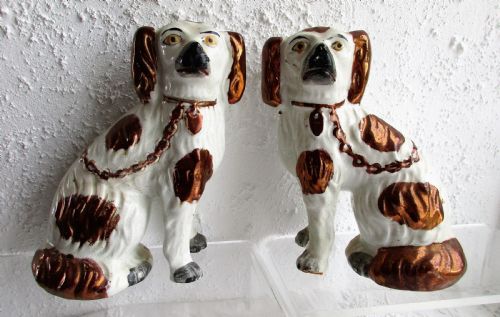
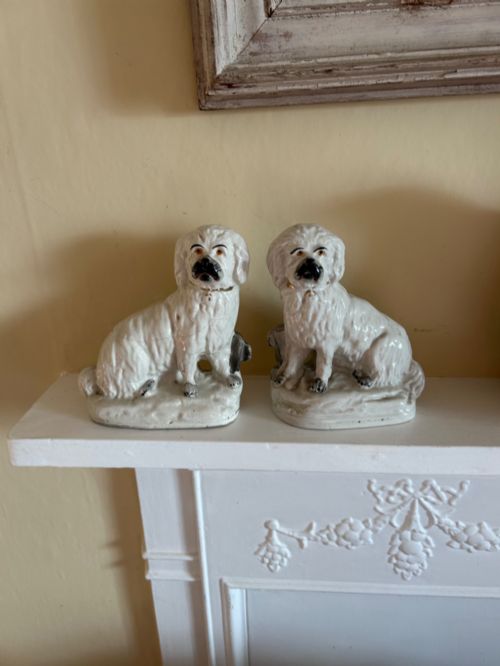


Pair of Staffordshire Dogs
These pair of staffordshire dogs are ceramic figures that bring character and a sense of Victorian life to a mantelpiece.
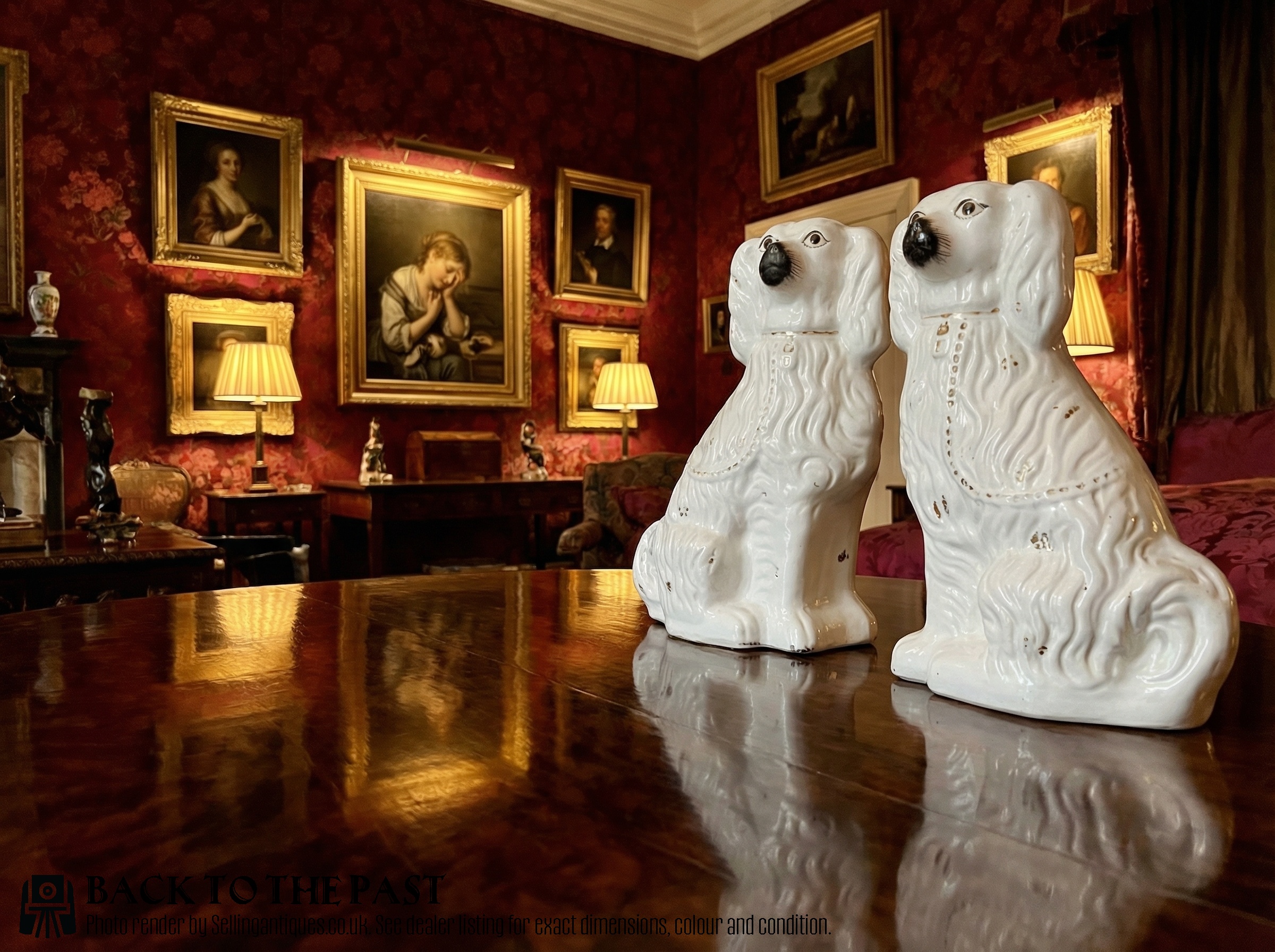
Understanding pair of staffordshire dogs
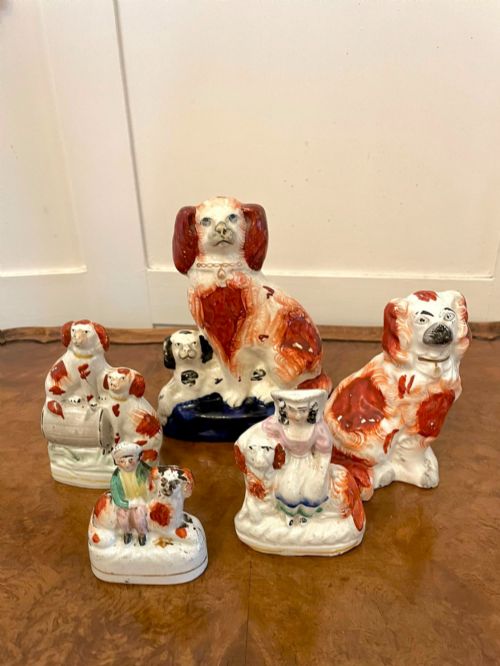
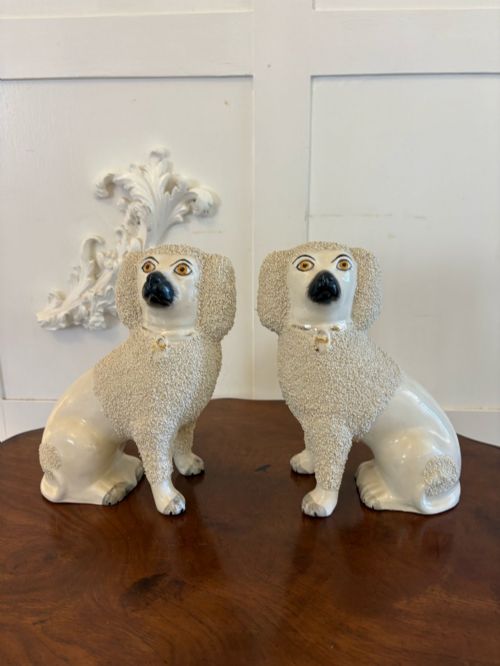
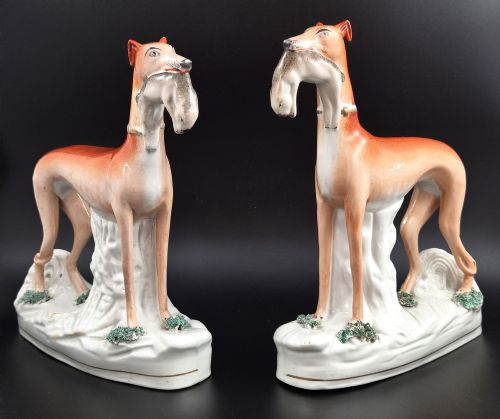
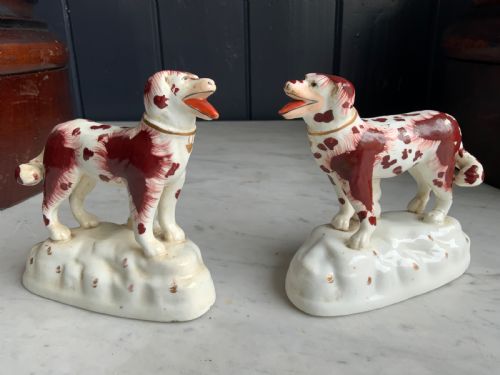
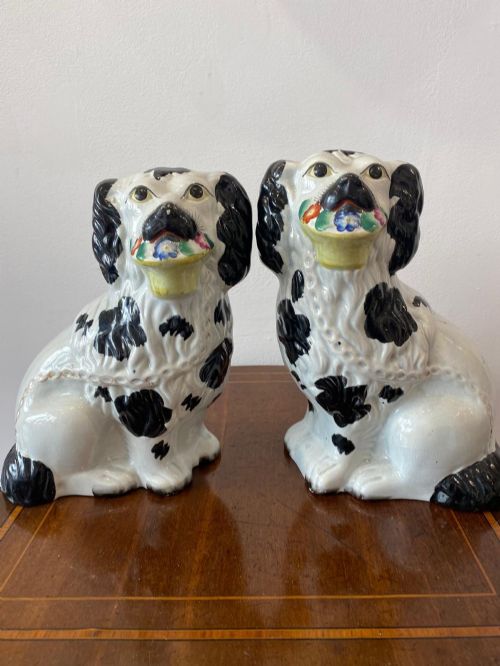
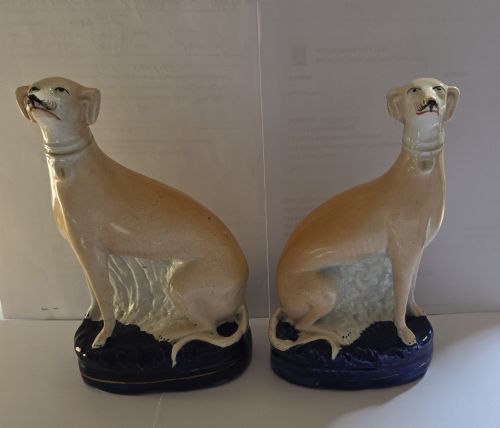
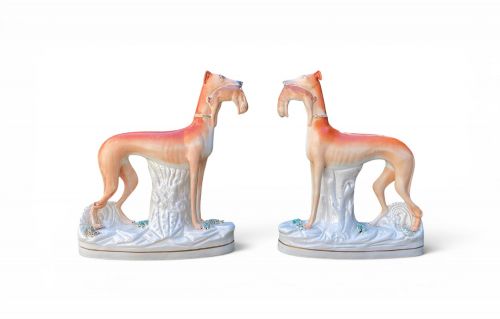
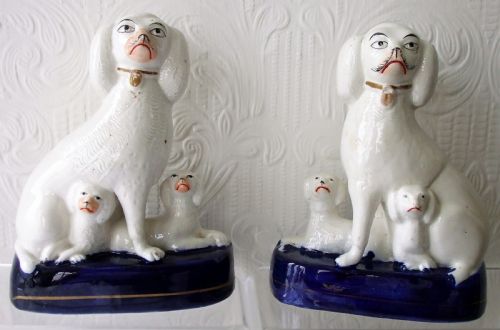
When you search for a pair of staffordshire dogs, you are looking at ceramic figures that typically depict seated spaniels, greyhounds, Dalmatians, collies, St Bernards, and other hounds. The versions you are most likely to meet on this page hail from the nineteenth century and the Victorian era, often modeled as facing pairs.
Makers and potteries produced these decorative figures in various sizes, ranging from miniatures to large fireside companions. The evidence shows styles spanning the Victorian period and into Edwardian times, reflecting domestic tastes of the nineteenth century.
Materials and construction
Some examples feature separate front legs, showing the detailed moulding techniques employed during the middle decades of the nineteenth century.
Some spaniel pairs feature independent front legs, giving the steadfast ceramic hounds a distinctly cheeky stance.
Assessing quality
The top of the range is distinguished by crisp modeling and careful hand-painted enamel work that captures the alert posture of the spaniels or greyhounds. Less accomplished pieces show heavy, flat glaze application and simpler brushwork on the facial details.
Scale also influences the character of the piece, with large pairs and miniature examples demonstrating different levels of detail in the ceramic body and surface finish.
The Pair of Staffordshire Dogs Glossary
- Earthenware
- A porous pottery body fired at lower temperatures, commonly used for nineteenth-century Staffordshire figures before glazing.
- Enamel
- Opaque glass-like paint applied over the glaze to add colour to the eyes, noses, and collars of the dogs.
- Wally dogs
- A traditional colloquial term used by collectors for Staffordshire pottery spaniels.
- Glaze
- A glassy coating applied to the fired ceramic body to give the figures their characteristic shine and waterproof surface.
Frequently Asked Questions
How were these dogs displayed?
These ceramic figures were traditionally placed on mantelpieces flanking a fireplace, often facing inward toward each other.
Pairs were designed to sit symmetrically at either end of a shelf or atop a sideboard in Victorian parlours.
What breeds are represented?
The most common breed depicted is the spaniel, often known as the Wally dog, but the listings also include greyhounds, Dalmatians, collies, and St Bernards.
Each breed reflects the popularity of specific household and working dogs during the nineteenth century.
How do I tell nineteenth century pieces apart?
Dating relies on stylistic markers such as the presence of separate front legs, modeling depth, and the vibrancy of the enamel colours.
Earlier nineteenth-century examples often exhibit distinct moulding traits compared to later Victorian and Edwardian productions.
Are all pairs identical?
While produced as matching pairs, these hand-finished figures often display subtle variations in their painted enamel details and glaze pooling.
Because artisans painted them by hand, each dog in a pair possesses its own distinct facial expression.