


King Charles Spaniel Ornaments
King Charles spaniel ornaments bring quintessential Victorian hearthside charm into the room through pottery and bronze likenesses.
King Charles Spaniel Ornaments
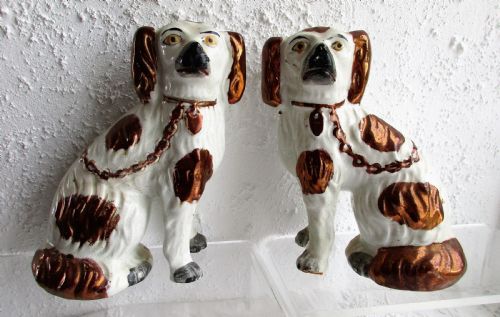
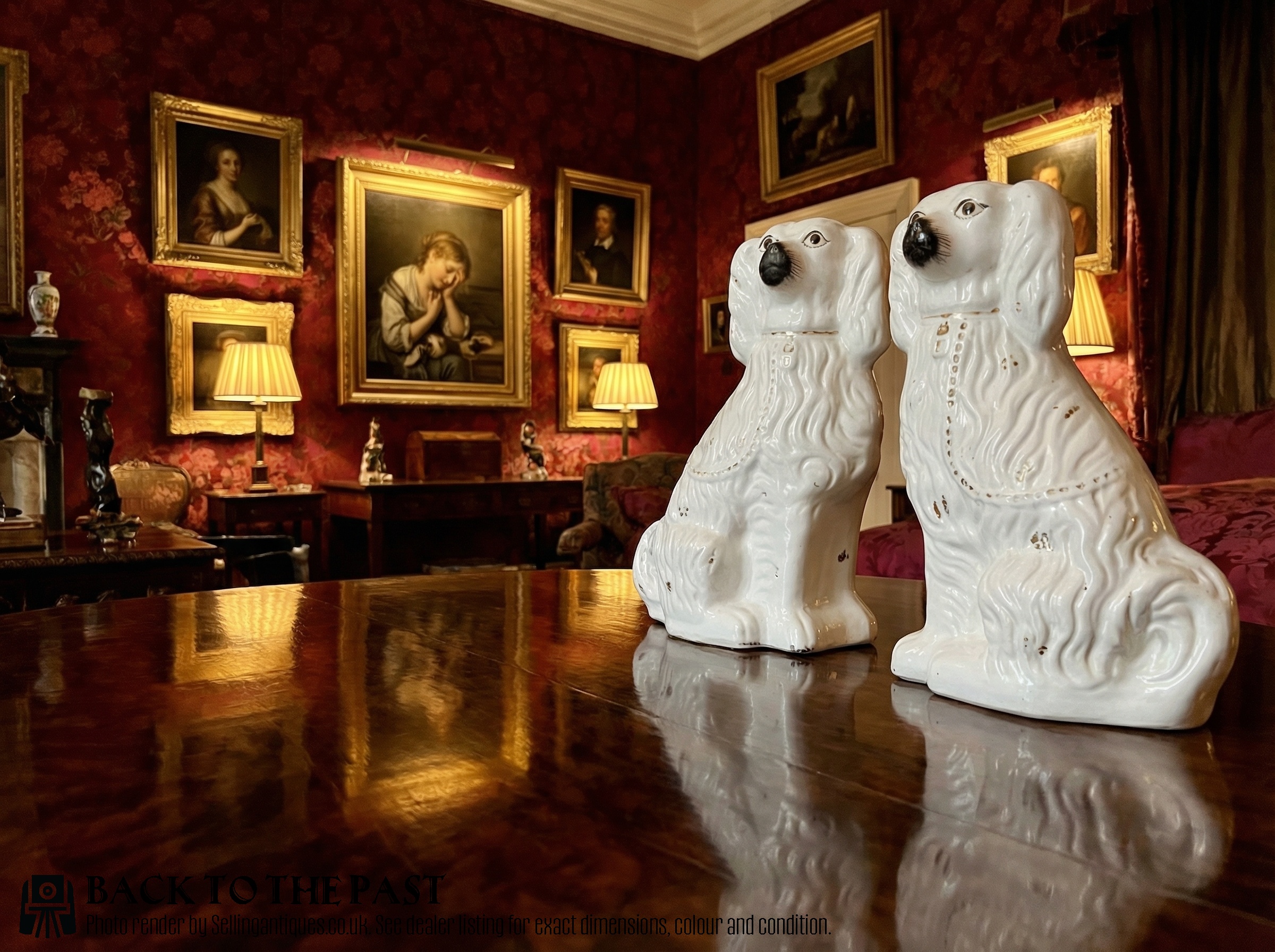
When you search for king charles spaniel ornaments, you encounter decorative figures shaped as seated dogs, mostly appearing in pairs intended for mantelpiece display.
The pieces listed on this page span the nineteenth century and into the twentieth, with Victorian Staffordshire pottery examples dominating the selection.
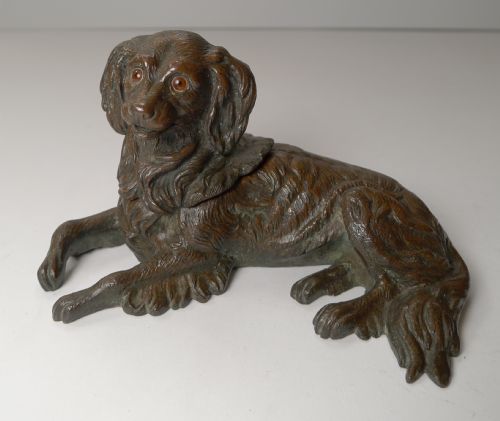
Beyond earthenware pairs, the forms include desk accessories such as bronze inkwells and groupings featuring makers from later periods.
Materials and Making
The makers formed these ornaments from earthenware, ceramic, and stoneware, shaping them into decorative figurines and functional desk pieces.
These ceramic guardsmen sat on Victorian mantelpieces to watch over the household without ever begging for a biscuit.
Assessing Quality
Quality rests upon the crispness of the moulding and the care taken with the enamel and gilt painting across the face and collar.
Pairs show greater uniformity in sizing and glaze application when modelled by skilled hands rather than hurried production lines.
Royal Doulton·Beswick
The King Charles Spaniel Ornaments Glossary
- Staffordshire pottery
- Earthenware produced in the Staffordshire Potteries district. Many nineteenth-century dog figures originated from this region.
- Comforter spaniels
- Pairs of mantelpiece dogs placed on either side of the fireplace. Victorians favoured them as domestic hearth companions.
- Copper lustre
- A metallic glaze technique producing a warm, coppery sheen. It highlights collars and facial markings on earthenware.
- Stoneware
- A dense, impermeable ceramic fired at high temperatures. It offers greater durability than standard earthenware.
King Charles Spaniel Ornaments: Frequently Asked Questions
Why are spaniel ornaments usually sold in pairs?
Victorian mantelpiece display demanded symmetry, so potters produced these dogs as mirror-image pairs to sit at either end of a shelf.
This arrangement framed the hearth and balanced the decorative weight of the mantel.
How do I date an antique spaniel figure?
Dating relies on the style of the modelling, the type of earthenware body, and the characteristics of the glaze.
Nineteenth-century pieces often show hand-painted enamel details, whereas twentieth-century items reflect factory production standards.
What materials were used for these ornaments?
Earthenware and ceramic serve as the primary bodies for these figures, finished with coloured glazes and enamel.
Some examples incorporate copper lustre highlights, gold paint, or metal casting in the case of desk accessories.
Are all these spaniels Staffordshire pottery?
Many nineteenth-century figures originated in Staffordshire, but the category also includes stoneware and later ceramic works.
Makers from the twentieth century expanded the material range beyond traditional earthenware.