

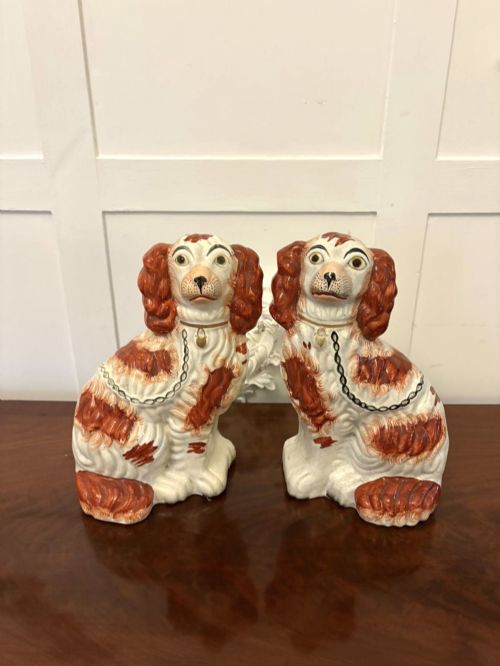


Wally Dugs Pair
These wally dugs pair pieces are traditional ceramic spaniels that sit on mantlepieces, prized for their cheerful Victorian hearthside charm.
Wally Dugs Pair
When you search for a wally dugs pair, you are looking at decorative pottery spaniels that traditionally flank the fireplace in Scottish and English homes. These earthenware figures represent the quintessential Victorian hearthside companion, modelled as seated spaniels facing each other.
You are most likely to meet pairs dating from the nineteenth century, including specific dates around eighteen-sixty and nineteen-hundred. They appear in forms such as pottery figurines, decorative objects, and ceramic figures in the English Traditional style.
The evidence shows examples described as Staffordshire dogs, Staffordshire spaniel dogs, and specifically Scottish dogs known as wally dugs. They range from plain white bodies to versions finished with gilt, gold leaf, and copper lustre glaze.
How they were made
Makers shaped these pieces from earthenware and ceramic bodies, forming the canine figures as hollow slip-cast or pressed pottery. Artisans then applied colourful enamel paint, copper lustre glaze, and white glaze to the dried clay before firing.
Finer details such as collars, chains, and facial expressions received hand-painted enamel work and highlights in gilt or gold leaf. Certain nineteenth-century variants incorporate inserted glass eyes to bring realism to the ceramic spaniel faces.
Wally Dugs Pair Retail Price Guide 2026
Typical asking prices for wally dugs pair among the pieces listed under this phrase on Sellingantiques today, from the lower quarter to the upper quarter. They describe what is for sale here now, not the wider market.
Some nineteenth-century spaniels peer back at the room through slightly mismatched glass eyes.
What varies in quality
Beswick
The Wally Dugs Pair Glossary
- Earthenware
- A porous pottery body fired at lower temperatures, commonly used for nineteenth-century figures before glazing. It forms the core material of these ceramic dogs.
- Copper lustre glaze
- A metallic surface finish producing a coppery, reflective sheen when fired on pottery. It appears on specific Victorian spaniel pairs.
- Comforter spaniels
- A Victorian term for ceramic spaniel figurines placed on mantelpieces as household hearth ornaments. They derive their name from the notion of comforting the homeowner.
- Gold leaf
- Extremely thin sheets of beaten gold applied to pottery details for ornamentation. It provides the bright metallic highlights seen on decorated Staffordshire dogs.
Wally Dugs Pair: Frequently Asked Questions
What are wally dugs?
Wally dugs are ceramic mantelpiece dogs, traditionally placed on either side of the fireplace in Scottish homes.
The term refers specifically to glazed earthenware spaniels originating from the nineteenth century.
How were Staffordshire dogs used?
These figures sat upon the mantelpiece facing inward toward each other to guard the hearth.
Victorian households used them as standard decorative ornaments to bring domestic warmth to the living room.
How do I date antique Staffordshire dogs?
Dating relies on observing the materials, painting style, and whether the eyes are painted or made of glass.
Nineteenth-century examples often feature copper lustre glazes, hand-painted enamels, or distinct gilt highlights.
Why do they come in pairs?
The dogs were modelled as mirror images designed to sit symmetrically at opposite ends of a mantelpiece.
Traditional placement required one dog to look toward the left and its partner toward the right.