


White Glazed Dog Ornaments
White glazed dog ornaments bring character to a mantelpiece, offering the ceramic charm of poodles, spaniels, and terriers shaped across the nineteenth and twentieth centuries.
White Glazed Dog Ornaments
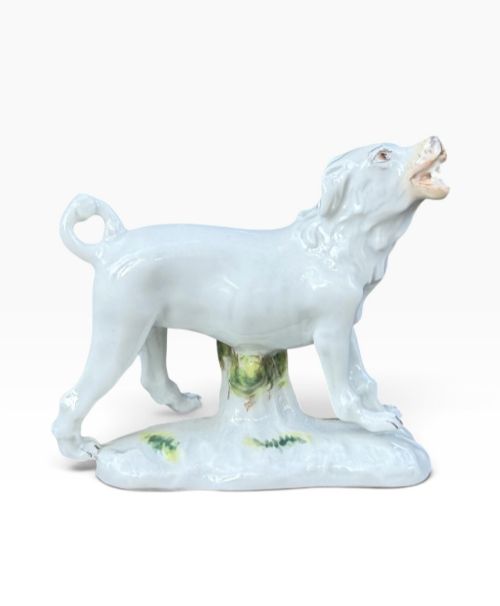
White glazed dog ornaments encompass decorative figures and functional objects such as inkwells and table lamps originating from Victorian England, continental Europe, and Japan. These pieces range from miniature poodles and seated spaniels to greyhounds, pugs, and Maltese terriers modelled in pairs or single statues.
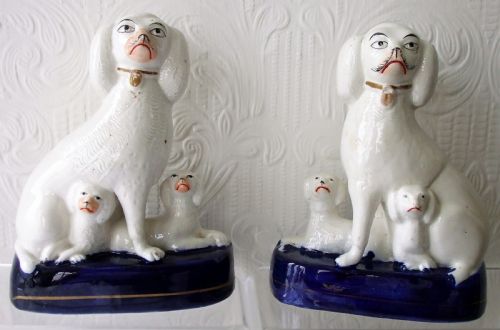
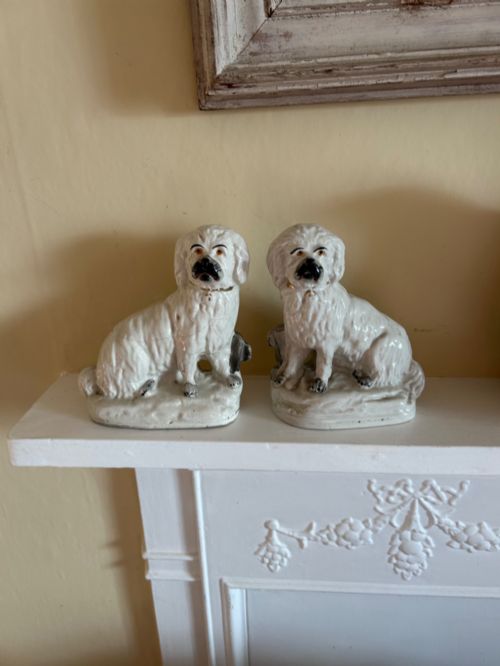
The most common version met on this page is the Staffordshire pottery spaniel or poodle, often modelled in pairs to sit symmetrically at either side of a fireplace. Figures span periods from the mid-nineteenth century through to the early twentieth century, reflecting the Victorian and Edwardian fondness for domestic animal sculpture.
Beyond standard mantel figures, search results include more specialised ceramic forms like spitz dog lamps from Germany and Japanese Hirado puppies. Certain examples incorporate hand painted enamel details, copper lustre, or gold leaf accents alongside the primary white glaze.
Distinctions in quality
The uniformity and depth of the white glaze layer affect the overall visual appeal, with thicker or uneven applications sometimes obscuring delicate ceramic contours underneath. Furthermore, the presence of original pairs rather than mismatched or single survivors influences the desirability of the figures.
Listings feature earthenware and porcelain bodies finished with lead glaze, enamel, and gold leaf across the Victorian and Art Deco periods.
Thomas Parr·Meissen·Beswick
The White Glazed Dog Ornaments Glossary
- Staffordshire figures
- Ceramic sculptures produced by numerous pottery kilns in the Staffordshire region of England during the nineteenth century. These figures typically depict animals, people, and historic events for domestic display.
- Earthenware
- A porous pottery body fired at relatively low temperatures and rendered impermeable to liquids through the application of a vitreous glaze. It serves as the primary material for the majority of nineteenth-century mantle ornaments.
- Lead glaze
- A traditional silica and lead oxide coating that melts during firing to produce a glossy, smooth transparent finish. It imparts a characteristic luminous sheen to early ceramic surfaces.
- Copper lustre
- A metallic pottery glaze technique involving copper compounds that yield a reflective, coppery sheen. It frequently appears on the collars and markings of nineteenth-century ceramic animals.
- Hirado ware
- Fine Japanese porcelain originating from the Hizen province, known for delicate modelling and refined white glazes. Pieces from this tradition often depict domestic animals with meticulous anatomical precision.
White Glazed Dog Ornaments: Frequently Asked Questions
Are these ceramic dogs antique?
The pieces span from the mid-nineteenth century through the early twentieth century, encompassing Victorian and Edwardian periods of production. Many examples date back to the 1850s and 1860s.
Collectors encounter both English Staffordshire potteries and continental European porcelain factories within this selection. Each piece reflects the manufacturing standards and ceramic styles of its specific decade.
Why were Staffordshire dogs made in pairs?
Victorian households traditionally placed matching dog figures at opposite ends of a fireplace mantelpiece to create balanced symmetry. This domestic arrangement mirrored formal interior design conventions of the period.
Individual dogs also served as mantel ornaments, but pairs remained the standard output for commercial potteries supplying middle-class homes.
How do I identify a Staffordshire spaniel?
Staffordshire spaniels typically feature seated posture, pendant ears, and painted or gilded chain collars. They are commonly modelled as pairs of white dogs with patch markings.
Potters produced these figures in various sizes, ranging from miniatures up to large mantel statues, using earthenware bodies beneath a glossy glaze.
What breeds are represented in these ornaments?
The listings feature a variety of popular canine breeds including spaniels, poodles, greyhounds, pugs, Maltese terriers, and spitz dogs. Each breed was interpreted through the aesthetic conventions of nineteenth and early twentieth-century ceramicists.
Sculptors captured the distinct physical traits of these dogs, from the curly coats of poodles to the sleek lines of greyhounds.